Top 10 Most Expensive Nose Studs 2027
The most expensive nose studs in 2027 are not expensive because they are large. A nose stud is a tiny piece of jewellery, and the price comes from what it is made of: the metal, the stone, and the work that went into setting it. A diamond nose stud in platinum can cost several thousand pounds, while a similar-looking stud in plated metal with a glass stone can cost less than a lunch. The difference is invisible from a distance and obvious up close.
What follows are the nine most expensive types of nose stud you can buy in 2027, ranked by the materials and craftsmanship that set their price, plus a tenth named in the lead and the table below. The ranges here are for a single stud with a stone of about 2 to 3 millimetres, in the metal named.
Each entry covers what the stud is made of, what it costs, and who it suits, so you can tell the difference between a genuinely fine stud and an expensive-looking one. A black diamond nose stud in 18ct gold, roughly £2,500 to £8,000, completes the list of ten and appears in the table below.
Key takeaways
- The most expensive nose studs are priced by their metal and stone, not their size: platinum and diamond sit at the top.
- A diamond nose stud in platinum can cost £3,000 to £12,000 or more, while a similar stud in 18ct gold is usually £1,500 to £6,000.
- Coloured stones such as pink diamond, sapphire and ruby can cost as much as, or more than, a white diamond of the same size.
- Buy from a jeweller who names the metal, the stone and its quality; an unnamed stone in an unnamed metal is not worth a luxury price.
- No nose stud holds its full purchase price on resale, and a stud bought for its craftsmanship will always be worth more than one bought for a brand name alone.
What the most expensive nose studs actually are
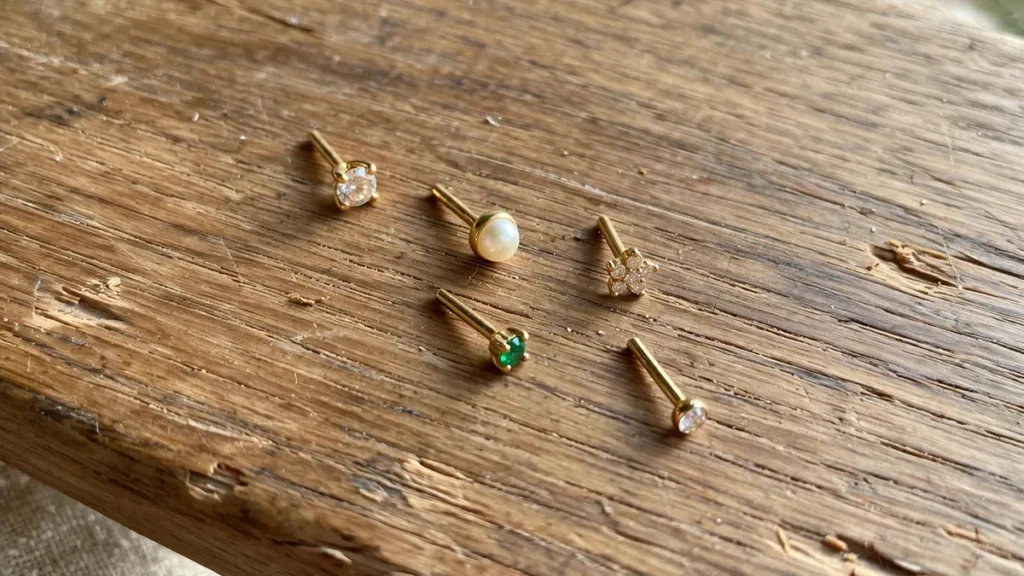
An expensive nose stud is a small piece of fine jewellery. The post is usually 18 or 20 gauge, the stone is usually 2 to 3 millimetres, and the setting is made by hand rather than cast in bulk. The metal is solid: platinum, 18ct gold, or occasionally 14ct gold. The stone is a real gemstone, a diamond, a sapphire, a ruby, an emerald or a pearl, and it comes with some record of its quality, even if that is only the jeweller’s own grading.
The price is set by four things. The first is the metal: platinum costs more than gold, and 18ct gold costs more than 14ct. The second is the stone: its size, its quality, and how rare it is. The third is the setting: a hand-made bezel or pavé setting takes more time than a cast one, and it holds the stone more securely. The fourth is the maker: a stud from a well-known fine jeweller carries a premium for the name, the service, and the guarantee.
None of this makes an expensive stud better to wear. What the price buys is the material, the finish, and the knowledge that the stone is real and the metal will not wear away. That is worth paying for if you want a stud you will wear for years, and it is not worth paying for if you change your jewellery every few months.
How we chose these nose studs and what to look for
Look first at the metal. The most expensive studs are made from platinum or 18ct gold, and the metal should be named on the listing or the receipt, with a hallmark to prove it. If a seller describes a stud only as “gold” without a carat, or “silver” without a standard, that is not a luxury piece, whatever the price.

Look next at the stone. A diamond should be described by its cut, colour, clarity and carat weight, even at this tiny size. A coloured stone should be named, natural or lab-grown, and its origin stated if it matters to the price. A lab-grown diamond is chemically the same as a natural one and costs far less, which is a sensible choice if you want the look without the price, but it should never be sold at a natural diamond’s price.
Finally, look at the setting and the guarantee. A hand-finished bezel or pavé setting should be smooth to the touch, with no sharp edges and no visible glue. The stud should come with a guarantee, a cleaning service, or at least a clear returns policy. Our guide to the most expensive nose rings follows the same approach,.
The 9 most expensive nose studs in the world in 2027
The Platinum Diamond Nose Stud
What we like: Platinum is the most durable metal for a nose stud, and a diamond in a platinum bezel is the brightest, most secure combination available. What to consider: Platinum is heavy for its size and the most expensive metal, so the price rises quickly with the stone. Best for: A lasting, everyday luxury piece. Material: Platinum, with a natural or lab-grown diamond. Price range: About £3,000 to £12,000, depending on the diamond. Standout feature: A hand-finished platinum bezel that will not wear thin over years of wear.
The 18ct Gold Diamond Nose Stud
What we like: Warm yellow gold makes a diamond look brighter, and 18ct gold is durable enough for daily wear. What to consider: Gold wears away very slowly over years, so the setting needs checking occasionally. Best for: Anyone who prefers warm metal and a classic look. Material: 18ct yellow, white or rose gold, with a diamond. Price range: About £1,500 to £6,000, depending on the diamond. Standout feature: A warm gold setting that flatters most skin tones.
The Emerald-Cut Diamond Nose Stud
What we like: An emerald cut has long, clean lines and a quiet, architectural sparkle that suits a stud’s small scale. What to consider: An emerald cut shows inclusions more clearly than a round cut, so the stone must be of good clarity. Best for: Anyone who wants a stud that looks considered rather than simply bright. Material: Platinum or 18ct gold, with an emerald-cut diamond. Price range: About £2,500 to £9,000, depending on the stone. Standout feature: A rectangular stone that reads as a deliberate design choice, not a default.
The Pink Diamond Nose Stud
What we like: A pink diamond is one of the rarest coloured stones, and its colour is soft, warm and unmistakable. What to consider: Natural pink diamonds are very expensive and hard to find at this size, so many pink studs use lab-grown stones. Best for: A collector or a special occasion piece. Material: 18ct rose gold or platinum, with a pink diamond. Price range: About £2,000 to £10,000 or more for a natural stone; less for lab-grown. Standout feature: A colour that no other stone can match.
The Sapphire Nose Stud
What we like: A blue sapphire is deep, rich and durable, and it suits a stud because its colour reads clearly even at a small size. What to consider: A sapphire’s price depends on its colour and origin, and a fine blue stone costs far more than a pale or dark one. Best for: Anyone who wants colour rather than sparkle. Material: Platinum or 18ct white gold, with a natural or lab-grown sapphire. Price range: About £800 to £5,000, depending on the stone. Standout feature: A deep blue that stands out against any skin tone.
The Ruby Nose Stud
What we like: A ruby is warm, vivid and unmistakably luxurious, and its red reads beautifully against gold. What to consider: A fine ruby is rarer than a fine sapphire, and many rubies on the market are treated to improve their colour. Best for: Evening wear and a bold, warm look. Material: 18ct yellow or rose gold, with a natural or lab-grown ruby. Price range: About £900 to £6,000, depending on the stone. Standout feature: A rich red that no other stone offers.
The Opal Nose Stud in White Gold
What we like: An opal shows flashes of green, blue and pink as it moves, which no other stone does at this size. What to consider: Opal is soft and can be damaged by knocks, water and chemicals, so it needs more care than a diamond or sapphire. Best for: Occasional wear and anyone who loves colour that changes. Material: 18ct white gold, with a natural Australian opal. Price range: About £600 to £4,000, depending on the opal. Standout feature: A play of colour that shifts with the light.
The Pearl Nose Stud
What we like: A pearl is soft, lustrous and classic, and it suits a stud because its shape is naturally small and round. What to consider: Pearls are soft and can be scratched or dulled by perfume, makeup and harsh cleaning. Best for: Bridal wear, formal occasions, and a soft, classic look. Material: 18ct gold or platinum, with a cultured Akoya or South Sea pearl. Price range: About £500 to £3,500, depending on the pearl. Standout feature: A lustre that no faceted stone can match.
The Vintage-Inspired Diamond Nose Stud
What we like: A vintage-inspired setting, with milgrain edges or a halo of tiny diamonds, gives a small stone far more presence. What to consider: The fine detail is harder to clean and more vulnerable to knocks than a plain bezel. Best for: Anyone who loves antique jewellery and fine detail. Material: Platinum or 18ct gold, with a central diamond and a halo of small diamonds. Price range: About £2,000 to £8,000, depending on the stones. Standout feature: Hand-finished milgrain and halo detailing that makes a small stone look larger.
Which expensive nose stud is right for you
Start with the metal. Platinum is the most durable and the most expensive, and it suits a stud you will wear every day for years. Eighteen-carat gold is warmer, lighter and more affordable, and it suits most people just as well.
Then choose the stone. A white diamond is the most versatile and the easiest to wear with anything. A coloured stone, a sapphire, a ruby or a pink diamond, makes a stronger statement and suits someone who wants their stud to be noticed. An opal or a pearl is softer and more delicate, and it suits occasional or formal wear rather than daily use. A guide to diamond necklaces applies the same principles at a larger scale.
Finally, think about how you will wear it. A stud you wear every day should be durable, secure and easy to clean, which points to a diamond or sapphire in a plain bezel. A stud for special occasions can be more delicate, an opal, a pearl, or a vintage-inspired halo, because it will not face the same knocks.
The caveats that matter
An expensive nose stud is still a piece of jewellery in a piercing, and the same rules apply as for a cheap one. The metal must suit your skin, the post must fit your nostril, and the piercing must be healed before you change the stud.
| Detail | What is known |
|---|---|
| Most expensive stud | Platinum diamond nose stud, about £3,000 to £12,000 |
| Best value luxury metal | 18ct gold, about £1,500 to £6,000 with a diamond |
| Rarest stone on the list | Natural pink diamond, about £2,000 to £10,000 or more |
| Most durable coloured stone | Sapphire, about £800 to £5,000; ruby about £900 to £6,000 |
| Most delicate stone | Opal, about £600 to £4,000; needs gentle care |
| Softest luxury choice | Pearl nose stud, about £500 to £3,500 |
| Tenth on the list | Black diamond nose stud in 18ct gold, about £2,500 to £8,000 |
| What holds value best | Platinum and 18ct gold with a natural diamond; lab-grown stones cost less and hold less |
The other caveat is resale. A nose stud, however expensive, will not hold its full purchase price if you sell it. The metal has a scrap value, and a fine stone has a value, but the retail price includes the making, the guarantee, and the jeweller’s margin, none of which comes back. Buy an expensive stud because you want to wear it for years, not because you expect it to be an investment.
Checklist: buying an expensive nose stud honestly
Use these checks before you pay a luxury price for a small piece of jewellery.
- Check the metal: platinum or 18ct gold, named and hallmarked, not just described as “gold” or “silver”.
- Check the stone: its type, size, quality and whether it is natural or lab-grown, stated in writing.
- Check the setting: a smooth, hand-finished bezel or halo, with no sharp edges and no visible glue.
- Check the fit: 18 or 20 gauge, and a post length that matches your nostril, usually 6 to 7 millimetres when new.
- Check the guarantee: a written guarantee, a cleaning service, and a clear returns policy from the jeweller.
- Compare like with like: get two quotes for the same metal and stone quality before you buy, because prices vary widely.
Frequently asked questions
How much does the most expensive nose stud cost?
A platinum diamond nose stud can cost £3,000 to £12,000 or more, depending on the diamond. A natural pink diamond stud can cost even more. Most luxury nose studs, in 18ct gold with a diamond, sapphire or ruby, fall between £1,500 and £6,000.
Is a lab-grown diamond nose stud worth buying?
Yes, if it is sold honestly as lab-grown. A lab-grown diamond is chemically the same as a natural one and looks identical, but it costs far less. It will not hold its value the way a natural diamond does, so buy it to wear, not as an investment.
What metal is best for an expensive nose stud?
Platinum is the most durable and the most expensive. Eighteen-carat gold is warmer, lighter and more affordable, and it suits most people just as well. Both are safe for sensitive skin. Avoid plated metals at a luxury price, because the plating wears away and the metal underneath is rarely disclosed.
How do I know a diamond nose stud is real?
Buy from a reputable jeweller who gives you the stone’s details in writing, its cut, colour, clarity and carat weight, and whether it is natural or lab-grown. A jeweller should also be able to show you the stone under magnification. If a seller cannot or will not give you these details, do not pay a luxury price.
Can I wear an expensive nose stud every day?
Yes, if it is a diamond or sapphire in a secure bezel setting, and the metal is platinum or 18ct gold. Softer stones such as opal and pearl are better kept for occasional wear, because they can be scratched or dulled by daily knocks, perfume and cleaning products. A guide to gold jewellery for everyday wear covers the same care principles for fine pieces.
Will an expensive nose stud hold its value?
Partly. The metal and a natural stone keep a material value, but the retail price includes making, service and margin, which do not come back on resale. A stud bought from a well-known jeweller, with a certificate for the stone, will hold its value better than one bought without any paperwork, but no nose stud should be bought as an investment.
The bottom line
The most expensive nose studs in 2027 are expensive for honest reasons: solid platinum or 18ct gold, a real gemstone, and a setting made by hand. A platinum diamond stud at £3,000 to £12,000, an 18ct gold diamond stud at £1,500 to £6,000, or a pink diamond, sapphire or ruby stud in between, are all fair prices for what they are, as long as the metal and the stone are named and the work is well done.
Choose a stud you will wear for years, not one you will admire for a week. That is the honest way to spend a luxury price on a very small piece of jewellery, and the way to make sure it is still worth wearing in five years’ time.