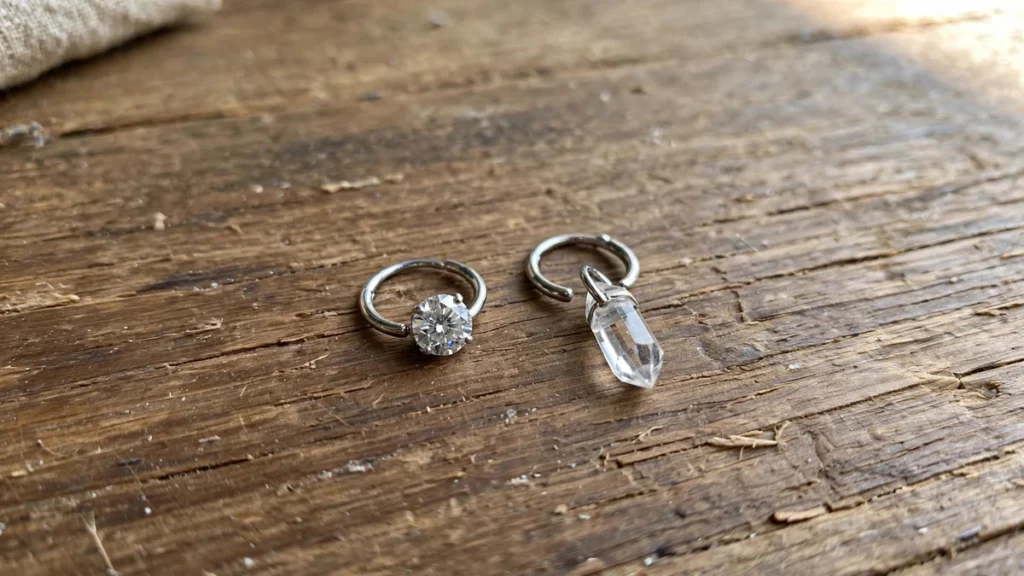
Diamond vs Crystal Nostril Rings 2027: 9 Comparisons That Matter
A nostril ring is one of the smallest pieces of jewellery you can wear, and one of the most visible. It sits at the centre of the face, catches the light every time you turn your head, and says a lot about your taste in a space no bigger than a fingernail. That is why the stone at its centre matters so much. A diamond and a crystal can look surprisingly similar in a shop display, yet they behave very differently over months of wear, and in price.
The difference is not just about cost, although the gap can be wide. Diamonds are the hardest natural gemstone, which means they hold a sharp sparkle and resist scratches from everyday life. Crystals, usually cubic zirconia, glass, or quartz, are softer and brighter in a different way, and they make it possible to change styles often without spending a fortune. The right choice depends on how often you wear the ring, how sensitive your skin is, and whether you want one piece to last for years or a small collection to rotate.
Below are nine comparisons that cover the things that actually matter when you choose between a diamond and a crystal nostril ring in 2027, from how they look in daylight to how they hold up, how much they cost, and how to care for them. Each comparison ends with who it suits best, so you can decide on evidence rather than sparkle alone.
Key takeaways
- Diamonds are harder and hold their sparkle longer, but they cost far more than crystals for the same size.
- Crystals are bright, affordable, and easy to replace, which makes them ideal for trying new styles.
- In daylight, a good crystal can look very close to a small diamond, but a diamond keeps its fire in low light.
- Both need a safe metal setting, such as gold, platinum, or implant-grade titanium.
- No stone makes a nostril ring maintenance-free, and a crystal will need replacing sooner than a diamond.
What diamond and crystal nostril rings actually are
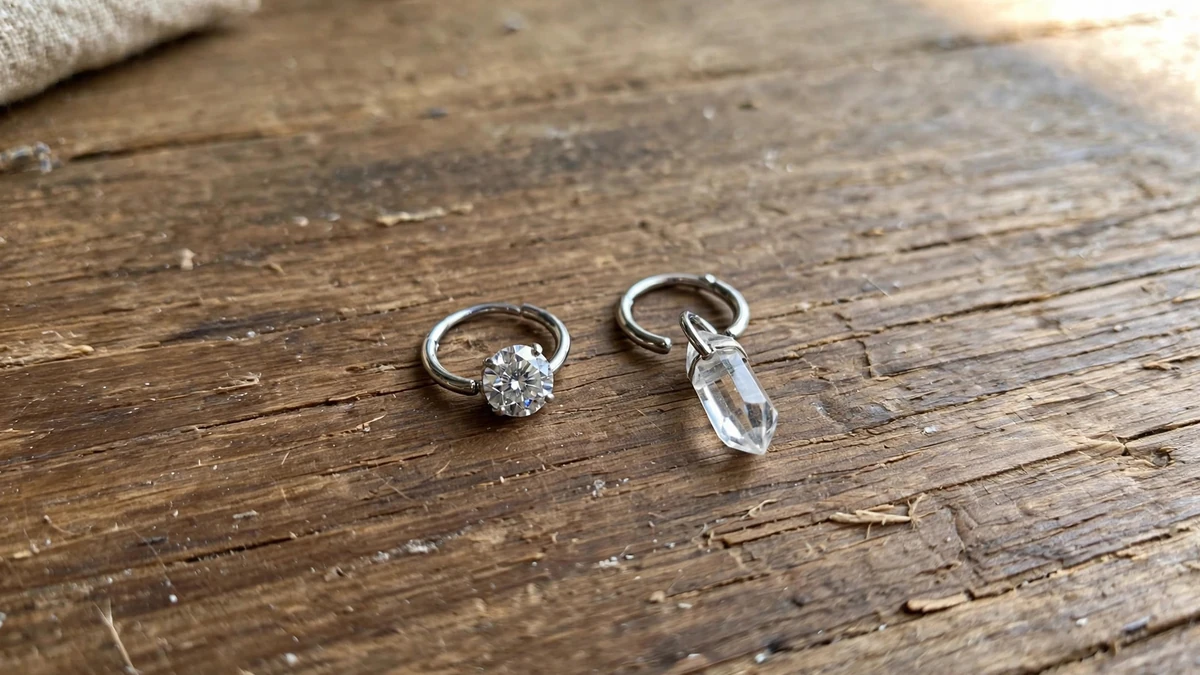
A diamond nostril ring carries a real diamond, a natural or lab-grown stone, set in a small piece of metal, usually gold or platinum. The diamond is most often round and brilliant-cut, because that cut returns the most light from such a tiny stone, but you will also see princess, oval, and marquise shapes in slightly larger settings. The ring itself is usually a thin hoop, an L-shaped stud, or a small screw-style post.
A crystal nostril ring looks similar at first glance, but the stone is a crystal, most commonly cubic zirconia, although glass and quartz are also used. Cubic zirconia is made to imitate a diamond, and in a small size it does the job well. It is clear and bright, and in a shop the two can be hard to tell apart. The difference shows up over time: a crystal is softer and will pick up fine scratches that a diamond would shrug off.
The setting matters as much as the stone. A well-made crystal ring in solid gold can be a better buy than a poorly set diamond in thin, low-quality metal. Look at the prongs, the finish, and the weight of the piece. A ring that feels flimsy, has rough edges, or shows glue around the stone is a warning sign whatever the stone claims to be.
How we chose these comparisons and what to look for
We chose these nine comparisons by thinking about what actually changes between a diamond and a crystal once the ring is on your nose, not just what changes on a price tag. Sparkle matters, but so does comfort, how the stone handles water and makeup, and whether you can afford to replace it if it falls out. Each comparison below is judged on those everyday terms.

Look first at the stone itself. A diamond should come with a simple description of its size, cut, and whether it is natural or lab-grown. A crystal should be named honestly, usually cubic zirconia, rather than described as premium stone or diamond-like. Our guide to the best gold jewellery for everyday wear explains why solid gold settings are worth the extra cost, and the same logic applies here.
Look next at the metal and the fit. Gold, platinum, and implant-grade titanium are the safest choices for most skin. Check the gauge and the diameter, because a ring that is too tight will press, and one that is too loose will fall out. Finally, look at the closure: a secure click, a snug screw, or a well-shaped L-post is what keeps a small ring where it belongs.
The 9 comparisons that matter in 2027
First impressions and how they look on the nose
What we like: A diamond gives a crisp, sharp sparkle that reads as refined even in a tiny size. A crystal gives a bright, white flash that looks lively, especially in sunlight. What to consider: A crystal can look slightly flat in dim light, while a diamond can look almost too subtle if the stone is very small. Best For: Diamonds for a quiet, polished look; crystals for a bright, noticeable sparkle. Material: Natural or lab-grown diamond, or cubic zirconia. Price Range: Around £80 to £600 for a small diamond ring; around £10 to £60 for a crystal ring. Standout Feature: A diamond’s sharp, rainbow fire in low light.
Sparkle in daylight and in low light
What we like: Diamonds keep their sparkle indoors and in the evening, where crystals can go dull. Crystals are at their best in bright daylight, where they can look almost as lively as a diamond. What to consider: A crystal that looks dazzling in a shop window may look plain at a candlelit dinner. Best For: Diamonds for evening wear and indoor events; crystals for daytime and outdoor wear. Material: Brilliant-cut diamond or brilliant-cut cubic zirconia. Price Range: Around £100 to £500 for a diamond; around £12 to £40 for a crystal. Standout Feature: A diamond holds its fire when the light fades.
Durability and how they handle daily life
What we like: A diamond is the hardest natural gemstone, so it resists scratches from makeup brushes, glasses, and everyday bumps. A crystal is light and comfortable, and replacing it costs very little. What to consider: A crystal can develop fine scratches within months, and a chipped crystal cannot be polished back the way a diamond can. Best For: Diamonds for daily wear over years; crystals for occasional wear or frequent changes. Material: Diamond in gold or platinum; cubic zirconia in gold or titanium. Price Range: Around £120 to £700 for a durable diamond ring; around £10 to £50 for a crystal ring. Standout Feature: A diamond that still looks new after years of wear.
Comfort and how it feels all day
What we like: Both can be very comfortable when the setting is smooth and the gauge is right. A crystal ring is often lighter. What to consider: Comfort depends more on the metal, the fit, and the finish than on the stone, so a rough setting will irritate your nose whatever the stone is. Best For: Either, provided the setting is smooth and the size is correct. Material: Gold, platinum, or implant-grade titanium. Price Range: Around £60 to £400 for a well-made ring in either stone. Standout Feature: A smooth, polished setting that you forget you are wearing.
Security and what stays put
What we like: A diamond in a proper prong or bezel setting is very secure. A crystal ring with a good closure is secure too, and losing one is a small loss. What to consider: Cheap crystal rings sometimes have weak closures and thin prongs, which is the real risk, not the stone itself. Best For: Diamonds for a ring you never want to lose; crystals for trying new styles without worry. Material: Gold or platinum setting for diamonds; gold or titanium for crystals. Price Range: Around £90 to £500 for a secure diamond ring; around £15 to £60 for a secure crystal ring. Standout Feature: A firm click closure that you can feel engage.
Cleaning and everyday care
What we like: Both clean easily with warm water and mild soap. A diamond stays bright with simple cleaning. What to consider: A crystal can go cloudy if lotions, hairspray, or makeup build up on it, and harsh cleaners can damage its surface. Best For: Diamonds for low-effort care; crystals for people happy to clean the ring weekly. Material: Diamond or cubic zirconia, cleaned with warm water and mild soap. Price Range: Around £0 to £10 for cleaning supplies for either. Standout Feature: A diamond that brightens again after a quick rinse.
Cost for one ring and for a small set
What we like: A crystal ring costs so little that you can own several and change them to suit your outfit or the season. A diamond ring costs more, but it is a single purchase that can last for years. What to consider: A set of five crystal rings can cost less than one small diamond ring, which makes crystals the clear choice for variety. Best For: Crystals for a collection; diamonds for a single, long-term piece. Material: Cubic zirconia in gold or titanium; diamond in gold or platinum. Price Range: Around £10 to £60 per crystal ring; around £80 to £800 for a diamond ring. Standout Feature: A crystal collection that costs less than one diamond.
Skin sensitivity and allergies
What we like: Neither stone itself usually causes irritation, because the stone barely touches the skin. The metal is what matters. What to consider: Cheap crystal rings are more often sold in nickel-heavy metals, which are the usual cause of irritation, redness, and itching. Best For: Either stone in gold, platinum, or implant-grade titanium. Material: Gold, platinum, or implant-grade titanium setting. Price Range: Around £40 to £300 for a hypoallergenic ring in either stone. Standout Feature: A nickel-free setting that keeps sensitive skin calm.
Matching outfits and other jewellery
What we like: A diamond pairs naturally with gold jewellery, pearls, and formal outfits. A crystal is more playful, and it suits silver, coloured stones, and casual looks. What to consider: A large crystal can clash with a delicate necklace or a formal dress, while a tiny diamond can disappear next to bold earrings. Best For: Diamonds for weddings, formal dinners, and fine jewellery; crystals for everyday outfits and casual looks. Material: Diamond in gold or platinum; crystal in gold, silver, or titanium. Price Range: Around £80 to £600 for a diamond; around £10 to £60 for a crystal. Standout Feature: A diamond that matches a gold necklace without competing with it.
Which nostril ring is right for you
Start with how you actually live. If you wear one ring every day and want it to look the same in two years as it does today, a diamond is the sensible choice. Choose a small, well-cut stone in a secure gold or platinum setting, and you have a piece that can become a signature.
If you like to change your look or match your jewellery to your outfit, a crystal is the better buy. You can own several for the price of one diamond, and you can afford to lose one without real regret. Spend your money on the setting and the metal, not on the biggest stone. A small crystal in solid gold or titanium, with a secure closure, will look better and feel better than a large crystal in cheap metal. Our guide to the best nose rings for women covers styles, metals, and fit in the same plain terms.
There is also a middle path that suits many people. Buy one diamond ring as your everyday piece, and a few crystal rings for weekends and holidays. It is the most practical answer, and it is the one most jewellers quietly recommend.
The caveats that matter
Neither stone is perfect, and the most common mistake is to buy on sparkle alone. A diamond that is poorly cut will look dull, and a crystal set in cheap metal will irritate your skin. Always check the metal, the closure, and the fit before you check the stone, because those three things decide whether the ring is comfortable and safe.
| Detail | What is known |
|---|---|
| Hardness and durability | Diamond is far harder and resists scratches; crystal is softer and shows wear over months of daily use |
| Sparkle | Diamond holds its fire in low light; crystal is brightest in strong daylight |
| Cost | A small diamond ring costs roughly £80 to £800; a crystal ring roughly £10 to £60 |
| Best metal | Gold, platinum, or implant-grade titanium for either stone, especially for sensitive skin |
| Cleaning | Warm water and mild soap for both; avoid harsh cleaners on crystals |
| When to choose diamond | Daily wear for years, formal occasions, and a single piece you want to keep |
| When to choose crystal | Trying new styles, changing rings often, and building a small collection cheaply |
| What it does not do | Neither stone makes a ring maintenance-free, and neither excuses a poor metal |
If your piercing is new or healing, check with your piercer before you change rings, and choose implant-grade titanium or solid gold while it settles. A ring change too early can set healing back by weeks.
Checklist: choosing between diamond and crystal
Use these checks before you buy.
- Ask for the stone by name: natural or lab-grown diamond, or cubic zirconia.
- Check the metal: solid gold, platinum, or implant-grade titanium.
- Check the closure: it should click or screw firmly, and stay shut when you tug it gently.
- Check the fit: the gauge and diameter should match your piercing, with no pressing or sliding.
- Check the setting: prongs should be smooth and even, with no rough edges or visible glue.
- Check the return policy: you should be able to return it if it irritates your skin.
Frequently asked questions
Can people tell a crystal from a diamond on the nose?
Sometimes, but rarely at a glance. In bright daylight, a good crystal can look very close to a small diamond. In low light, or after months of wear, the difference is easier to see.
Is a lab-grown diamond as good as a natural one?
For a nostril ring, yes. A lab-grown diamond is a real diamond, with the same hardness and sparkle, and it usually costs less than a natural stone of the same size. Resale value matters little for a stone this small.
How long does a crystal nostril ring last?
With daily wear, a crystal usually looks its best for six to twelve months, then slowly loses its sharpness. With occasional wear, it can last much longer. Replacing it is cheap.
Can I wear a crystal ring if my skin is sensitive?
Yes, if the metal is safe. Choose a crystal set in solid gold, platinum, or implant-grade titanium, and avoid cheap plated metals, which are the usual cause of irritation.
Which is better for a first nostril ring?
A crystal in implant-grade titanium is often the best first choice, because it is affordable, comfortable, and easy to replace while you learn what size and style suit you. Once you know your size and taste, a diamond makes a good long-term upgrade.
Does a diamond nostril ring hold its value?
A small diamond holds some value, but a nostril ring is too small for resale to matter much. Buy a diamond because you want to wear it for years, not because you expect to sell it. If you want the ring to sit well with the rest of your jewellery, our guide to the best pearl necklaces for women shows how a small, fine piece can anchor a whole outfit.
The bottom line
A diamond nostril ring is the better choice if you want one ring to wear every day for years, with a sparkle that holds up in any light. A crystal nostril ring is the better choice if you want variety, a bright daytime sparkle, and the freedom to change styles. Many people end up owning both.
Buy on the metal and the fit first, on the stone second, and on the price last. A small diamond in a good setting will serve you far better than a large stone in cheap metal. That is the honest way to get the sparkle you want, at a price that makes sense.