Ruby Nostril Rings 2027: 9 Picks Worth Wearing
A ruby nostril ring is the boldest choice in nose jewellery. Where a diamond glints, a ruby glows, and that deep red colour changes the whole feeling of a look. The problem is that rubies vary more than most people expect. A fine ruby is vivid and clear, while a poor one can look dark, brownish, or almost black in indoor light, and a ring that looks rich in a product photo can look flat on the face.
That is why this guide looks at colour first, then at setting, metal, and fit. The best ruby nostril rings use stones with a strong, even red colour, set in a way that lets light in and holds the stone securely. A well-chosen ruby ring should look alive in daylight and in a dim room, sit comfortably against the nostril, and be easy to keep clean.
Below are nine ruby nostril rings worth considering in 2027, from a classic single-stone ring to a pavé hoop and a lab-created option. Each one is described by what it does well, what to watch for, and who it suits best, so you can choose with your piercing and your budget in mind, not just a photograph.
Key takeaways
- Colour is the first thing to judge in a ruby — look for a vivid, even red that stays bright indoors, not a dark or brownish stone.
- A good setting lets light reach the stone and holds it securely; bezel settings protect the ruby, prong settings show it off.
- Implant-grade titanium and 14k or 18k gold are the safest everyday metals for a healed nostril piercing.
- Match the gauge and diameter to your piercing — a ring that is too tight or too loose will irritate the skin.
- No nostril ring suits a fresh or unhealed piercing, and even the finest ruby cannot fix a ring that is the wrong size or made from a metal your skin reacts to.
What ruby nostril rings actually are
A ruby nostril ring is a ring worn through the nostril piercing, set with one or more rubies. Like other nostril rings, it is a hoop that passes through the piercing and curves around the edge of the nostril, with the stone set at the front where it is most visible. The ruby may be a single stone, a small cluster, or a row of tiny stones set along the curve of the hoop.
Most ruby nostril rings are made in 20 gauge or 18 gauge, the common sizes for a healed nostril piercing, and in diameters from 6 mm to 10 mm. The diameter decides how closely the hoop hugs the nostril. A smaller diameter sits snugly and looks neat, while a larger diameter hangs lower and makes more of a statement. Measuring your current jewellery before ordering is the simplest way to get the fit right.
Rubies are the red variety of the mineral corundum, the same family as sapphires, and they are hard enough for everyday wear. Most rubies on the market are heat-treated to improve their colour, which is standard practice and nothing to worry about. Lab-created rubies are also common; they are chemically the same as natural rubies and offer a vivid, even colour at a much lower price, which makes them a practical choice for a small piece like a nostril ring.
How we chose these ruby nostril rings and what to look for
Look first at the colour. A good ruby is a strong, vivid red with no brown or purple cast, and it should hold its colour in indoor light, not just in sunlight. Hold the ring under a lamp and in daylight if you can. A stone that looks dark or muddy indoors will look the same on your face, and no setting can fix a dull stone.
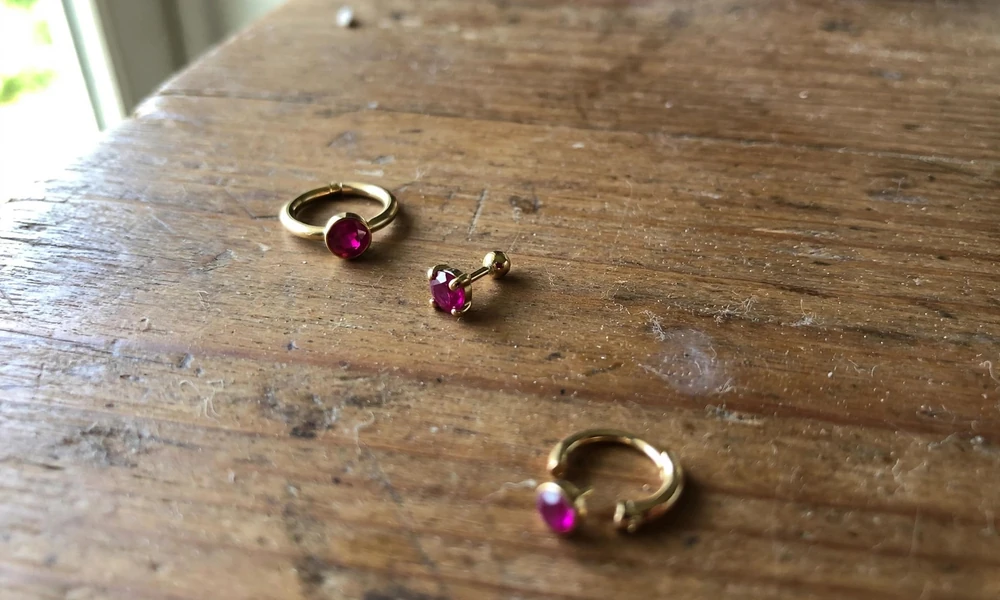
Look next at the setting. A bezel setting wraps metal around the edge of the stone, protecting it and giving a smooth profile that never snags. A prong setting holds the stone higher and lets more light in, which can make the ruby look brighter, but the prongs must be smooth and well finished. A pavé setting with tiny rubies along the hoop gives a continuous line of red sparkle and suits people who want the ring itself to be the feature. Our guide to the best nose rings for women covers the same setting choices for other stones, and the advice on bezel versus prong applies just as well to rubies.
Finally, look at the metal and the closure. Implant-grade titanium is the safest choice for sensitive skin. Solid 14k or 18k gold holds its colour well and suits the warmth of a ruby, especially yellow and rose gold. A hinged segment ring clicks open and shut and is easier to change, while a seamless ring looks cleaner but needs careful handling so the ends stay aligned. Whichever closure you choose, the ends should meet smoothly with no gap and no sharp edge against the skin.
The 9 best ruby nostril rings of 2027
The Classic Single Ruby Ring
What we like: A single round ruby in a smooth bezel setting on a slim gold hoop, vivid, neat, and easy to wear every day. What to consider: The single stone is a clear statement of colour, so it suits people who want the red to be noticed rather than whispered. Best For: Everyday wear and first ruby nostril rings. Material: 14k solid gold with a 0.12 carat ruby. Price Range: $100 to $200. Standout Feature: A low-profile bezel that never snags.
The Pavé Ruby Hoop
What we like: A row of tiny pavé rubies set along the front of the hoop, giving a continuous line of red sparkle that catches the light from every angle. What to consider: Pavé stones need occasional checking, as a loose stone can fall out unnoticed. Best For: Evenings, occasions, and anyone who wants visible colour. Material: 14k white gold with pavé rubies totalling 0.18 carats. Price Range: $160 to $300. Standout Feature: An unbroken line of red sparkle along the hoop.
The Ruby Halo Nostril Ring
What we like: A centre ruby surrounded by a halo of tiny diamonds, which makes the red look deeper and the centre stone look larger and brighter. What to consider: The halo adds width, so it sits slightly proud of the nostril and needs a well-fitted diameter. Best For: Making a ruby look bigger and brighter. Material: 14k yellow gold with a 0.12 carat ruby and diamond halo. Price Range: $220 to $380. Standout Feature: A diamond halo that frames the ruby beautifully.
The Lab-Created Ruby Ring
What we like: A lab-created ruby with a vivid, even red colour and excellent clarity, at a noticeably lower price than a natural stone of the same look. What to consider: Lab-created rubies hold less resale value than natural stones, which matters only if you plan to sell the piece later. Best For: Getting the brightest red on a budget. Material: Implant-grade titanium with a 0.15 carat lab-created ruby. Price Range: $70 to $150. Standout Feature: A vivid, even red for the same money as a duller natural stone.
The White Gold Ruby Ring
What we like: A cool white gold hoop with a single ruby, the contrast between the red stone and the pale metal making the colour look even stronger. What to consider: White gold is usually rhodium-plated, and the plating may need refreshing after a year or two of daily wear. Best For: Cool skin tones and bold, modern styling. Material: 14k white gold with a 0.12 carat ruby. Price Range: $130 to $240. Standout Feature: A sharp red-on-white contrast that makes the ruby pop.
The Rose Gold Ruby Ring
What we like: A warm rose gold hoop with a single ruby, the blush metal and the red stone blending into a soft, romantic look. What to consider: Rose gold and ruby are close in tone, so the stone needs a strong colour to stand out against the metal. Best For: Warm skin tones and soft, romantic styling. Material: 14k rose gold with a 0.12 carat ruby. Price Range: $130 to $240. Standout Feature: A warm, tonal look that flatters the face.
The Platinum Ruby Ring
What we like: A platinum hoop with a single ruby, heavy, durable, and naturally hypoallergenic, with a cool white lustre that never needs replating. What to consider: Platinum is the most expensive metal in this guide and is heavier than gold or titanium, which some people notice at first. Best For: Sensitive skin and anyone who wants a ring to last for years. Material: Platinum with a 0.14 carat ruby. Price Range: $280 to $520. Standout Feature: A metal that never fades and rarely irritates.
The Bezel-Set Ruby Ring
What we like: A ruby fully enclosed in a smooth metal bezel, the most protective setting in this guide, with no prongs to catch and no exposed edges. What to consider: A bezel can make a stone look slightly smaller than a prong setting, because the metal covers the edge of the ruby. Best For: Active lifestyles, sport, and anyone who snags prong settings. Material: 14k solid gold with a 0.15 carat ruby. Price Range: $150 to $270. Standout Feature: A completely smooth profile with nothing to catch.
The Tiny Ruby Ring
What we like: A slim 20 gauge hoop with a very small ruby, delicate and discreet, ideal for a first ruby ring or for a second nostril piercing. What to consider: The stone is small, so it reads as a point of red rather than a feature, and it suits a snug diameter best. Best For: Minimal looks, second piercings, and subtle everyday colour. Material: Implant-grade titanium with a 0.06 carat ruby. Price Range: $50 to $110. Standout Feature: A barely-there ring with a single bright point of red.
Which ruby nostril ring is right for you
Start with your piercing. A healed nostril piercing in 20 gauge suits a slim, delicate ring, while an 18 gauge piercing can carry a slightly heavier hoop with a larger stone. If you are not sure of your gauge, ask your piercer or measure your current jewellery before ordering. A ring in the wrong gauge will either slide around or feel tight, and neither is comfortable for long.
Next, think about how much colour you want. A single ruby in a bezel setting gives a clear, neat point of red that works every day. A pavé or halo ring gives much more colour and sparkle and suits evenings and occasions. Our guide to gold jewellery for everyday wear explains how warm metals pair with coloured stones, and the same thinking applies here: yellow and rose gold warm a ruby up, while white gold and platinum make the red look sharper.
Finally, match the metal to your skin and your other jewellery. Warm gold suits warm skin tones and pairs with gold earrings and necklaces. White gold and platinum suit cool skin tones and silver-toned jewellery. Titanium is the safest choice if your skin reacts easily, and it is also the lightest, which matters if you find heavier rings uncomfortable by the end of the day.
The caveats that matter
A ruby nostril ring is only suitable for a fully healed piercing. A fresh piercing needs a simple, implant-grade stud while it heals, usually for several months, and changing to a ring too early can delay healing and cause irritation or bumps. If your piercing is still tender, red, or producing discharge, wait before switching to a ring, and ask your piercer if you are unsure.
| Detail | What is known |
|---|---|
| Best gauge for most people | 20 gauge for a delicate fit, 18 gauge for a slightly sturdier ring |
| Common diameters | 6 mm to 10 mm; measure your current jewellery before ordering |
| Safest metals | Implant-grade titanium, 14k or 18k solid gold, platinum |
| Best setting for daily wear | Bezel, which protects the stone and has nothing to catch |
| Lab-created vs natural | Chemically identical; lab-created costs less and has a reliably vivid colour |
| Who should wait | Anyone with a fresh, unhealed, or irritated piercing |
| Cleaning | Warm water and mild soap, or saline; avoid harsh chemicals and alcohol |
| What it does not do | It does not heal a piercing, hide a bump, or suit every nose shape at every size |
Cleaning matters more than most people expect. A nostril ring collects skin oils, makeup, and dust, which can dull the ruby and irritate the piercing. Rinse it with warm water and mild soap, or with a saline solution, and dry it gently. Avoid alcohol, hydrogen peroxide, and harsh cleansers, which can dry the skin and damage some settings.
Checklist: buying a ruby nostril ring honestly
Use these checks before you buy, and again when the ring arrives.
- Check the colour: vivid, even red in daylight and indoors, with no brown or muddy cast.
- Check the metal: implant-grade titanium, solid 14k or 18k gold, or platinum — not plated base metal.
- Check the setting: run a finger over it; there should be no sharp prongs, rough edges, or gaps at the closure.
- Check the stone: ask whether it is natural, heat-treated, or lab-created, and what that means for the price.
- Check the closure: the ends should meet smoothly with no gap, and a hinged ring should click shut firmly.
- Check your piercing first: only switch to a ring when the piercing is fully healed, calm, and free of tenderness.
Frequently asked questions
Can I wear a ruby nostril ring in a new piercing?
No. A new nostril piercing needs a simple stud while it heals, usually for three to six months. A ring moves more than a stud and can delay healing. Wait until the piercing is fully healed and calm before switching to a ring.
What gauge should I choose for a ruby nostril ring?
Most nostril piercings are 20 gauge or 18 gauge. Match the ring to your piercing: a 20 gauge ring in an 18 gauge piercing will slide around, and an 18 gauge ring will not fit a 20 gauge piercing. If you are unsure, ask your piercer.
Are lab-created rubies good for nostril rings?
Yes. Lab-created rubies are chemically the same as natural rubies, so they look and wear the same. Their colour is usually vivid and even, and they cost much less than a natural ruby of the same look, which makes them a practical choice for a small piece of jewellery like a nostril ring.
How do I clean a ruby nostril ring?
Rinse it with warm water and a little mild soap, or use a saline solution, then pat it dry. Clean it while it is in place if you can, and avoid alcohol, hydrogen peroxide, and harsh chemicals, which can irritate the piercing and dull some settings.
Will a ruby nostril ring suit my nose shape?
Most nose shapes suit a small ruby ring, but the diameter matters. A snug diameter hugs the nostril and looks neat on a smaller nose, while a slightly larger diameter suits a broader nose. Our guide to ruby nose rings covers the same fitting questions in more detail, and the advice on measuring your current jewellery applies here too.
How often should I check the setting?
Check it every few weeks by looking at the stone in good light and feeling the setting for looseness. Pavé and prong settings deserve a closer look, as a loose stone can fall out without you noticing. A jeweller or piercer can tighten a setting quickly if you catch it early.
The bottom line
The best ruby nostril ring in 2027 is not the biggest or the most expensive. It is the one with a vivid, even red colour, a setting that holds the stone securely, and a fit that stays comfortable from morning to night. For most people, that means a bezel-set or seamless ring in solid gold or implant-grade titanium, with a stone that stays bright in daylight and indoors.
Choose your gauge and diameter first, then your metal, then your stone. Judge the ruby by its colour in ordinary light, not by a product photo. Get the fit right, keep it clean, and the red will do the rest.