Best Opal Nostril Rings 2027
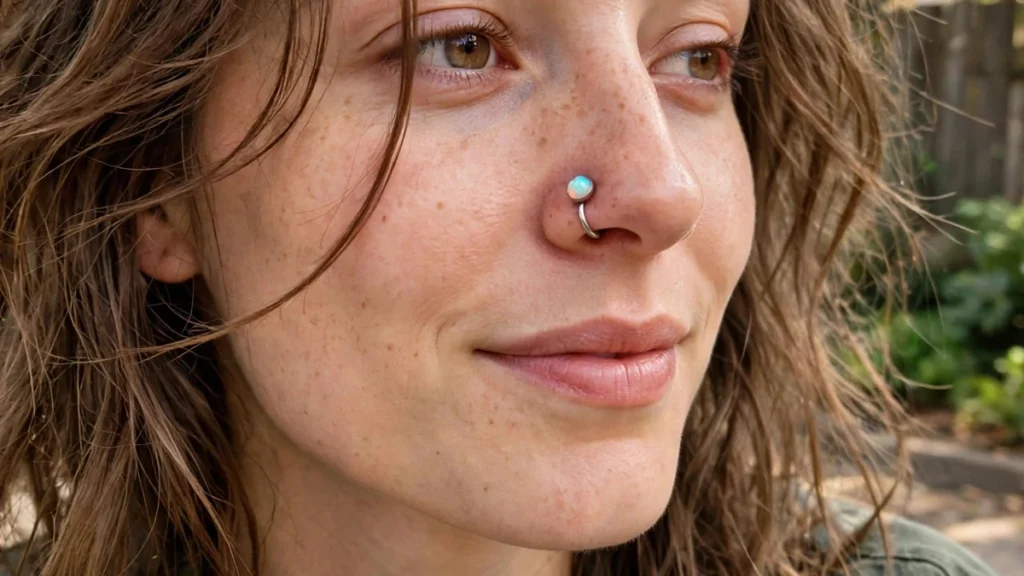
An opal nostril ring is a small piece of jewellery with an outsized effect. Opal is the one gemstone that changes as it catches the light, shifting from milky white to flashes of green, blue and peach, and on a nostril ring that play of colour sits right at the centre of the face. It is delicate without being invisible, and it suits people who want something softer than a diamond.
The difficulty is that opal is also one of the softest stones used in nose jewellery. It scratches more easily than sapphire or diamond, it does not like hard knocks, and a poorly set stone can look cloudy instead of fiery. That is why the setting matters as much as the stone. A good opal nostril ring protects the gem with a bezel or a low profile, uses a metal that will not irritate a piercing, and is sized so the stone sits flat against the nostril rather than catching on everything.
Below are nine opal nostril rings worth considering in 2027, from a classic white opal stud to a black opal clicker and a vintage-style ring. Each one is described by what it does well, what to watch for, and who it suits best.
Key takeaways
- Opal is softer than most nose-jewellery stones, so a bezel or low-profile setting protects it far better than tall prongs.
- White, Ethiopian and Australian opals show the most fire, while pink and black opals offer a quieter or bolder look.
- Implant-grade titanium and 14k gold are the safest metals for a healed nostril piercing; plated base metal can irritate skin.
- Choose a stud or screw for a new or sensitive piercing, and save hoops and clickers for a fully healed piercing.
- Opal can chip, scratch and dry out, and no nostril ring suits a piercing that is still healing, irritated or infected.
What opal nostril rings actually are
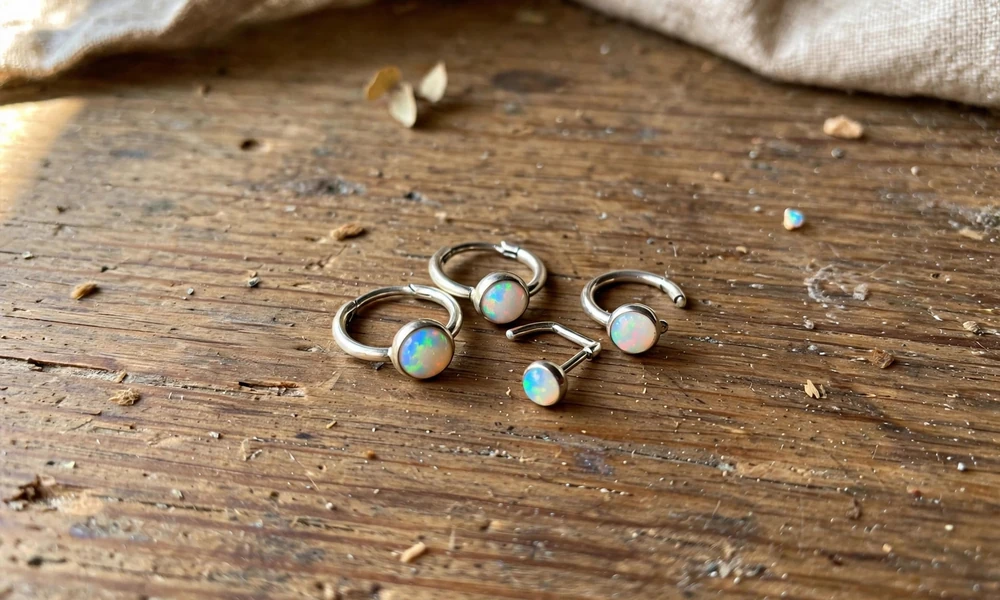
A nostril ring is jewellery worn through the side of the nose, and an opal nostril ring simply sets an opal in that piece. The most common styles are the stud, which sits flat with a straight or bent post; the screw, which curves inside the nostril to stay in place; the hoop, which circles the edge of the nostril; and the clicker, a hinged ring that opens and closes with a small snap. Each style wears differently, and the right one depends on how healed your piercing is.
Opal itself is a hydrated silica, which is why it looks so different from other gemstones. It does not have the hard, glassy sparkle of a diamond. Instead it has a soft glow and flashes of colour that appear and disappear as you move. White opal shows a milky base with green and blue fire. Ethiopian opal is often clearer, with bright flashes. Australian opal tends to have a whiter, more opaque base. Black opal has a dark body that makes the colour flashes look stronger, and pink opal is usually a soft, solid pink with little or no fire.
Because opal is relatively soft, with a hardness of around 5.5 to 6.5, it needs more care than a sapphire or a diamond. It can be scratched by harder stones, chipped by a hard knock, and dried out by heat or harsh chemicals. That does not make it a bad choice. It makes it one that rewards a good setting, gentle handling, and a little patience. A well-made opal nostril ring can be worn every day, as long as it is not treated like a piece of hard-stone jewellery.
How we chose these opal nostril rings and what to look for
Look first at the setting. A bezel setting, where a rim of metal wraps around the edge of the stone, protects opal far better than tall prongs, which leave the edges exposed. A low, flat profile is also better than a tall, raised one, because a nostril ring that sits close to the skin is less likely to catch on clothing, towels or a face mask.
Look next at the metal. Implant-grade titanium is the safest choice for most people, because it is light, strong and very unlikely to cause a reaction. Solid 14k gold is also a good choice, and it suits opal well, because warm gold makes the fire in a white opal look richer. Avoid plated base metal, especially if your skin is sensitive, because the plating can wear away and expose the metal underneath. Our guide to gold jewellery for everyday wear explains why solid gold holds up better than plated pieces over time, and the same logic applies to a piece you wear in a piercing every day.
Finally, look at the size and the gauge. Most nostril piercings are 18 or 20 gauge, and a ring that is too thick will not fit comfortably, while one that is too thin can move around and irritate the piercing. A stone of 2 to 3 millimetres is a good everyday size. It is visible without dominating the face, and it is small enough to sit flat.
The 9 best opal nostril rings of 2027
The Classic White Opal Stud
What we like: A 2.5 mm white opal in a low bezel setting, with a milky base and clear flashes of green and blue. Simple, flattering and easy to wear every day. What to consider: The fire is subtle in dim light, and the stone needs gentle cleaning. Best for: Everyday wear and a first opal nostril ring. Material: White opal in implant-grade titanium. Price range: £25 to £45. Standout feature: The low bezel that keeps the stone protected and flat against the nostril.
The Ethiopian Opal Hoop
What we like: A small seamless hoop with a 2 mm Ethiopian opal, bright and clear, with flashes that show strongly in daylight. What to consider: Hoops suit healed piercings only, and the stone sits on the outside of the hoop where it can catch. Best for: Healed piercings and a brighter, more visible look. Material: Ethiopian opal in 14k gold. Price range: £60 to £95. Standout feature: The clarity of the Ethiopian opal, which shows more fire than most white opals.
The Australian Opal Clicker
What we like: A hinged clicker with a 3 mm Australian opal, opaque and milky, with a calm, even glow. The hinge makes it easy to put in and take out. What to consider: The clicker mechanism adds a little weight, and the stone is larger than a stud. Best for: Healed piercings and people who change jewellery often. Material: Australian opal in 14k gold. Price range: £70 to £110. Standout feature: The smooth hinge, which opens and closes without tools.
The Opal and Diamond Accent Stud
What we like: A 2 mm white opal with a tiny diamond set beside it, which adds a hard sparkle next to the soft glow of the opal. What to consider: Two stones mean two settings to keep clean, and the price is higher than a plain opal stud. Best for: Special occasions and anyone who wants a little more sparkle. Material: White opal and diamond in 14k white gold. Price range: £85 to £140. Standout feature: The contrast between the diamond’s sharp sparkle and the opal’s soft fire.
The Bezel-Set Opal Nostril Screw
What we like: A 2.5 mm white opal in a full bezel on a curved screw post, which stays in place securely and protects the stone on every side. What to consider: A screw takes a little practice to insert, and it is not ideal if you change jewellery often. Best for: Active days and anyone who has lost a stud before. Material: White opal in implant-grade titanium. Price range: £30 to £50. Standout feature: The curved post, which holds the ring securely without a separate backing.
The Pink Opal Stud
What we like: A 2.5 mm pink opal with a soft, even colour and no fire, which reads as calm and pretty rather than flashy. What to consider: Pink opal has little play of colour, so it looks more like a coloured stone than a classic opal. Best for: A softer, more romantic look and sensitive skin. Material: Pink opal in 14k rose gold. Price range: £40 to £70. Standout feature: The rose gold setting, which warms the pink of the stone.
The Black Opal Clicker
What we like: A 3 mm black opal in a hinged clicker, with a dark body that makes the green and blue flashes look intense. What to consider: Black opal is usually the most expensive opal here, and the dark stone suits a bolder style. Best for: Evenings, bold styling and healed piercings. Material: Black opal in 14k yellow gold. Price range: £95 to £160. Standout feature: The dark body colour, which makes the fire stand out more than in any light opal.
The Vintage-Style Opal Nostril Ring
What we like: A small white opal in a milgrain-edged setting with a fine, old-fashioned frame, which gives the ring a vintage feel without looking costume-like. What to consider: The detailed setting has more edges to clean, and the style is specific rather than neutral. Best for: Vintage styling and anyone who likes detailed jewellery. Material: White opal in 14k yellow gold. Price range: £65 to £105. Standout feature: The milgrain edge, which adds texture and an antique look.
The Tiny Opal Nostril Stud
What we like: A 1.5 mm white opal in a tiny bezel, barely there but still catching the light, ideal for a subtle look or a second nostril piercing. What to consider: The stone is small, so the fire is harder to see, and it is easy to lose if it comes out. Best for: Minimal styling, work, and a second piercing. Material: White opal in implant-grade titanium. Price range: £20 to £35. Standout feature: The tiny size, which makes it the most discreet piece on the list.
Which opal nostril ring is right for you
Start with your piercing. If it is less than six months old, or if it is still tender, red or weepy, stick with a simple stud in implant-grade titanium and do not change it. A hoop or clicker moves more, and that movement can irritate a piercing that is still settling. Once it is fully healed, usually after six to twelve months, hoops, clickers and screws are all fine, and the choice becomes about style.
Then think about your daily life. If you play sport, wear a face mask for work, or sleep on your side, a low-profile stud or screw is the most practical choice, because it catches on the least. If you work in a setting where jewellery needs to be subtle, a tiny stud or a pink opal is easier to wear than a black opal clicker. Our roundup of the best nostril rings for women covers the same question across all stones, and it is a useful next read if you are still deciding between opal and a harder gemstone.
Finally, think about colour. White opal is the most versatile, because it goes with warm and cool metals and suits most skin tones. Ethiopian opal is brighter and better in daylight. Black opal is bolder and better for evenings. Pink opal is the softest and the most romantic.
The caveats that matter
Opal is a beautiful stone, but it is not a hard one, and that is the main caveat. It can be scratched by harder gemstones, chipped by a knock against a hard surface, and dulled by harsh cleaning products. Clean it with warm water, a drop of mild soap and a soft cloth, and dry it gently rather than rubbing hard. Do not use an ultrasonic cleaner, steam, or strong chemicals.
The other caveat is the piercing itself. No nostril ring, opal or otherwise, belongs in a piercing that is still healing, irritated, swollen or infected. Changing jewellery too early is one of the most common causes of irritation, and a new piece will not fix a piercing that is unhappy. If a piercing is sore or producing discharge, leave the jewellery in, keep it clean with saline, and speak to a piercer or a clinician before changing anything.
| Detail | What is known |
|---|---|
| Hardness of opal | Around 5.5 to 6.5, softer than sapphire, diamond and most metals |
| Best setting | A low bezel that wraps the edge of the stone and protects it |
| Safest metals | Implant-grade titanium and solid 14k gold |
| Best size for everyday wear | A stone of 2 to 3 millimetres, in 18 or 20 gauge |
| When to wear a hoop or clicker | Only in a fully healed piercing, usually after 6 to 12 months |
| How to clean opal | Warm water, mild soap and a soft cloth; no ultrasonic or steam cleaning |
| Who should be cautious | Anyone with a new, irritated or infected piercing, or very sensitive skin |
| What opal does not do | It does not resist scratches and knocks like a hard gemstone |
If you are pregnant, breastfeeding, or taking medication that affects healing, speak to your clinician before changing a piercing. Healing is slower when the body is under strain, and a simple check avoids weeks of irritation.
Checklist: buying an opal nostril ring honestly
Use these checks before you buy, and again after two weeks of wear.
- Check the setting: a low bezel that wraps the stone, not tall prongs that leave it exposed.
- Check the metal: implant-grade titanium or solid 14k gold, not plated base metal.
- Check the size: 18 or 20 gauge, with a stone of 2 to 3 millimetres for everyday wear.
- Check the piercing: fully healed, calm and comfortable before you switch to a hoop or clicker.
- Check the stone: bright and clear, with visible fire in daylight, not cloudy or dull.
- Check the cleaning: warm water and mild soap only, and dry the ring gently after washing.
Frequently asked questions
Can I wear an opal nostril ring every day?
Yes, if the piercing is healed and the setting is a low bezel. Opal is soft, so it needs more care than a hard stone, but a well-set opal ring can be worn daily. Take it out for rough sport, and avoid knocking it against hard surfaces.
Is opal safe for a new nostril piercing?
No. A new piercing needs a simple, smooth piece in implant-grade titanium, usually a flat-back labret stud, until it is fully healed. Opal is too soft and too easily damaged for a fresh piercing, and changing jewellery early can cause irritation.
How do I clean an opal nostril ring?
With warm water, a drop of mild soap and a soft cloth. Rinse it well and pat it dry. Do not use ultrasonic cleaners, steam cleaners, or harsh chemicals, because heat and vibration can crack or dull opal.
Does opal fade or lose its colour?
Opal can dry out and lose some of its fire if it is kept very dry or exposed to heat for a long time. Wearing it regularly helps, because the stone picks up a little moisture from the skin and the air.
Which opal is best for a nostril ring?
White opal is the most versatile, Ethiopian opal is the brightest, and Australian opal has the most even, milky base. Black opal shows the strongest fire but costs more. For a first opal nostril ring, white opal in a bezel setting is the most forgiving choice. Our guide to the best opal nose rings covers the same stones in other styles, if you want to compare.
Can I sleep in an opal nostril ring?
Yes, if it is a low-profile stud or screw in a healed piercing. A hoop or clicker can press against the pillow overnight, so a flat stud is the better choice for sleeping.
The bottom line
The best opal nostril ring in 2027 is not the biggest stone or the most expensive one. It is the one that protects the opal with a low bezel, uses a metal your skin tolerates, and fits your piercing and your daily life. For most people, that means a white opal stud in titanium or 14k gold, with a stone of 2 to 3 millimetres. It is bright enough to notice, soft enough to wear every day, and safe enough to keep in for months.
Choose one ring, wear it in a healed piercing, clean it gently, and judge it on how it looks in daylight and how it feels after a full day. That is the honest way to enjoy opal, without the chips and scratches that come from treating it like a hard gemstone.