Planning a luxury safari is not like booking a hotel. There are more moving parts, the dates matter more, and the difference between a good trip and a great one is usually decided months before you leave, in the choices about where to go, when to go, and which lodge to trust with the trip.
A luxury safari is also one of the most expensive holidays you will ever book, so it is worth planning it properly. This guide walks through the decisions in order, from choosing a region to packing your bag, so you can plan with confidence rather than guesswork.
Everything below applies to a first safari as well as a return trip. If you have been before, you will know which parts to skip. If you have not, follow the steps in order, and use a specialist safari agent for the booking itself, because the best lodges and the best flight combinations are rarely the ones you find on a general booking site.
Key takeaways
- Choose the region first, then the season, then the lodge, because the wildlife calendar decides what you will actually see.
- Book the lodge before the flights, since the best lodges and the best suites sell out long before the airlines do.
- Compare the full trip price, not the lodge rate, because internal flights, park fees and tips are a large part of the total.
- A private concession matters more than a famous name, because it means fewer vehicles, off-road driving and night drives.
- No safari can guarantee a sighting, and the most expensive lodge will not fix a badly timed trip, so plan around the wildlife, not the brochure.
What planning a luxury safari actually involves
A luxury safari is a chain of decisions, and each one depends on the one before it. The region decides the season, the season decides the price, and the price decides how many nights you can afford and where you can stay. A trip to the Maasai Mara in August is a different holiday, at a different price, from a trip to the Okavango in February, even if the lodges look similar on paper.
The practical pieces are the lodge, the internal flights, the transfers, the park and conservation fees, and the guiding. The internal flights between lodges are usually separate, and they are often the most complicated part of the trip, because the small aircraft fly on fixed schedules and have strict luggage limits.
The other piece people forget is time. A safari is not a weekend trip. You need at least three nights in one place to settle in and see the wildlife properly, and most good trips run for seven to ten nights across two lodges. Shorter trips are possible, but they spend too much of the time travelling and too little of it watching animals.
How to plan in the right order, and what to look for
Start with the region, not the lodge. Southern Africa and East Africa offer different safaris, and the right choice depends on what you want to see. East Africa, Kenya and Tanzania, is best for the great migration and open plains. Southern Africa, Botswana, South Africa, Zambia and Namibia, is best for water-based safaris, desert landscapes, and private reserves with off-road driving.
Next, match your dates to the wildlife calendar for that region. The dry season, roughly June to October, is the easiest for game viewing in most places, because animals gather at water and the bush is thin. The green season, roughly November to March, is cheaper and quieter, with lush landscapes and newborn animals, but the game is more spread out and some roads become difficult.
Then choose the lodge, and judge it on the concession before the comfort. A lodge on a private reserve, with off-road driving, night drives and walking, will give you a better safari than a fancier lodge inside a busy public park. Our roundup of the best luxury safaris is a useful starting point for comparing regions and trip styles before you narrow it down.
How to plan a luxury safari, step by step
Decide what kind of safari you want
What to do: Choose between a classic game-viewing safari, a water-based safari in the Okavango Delta, a desert trip in Namibia, or a walking safari in Zambia, and let that choice decide the region. What to avoid: Trying to do everything in one trip, which means long flights and shallow days in each place. Best for: First-time travellers who need a clear starting point. Time needed: An evening of reading and one conversation with a specialist. Standout tip: Write down the three animals or experiences that matter most, and plan the trip around them.
Be honest about what you enjoy.
Set a realistic total budget
What to do: Ask for a full quote that includes the lodge, internal flights, park fees, transfers, tips and travel insurance, and budget for all of it. What to avoid: Budgeting from the lodge rate alone, then being surprised by the flights and fees. Best for: Anyone booking a first luxury safari. Time needed: A week of quotes and comparison. Standout tip: Get two quotes for the same dates from different specialists, and compare the inclusions line by line.
A luxury safari for two typically costs from $10,000 to $30,000 for seven to ten nights, before international flights, and the range is wide because lodges, seasons and routes vary so much.
Match the season to the region
What to do: Check the wildlife calendar for your chosen region and month, and ask the lodge what the game viewing is actually like in that month. What to avoid: Assuming one African season fits everywhere, because the rains and the migration move differently in each region. Best for: Travellers with fixed dates who need to know what is realistic. Time needed: An hour of reading, plus one honest conversation with the lodge or agent. Standout tip: The shoulder months, May and November, often offer the best balance of price, weather and game viewing.
The migration is the most famous example.
Choose the lodges, not just the destination
What to do: Shortlist two or three lodges per region, compare their concessions, suite counts, inclusions and guiding, and read recent guest reviews for the guiding specifically. What to avoid: Choosing on photographs alone, because every luxury lodge photographs well. Best for: Travellers who want the best game viewing, not just the prettiest room. Time needed: A few evenings of research. Standout tip: A lodge with fewer than twelve suites on a large private concession is usually a better safari than a larger lodge in a famous park.
The guide is the single most important part of a safari, and the lodge is how you choose the guide.
Book the lodge before the flights
What to do: Secure the lodge first, then book the internal flights to fit the lodge dates, and the international flights last. What to avoid: Booking flights first and then finding the lodge you wanted is full on your dates. Best for: Peak-season travellers and anyone booking a small lodge. Time needed: Book six to nine months ahead for the dry season. Standout tip: Hold the lodge with a deposit while you sort the flights, rather than waiting for everything to be perfect.
The best lodges sell out months ahead, and the smallest ones may have only four or six suites.
Plan the route and the internal flights
What to do: Keep the route simple, with two lodges at most for a seven to ten night trip, and allow a full day for each transfer. What to avoid: Stringing together three or four lodges in a week, which turns the holiday into a series of airports. Best for: Travellers combining two regions, such as the Mara and the coast. Time needed: An afternoon with a specialist agent. Standout tip: Ask whether the transfer is by air, road or both, and how long it really takes, including waiting time.
Internal flights in safari country use small aircraft with strict luggage limits, usually 20 kilograms per person in soft-sided bags. The best luxury safari camps roundup is worth reading alongside this step, because the camps and lodges in different regions connect in different ways.
Sort the health and paperwork early
What to do: Check passport validity, visa requirements, vaccinations and malaria prevention for every country on your route, and arrange travel insurance that covers medical evacuation. What to avoid: Leaving it to the last month, when a vaccination course may not fit the schedule. Best for: Everyone, but especially travellers visiting more than one country. Time needed: Start at least two months before departure. Standout tip: Keep a paper copy of your insurance and emergency numbers, because phone signal is unreliable in the bush.
Most safari countries need a passport valid for at least six months beyond your return date, with several blank pages.
Pack for the bush, not for the hotel
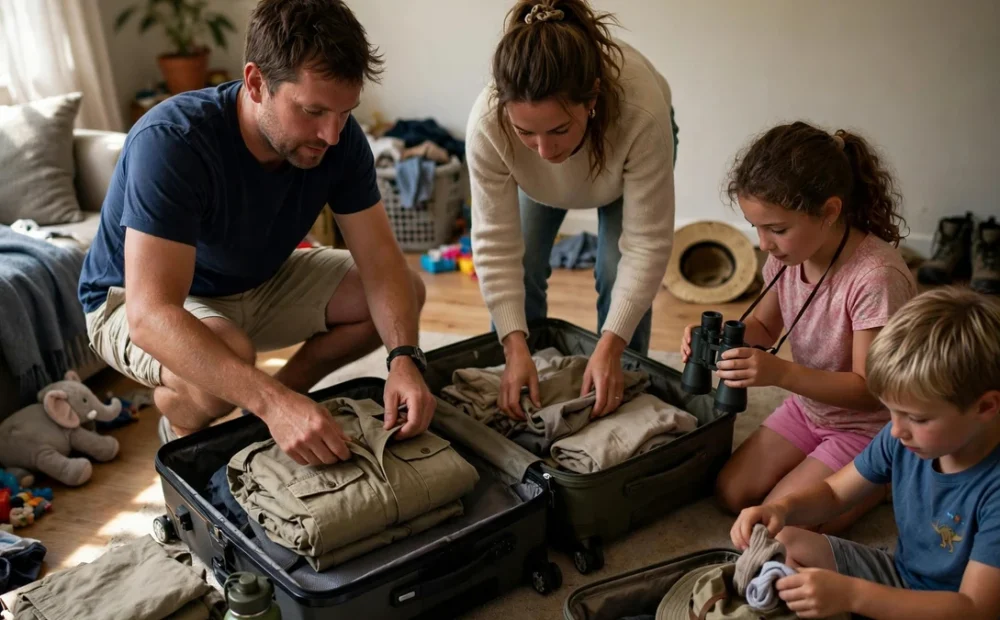
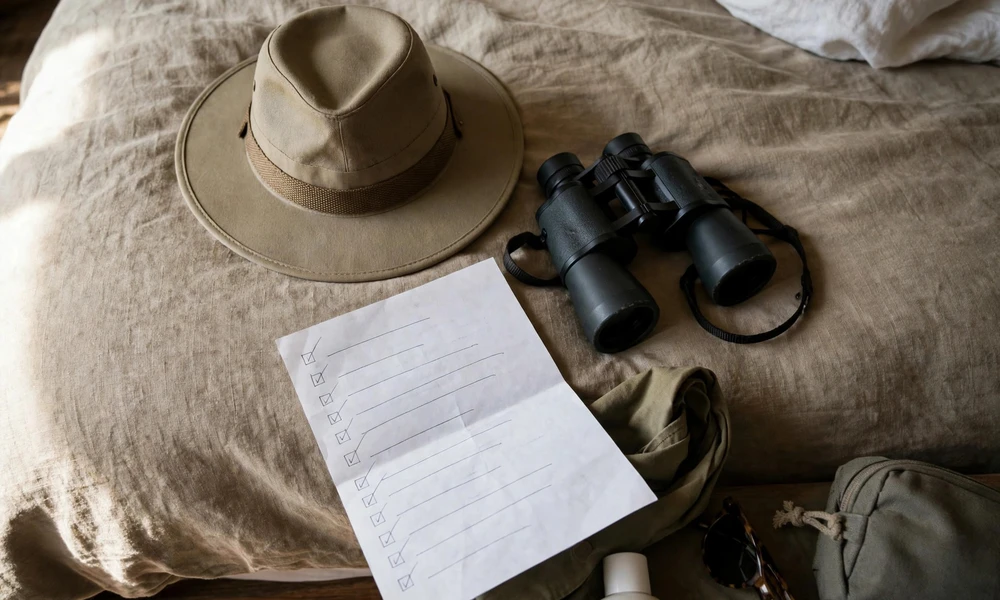
What to do: Pack light, neutral-coloured layers, a warm jacket for early mornings, comfortable closed shoes, sun protection, binoculars and a camera with spare batteries. What to avoid: Bright colours, white clothes, hard suitcases and too much luggage. Best for: First-time safari travellers. Time needed: An evening of packing, plus a laundry check. Standout tip: Most lodges offer same-day laundry, so three days of clothes is enough for a week.
Mornings on safari are cold, even in the warm season, because the vehicle moves fast through cool air before sunrise.
Plan the days, then let the plan go
What to do: Agree a loose rhythm with your guide, with an early drive, a long lunch, and an afternoon drive, and leave the afternoons free. What to avoid: Filling every hour with activities, which turns a safari into a schedule. Best for: Travellers who want to enjoy the lodge as well as the wildlife. Time needed: A short chat with your guide on arrival. Standout tip: Skip a drive if you are tired, and spend the afternoon on the deck instead, because the animals will still be there tomorrow.
The best safari days are often the unplanned ones: a leopard found by chance, a long lunch that turns into an afternoon by the pool, a sundowner that lasts until dark.
Which kind of safari suits you
Start with your interests, not the destination. If you want big cats and open plains, East Africa in the dry season is the classic choice. If you want water, elephants and quiet, the Okavango Delta in Botswana is hard to beat. If you want desert landscapes and dark skies, Namibia is the most rewarding. If you want to walk, Zambia is the home of the walking safari, and it is the most immersive way to experience the bush.
Then think about how much structure you want. A lodge-based safari, with two game drives a day and meals at set times, is the easiest and most comfortable option. A self-drive safari in South Africa or Namibia is the cheapest option and gives you total freedom, but you lose the guiding, which is the single most valuable part of a safari.
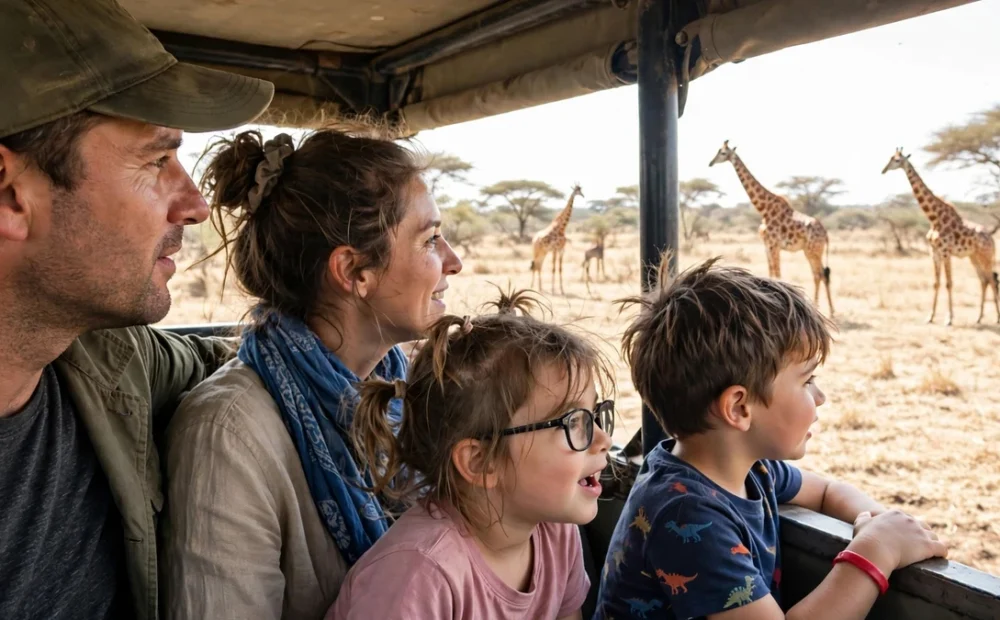
Finally, think about who is travelling. A safari with children needs a lodge that welcomes families, with a family suite and a guide who enjoys working with young people. A honeymoon needs privacy and a slow rhythm. A group of friends can take a private camp and set their own pace. The lodges differ more on these points than on the animals, so choose for the people first.
The caveats that matter
Safaris are weather-dependent, and the weather does not follow the brochure. Rain can close roads, change animal movements, and ground small aircraft. Build a buffer day into your trip if you can, so a delayed flight does not cost you a night at the lodge.
| Detail | What is known |
|---|---|
| How far ahead to book | Six to nine months for the dry season, further for small lodges |
| How long to stay | At least three nights per lodge, seven to ten nights for two lodges |
| Best season for game | Dry season, roughly June to October, when animals gather at water |
| Best season for value | Green season, roughly November to March, when rates fall and lodges are quieter |
| Luggage limit | Usually 20 kilograms per person in soft-sided bags on internal flights |
| What the rate usually includes | Suite, meals, most drinks, game drives and airstrip transfers |
| What to budget separately | Internal flights, park fees, tips, travel insurance and spa treatments |
| What no operator can promise | A specific sighting, a specific crossing, or exact weather |
Tipping is part of the cost, and it is worth budgeting for it honestly. A common guide is around $20 to $30 per person per day for the guide, $10 to $15 for the tracker, and a similar amount for the lodge staff, shared through the lodge tip box.
Checklist: planning a luxury safari honestly
Use these checks before you pay a deposit, and again a month before you fly.
- Check the region: match your dates to the wildlife calendar for that specific region.
- Check the lodge: fewer than twelve suites, a private concession, and a good guiding record.
- Check the full price: lodge, internal flights, park fees, tips and insurance, in writing.
- Check the flights: soft-sided bags, 20 kilogram limit, and a full day allowed for transfers.
- Check the paperwork: passport validity, visas, vaccinations and medical evacuation cover.
- Check the packing: neutral layers, warm jacket, closed shoes, binoculars and spare batteries.
Frequently asked questions
How much does a luxury safari cost?
A seven to ten night luxury safari for two typically costs from $10,000 to $30,000 before international flights, depending on the lodges, the season and the route.
When is the best time to go on safari?
The dry season, roughly June to October, is the easiest for game viewing in most regions, because animals gather at water and the bush is thin. The green season, roughly November to March, is cheaper and quieter, with lush landscapes and newborn animals. The right month depends on the region, so check the calendar for your destination specifically.
Do I need a specialist safari agent?
For a first luxury safari, yes. A specialist knows which lodges are actually good in a given month, which flight combinations work, and which lodges to avoid. They also have access to rates and availability that general booking sites do not, and they can rearrange the trip if a flight or a lodge changes.
How many nights should I stay at each lodge?
At least three nights. The first day is for settling in, the second is when the best sightings usually happen, and the third gives you a buffer for weather or a missed sighting. Two nights is too short, and five nights in one place is usually more than you need unless the lodge is very remote.
What should I wear on safari?
Light, neutral-coloured layers, with a warm jacket for early mornings and comfortable closed shoes. Avoid bright colours and white, which can disturb animals and attract insects. A hat, sunscreen and insect repellent are essential, and binoculars are worth carrying even if the lodge provides them.
Is a luxury safari suitable for children?
Yes, with the right lodge. Many luxury lodges welcome children over six or eight, with family suites, shorter drives, and guides who enjoy working with young people. Check the minimum age before you book, because some lodges and some activities, such as walking safaris, have strict age limits.
The bottom line
Planning a luxury safari is a chain of decisions, and the order matters: region first, then season, then lodge, then flights. Get those four right and the rest of the trip takes care of itself. The most important choice is the lodge, because the lodge decides the concession, the guiding and the rhythm of your days, and those three things decide whether the safari is good or unforgettable.
A good safari is not a list of sightings ticked off in order. It is a week spent properly in the bush, with a good guide, in a place that suits the people travelling. Plan it that way, and it will be worth every part of the effort. For a base before or after the bush, our guide to the best luxury hotels in Nairobi covers the city stays that work best at either end of a Kenya safari.