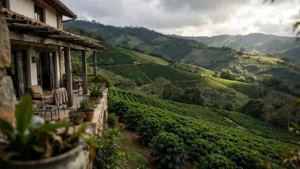
A coffee plantation escape sounds simple. Pick a farm, book a room, drink good coffee. In practice, the trip needs more planning than a city break, because the farms are remote, the seasons matter, and the best stays are small. Get the planning right and the trip is one of the most rewarding kinds of travel there is.
The good news is that the planning is not complicated. It is mostly a matter of order. Choose the region first, then the season, then the farm, then the transport. Most of the mistakes people make come from doing it backwards — booking a flight before checking the harvest, or choosing a farm before checking how far it is from the airport. This guide walks through the nine steps in the order that works.
It is written for a first trip, but the same steps apply if you have done it before and want to do it better. Each step explains what to do, what to avoid, how long it takes and the one tip that makes the difference, so you can plan the escape in an evening and then stop worrying about it.
Key takeaways
- Plan in order: region, season, farm, transport — most mistakes come from booking in the wrong order.
- Harvest season is the best time to go, but it is also the busiest, so book the stay and the tours first.
- Budget for the whole trip, not just the room — transfers, tastings and tours add up on a remote farm.
- Leave gaps in the day on purpose, because the best moments on a farm are the unplanned ones.
- No plan survives contact with mountain weather, so build in a spare day and pack for rain.
What a coffee plantation escape actually involves
A coffee plantation escape is a short trip built around a working farm, usually two to four nights in the highlands where coffee grows. The days are simple. You walk the farm in the morning, watch the harvest or the processing in the afternoon, taste the coffee with the people who grew it, and eat well in the evening. The nights are quiet, the air is cool, and the stars are better than they are in the city.
It is not a resort holiday. There is no pool scene, no nightlife and often no phone signal worth relying on. What there is instead is a landscape that changes with the light, work worth watching, and coffee that tastes different when you have seen where it comes from.
The planning matters because the farms are far from everything. The nearest airport can be three hours away, the roads are steep, and the farm may have only a handful of rooms. A well-planned trip feels effortless. A poorly planned one feels like a long drive with coffee at the end.
What to sort out before you book
Start with the big decisions, not the small ones. The region sets the season, the season sets the harvest, and the harvest sets what you will actually see. Decide where and when first, and everything else follows. Our guide to planning a tea plantation escape follows the same order, and it works just as well for coffee country.

Next, be honest about how you like to travel. If you want everything organised, choose a larger farm with a visitor programme and fixed tours. If you want freedom, choose a small estate and arrange your own guide.
Finally, sort the money early. Farm stays look affordable until you add the transfer, the tours, the tastings and the meals, and most of those are priced separately. Work out the total before you book, not after, and keep a small reserve for the things you will want to do once you are there. A farm that is clear about its prices before you arrive is usually a farm that is well run in every other way.
The 9 steps to planning a coffee plantation escape
Pick your coffee region first
What to do: Choose the region that fits your trip. Latin America suits first-timers, Ethiopia suits coffee lovers, and Hawaii and Vietnam suit travellers already in the region. Read about the coffee each region is known for, and pick the flavour you want to taste at the source.
What to avoid: Do not choose a farm because of a photograph alone. A beautiful view does not tell you how far the farm is from the airport, or whether it welcomes visitors at all. Best For: Everyone, at the start of planning. Time Needed: One evening of reading. Standout Tip: Pick the region by the coffee you love, not by the flight that is cheapest.
The region is the one decision you cannot easily change later, so take your time with it.
Time it with the harvest
What to do: Find out when the harvest runs in your region, and aim for the middle of it. In Latin America that is usually October to February, and in Ethiopia November to January. During harvest the farm is busy, the processing is running, and there is something to see every day.
What to avoid: Do not assume harvest happens everywhere at the same time. It varies by altitude, rainfall and variety, and a farm at 1,800 metres harvests weeks later than one at 1,200 metres. Best For: Anyone who wants to see the farm working. Time Needed: Half an hour of research. Standout Tip: Ask the farm directly when picking starts, because the dates move every year.
Harvest is the reason to go, and the reason to book early.
Decide between an estate stay and a nearby hotel
What to do: Decide whether you want to sleep on the farm or nearby. Sleeping on the farm means early mornings, farm sounds and the shortest walk to the fields. Sleeping nearby means more choice, more comfort and a drive each morning.
What to avoid: Do not book a hotel an hour from the farm and expect to enjoy the early start. The drive will eat the morning, and the farm will be halfway through its day before you arrive. Best For: Couples and slow travellers. Time Needed: An hour of comparing options. Standout Tip: If the farm has rooms, take them. The mornings are the best part.
There is no wrong answer here, only a trade-off between comfort and closeness.
Book the stay early, and read the details
What to do: Book as soon as your dates are firm, especially for harvest season and for small farms with only a few rooms. Read what is included before you pay: farm walk, tasting, meals, transfer, and anything that costs extra.
What to avoid: Do not book a farm stay the way you book a city hotel. The cancellation terms are often stricter, the check-in times are different, and the farm may need your arrival time in advance to arrange the transfer. Best For: Everyone, especially in harvest season. Time Needed: An hour to book and confirm. Standout Tip: Email the farm after booking to confirm your arrival time and ask about the transfer.
A short email after booking saves more trouble than any amount of reading.
Sort transport before you arrive
What to do: Work out the whole journey from the airport to the farm, and book it before you travel. Ask the farm if it arranges transfers, and if it does, take them. A farm driver knows the roads, the weather and the shortcuts, and the price is usually fair.
What to avoid: Do not rely on finding a taxi at a small regional airport, and do not plan to drive yourself on mountain roads you have never seen, especially after a long flight. Best For: First-time visitors. Time Needed: An hour to arrange. Standout Tip: Arrive in daylight if you can. Mountain roads are much easier to enjoy when you can see them.
Transport is the part of the trip people leave until last, and it is the part that causes the most trouble.
Set a total budget, not just a room price
What to do: Add up the room, the transfer, the tours, the tastings, the meals and the coffee you will want to bring home, and set a total for the trip. Keep a small reserve for the things you will only discover once you are there, like a second tasting or a bag of beans you did not expect to love.
What to avoid: Do not compare farms by room price alone. A farm that charges more for the room but includes the tours and the transfer can cost less in total than a cheaper room with everything priced separately. Best For: Anyone travelling on a budget. Time Needed: Half an hour with a calculator. Standout Tip: Ask the farm for a total price for your stay, including everything, before you book.
A farm that gives you a clear total is a farm that respects its guests.
Book tastings and estate tours in advance
What to do: Book the farm walk and the tasting when you book the stay, especially during harvest when the farm is busy. Ask what the tour covers, how long it takes, and how many people will be in the group.
What to avoid: Do not assume you can join a tour on the day. Small farms run tours for their guests only, and a group that is full is full. Turning up and hoping rarely works on a working farm. Best For: Coffee lovers and first-timers. Time Needed: Twenty minutes to book. Standout Tip: Book the tasting for your first full day, so the rest of the trip is informed by what you learn.
The tasting is the heart of the trip, and it deserves a place in the plan, not a hope.
Pack for the fields, not the hotel
What to do: Pack walking shoes with grip, a rain jacket, layers for cool mornings, sun protection for the afternoons, and a small bag for the farm walk. Coffee country is mountain country, and the weather changes fast.
What to avoid: Do not pack only for the hotel. White trainers, open sandals and a single light jacket will not survive a morning in the fields, and you will spend the walk worrying about your shoes instead of looking at the farm. Best For: Everyone, a week before departure. Time Needed: An evening to pack properly. Standout Tip: Pack a spare pair of shoes. Mud is part of the experience, and dry feet at dinner are worth the space.
Packing well is the cheapest way to improve the trip.
Leave gaps in the day on purpose
What to do: Plan one activity per day and leave the rest open. Sit on the terrace with a cup, walk to the village, talk to the pickers, or do nothing at all. The best moments on a farm are usually the ones you did not plan.
What to avoid: Do not fill every hour. A farm is not a city, and a timetable that works in London or New York will feel wrong on a hillside in the highlands. Overplanning is the fastest way to miss the point of the trip. Best For: Slow travellers and the over-organised. Time Needed: Nothing — it is the absence of planning. Standout Tip: Leave one whole morning completely free, and see what the farm offers you.
The gap in the day is not wasted time.
Which region fits your trip
Latin America is the easiest place to start. The roads are good, the farms welcome visitors, and there is a wide choice of places to stay. Costa Rica and Colombia suit first-timers, Guatemala suits coffee lovers, and all three are worth a longer trip on their own.
Africa is the most rewarding and the most demanding. Ethiopia is where coffee began, and the farms there are smaller, simpler and closer to the source. The coffee is extraordinary, the landscapes are striking, and the travel needs more patience. Our guide to luxury citrus grove retreats follows the same logic, because the best trips are chosen by what you love, not by what is easiest.
Asia and the Pacific suit travellers who are already nearby. Hawaii is relaxed and welcoming, Vietnam is affordable and full of surprises, and both reward a slow pace. Wherever you choose, the rule is the same. Pick the region that fits your trip, give it enough days, and let the farm set the pace once you arrive.
The caveats that matter
Mountain weather is the biggest caveat, and the one most people underestimate. Rain can close a trail, fog can hide the view, and a road that was fine in the morning can be slow by the afternoon. Build a spare day into the trip if you can, and do not plan the most important activity for the day you arrive.
| Detail | What is known |
|---|---|
| When to start planning | Three to six months ahead for harvest season, six weeks ahead outside it |
| How long to stay | Two to four nights, with a spare day if the trip allows it |
| What to book first | The stay, then the farm tour and tasting, then the transfer |
| What the trip costs | Rooms from around $60 to $300 per night, plus tours, tastings and transfers |
| Who it suits | Slow travellers, coffee lovers, couples and families with older children |
| Who should think twice | Anyone who needs step-free access, or who dislikes early starts and mountain roads |
| What to pack | Walking shoes, a rain jacket, layers, sun protection and a spare pair of shoes |
| What can go wrong | Rain, mud, altitude, long drives and a harvest that runs early or late |
Altitude is the other caveat worth taking seriously. Most coffee farms sit between 1,200 and 2,000 metres, and some visitors feel it on the first day. Drink water, take the first walk slowly, and do not plan a long hike on arrival day. A lavender farm retreat in the hills follows the same advice, because high places ask the same of every traveller, whatever grows there.
Checklist: planning a coffee plantation escape honestly
Use these checks a month before you travel, and again the week before you go.
- Check the harvest dates with the farm directly, because they move every year.
- Check what is included in the room rate, and what the tours and tastings cost.
- Check the transfer from the airport, and confirm your arrival time with the farm.
- Check the cancellation terms, because farm stays are often stricter than hotels.
- Check your packing: walking shoes, rain jacket, layers, sun protection, spare shoes.
- Check your travel documents and insurance, and the current advice for the region.
Frequently asked questions
How far ahead should I plan a coffee plantation escape?
Three to six months ahead for harvest season, when the best rooms go first.
Do I need a guide to visit a coffee farm?
On a farm stay, the farm provides the guide, and that is part of the experience. For independent visits in Ethiopia or remote regions, a local guide is essential, both for the roads and for the introductions.
Can I visit a coffee plantation as a day trip?
Yes, in places like Costa Rica, Jamaica and Hawaii, where the farms are near towns and run regular tours.
What should I wear on a coffee farm?
Walking shoes with grip, long trousers, layers for cool mornings and a rain jacket. The fields are muddy, the plants are thorny, and the weather changes fast, so dress for the farm, not for the photograph.
Is a coffee plantation escape good for children?
Often yes, especially on larger farms with organised tours. Older children enjoy the farm walk and the tasting, while younger children may find the early starts and long walks tiring.
What coffee should I bring home?
The farm’s own coffee, bought at the farm, ideally the lot you tasted during your stay. It is fresher than anything you will find at home, and it carries the memory of the trip with it.
The bottom line
Planning a coffee plantation escape is mostly a matter of order. Choose the region, time it with the harvest, book the stay early, sort the transport, and leave gaps in the day for the farm to surprise you.
Do those nine steps well and the trip takes care of itself. The coffee will be better than you expected, the mornings will be quieter than you imagined, and the farm will still be there when you are ready to go back.