A citrus grove retreat is one of the quieter luxuries in travel. There is no grand lobby moment, no famous view to tick off a list. Instead there are rows of orange and lemon trees, the smell of blossom in the morning, shade at midday, and a pace that slows down whether you planned it or not. In 2027, that kind of stillness is exactly what many travellers are looking for, and the best citrus grove retreats have learned how to offer it without feeling empty or underdone.
The problem is that not every place with a few lemon trees deserves the word retreat. Some are working farms with a spare room and a long drive to the nearest restaurant. Others are large resorts that happen to sit near an orchard and charge retreat prices for an ordinary hotel stay. A good citrus grove retreat sits in the middle: a working grove you can walk through, rooms that feel calm rather than bare, food that uses what grows on the land, and staff who understand that the point of the trip is rest, not a schedule.
Below are nine luxury citrus grove retreats worth considering in 2027, from a small Amalfi Coast farmhouse to a large Algarve estate. Each one is described by what it does well, what to watch for, and who it suits best, so you can choose with your travel style in mind, not just a pretty photograph.
Key takeaways
- A citrus grove retreat works best when the grove is real and walkable, not just a view from the terrace.
- Blossom season in spring and harvest season in late autumn are the two most rewarding times to visit.
- Small farmhouse retreats suit couples and solo travellers; larger estates suit families and groups better.
- Check what is included before booking, because meals, grove tours and transfers vary widely between retreats.
- No retreat suits everyone, and a grove stay is a poor choice if you want nightlife, shopping or a busy itinerary.
What a citrus grove retreat actually is
A citrus grove retreat is a stay built around a working grove of oranges, lemons, grapefruit or mandarins. The trees are not decoration. They shade the paths, scent the air, supply the kitchen and give the place its rhythm: blossom in spring, green fruit in summer, harvest in the cooler months. Guests usually stay in converted farmhouses, villas or small suites set among the trees, with outdoor space that matters more than indoor space.
What sets the best ones apart is how little they ask of you. Days are shaped by simple things: breakfast under a pergola, a slow walk between the rows, a cooking session with fruit picked that morning, a swim, an early night. There is usually a pool, almost always a terrace, and often a small spa or a treatment room, but the grove itself is the main amenity. If a retreat needs a long list of activities to justify itself, it is probably not a grove retreat at heart.
Location matters as much as the property. The classic citrus regions are the Amalfi Coast and Sicily, Valencia and Seville in Spain, the Algarve in Portugal, Provence in the south of France, Crete, and the hills around Marrakech. Each has a different feel: Amalfi is steep and dramatic, Valencia is flat and sunny, Provence is orderly and fragrant, Marrakech is warm and dry. Choose the region first, then the retreat, because the landscape around the grove shapes the whole trip.
How we chose these retreats and what to look for
We looked first at the grove itself. A retreat earns its place here when guests can walk among the trees, when the fruit is used in the kitchen and the bar, and when the grove is tended rather than neglected. A handful of potted lemon trees by a pool does not count. We also looked at the rooms, the food, the setting and the feeling of the place, because a beautiful grove cannot rescue uncomfortable beds or indifferent cooking.
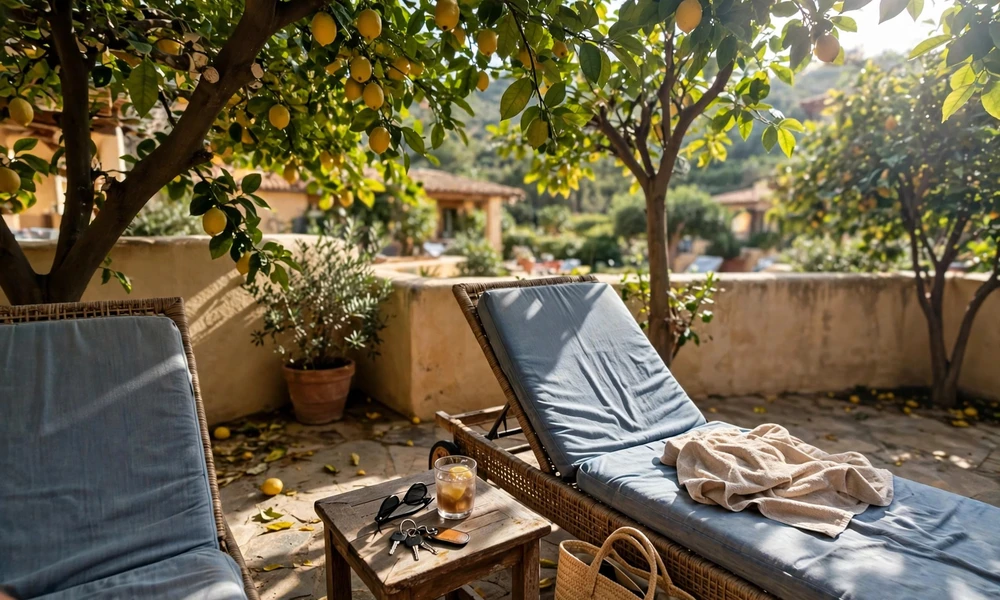
Look next at what is included. Some retreats include breakfast and a grove tour, others include full board, cooking classes and transfers. Prices can look similar while the value is very different, so read the fine print before comparing. And check the practical details that matter on a slow trip: how far the nearest town is, whether you need a car, whether the pool is heated in the cooler months, and whether the retreat is open in the season you want to travel. Our guide to luxury olive grove retreats follows the same approach, because grove stays share the same questions whatever the tree.
The 9 best luxury citrus grove retreats of 2027
Agriturismo Il Limoneto, Amalfi Coast
What we like: A small family-run farmhouse above the coast, with lemon terraces you can walk through at any hour, simple rooms with tiled floors, and a kitchen that cooks what the grove provides. Breakfast under the pergola is the best meal of the day. Best for: Couples who want a quiet, romantic base. Style: Rustic farmhouse, Amalfi terraces. Price range: Mid to high. Standout feature: Lemon grove terraces with sea views.
What to consider: The terraces mean steps, many of them, and the nearest town is a drive away. Rooms are comfortable rather than large, and there is no spa, so this suits travellers who are happy with a pool and a book.
Finca Los Naranjos, Valencia
What we like: A whitewashed finca set in flat, sunny orange groves, with wide paths for morning walks, a long pool, and a kitchen that serves orange salads, fresh juice and grilled fish. The light here is extraordinary in spring. Best for: Solo travellers and couples who like long, easy walks. Style: Spanish finca, bright and airy. Price range: Mid. Standout feature: Miles of flat grove paths for walking and cycling.
What to consider: Valencia city is a drive away, so you will want a car, and the landscape is gentle rather than dramatic. If you want mountains or sea cliffs, look elsewhere.
Quinta das Laranjeiras, Algarve
What we like: A larger estate with orange and lemon groves, a spa, a heated pool and villas that suit families as well as couples. The gardens are carefully kept, the staff are warm, and the beach is a short drive. Best for: Families and groups who want space and facilities. Style: Portuguese estate, relaxed and green. Price range: High. Standout feature: A spa and heated pool inside a working grove.
What to consider: It is a bigger property, so it feels less intimate than the smaller farmhouses, and the best villas book early for spring and autumn.
Domaine des Citronniers, Provence
What we like: A refined Provençal house with lemon and mandarin trees, a lavender border, and a restaurant that treats citrus as a serious ingredient rather than a garnish. The rooms are calm, pale and well made. Best for: Food lovers and couples celebrating something. Style: Provençal country house, understated and elegant. Price range: High. Standout feature: A citrus-led restaurant with a short, seasonal menu.
What to consider: Dinner is an event here and priced to match, and the grove is smaller than at the farmhouse retreats, so walkers may want to explore the surrounding countryside too.
Villa Arancio, Sicily
What we like: A Sicilian villa among old orange trees, with thick stone walls, a shaded courtyard and a kitchen that makes the most of blood oranges in season. The pace is slow even by Sicilian standards. Best for: Travellers who want deep quiet and long lunches. Style: Sicilian villa, stone and shade. Price range: Mid to high. Standout feature: Old blood orange trees and a shaded courtyard.
What to consider: The villa is remote, the roads are narrow, and you will need a car for almost everything. Summer can be very hot, so spring and autumn suit it best.
Hacienda de Azahar, Seville
What we like: A white hacienda on the edge of Seville, with orange trees in a walled garden, a courtyard pool and a rooftop for evening drinks. The city is close enough for a day trip and far enough to forget. Best for: Couples who want a grove stay with a city nearby. Style: Andalusian hacienda, white walls and tiles. Price range: Mid to high. Standout feature: A walled orange garden with a rooftop terrace.
What to consider: Seville is hot in high summer, and the garden is compact compared with the larger estates, so this is a base for exploring as much as a place to stay put.
Jardin des Agrumes, Marrakech
What we like: A garden retreat outside Marrakech, with orange and lemon trees, a long pool, shaded pavilions and a kitchen that uses preserved lemons, orange blossom and fresh mint. The dry air and the scent of the grove make mornings feel clean and clear. Best for: Travellers who want warmth in the cooler months. Style: Moroccan garden, warm and shaded. Price range: Mid. Standout feature: A long pool and shaded pavilions inside the grove.
What to consider: The retreat is outside the city, so transfers matter, and the heat in midsummer is serious. Winter and spring are the kindest seasons here.
Limonaia di Torri, Lake Garda
What we like: A restored lemon house on Lake Garda, with terraced citrus trees, a small pool and rooms that look across the water. The combination of lake and lemon grove is unusual and genuinely beautiful. Best for: Couples who want a lake and a grove in one trip. Style: Italian lakeside, stone terraces. Price range: High. Standout feature: Terraced lemon groves above the lake.
What to consider: The terraces are steep, the property is small and books early, and the lake towns are busier in summer than the grove itself.
Orange Grove House, Crete
What we like: A relaxed Cretan house among orange trees, with a simple pool, a large terrace and a kitchen that cooks with local olive oil, herbs and citrus. The owners are generous with advice about beaches and walks. Best for: Easy-going travellers and first-time grove guests. Style: Cretan house, simple and sunny. Price range: Mid. Standout feature: A large terrace for long, slow evenings.
What to consider: It is simpler than the high-end estates, with fewer facilities and no spa, so it suits travellers who are happy with a pool, a terrace and a good walk.
Which citrus grove retreat is right for you
Couples who want romance should look at the small farmhouses: Il Limoneto on the Amalfi Coast, Villa Arancio in Sicily and Limonaia di Torri on Lake Garda all trade size for atmosphere, and all reward travellers who are happy to do very little. Families and groups are better served by the larger estates, Quinta das Laranjeiras in the Algarve above all, where villas, a spa and a heated pool make a longer stay easy. If food is your priority, Domaine des Citronniers in Provence is the clear pick, while Finca Los Naranjos in Valencia suits walkers and cyclists who want flat, sunny paths.
Season should shape the choice too. Spring brings blossom and mild weather across the Mediterranean, and it is the best time for the Amalfi Coast, Provence and Valencia. Late autumn brings harvest, cooler days and lower prices, and it suits Sicily, Crete and Marrakech well. Summer is hot everywhere in this list except the lake and the coast, so if you must travel in July or August, choose a retreat with a good pool and real shade, and plan your grove walks for early morning. Our guide to planning an olive grove escape covers the same seasonal thinking, because grove trips live or die by the weather.
Budget is the last filter. Mid-priced retreats like Finca Los Naranjos, Jardin des Agrumes and Orange Grove House offer the grove experience without the top-end price, while the high-priced estates add space, service and facilities. In every case, check what is included: a mid-priced stay with meals and a grove tour included can cost less in total than a cheaper room with everything added on.
The caveats that matter
Citrus grove retreats are wonderful for the right traveller and a poor fit for the wrong one. They are rural, quiet and slow by design. If you want nightlife, shopping, a busy restaurant scene or a packed itinerary, you will be happier in a town or a city hotel. They are also seasonal: blossom, harvest and weather all change the experience, and a retreat that is magical in April can be very hot in August or very quiet in January. Check the opening season before you book, and ask what is actually open when you travel.
| Detail | What is known |
|---|---|
| Best time to visit | Spring for blossom, late autumn for harvest, mild weather in both |
| Who it suits best | Couples, solo travellers and families who want quiet and slow days |
| Who should skip it | Travellers who want nightlife, shopping or a busy sightseeing schedule |
| What to check first | Whether the grove is walkable, what meals include, and how far the nearest town is |
| Getting around | A car is usually needed, except at retreats near a city such as Seville |
| What to pack | Comfortable walking shoes, sun protection, a light layer for cool evenings |
| When to book | Three to six months ahead for spring and autumn, earlier for small properties |
| What it does not offer | It does not replace a city break, a beach resort or a touring holiday |
If you have limited mobility, ask about steps, slopes and distances before booking, because terraced groves and old farmhouses are rarely flat.
Checklist: choosing a citrus grove retreat honestly
Use these checks before you book, and again before you travel.
- Check the grove: it should be walkable, tended and used in the kitchen, not just a view.
- Check what is included: meals, grove tours, transfers and activities vary widely.
- Check the season: blossom in spring, harvest in late autumn, heat in high summer.
- Check the distance: how far the nearest town, beach and airport really are.
- Check the rooms: ask about steps, shade, pool heating and whether the property suits children.
- Check the total cost: a mid-priced stay with meals included can cost less than a cheaper room with extras.
Frequently asked questions
When is the best time to visit a citrus grove retreat?
Spring for blossom and mild weather, and late autumn for harvest and cooler days. Summer is hot in most citrus regions, so choose a retreat with a good pool and real shade if you travel then.
Do I need a car at a citrus grove retreat?
Usually yes. Most grove retreats are rural, and the nearest town, beach or restaurant is a drive away. Retreats near a city, such as the Seville hacienda, are the exception.
Are citrus grove retreats suitable for families?
The larger estates are, especially those with villas, a heated pool and space to spread out. Small farmhouses are often better for couples, so check before booking.
What should I pack for a citrus grove stay?
Comfortable walking shoes for the grove paths, sun protection, a light layer for cool evenings, and swimwear. Evenings in spring and autumn can be cooler than the days suggest.
Can I join a grove tour or a cooking class?
Many retreats offer both, and some include them in the stay. Ask when you book, because tours and classes are often small and fill up in spring and autumn.
Is a citrus grove retreat worth the price?
It is if you want quiet, space and a real grove rather than a resort with trees. Compare the total cost including meals and transfers, and look at our luxury orchard retreats for a similar kind of stay at a different price point.
The bottom line
The best luxury citrus grove retreat in 2027 is not the grandest or the most expensive. It is the one whose grove you can walk through, whose kitchen uses what grows there, and whose pace matches the trip you actually want. For most travellers, that means a small farmhouse in spring or a larger estate in autumn, with a car, a book and no fixed plans.
Choose the region first, check what is included, and book early for spring and autumn. Then let the grove set the pace, because that is the whole point of going.