
A satin jumpsuit is the kind of piece you buy for one evening and then quietly worry about for the next year. It looks effortless when it is on, all smooth shine and clean lines, but the fabric is unforgiving in the wash. The shine is the whole point of satin, so the goal is always to clean it without dulling that surface.
The good news is that most satin jumpsuits are not as fragile as they look. Satin is a weave, not a fibre, and the care it needs depends on what the satin is made from. A polyester satin jumpsuit can usually be washed at home with a gentle hand. The label inside the jumpsuit tells you which one you own, and reading it before you touch water is the single most useful step in this whole guide.
Below are nine steps that take a satin jumpsuit from worn to clean without stripping its shine. Each step explains what to do, what to avoid, who it suits, how long it takes, and the one tip that makes the difference.
Key takeaways
- Read the care label first: polyester satin can usually be hand-washed at home, while silk satin needs a gentler approach or a professional clean.
- Always wash satin in cool water with a mild detergent, never hot water, bleach, or a harsh stain remover.
- Spot-treat stains before washing, blot rather than rub, and test any product on a hidden seam first.
- Never wring, twist, or tumble-dry a satin jumpsuit; press water out gently and dry it flat or on a padded hanger, away from direct sun.
- No home method removes every mark safely, and a jumpsuit with beading, boning, or a “dry clean only” label should go to a professional cleaner.
What satin is and why it needs gentle care
Satin is not a material. It is a way of weaving threads so that most of them sit on the surface of the fabric, which is what gives satin its smooth, light-catching shine. That surface is also what makes it vulnerable. A satin jumpsuit cannot, and the damage usually shows up exactly where the light hits it.
The fibre underneath the weave changes the rules. Polyester satin is the most common choice for jumpsuits in 2027, and it is the most forgiving: it resists water spots better than silk, it holds its shape, and it usually survives a careful hand wash. Acetate satin sits between the two and is best treated like silk. If the label is missing, assume the fabric is silk and treat it gently.
The construction of a jumpsuit adds a second layer of risk. A jumpsuit has more seams, a longer zip, and often a lining, a waistband, or a belt loop that a dress does not.
How we chose these steps and what to check first
These steps are ordered the way a careful clean actually happens: check, spot-treat, wash, rinse, dry, press, store. The method that suits most jumpsuits is a cool hand wash, because it gives you control over the water temperature, the detergent, and how much the fabric moves.

Before you start, gather what you need: a clean basin or sink, cool water, a mild liquid detergent made for delicates, a couple of clean white towels, and a padded hanger or a flat drying rack. Give yourself a clear work surface and a basin you can reach easily, because a rushed wash is a careless wash. Our guide to how to style a satin jumpsuit is worth a read once the jumpsuit is clean, because the way you wear it — and what you wear under it — affects how often it needs washing at all.
Finally, set aside enough time. A hand wash takes about half an hour from basin to drying rack, and the jumpsuit needs several hours to dry. Do not start cleaning an hour before you need to wear it.
The 9 steps to clean a satin jumpsuit
1. Read the label and check the whole garment
What to Do: Read the care label inside the jumpsuit and follow it over any general advice, including this guide. Then lay the jumpsuit flat and check every seam, the zip, the lining, any beading or sequins, and the hem for loose threads or damage.
What to Avoid: Do not skip the label because the jumpsuit looks like polyester. Do not wash a jumpsuit with loose beading, a torn seam, or a broken zip, because water and movement will make the damage worse.
Best For: Every satin jumpsuit, every time. Time Needed: 5 minutes. Standout Tip: Photograph the label before you wash, so you have the instructions even if the print fades.
2. Close the zip and turn the jumpsuit inside out
What to Do: Close the zip fully, fasten any hooks or buttons, and turn the jumpsuit inside out. This protects the shiny outer surface from friction and keeps the zip teeth away from the satin.
What to Avoid: Do not wash the jumpsuit with the zip open, because the teeth can snag the satin in the basin. Do not leave a belt threaded through its loops, because the loops can stretch and the belt can leave a dye mark when wet.
Best For: Polyester and acetate satin jumpsuits being hand-washed. Time Needed: 2 minutes. Standout Tip: Put the jumpsuit in a mesh laundry bag if you must use a machine, but hand washing is still the safer choice.
3. Spot-treat stains before the wash
What to Do: Work on stains before the jumpsuit goes into water. For food, drink, or makeup marks, dampen a clean white cloth with cool water and a drop of mild detergent, then blot the stain gently from the outside edge toward the centre.
What to Avoid: Never rub a satin stain, because rubbing breaks the surface threads and leaves a dull patch that is worse than the mark. Do not use bleach, acetone, or a harsh stain remover on satin. Do not use hot water on a stain, because heat can set protein marks such as sweat and milk permanently.
Best For: Fresh marks, deodorant residue, and light food stains. Time Needed: 10 minutes. Standout Tip: Treat a stain as soon as you can after wearing the jumpsuit; a mark that has dried for a week is far harder to lift.
4. Hand-wash in cool water with mild detergent
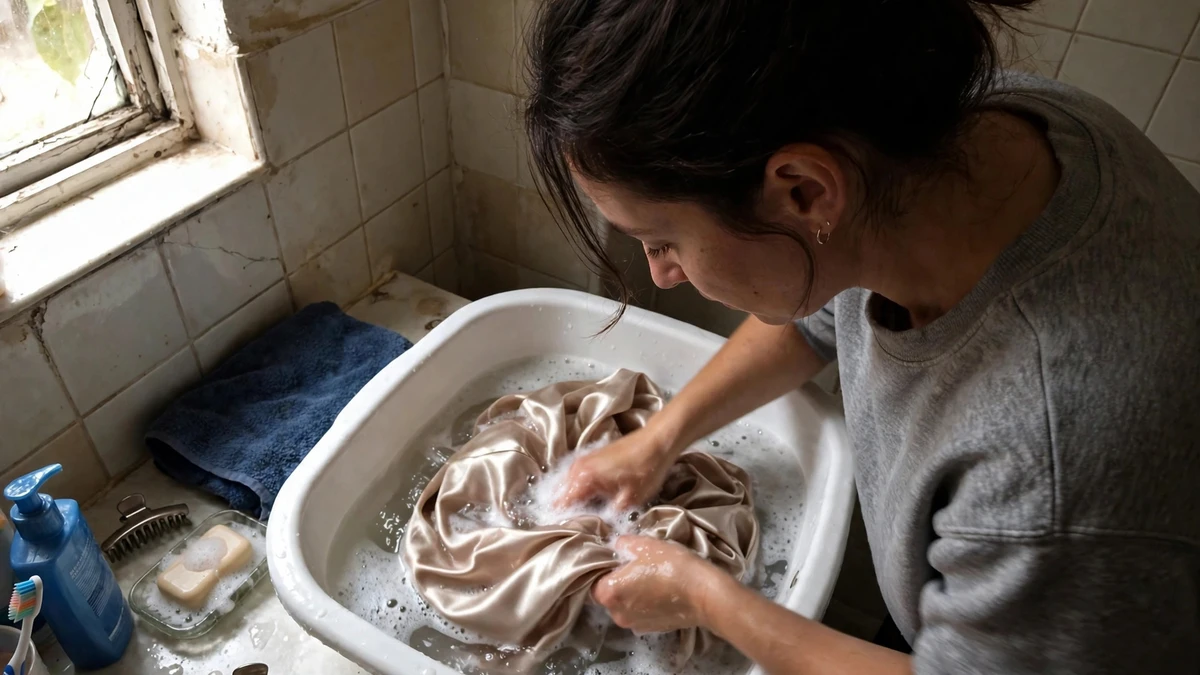
What to Do: Fill a clean basin with cool water, add a small amount of mild liquid detergent made for delicates, and stir it in. Then move it slowly through the water with your hands, squeezing the fabric softly rather than scrubbing or twisting it.
What to Avoid: Do not use hot water, which can dull satin and shrink linings. Do not use a powdered detergent that has not fully dissolved, because undissolved grains can leave spots.
Best For: Polyester satin jumpsuits and most acetate satin. Time Needed: 15 minutes. Standout Tip: Use less detergent than you think you need; excess soap is hard to rinse out of satin and leaves a dull film.
5. Rinse thoroughly in cool, clean water
What to Do: Drain the soapy water, refill the basin with clean cool water, and rinse the jumpsuit by pressing it gently under the water.
What to Avoid: Do not add fabric softener to the rinse, because it coats the fibres and dulls the shine. Do not wring the jumpsuit to get the water out.
Best For: Every hand-washed satin jumpsuit. Time Needed: 10 minutes. Standout Tip: Add a tablespoon of white vinegar to the final rinse to help remove soap residue and keep the satin soft.
6. Press out water gently and roll in a towel
What to Do: Lift the jumpsuit out of the basin and support its full weight with both hands so it does not stretch. Lay it flat on a clean white towel, roll the towel up with the jumpsuit inside, and press gently along the roll to absorb the water.
What to Avoid: Never wring or twist a satin jumpsuit, because twisting breaks the surface threads and leaves permanent creases. Do not hang a soaking wet jumpsuit, because the weight of the water pulls the shoulders out of shape. Do not use a coloured towel, which can transfer dye to damp satin.
Best For: All satin jumpsuits after washing. Time Needed: 5 minutes. Standout Tip: Press with the flat of your hands, not your fingers, so you do not leave finger-shaped pressure marks.
7. Dry flat or on a padded hanger, away from sun and heat
What to Do: Lay the jumpsuit flat on a clean, dry towel on a drying rack, and reshape the legs, sleeves, and waist while it is damp. Dry it indoors or in shade, with air moving around it, and let it dry completely before you touch it again.
What to Avoid: Do not tumble-dry satin, because heat and friction will dull and shrink it. Do not dry it in direct sunlight, which fades the colour and weakens the fibres.
Best For: All satin jumpsuits. Time Needed: 4 to 8 hours to dry fully. Standout Tip: Turn the jumpsuit the right way out halfway through drying so both sides dry evenly.
8. Press on low heat from the inside
What to Do: Once the jumpsuit is completely dry, turn it inside out and press it with an iron on the lowest heat setting, using a pressing cloth between the iron and the fabric. A handheld steamer held a few inches away is an even gentler option for removing creases.
What to Avoid: Never press satin on a high heat, and never press the shiny outer surface directly, because the iron can leave a permanent shine mark or scorch the fabric.
Best For: Polyester satin and acetate satin jumpsuits after drying. Time Needed: 10 minutes. Standout Tip: Test the iron on an inside seam first; if the fabric puckers or shines, the heat is too high.
9. Store it clean, hung, and covered
What to Do: Store the jumpsuit clean, because stains and body oils left in satin attract moths and can set over time. Hang it on a wide padded hanger with the zip closed, and cover it with a breathable cotton garment bag.
What to Avoid: Do not fold a satin jumpsuit for long storage, because the folds will set into creases that are hard to press out. Do not store it in a plastic bag, which traps moisture and can cause mildew.
Best For: Any satin jumpsuit between wears. Time Needed: 5 minutes. Standout Tip: Slip a small sachet of dried lavender in the garment bag instead of a mothball, which can leave a smell that is hard to remove from satin.
Which cleaning method suits your jumpsuit
The right method depends on the fibre and the label. A polyester satin jumpsuit with no embellishment is the easiest case: a cool hand wash, a gentle rinse, and flat drying will keep it looking new.
If the label says dry clean only, believe it. That label usually means the fabric, the lining, or the trims will react badly to water, and a home wash can cause shrinkage or dye transfer that no cleaner can reverse. If the jumpsuit has beading, sequins, boning, or a structured bodice, the same rule applies: the trims are often glued or stitched in ways that water will loosen. The same care logic applies to other smooth fabrics, and our guide to how to care for a silk dress covers the same decisions for silk, which is the closest comparison to silk satin.
When you are not sure what the fabric is, treat it as silk. That means cool water, a mild detergent, no machine, no wringing, and no heat.
The caveats that matter
Satin rewards patience and punishes shortcuts. The most common mistakes are all avoidable: hot water, a machine wash on a normal cycle, wringing, tumble drying, and ironing the shiny side directly. Let the jumpsuit dry flat, press it gently from the inside, and accept the result, or take it to a cleaner for advice.
| Detail | What is known |
|---|---|
| Best method for most jumpsuits | Cool hand wash with a mild detergent for delicates |
| Water temperature | Cool, never hot; hot water dulls satin and shrinks linings |
| What never to use | Bleach, fabric softener, harsh stain removers, and solvents |
| Stains | Blot from the edge inward; never rub, and test products on a hidden seam |
| Drying | Flat or on a padded hanger, indoors or in shade; never tumble-dry |
| Pressing | Low heat from the inside with a pressing cloth, or a steamer held away |
| When to use a cleaner | Dry clean only labels, silk satin, beading, boning, or stubborn stains |
| Storage | Clean, hung on a padded hanger, in a breathable cotton bag |
If the jumpsuit is a gift, a vintage piece, or a designer item with no care label, take it to a cleaner before you try anything at home. A cleaner can test the fabric and the dye, and that test is worth far more than a guess.
Checklist: cleaning a satin jumpsuit honestly
Run through these checks before the jumpsuit touches water, and again before you store it.
- Read the label and photograph it; follow it over any general advice.
- Check the seams, zip, lining, and trims for damage before washing.
- Close the zip, remove the belt, and turn the jumpsuit inside out.
- Spot-treat stains by blotting, never rubbing, and test products on a hidden seam.
- Wash in cool water with a mild detergent, rinse until the water runs clear, and never wring the fabric.
- Dry flat or on a padded hanger away from sun and heat, press from the inside on low heat, and store it clean and covered.
Frequently asked questions
Can I machine-wash a satin jumpsuit?
Sometimes, but hand washing is safer. If the label allows a machine wash, use a cold, gentle cycle, put the jumpsuit inside out in a mesh bag, and use a mild detergent.
Can I use regular laundry detergent on satin?
A mild liquid detergent made for delicates is the best choice. A detergent made for wool or silk is a good substitute if you do not have a delicates wash at home. Regular detergent is often too alkaline for satin, especially silk satin, and it can leave a dull film. Use less than the bottle suggests, and rinse until the water runs clear.
How do I remove a water spot from satin?
Water spots happen when one part of the fabric gets wet and dries faster than the rest, leaving a visible ring. The usual fix is to dampen the whole area evenly with cool water, then let it dry flat, so the fabric dries at the same rate.
How do I get sweat marks out of a satin jumpsuit?
Blot the area with a cloth dampened with cool water and a little diluted white vinegar, leave it for ten minutes, then blot it away and hand-wash the jumpsuit as usual.
Can I steam a satin jumpsuit instead of ironing it?
Yes, and steaming is often the better choice. Hold a handheld steamer a few inches away from the fabric and let the steam relax the creases.
How often should I wash a satin jumpsuit?
Only when it needs it. Washing less often keeps the shine longer, and the same gentle approach works for other smooth fabrics — our guide to how to wash a silk pillowcase follows the same cool-water, no-wringing rules.
The bottom line
Cleaning a satin jumpsuit is a slow, gentle process, but it is not a difficult one. Press it from the inside on low heat, or use a steamer, and store it clean, hung, and covered.
The rule to remember is simple: if you are not sure, choose the gentler option, and if the label says dry clean only, or the jumpsuit has beading, boning, or silk satin, let a professional handle it. A satin jumpsuit that is cleaned carefully will keep its shine for years, and the half hour you spend on a hand wash is a small price for a piece that looks as good as it did the day you bought it.