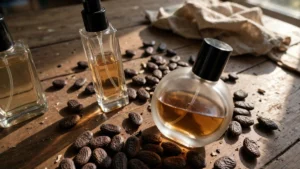
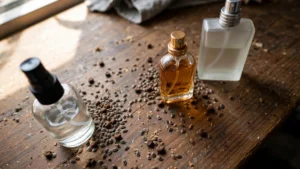
Ambrette is one of the most interesting notes in perfumery, and one of the least understood. It smells like musk, it behaves like musk, and it has been used as a musk for centuries, yet it comes from a plant, not an animal and not a laboratory. The seeds of the musk mallow plant, Abelmoschus moschatus, produce a warm, sweet, slightly floral scent that perfumers have prized since the nineteenth century, and it remains one of the most expensive natural musk materials in the world.
Most people have smelt ambrette without knowing it. It is the soft, clean warmth underneath many musk perfumes, the reason a floral perfume lasts for hours without turning heavy, and the gentle skin-like quality that makes some of the most admired perfumes in the world smell expensive. It rarely takes centre stage, which is why it is easy to miss, but once you know what it smells like, you start noticing it everywhere.
This guide explains what ambrette is, where it comes from, how it smells, how perfumers use it, and how to recognise it in a perfume, so you can shop for ambrette perfumes with confidence and understand why the best ones cost what they do.
Key takeaways
- Ambrette is a plant-based musk from the seeds of Abelmoschus moschatus, the musk mallow plant, and it is one of the few natural materials that smells genuinely musky.
- It smells warm, sweet, slightly floral and faintly nutty, with a clean, skin-like character that sits close to the body rather than projecting loudly.
- Ambrette works as both a scent and a fixative, which means it adds its own character and helps other notes last longer and smell smoother.
- Natural ambrette is expensive because the seeds are small and the oil yield is low, so it usually appears in niche and luxury perfumes rather than cheap ones.
- Ambrette is not the same as synthetic musk, and a perfume that lists ambrette seed among its main notes will usually smell warmer and more complex than one that uses only synthetic musk.
What ambrette is and where it comes from
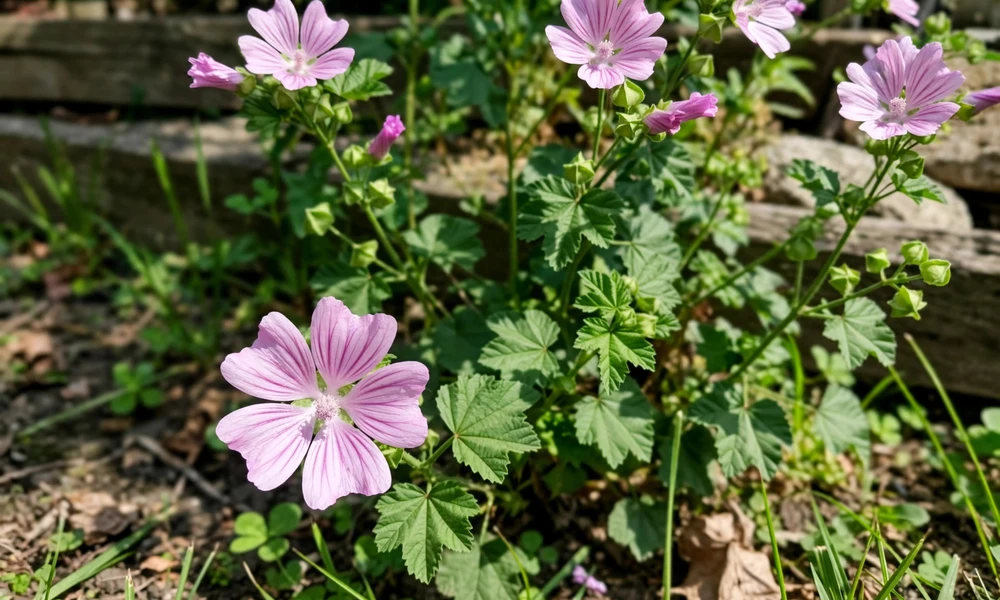
Ambrette comes from Abelmoschus moschatus, a tropical plant in the hibiscus family that grows in India, South-East Asia and parts of Africa. The plant produces small, kidney-shaped seeds that smell faintly musky even before they are processed, and those seeds are steam-distilled or solvent-extracted to produce ambrette seed oil or ambrette seed absolute, the materials perfumers actually use.
The plant is sometimes called musk mallow, and its seeds have been used for centuries in traditional medicine and in perfumery. In India the seeds were used as a spice and as a scent, and in nineteenth-century Europe they became a valued alternative to animal musk, which was expensive, controversial and difficult to obtain. Perfumers discovered that ambrette seed oil smelt remarkably like musk, but softer, warmer and cleaner, and it quickly became a staple of fine perfumery.
Today most ambrette seed is grown in India and Ecuador, and the oil is produced in relatively small quantities.
How ambrette smells and how perfumers use it
Ambrette smells warm, sweet, slightly floral and faintly nutty, with a soft, powdery dry-down that feels like clean skin. Animal musk, from the musk deer, smells deep, warm and slightly animalic, while ambrette smells cleaner, softer and more floral, with a faint fruity sweetness that synthetic musks rarely match.
Perfumers use ambrette in two ways. As a note, it adds its own warm, musky character to a composition, and as a fixative it slows down the evaporation of the lighter notes around it, which makes the whole perfume last longer and smell rounder. That dual role is why ambrette appears in so many different kinds of perfume, from clean musks to rich ambers, florals and woods.
With florals it adds warmth and softness. With woods it smooths the dry edges. With amber and vanilla it adds a clean, skin-like quality that keeps the sweetness from becoming sticky. And with citrus it adds depth and warmth underneath a bright, fresh opening. Our guide to unisex perfumes shows how often ambrette appears in scents worn by both men and women, because the note is warm and clean rather than floral or woody, which makes it genuinely versatile across genders.
9 facts about ambrette perfume
Ambrette comes from a plant in the hibiscus family
What It Shows: Ambrette is a genuine plant material, not a synthetic molecule, and it comes from Abelmoschus moschatus, a tropical plant related to hibiscus and okra, which is why it smells warm and slightly floral rather than sharp or metallic.
What to Consider: Because it is a natural material, the scent can vary slightly from batch to batch, depending on where the seeds were grown and how they were processed. Best For: Anyone who prefers natural perfume materials. Material: Ambrette seed oil or absolute. Price Range: Expensive, which is why it appears mainly in niche and luxury perfumes. Standout Feature: One of the only plant materials that smells genuinely musky.
Ambrette was the original alternative to animal musk
What It Shows: Long before synthetic musks existed, perfumers used ambrette seed as a gentler, plant-based alternative to musk from the musk deer, and it became a standard material in fine perfumery in the nineteenth century.
What to Consider: Animal musk is now banned in most countries, so modern musk perfumes use ambrette, synthetic musks, or a combination of both. Best For: Anyone interested in the history of perfumery. Material: Ambrette seed, musk. Price Range: Varies, but historic ambrette perfumes were luxury items. Standout Feature: A musk with a history that goes back centuries, not decades.
The seeds smell musky before they are distilled
What It Shows: Ambrette seeds smell faintly musky even in their raw, dried form, with a sweet, warm scent that is noticeable as soon as you open a bag of them, which is unusual for a perfume material.
What to Consider: The raw seed scent is much weaker than the distilled oil, so smelling the seeds will not tell you exactly how a perfume will smell. Best For: Anyone curious about raw perfume materials. Material: Dried ambrette seeds. Price Range: Affordable as seeds, expensive as distilled oil. Standout Feature: A rare perfume material that smells good before any processing.
Ambrette is both a scent and a fixative
What It Shows: Ambrette does two jobs at once in a perfume, adding its own warm, musky character and slowing down the evaporation of the lighter notes around it, which makes the whole composition last longer and smell smoother.
What to Consider: Because it is a fixative, ambrette can be present in a perfume even when it is not listed as a main note, so the note list does not always tell the full story. Best For: Anyone who wants a perfume that lasts all day. Material: Ambrette seed absolute. Price Range: Varies with the perfume. Standout Feature: One of the few notes that improves both the scent and the longevity of a perfume.
Natural ambrette is expensive and the yield is low
What It Shows: The seeds are small, the oil yield is low, and the extraction has to be done carefully, which makes natural ambrette seed one of the more expensive natural musk materials in perfumery.
What to Consider: Very cheap perfumes that claim ambrette are usually using synthetic musk instead, which can still smell pleasant but will not have the same warmth or complexity. Best For: Anyone shopping for a genuine ambrette perfume. Material: Ambrette seed oil. Price Range: High, which is why it appears mainly in niche and luxury perfumes. Standout Feature: A material whose price reflects how difficult it is to produce.
Ambrette smells different on skin than on paper
What It Shows: Ambrette is a skin note, which means it interacts with body heat and skin chemistry, and it often smells warmer, sweeter and more musky on skin than it does on a paper test strip.
What to Consider: A perfume that smells quiet on paper can become warm and noticeable on skin, so always test ambrette perfumes on your wrist before deciding. Best For: Anyone buying perfume for the first time. Material: Ambrette seed, musk. Price Range: Varies with the perfume. Standout Feature: A note that rewards skin testing more than almost any other.
Ambrette pairs well with almost every perfume family
What It Shows: Ambrette works with florals, woods, ambers, citruses and musks, adding warmth and softness to each one without overpowering it, which makes it one of the most versatile notes in perfumery.
What to Consider: Because it blends so easily, ambrette can be hard to identify in a complex perfume, especially when it is used as a supporting note rather than the star. Best For: Anyone building a perfume collection. Material: Ambrette seed absolute. Price Range: Varies with the perfume. Standout Feature: A note that improves almost any composition it is added to.
Ambrette is a genuinely unisex note
What It Shows: Ambrette is warm and clean rather than floral or woody, which means it works equally well in perfumes marketed to men, women, or both, and most ambrette perfumes are worn by all genders.
What to Consider: The other notes in a perfume decide whether it leans masculine or feminine, not the ambrette itself, so check the full composition rather than the marketing. Best For: Anyone shopping for a shared or unisex perfume. Material: Ambrette seed, musk. Price Range: Varies with the perfume. Standout Feature: A musk that belongs to no gender and works for everyone.
Our guide to bergamot perfumes shows a similar pattern, because bergamot is another note that appears across men’s, women’s and unisex perfumes, and like ambrette it works because it is fresh and versatile rather than tied to one gender.
Ambrette perfumes are usually quiet, not loud
What It Shows: Ambrette sits close to the skin and projects softly, which means ambrette perfumes are usually intimate and understated rather than bold and room-filling.
What to Consider: If you like perfumes that project strongly, an ambrette perfume may feel too subtle at first, especially in the first hour, so give it time and ask someone close to you what they smell. Best For: Office wear, close encounters and anyone who prefers quiet luxury. Material: Ambrette seed, musk. Price Range: Varies with the perfume. Standout Feature: A note that rewards closeness rather than distance.
Ambrette vs musk: how they compare
Ambrette and synthetic musk are often confused, because both are called musk and both smell musky, but they are different materials with different characters. Ambrette is a natural plant material, warm, sweet, slightly floral and faintly nutty, with a soft, powdery dry-down. Synthetic musks are laboratory-made molecules, and they range from clean and soapy to sharp and slightly metallic, depending on the molecule.
The difference shows most clearly in the dry-down. A perfume built on real ambrette seed tends to smell warmer and more complex after several hours, with a soft, skin-like sweetness that lingers. A perfume built only on synthetic musk can smell cleaner and more modern, but it can also feel flatter, with less warmth and less depth.
It smelt deeper, warmer and slightly animalic, and it was the original reference point for all musk perfumes. Ambrette was the closest plant-based alternative, and it remains the warmest and most complex of the modern musk materials. A guide to luxury perfume brands is worth reading alongside this one, because the houses that use real ambrette tend to be the same houses that invest in expensive natural materials generally, and the brand is often a useful clue to what is actually in the bottle.
The caveats that matter
Ambrette is a gentle note, but it is not a simple one, and there are a few things worth knowing before you buy. The first is that ambrette perfumes are usually quiet, and if you are used to loud, sweet perfumes, they may feel too subtle at first. Give them time, wear them for a full day, and ask someone close to you what they smell, because ambrette often projects more to other people than it does to the wearer.
| Detail | What is known |
|---|---|
| What it is | A plant-based musk from the seeds of Abelmoschus moschatus, the musk mallow plant |
| What it smells like | Warm, sweet, slightly floral and faintly nutty, with a clean, skin-like character |
| What it does | Adds gentle musk character and acts as a fixative, making other notes last longer |
| How it differs from synthetic musk | Warmer, softer and more complex, with a floral and nutty warmth synthetics rarely match |
| Best format | Eau de parfum, which helps the soft musk project and last through the day |
| Who should test first | Anyone who likes strong, sweet perfumes, because ambrette is much quieter |
| What to avoid | Very cheap ambrette perfumes, which usually use synthetic musk instead of real ambrette seed |
| What it does not do | It does not project loudly or smell animalic, and it will not suit people who want a bold, sweet scent |
The second caveat is price. Natural ambrette is expensive, and the best ambrette perfumes reflect that. Very cheap perfumes that claim ambrette are usually using synthetic musk molecules instead, which can still smell pleasant, but they will not have the warmth and complexity of real ambrette seed.
Checklist: understanding ambrette honestly
Use these checks before you buy an ambrette perfume, and again after a week of wearing it.
- Check the note list: ambrette seed should be listed among the main notes, not buried at the end.
- Check the concentration: eau de parfum is usually the best format for a quiet musk note.
- Test on skin, not paper: ambrette changes significantly on skin, so wear it for a full day before deciding.
- Ask someone close: ambrette projects more to others than to the wearer, so get a second opinion.
- Check the price honestly: very cheap ambrette perfumes usually use synthetic musk instead.
- Match it to the season: warm, rich ambrette for autumn and winter, fresher ambrette colognes for summer.
Frequently asked questions
What is ambrette made from?
Ambrette comes from the seeds of Abelmoschus moschatus, a tropical plant in the hibiscus family known as musk mallow. The seeds are steam-distilled or solvent-extracted to produce ambrette seed oil or absolute, the materials perfumers use.
Does ambrette smell like musk?
Yes, but softer and cleaner than animal musk. Ambrette smells warm, sweet, slightly floral and faintly nutty, with a clean, skin-like character. It is musky without being animalic, which is why it works so well in modern perfumes.
Is ambrette natural or synthetic?
Natural ambrette is a plant material from ambrette seeds. Many perfumes also use synthetic musks, which are laboratory-made molecules.
Why is ambrette so expensive?
The seeds are small, the oil yield is low, and the extraction has to be done carefully to preserve the scent. That makes natural ambrette seed one of the more expensive natural musk materials, which is why it usually appears in niche and luxury perfumes.
Is ambrette safe for sensitive skin?
Ambrette seed oil is generally considered gentle, but any perfume can irritate sensitive skin, especially on the neck or wrists. Spray on clothing first if you are sensitive, and patch-test on a small area before wearing it all day.
How can I tell if a perfume really contains ambrette?
Check the note list. Ambrette seed should be listed among the main notes, and the perfume should smell warm, musky and slightly sweet on skin after an hour. Very cheap perfumes that claim ambrette are usually using synthetic musk instead.
The bottom line
Ambrette is one of the most rewarding notes in perfumery once you know what to look for. It is a plant-based musk with centuries of history, a warm, sweet, slightly floral character, and a dual role as both a scent and a fixative that makes perfumes last longer and smell smoother.
The best way to understand ambrette is to wear it. Try a pure showcase like Le Labo Ambrette 9, or a warm classic like Musc Ravageur, wear it for a full day, and pay attention to how it smells at the end of the day rather than in the first five minutes. That is when ambrette shows its real character, soft, warm and quietly expensive, and that is when most people decide they want more of it.