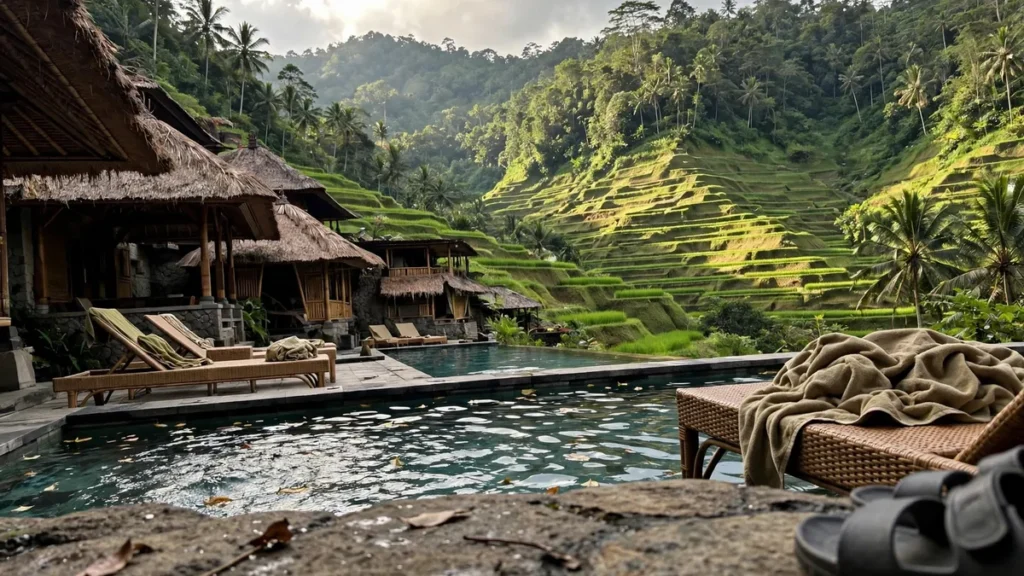
A rice terrace is not a view you glance at once and move on from. It is a landscape that changes all day, green and silver in the morning, gold by late afternoon, and quiet after dark in a way a beach resort never is.
The problem is that a terrace retreat is easy to get wrong. Some stays are beautiful in photos and awkward in person, with a long climb to the room, no shade at midday, and a dining room that closes before you have finished your walk.
Below are nine terrace retreats worth considering in 2027, from a hillside stay in Ubud to a small lodge in the Sri Lankan hill country.
Key takeaways
- The best rice terrace retreats sit inside the working landscape, with rooms that face the fields and a walk to the village, not a long drive.
- Season matters more than the room: flooded terraces in the planting season look completely different from the golden weeks before harvest.
- Small, family-run stays often give a better terrace experience than large resorts, because the hosts know the fields, the walks, and the weather.
- Check the climb, the shade, and the transfer before you book, because a beautiful room at the top of a steep path is not relaxing after a long day.
- No terrace stay guarantees a perfect view every day, and mist, rain, and harvest work are part of the landscape, not a flaw in the booking.
What a rice terrace retreat actually is
A rice terrace retreat is a stay built around flooded, stepped fields, usually in a hillside valley where rice has been grown for generations. The fields are the point. You wake to them, you walk through them, and you eat what they grow. The best retreats do not hide the farming. They build the day around it, with an early walk before the heat, a long lunch, and an afternoon that slows down on purpose.
The nine stays below were chosen for that connection first, and for comfort second.
How we chose these retreats and what to look for
Look first at the position of the room. A room that faces the terraces, with a door that opens onto them, is worth more than a larger room that faces a car park or a wall. Ask which direction the room faces, whether the sun hits it in the afternoon, and whether there is shade to sit in at midday.
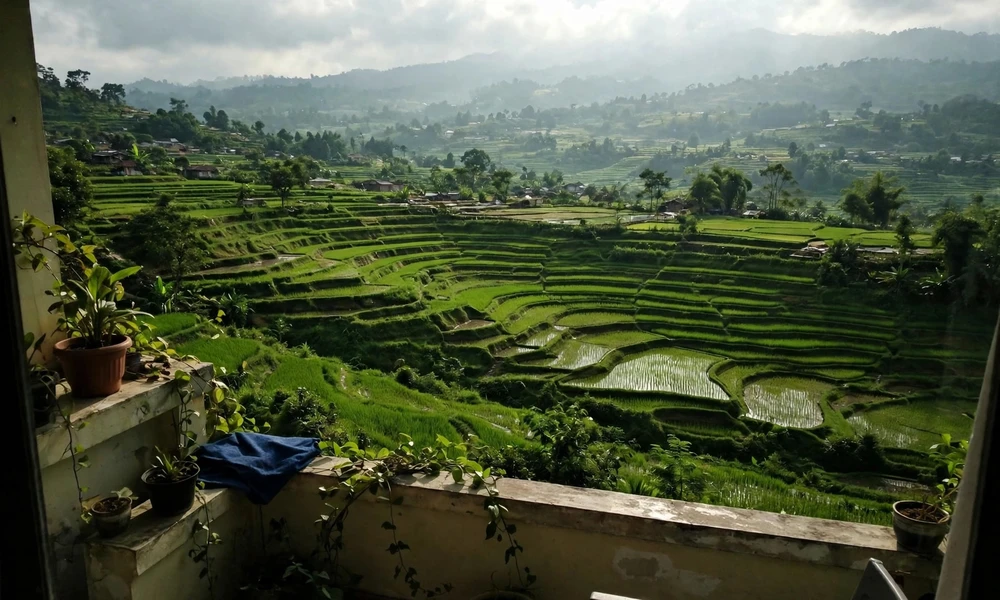
Look next at the walking. A good terrace retreat has at least one walk that starts at the door and reaches the fields, a village, or a viewpoint within half an hour. If every walk needs a car, the stay is not really in the terraces, it is near them. Ask how long the walk to the nearest village takes, whether the paths are paved or muddy after rain, and whether the stay provides a guide for the longer walks. Our guide to tea plantation retreats makes the same point, because a working landscape is only enjoyable if you can actually move through it on foot.
Finally, look at what is included. Meals matter more in a terrace valley than in a city, because there may be nowhere else to eat within walking distance. A stay that includes breakfast and one cooked meal a day is usually a better value than a cheaper room that leaves you arranging every meal by phone.
The 9 best luxury rice terrace retreats of 2027
A terraced hillside stay in Ubud, Bali
What we like: Rooms set into a steep green valley with the fields below the terrace, a pool that looks over the water, and staff who arrange sunrise walks through the paddies. What to consider: The valley is steep, so the walk back to the room is a climb, and the area is busy in the dry season. Best for: First-time terrace travellers who want comfort and easy walks. Style: Hillside villas with open-air bathrooms. Price range: Approximately $250 to $450 a night. Standout feature: A breakfast served on a terrace that faces the flooded fields at first light.
A family-run terrace lodge in Sapa, Vietnam
What we like: A small lodge run by a local family, with rooms above the terraces, home-cooked meals, and a host who walks guests through the fields each morning. What to consider: The rooms are simple, the weather changes fast, and mist can hide the view for a whole morning. Best for: Travellers who want to meet the people who farm the land. Style: Simple wooden lodge with shared dining. Price range: Approximately $60 to $140 a night. Standout feature: A morning walk with the host, from the lodge door down through the planted steps.
Sapa is the most rewarding of the nine for people who like walking and talking, and the least rewarding for people who want a polished resort. The lodge is small, the food is cooked at home, and the terraces are the main event from the moment you wake.
A rice terrace villa in the Ifugao highlands, Philippines
What we like: A quiet villa above ancient terraces, with wide views across the valley, cool mountain air, and a host who arranges village visits and weaving demonstrations. What to consider: The road in is long and winding, and the stay is best reached with a driver arranged in advance. Best for: Slow travellers who want a remote, historic landscape. Style: Stone and timber villa with a wide terrace. Price range: Approximately $120 to $260 a night. Standout feature: A view across terraces that have been farmed for two thousand years.
A hillside retreat above the Yuanyang terraces, Yunnan, China
What we like: A retreat set above some of the most photographed terraces in Asia, with mirrored water in the planting season and a sunrise that fills the whole valley. What to consider: The best views need an early start, and the area is cold in winter, so pack layers. Best for: Photographers and early risers who want the classic mirrored-water view. Style: Hillside rooms with large windows and a viewing deck. Price range: Approximately $100 to $220 a night. Standout feature: A viewing deck that faces the sunrise over the flooded steps.
Yuanyang is the most dramatic of the nine at dawn, when the water catches the sky. It is also the most weather-dependent, so plan for two mornings rather than one, and treat the first as a rehearsal.
A terrace-view stay in the Chiang Mai highlands, Thailand
What we like: A calm stay in the hills north of Chiang Mai, with terraces below the rooms, a garden restaurant, and easy day trips to hill villages. What to consider: The terraces here are smaller than in Sapa or Yuanyang, and the dry season can leave them brown. Best for: Travellers combining a city break with a quiet hillside stay. Style: Garden rooms with wooden decks. Price range: Approximately $90 to $200 a night. Standout feature: A garden restaurant that serves food grown in the valley below.
The Chiang Mai highlands suit people who want a terrace stay without a long journey. It is an easy two or three nights after the city, with walks that are gentle and a kitchen that is worth staying in for.
A terrace stay in the Lombok highlands, Indonesia
What we like: A small stay in the green highlands of Lombok, with terraces on the doorstep, waterfalls nearby, and far fewer visitors than Bali. What to consider: The island is quieter, so restaurants and shops are limited, and the roads are slow. Best for: Travellers who want Bali’s landscape without Bali’s crowds. Style: Small hillside bungalows with open verandas. Price range: Approximately $70 to $160 a night. Standout feature: A waterfall walk that starts at the stay and passes through the terraces.
A terrace-view lodge in Luang Prabang province, Laos
What we like: A lodge above the river valley, with terraces on the slopes below, slow mornings, and a host who arranges boat trips and village markets. What to consider: The lodge is remote, the internet is slow, and the best time to visit is short. Best for: Slow travellers who want to switch off properly. Style: Riverside lodge with a long wooden deck. Price range: Approximately $80 to $180 a night. Standout feature: A long deck where you can watch the light move across the terraces all afternoon.
Luang Prabang province is the slowest of the nine, and that is its strength. The lodge suits people who are happy to read, walk, and eat well, and who do not need a schedule to enjoy a place.
A rice terrace stay in the Kathmandu Valley foothills, Nepal
What we like: A stay in the foothills above the valley, with terraces on every slope, mountain views on clear mornings, and a host who arranges short hikes to nearby villages. What to consider: The air can be hazy, the roads are rough, and the stay is best in the weeks after the monsoon. Best for: Walkers who want terraces with mountain views. Style: Foothill farmhouse with a sunny courtyard. Price range: Approximately $60 to $150 a night. Standout feature: A courtyard breakfast with the Himalayas visible on a clear morning.
A terrace retreat in the Sri Lankan hill country, near Kandy
What we like: A retreat in the green hill country, with rice terraces below the rooms, tea gardens on the slopes above, and a kitchen that cooks with both. What to consider: The weather is changeable, with afternoon rain common, and the roads are slow. Best for: Travellers who want rice terraces and tea gardens in one trip. Style: Colonial-era house with a wide veranda. Price range: Approximately $110 to $240 a night. Standout feature: A veranda that looks over rice terraces in one direction and tea gardens in the other.
The Sri Lankan hill country is the most varied of the nine, because the landscape changes every few kilometres. The retreat suits people who want to see two kinds of farming in one stay, and who like a long, slow lunch on a veranda. Our coconut plantation retreats cover a warmer, flatter kind of farm stay, while this one is all hills, mist, and green.
How to choose between the nine
Start with the season, not the country. Flooded terraces in the planting season are silver and still, green terraces in the growing season are soft and full, and golden terraces before harvest are the most photographed. The same valley can look like three different places across the year, so check the planting calendar for the region before you book, and ask the stay what the fields will look like on your dates. The view also changes with the hour, so a valley that is silver at dawn can be deep green by noon, and a stay that offers a morning walk and an afternoon rest will show you both.
Then think about how you travel. If you like walking and talking, Sapa and the Ifugao highlands will give you the most. If you want comfort and easy days, Ubud and the Chiang Mai highlands are the safer choice. If you want drama at dawn, Yuanyang is the one to plan around, and if you want quiet, Lombok and Luang Prabang province are the ones to choose. A palm grove retreat is a useful comparison here, because a palm grove is flat and shaded while a rice terrace is steep and open, and the two suit different kinds of days.
Finally, be honest about the climb. A room at the top of a steep path is wonderful at sunrise and tiring after a long walk. If you have sore knees, or you travel with older parents, ask for a room near the dining area, and check whether the stay has a buggy or a handrail on the steepest steps.
The caveats that matter
A rice terrace is a working farm, not a garden, and that changes what a stay feels like. Farmers work early, water is released and drained on a schedule, and a field that was flooded yesterday can be muddy today. Harvest brings noise, dust, and workers in the fields, which some travellers love and others find surprising.
| Detail | What is known |
|---|---|
| Best time to visit | Planting season for flooded, mirrored fields; the weeks before harvest for gold |
| What changes the view most | Rain, mist, and the planting calendar, not the room you book |
| Who should check the climb | Anyone with sore knees, older travellers, and families with small children |
| What to pack | Light layers, shoes you can wash, a rain jacket, and sun protection |
| How long to stay | Three nights is the minimum to see the terraces in different light |
| What to ask before booking | What the fields will look like on your dates, and how long the walk to the village takes |
| What to avoid | Booking a terrace stay for a single night, or arriving without a transfer arranged |
| What it does not offer | A guaranteed view every day, or a resort-style schedule in a farming valley |
Checklist: choosing a rice terrace retreat honestly
Use these checks before you book, and again the week before you travel.
- Check the season: ask the stay what the fields will look like on your dates, flooded, green, or golden.
- Check the room: ask which direction it faces, whether it has shade at midday, and how steep the walk back is.
- Check the walking: confirm at least one walk starts at the door and reaches the fields or a village within half an hour.
- Check the meals: confirm what is included, when the dining room closes, and whether drinking water and tea are included.
- Check the transfer: arrange the journey from the nearest town or airport before you book, not after.
- Check the weather: pack a rain jacket and shoes you can wash, because terrace valleys are wet as well as warm.
Frequently asked questions
When is the best time to visit a rice terrace retreat?
It depends on the look you want. The planting season gives flooded, mirrored fields, the growing season gives soft green, and the weeks before harvest give gold.
How long should I stay at a rice terrace retreat?
Three nights is a sensible minimum. One night is too short to see the terraces in different light, and two nights leaves no room for a rainy morning.
Are rice terrace retreats suitable for children?
Often yes, if the stay has rooms near the dining area and the paths are not too steep.
Do I need a guide to walk the terraces?
Not always, but a guide is worth it for the longer walks. A local guide knows which paths are dry, which fields are being worked, and which village paths are private, and they can explain the planting calendar as you walk.
What should I pack for a rice terrace stay?
Light layers, shoes you can wash, a rain jacket, sun protection, and a small bag for day walks.
Is a rice terrace retreat a good honeymoon choice?
Yes, if you both like walking and quiet mornings. A terrace retreat is romantic in a slow, private way, with long lunches and early sunrises. It is less suited to a honeymoon that wants nightlife, shopping, or a busy schedule.
The bottom line
The best rice terrace retreat in 2027 is not the most expensive or the most photographed. It is the one that sits inside the working landscape, with a room that faces the fields, a host who knows the planting calendar, and walks that start at the door. Ubud is the easiest first step, Sapa and the Ifugao highlands are the most rewarding for walkers, and Yuanyang is the one to plan around if you want the mirrored-water dawn.
Choose the season first, then the region, then the room, and give the trip three nights at least. Pack for mud and sun, arrange the transfer before you book, and let the valley set the pace once you arrive. That is the honest way to enjoy a rice terrace, without expecting a farm to behave like a resort.