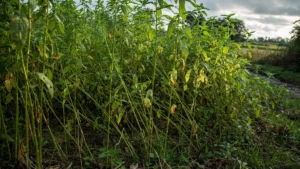
Flax is the quiet crop behind linen. For most of the year it looks like an ordinary field of thin green stems, and then, for a few short weeks in early summer, it turns blue. The flowers open in the morning and drop by the afternoon, so a whole field can look like a pale blue sea at breakfast and green again by supper.
A flax farm retreat is a working farm stay built around that crop and the cloth it becomes. Guests sleep in a converted barn, a stone cottage, or a farmhouse room, walk the fields at dawn, watch the harvest, and see the slow chain that turns a plant into a sheet: pulling, retting, scutching, spinning, weaving.
Below are nine flax farm retreats worth considering in 2027, from the old linen country of Normandy and Flanders to the flax fields of Lithuania, Egypt, Canada, and Northern Ireland.
Key takeaways
- Flax flowers bloom for only a few weeks in early summer, usually June, and each flower lasts a single day.
- Fibre flax is grown tall and dense for linen; seed flax is grown shorter and wider for oil, and the two farms feel very different.
- The best flax stays are working farms with a retting pool, a scutching mill, or a loom on site, not just a farmhouse near a field.
- Book the bloom window early, because the flowering weeks are short and the good rooms go first.
- Flax farming is muddy, weather-dependent work, and a retreat is a rural stay, not a resort, so pack and plan for real farm conditions.
What a flax farm retreat actually is
A flax farm retreat is a stay on a farm that grows flax, usually fibre flax for linen, where guests are invited into the working life of the place. The farm grows the crop, harvests it, and in most cases processes it at least part of the way toward cloth.
What makes it different from an ordinary countryside stay is the crop itself. Flax is one of the oldest cultivated plants in the world, and the chain from field to fabric is still largely done by hand on small farms. The stalks are pulled, not cut, so the full fibre length is kept. They are laid in dew or in water to ret, which loosens the woody core. Then they are broken, scutched, hackled, spun, and woven.
The season matters more here than on most farm holidays. The blue bloom lasts two to four weeks, the harvest follows in late summer, and the retting and processing stretch into autumn.
How we chose these stays and what to look for
Look first at what the farm actually does with its flax. A farm that grows fibre flax and rets, scutches, and spins on site will give you a far richer stay than a farm that grows a field of flax for seed and sells the crop on. Ask whether there is a retting pool, a scutching mill, or a loom you can see working.

Look next at the stay itself. The best flax retreats keep you close to the fields, so you can walk out at dawn when the flowers are open and the light is soft. A room in the farmhouse or a barn a few minutes from the crop is better than a smart hotel in the nearest town. Our guide to the best luxury lavender farm retreats uses the same test, because a farm stay lives or dies on how close you are to the fields and how well the farm feeds you.
Finally, look at the season you are booking. The bloom is the draw, but it is short, and a stay booked for the wrong week will show you green stems and a closed workshop instead.
The 9 best luxury flax farm retreats of 2027
A Normandy flax farm stay, France
What we like: A working fibre flax farm on the chalk plains of Normandy, with a blue field that runs to the horizon in June, a retting pool behind the barn, and a stone farmhouse stay with linen sheets. What to consider: The bloom is short and the farm is popular, so the flowering weeks book out months ahead, and you will need a car. Best For: Travellers who want the classic linen landscape. Style: Stone farmhouse on a working flax farm. Price Range: Around €160 to €290 a night, breakfast included. Standout Feature: A retting pool and scutching demonstration in the same visit.
A Flemish flax farm stay in West Flanders, Belgium
What we like: A family farm in the old flax country around Kortrijk, with a converted barn stay, a small weaving studio, and a host who can trace the farm’s flax back four generations. What to consider: The farm is small and the rooms are few, so book early, and the village is quiet in the evenings. Best For: Couples who want linen history with their holiday. Style: Converted barn with a weaving studio. Price Range: Around €150 to €260 a night, breakfast included. Standout Feature: A loom in the barn where you can try weaving your own strip of cloth.
A flax farm stay in the Cotswolds, England
What we like: A small organic farm in a honey-coloured stone village, growing fibre flax on a few acres, with a cottage stay and spinning mornings for guests in the summer. What to consider: The field is small, so the blue is a patch rather than a sea, and the English weather can close the bloom early. Best For: First-time farm-stay travellers who want comfort with their fields. Style: Stone cottage on a small organic farm. Price Range: Around £140 to £240 a night, breakfast included. Standout Feature: Morning spinning sessions in the cottage garden.
A Zeeland flax farm stay, Netherlands
What we like: A flat, open farm on reclaimed polder land, with long straight flax fields, big skies, and a modern barn conversion facing the crop. What to consider: The wind is constant and the landscape is flat, which suits cyclists more than walkers, and the farm is a drive from the nearest town. Best For: Travellers who want big skies and long bike rides. Style: Modern barn conversion on polder farmland. Price Range: Around €140 to €250 a night, breakfast included. Standout Feature: Bicycles included, with dyke paths running between the flax fields.
A flax and linen farm stay in Lithuania
What we like: A farm in the Lithuanian countryside where flax has been grown for centuries, with a wooden farmhouse stay, a sauna by the field, and a host who still weaves linen on a wooden loom. What to consider: English is limited and the farm is remote, so arrange transfers in advance and expect a slow, quiet stay. Best For: Travellers who want deep linen heritage and real quiet. Style: Wooden farmhouse with a field sauna. Price Range: Around €90 to €180 a night, breakfast included. Standout Feature: A working wooden loom and a sauna beside the flax field.
A flax farm stay in the Nile Delta, Egypt
What we like: A farm on the rich delta soil where flax has been grown since ancient times, with a palm-shaded guesthouse, warm winter sun, and retting methods used along the Nile for thousands of years. What to consider: The summer heat is fierce, so visit in the cooler months, and the farm is a long drive from Cairo, so plan the transfer carefully. Best For: Winter travellers who want ancient flax history. Style: Palm-shaded guesthouse on a delta farm. Price Range: Around $80 to $170 a night, breakfast included. Standout Feature: Retting pools on the same land where flax was grown in ancient Egypt.
A flax farm stay in Saskatchewan, Canada
What we like: A vast prairie farm growing seed flax for oil, with enormous skies and a comfortable farmhouse stay where the host presses flaxseed oil on site. What to consider: This is seed flax, not fibre flax, so there is no linen weaving here, and the farm is a long way from anywhere, so a car is essential. Best For: Travellers who want prairie scale and farm food. Style: Prairie farmhouse with an oil press. Price Range: Around $120 to $210 a night, breakfast included. Standout Feature: Cold-pressed flaxseed oil made on the farm, served at every meal.
A flax farm stay in the Scottish Borders
What we like: A hill farm in the Borders with a small flax field, a stone cottage stay, and walks along the river. What to consider: The field is modest and the Scottish summer is changeable, so the bloom can be brief and the rain can arrive without warning. Best For: Walkers who want a quiet hill stay with a flax story. Style: Stone cottage on a hill farm. Price Range: Around £120 to £210 a night, breakfast included. Standout Feature: Heritage-crop walks that link the flax field to the old Border mills.
A flax farm stay in County Antrim, Northern Ireland
What we like: A farm near the old linen towns of the Lagan valley, with a flax field and a barn stay near the surviving linen mills. What to consider: The weather is changeable and the field is small, so treat the bloom as a bonus rather than a guarantee, and book the mill visits ahead. Best For: Travellers who want the Ulster linen story first-hand. Style: Barn stay near the old linen towns. Price Range: Around £130 to £220 a night, breakfast included. Standout Feature: Guided visits to the surviving linen mills of the Lagan valley.
Flax, linen, and the blue flower
Flax and linen are the same plant at different stages. Flax is the crop, a slender annual with small blue flowers, and linen is the cloth made from the long fibres inside its stems.
The blue flower is the crop’s calling card, but it is also its warning. Each flower opens at dawn and drops by the afternoon, and the whole field flowers over two to four weeks, so the blue is a brief event rather than a season. A cotton farm retreat runs on a longer, whiter season, with the bolls opening over weeks, while a flax stay is built around a much shorter window, which is why timing matters so much here.
There are two kinds of flax, and they look and feel very different. Fibre flax is sown dense, grows tall and straight, and is pulled whole so the long fibres stay intact. Seed flax, also called linseed, is sown thinner, grows shorter and bushier, and is grown for the oil-rich seeds rather than the stem.
The caveats that matter
A flax farm retreat is a working farm stay, and the caveats are practical rather than dramatic. The bloom is short and weather-dependent, the fields are muddy after rain, the farms are often remote, and the processing work smells, because retting is a controlled rot and it carries a damp, earthy odour that surprises first-time visitors.
| Detail | What is known |
|---|---|
| Best time to visit | June for the blue bloom; late summer for the harvest; autumn for retting and weaving |
| How long the bloom lasts | Two to four weeks, with each flower open for a single day |
| Fibre flax vs seed flax | Fibre flax is tall and dense, grown for linen; seed flax is shorter, grown for oil |
| What to wear | Sturdy shoes, layers, and clothes you can wash, because the fields are muddy after rain |
| Who should plan carefully | Travellers with limited mobility, because farm lanes are uneven and there are few lifts |
| What retting smells like | Damp and earthy, like a compost heap; it is normal and it passes |
| What to buy | Linen cloth, tea towels, and cold-pressed flaxseed oil, bought on the last day |
| What it does not offer | It is not a resort stay, so expect farm breakfasts, not room service or a spa |
If you have a pollen allergy, check with the farm before you book, because a flowering flax field in June is a high-pollen place, and the dust from scutching can irritate sensitive lungs. The best luxury linen brands are a useful reference for what the cloth should feel like, because a good farm shop will sell linen that is soft, slightly slubbed, and honest about its weave, while a poor one will sell stiff, over-finished cloth that has little to do with the field outside.
Checklist: booking a flax farm retreat honestly
Use these checks before you book, and again before you travel.
- Check the crop: ask whether the farm grows fibre flax for linen or seed flax for oil.
- Check the bloom dates: ask for the flowering dates of the last two years, not just a month.
- Check the processing: ask whether there is a retting pool, a scutching mill, or a loom on site.
- Check the stay: confirm the room is on the farm, not in the nearest town, and that breakfast is included.
- Check the transfer: confirm how you get from the nearest station or airport, because many farms have no bus.
- Check the packing list: sturdy shoes, layers, and clothes you can wash after a muddy field walk.
Frequently asked questions
Why do flax fields turn blue for only a few weeks?
Each flax flower opens at dawn and drops by the afternoon, and a field flowers over two to four weeks. The blue is the sum of thousands of one-day flowers, so the colour is intense while it lasts and then gone, which is why the bloom weeks are the most sought-after time to visit.
What makes a flax farm stay different from a vineyard stay?
A vineyard stay is built around wine, tasting, and long lunches. A flax farm stay is built around a working crop and the cloth it becomes, with field walks, retting pools, and looms instead of cellars. The pace is slower and the hands-on work is closer to the ground.
Do I need to know anything about linen before I go?
No. The farms on this list are used to guests who have never seen flax growing, and the hosts explain the chain from field to fabric as part of the stay. Knowing that linen comes from a plant, not a factory, is enough to start.
Which flax region suits a first visit?
Normandy or Flanders suit a first visit best, because the linen country is concentrated, the farms are used to guests, and the mills and museums nearby fill in the story. Lithuania and the Nile Delta suit a second visit, when you want the deeper heritage.
What should I pack for a flax farm retreat?
Sturdy shoes with grip, layers for cool mornings and warm afternoons, a waterproof jacket, and clothes you can wash. Leave the white trainers and the smart shoes at home, because the farm lanes are muddy after rain.
Can I take linen home from the farm shop?
Yes, and most farms sell tea towels, table linen, and lengths of cloth, plus cold-pressed flaxseed oil where the farm presses it. Buy on the last day so the cloth travels home flat, and check the care label, because linen softens with washing and should not be tumble-dried hard.
The bottom line
The best luxury flax farm retreat in 2027 is not the one with the bluest photograph. It is the one where the farm grows fibre flax, processes it on site, keeps you close to the fields, and feeds you well, with a room you can walk out of at dawn when the flowers are open. Normandy and Flanders are the natural first choice, because the linen country is real and the farms are used to guests, but the quieter stays in Lithuania, the Borders, and Antrim have their own reward.
Book the bloom weeks early, ask the farm for the flowering dates of the last two years, and pack for mud and weather rather than for a resort. Do that, and a flax farm retreat gives you something few other holidays offer: a week inside the oldest cloth-making chain in the world, watched at the pace of a field.