

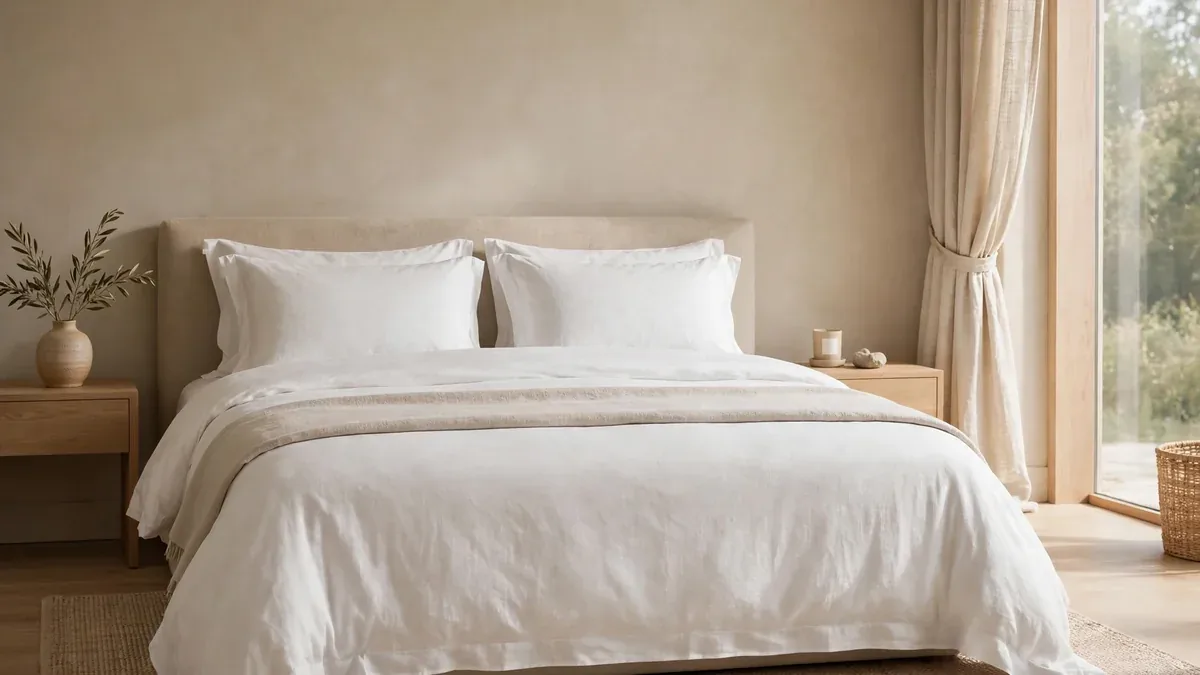

Best Luxury Linen Brands 2027: 8 Labels Worth the Investment
The best luxury linen brands share one quality cheaper bedding cannot fake: linen that gets better the longer you live with it. Real flax linen starts crisp, softens with every wash, breathes through warm nights, and develops a relaxed drape no synthetic blend can copy. The difference between a good set and a great one is the flax itself, where it was grown, and whether the brand is honest about the fabric.
That honesty matters, because the word linen now appears on everything from genuine Belgian flax to polyester blends containing barely any flax. Sheet sets range from a few hundred dollars to well over a thousand, and the most expensive is not always the best made. A heritage Italian mill can be beaten on value by a direct-to-consumer label, and a famous name can coast on reputation while cutting corners.
This guide covers eight luxury linen brands with real track records, explains how to read a label, compares the ranges side by side, and flags the caveats before you spend. Whether you are dressing a first proper bedroom or replacing a set you have slept on for a decade, these are the names worth your shortlist.
Key takeaways
- True luxury linen is flax, usually European flax from France or Belgium, and the best brands name the origin.
- Stonewashed linen feels soft from night one; untreated linen starts crisper and softens over months.
- Expect roughly $250 to $600 for a quality linen sheet set, and $800 or more for heritage labels.
- Lighter linen around 150 to 170 grams per square metre suits warm sleepers; heavier weaves suit cooler rooms.
- Linen wrinkles, costs more than cotton, and blends labelled as linen may contain little flax.
What this guide covers
This guide covers eight luxury linen brands selling genuine flax linen bedding, from heritage European mills to modern direct-to-consumer labels. Every brand offers full linen ranges, and each publishes enough detail about fibre, weave, and washing for a buyer to judge it fairly. The focus is bedding first — sheets, duvet covers, and pillowcases.
The guide starts with how the shortlist was chosen and what to look for on a label, then profiles each brand with its strengths, drawbacks, and the context behind its price. A comparison table puts the eight brands side by side, followed by a checklist and the questions buyers ask most.
Linen belongs to a wider luxury home story. The same eye for natural fibres shows up in the celebrity home decor looks that pair rumpled linen bedding with stone, pale wood, and soft neutral walls. Good linen needs no grand room to look expensive.
How we chose
The shortlist was built from fibre first and branding second. A brand qualified only if its core bedding is genuine flax linen with the fibre content stated plainly, woven from European flax, the benchmark for long, strong fibres. Brands selling mostly blends, or hiding fibre content, were excluded however fashionable their marketing looked.
Provenance and process counted next. The strongest candidates either mill their own fabric, as the Belgian and Italian heritage houses do, or work with named European mills and publish the details. Certifications such as OEKO-TEX and GOTS were treated as useful evidence, not proof alone, and brands with years of customer history scored above newcomers with one viral product.

Price was judged as value. Flax is a slow crop and weaving it well is skilled work, so the question was whether price matched fibre, finish, and construction — plus size range, fitted sheet depth, and stitching quality.
What to look for
Four things decide linen quality. First, fibre origin: European flax, grown mainly in France and Belgium, produces the longest, strongest fibres, and the best brands name the origin rather than writing “imported linen”. Second, weight: a plain weave around 150 to 170 grams per square metre feels light and airy, while heavier weaves near 200 grams suit cooler bedrooms.
Third, the finish. Stonewashed and garment-washed linen is pre-softened, so it feels relaxed from the first night. Untreated linen starts crisper and needs several washes to reach its best, but often lasts longer. Fourth, construction: French seams, reinforced corners, and envelope closures signal a brand that expects its bedding to be washed hard and often.
1. Parachute
What We Like: Parachute made relaxed, stonewashed European flax linen a mainstream luxury. The fabric is pre-washed for softness, the palette leans into warm neutrals, and fitted sheets are deep enough for thicker mattresses.
What to Consider: The linen is deliberately casual, so buyers wanting a crisp hotel finish may find it too relaxed. Prices sit mid-range, roughly $250 to $450 for a sheet set.
Background: Founded in Los Angeles in 2014, Parachute built its name on direct-to-consumer bedding focused on natural materials. Its linen is European flax, garment-washed for softness and a slightly rumpled look.
Caveats: The lighter weight can feel thin after heavy cotton percale, and colour batches can vary between orders, so buy a matching set in one order.
2. Brooklinen
What We Like: Brooklinen brings its direct-to-consumer value to a well-made linen range: stonewashed European flax, a broad size range, and prices clearly below most heritage labels. Bundle pricing makes a full bed refresh more affordable.
What to Consider: This is a value play rather than the most refined fabric here. The weave is slightly less dense than the heritage mills, and softness does not deepen quite as much over years of washing.
Background: Founded in New York in 2014 by a husband-and-wife team, Brooklinen grew through word of mouth and a long returns window. Its linen follows the same formula: European flax, stonewashed finish, fair pricing.
Caveats: Popular colours and sizes can sell out, especially during sales. Fitted sheet depth is generous but not the deepest here, so check measurements for very thick mattresses.
3. Coyuchi
What We Like: Coyuchi is the strongest choice for buyers wanting luxury linen with serious environmental credentials. Its organic linen is GOTS certified, the supply chain is published in detail, and the brand runs a trade-in programme for used linens.
What to Consider: Sheet sets typically start around $400 and rise with size, and the colour range is narrower than Parachute or Brooklinen. The aesthetic is firmly understated.
Background: Founded in California in 1991, Coyuchi is one of the older organic bedding companies in the United States and a pioneer of GOTS-certified textiles, built around organic fibres and fabrics designed to last.
Caveats: Certification explains the price but does not make the fabric softer than rivals on night one. Natural dyes can fade slightly faster if bedding is dried in strong sun.
4. Sferra
What We Like: Sferra is the connoisseur’s choice, an Italian house whose linen is woven with a density and finish the younger brands have not matched. The bedding has a cool, substantial hand, beautiful drape, and stitching that survives years of laundering.
What to Consider: Sferra is expensive, with sheet sets commonly starting above $700 and rising past $1,000. The range is more formal than the relaxed American brands, so it can feel too polished for a casual bedroom.
Background: Sferra traces its roots to Italy in 1891, producing fine linens in the textile region around Milan, and remains known for weaving and finishing in Italy. It has supplied fine hotels and private homes for generations.
Caveats: Some lines are linen blends or finished with a sheen that reads dressier than everyday, so check fibre content on each product rather than assuming the whole range is pure flax.
5. Frette
What We Like: Frette is the hotel linen standard, behind the beds of many of the world’s best hotels. The fabric is smooth, cool, and exceptionally well finished, with a crispness that survives washing, and it pairs well with the brand’s cotton percale.
What to Consider: Prices sit at the top of this guide, with sheet sets often starting near $800 and passing $1,200. Some famous Frette lines are cotton, so confirm you are buying the linen range.
Background: Founded in Grenoble, France, in 1860 and long based in Italy, Frette began supplying fine linens to European royalty and grand hotels, and it still supplies many leading hotels today.
Caveats: The linen is designed to look immaculate, so buyers who love a deliberately rumpled bed may find it too neat. Returns go through the brand’s own retail channels and can be slow.
6. Matteo
What We Like: Matteo offers Belgian linen with a Californian ease, and its bedding is among the softest here from the first wash. The garment-wash finish gives a relaxed drape, and the palette of washed whites, pale greys, and earth tones flatters a calm bedroom.
What to Consider: Matteo is a smaller, design-led label, so stock can be limited and colours sell through quickly. Prices sit in the upper middle, typically $400 to $700 for a sheet set.
Background: Founded in Los Angeles, Matteo built its name on Belgian linen woven and finished to its own specifications, with a focus on softness and colour. It supplies homes and boutique hotels alike.
Caveats: The softness comes with a more relaxed structure, so the fabric can look less tailored than Sferra or Frette on a tightly made bed. Confirm availability for unusual sizes.
7. Rough Linen
What We Like: Rough Linen is the purist’s brand: heavyweight linen woven from European flax and sewn in California, focused on durability over decoration. The bedding is thick, substantial, and famously long-lived, softening slowly over years.
What to Consider: It is not soft on arrival. The fabric starts notably crisp and needs regular washing to reach its best, which can take months, and the rustic look suits a farmhouse bedroom better than a sleek city flat.
Background: Rough Linen is a small California company built on one thing: heavyweight linen bedding from European flax, cut and sewn in the United States. Its best-known product is the Orkney linen range.
Caveats: The break-in period is real; anyone wanting soft bedding on night one should choose a stonewashed brand instead. The heavyweight fabric is warm, a virtue in winter and a drawback in a hot climate.
8. Libeco
What We Like: Libeco is the mill itself, a Belgian linen weaver selling its own bedding. Its linen is woven in Belgium from Belgian and French flax, in weights from light summer sheets to heavier winter bedding, at prices remarkably fair for genuine Belgian-made linen.
What to Consider: Libeco is a weaver first and a retailer second, so branding is plain and distribution narrower than the American brands. The colour range is sensible rather than exciting.
Background: Libeco has woven linen in Belgium since 1858, in the flax region of Kortrijk, and remains one of the few mills controlling the process from fibre to finished fabric.
Caveats: Availability varies by country, with some sizes easier to find in Europe. The fabric is less pre-softened than the garment-washed American brands, so expect a firmer first impression.
Background
Linen is one of the oldest textiles in the world, and its modern luxury story is still centred on Western Europe. The finest flax grows in a coastal belt from Normandy through Belgium into the Netherlands, where the climate produces long, strong fibres, and the region’s mills have spent centuries perfecting the craft. That is why Belgian linen and French flax still carry weight on a label.
The craft survives as a living trade. In Lisbon, family-run linen shops still sell hand-embroidered cloth in the old quarters, and the Lisbon fashion guide notes how those small ateliers sit alongside the city’s grand luxury avenues.
History also explains the price. Flax is a demanding crop, and turning it into fabric takes more steps than cotton, each needing skill and time. A linen set cannot be made cheaply without cutting corners, and the corners show up as shorter fibres, looser weaves, or diluted blends.
The caveats that matter
Linen’s strengths come with honest trade-offs. It wrinkles in a soft, lived-in rumpling that some love and others cannot tolerate. It costs two to three times as much as good cotton, and the first washes can feel crisp before the fabric reaches its best. None of this makes linen a bad buy, but it makes it a considered one.
The biggest trap is the blend. A product labelled as linen may legally contain a minority of flax mixed with cotton or polyester, so always check the fibre content, and avoid any brand that does not publish it. A second trap is weight: very light linen can feel flimsy, while very heavy linen can feel stiff and warm.
| Brand | Fibre origin | Finish | Sheet set from | Best for |
|---|---|---|---|---|
| Parachute | European flax | Stonewashed | About $250 | Easy first luxury set |
| Brooklinen | European flax | Stonewashed | About $240 | Best value |
| Coyuchi | Organic European flax | Garment-washed | About $400 | Organic credentials |
| Sferra | Italian-woven flax | Finished | About $700 | Formal, heirloom quality |
| Frette | Italian-woven flax | Finished | About $800 | Hotel-grade polish |
| Matteo | Belgian flax | Garment-washed | About $400 | Softness and colour |
| Rough Linen | European flax | Untreated | About $350 | Heavyweight durability |
| Libeco | Belgian and French flax | Lightly finished | About $300 | Authentic Belgian linen |
Prices are approximate starting points for a queen sheet set. The pattern is the useful part: direct-to-consumer brands cluster at the accessible end, Belgian and organic labels sit in the middle, and the Italian heritage houses command a clear premium.
Checklist
- Check the fibre content and confirm it is 100 percent flax, or as close to it as the product claims.
- Look for European flax, Belgian linen, or French flax named on the label; be wary of brands writing only “imported linen”.
- Choose stonewashed linen for softness on night one, or untreated linen for the longest life if you accept a break-in period.
- Match weight to climate: lighter linen around 150 to 170 grams per square metre for warm rooms, heavier weaves for cooler ones.
- Measure mattress depth, including any topper, and check fitted sheet depth before ordering, especially with heritage brands.
- Fold linen loosely and store it in a cool, dry place, following the same how to organize your closet principles for natural fibres.
FAQ
Is linen bedding worth the price?
For buyers who sleep warm or value natural fibres, yes. Genuine linen lasts longer than cotton, breathes better in summer, and softens with every wash, so the cost per year of use is often lower than a cheaper set. It is not worth it if you dislike wrinkles, because no spending removes linen’s natural texture.
How long does luxury linen bedding last?
Well-made linen bedding commonly lasts ten years or more, and heavier weaves can last decades. The fabric softens rather than wearing thin, and the most common failure is the stitching or elastic, which is why construction matters as much as fibre.
Does linen get softer over time?
Yes. Each wash relaxes the fibres, so a set that feels crisp in its first month will feel noticeably softer by its tenth wash. Stonewashed linen starts further along that journey, while untreated linen takes longer.
Is linen good for hot sleepers?
Linen is one of the best fabrics for hot sleepers. Flax fibres absorb moisture and release it quickly, and the loose weave lets air circulate, keeping the bed cooler than cotton sateen or synthetics.
How do I wash linen sheets?
Wash in cool or warm water on a gentle cycle with mild detergent, and avoid bleach and fabric softener, which damage the fibres. Line drying is ideal, but low-heat tumble drying is fine; remove sheets while slightly damp and smooth by hand. Linen does not need ironing.
What is the difference between Belgian linen and other linen?
Belgian linen is woven in Belgium from flax grown mainly in Belgium and France, protected by the Belgian Linen Association’s standards. The distinction is about provenance and process, not one measurable property. French flax is equally respected; the real dividing line is between traceable European flax and anonymous imported fibre.
The bottom line
The best luxury linen brand for most buyers matches their climate, budget, and tolerance for wrinkles. Parachute and Brooklinen are the smartest first buys: genuine European flax at accessible prices, soft from the first night. Coyuchi, Matteo, and Libeco are the middle ground, while Sferra and Frette are the splurge. Rough Linen stands apart for the patient buyer who wants heavyweight fabric built to last.
Whichever brand you choose, the rules stay the same: confirm the fibre is flax, look for European origin, pick a finish and weight that suit your room, and accept the wrinkles as part of the fabric’s character. Do that, and a good linen set will repay its price — in cooler summers, softer winters, and a bed that looks better the longer you live with it.
Meet Our Experts
Our home and interiors editors research luxury textiles, bedding, and home design, drawing on published brand information, mill histories, and certification records.
Why Trust BrassSmile
BrassSmile covers luxury homes, fashion, and lifestyle with guides that prioritise honest materials, transparent sourcing, and real-world value over brand hype, and every guide flags the caveats alongside the praise.
Sources
European Flax, Masters of Linen, Belgian Linen Association, OEKO-TEX, Global Organic Textile Standard, Parachute, Brooklinen, Coyuchi, Sferra, Frette, Matteo, Rough Linen, Libeco.



