Best Luxury Travel Bags Brands: 8 Names Worth the Investment in 2027
The best luxury travel bags brands make luggage that still looks good after its tenth trip, not just its first. A great travel bag survives baggage handlers, overhead bins, rain on the tarmac, while making the journey feel a little more considered. That mix of durability and design separates a luxury travel bag from an expensive one.
Choosing between these brands is harder than it looks. The most famous name is not always the most practical, the prettiest bag is not always the one that fits in the overhead bin, and the highest price does not guarantee the best warranty. A leather weekender that ages beautifully may be a poor choice for a rainy city break.
This guide compares the eight luxury travel bag brands that matter most in 2027, from Parisian trunk makers to German engineering icons and modern American performance labels. For each one you will find what it does best and what to watch out for.
Key takeaways
- The strongest luxury travel bag brands combine heritage craft with practical design: durable materials, good hardware, and a repair service that works.
- Leather weekenders suit car, train and short-haul travel; hard-shell cases suit frequent flyers.
- Buy for the trip you take most often, and check cabin dimensions against your usual airline first.
- Warranty and repair coverage vary widely, and a strong aftercare network is worth as much as the bag itself.
- No luxury travel bag suits every journey, and one that is too heavy empty or too small for your packing list will stay in the cupboard.
What this guide covers
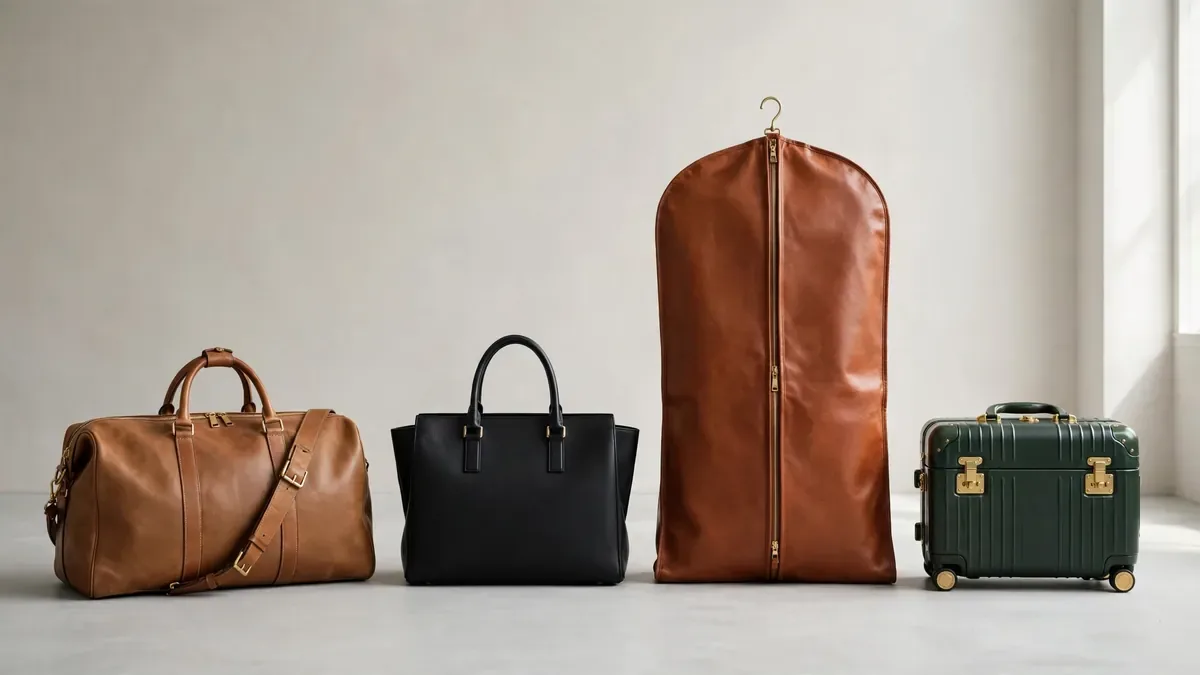
This guide covers eight luxury travel bag brands, each chosen for a genuine, long-standing reputation in travel luggage rather than a single fashionable season. Every brand here makes bags designed for real journeys: weekenders, cabin cases, garment bags and holdalls built to be carried, wheeled, lifted into overhead bins and checked into holds. Each has a proven record and a service network that can repair what it sells.
The guide is organised around how you actually travel. For short trips by car or train, a leather weekender or soft duffel will serve you better than a rigid case. If you fly often, a hard-shell cabin case with smooth wheels and a reliable telescopic handle will save you more trouble than any amount of leather. And if your trips mix business and leisure, a bag that works in a hotel lobby and a boardroom is worth more than one that only works in one. Our roundup of versatile bags that work across work, travel and evenings is a useful companion if you want one bag to do several jobs.
We have focused on the brands themselves rather than single products, because a brand’s approach to materials, construction and aftercare tells you more than any one model. though each profile names the signature pieces.
How we chose
We chose these eight brands by weighing four things: the quality of their materials, the engineering of their hardware, the depth of their travel collections, and the strength of their repair and warranty service. A brand made the list only if it scored well on all four; a beautiful bag with a weak zip or no repair service did not qualify.
We also looked at how each brand’s bags behave over time. Leather should patinate rather than crack, canvas should resist scuffs, polycarbonate should flex rather than shatter, and wheels and handles should survive years of airport floors. We drew on long-term ownership reports, published brand histories, warranty terms, and the judgement of our fashion and travel editors.
What to look for
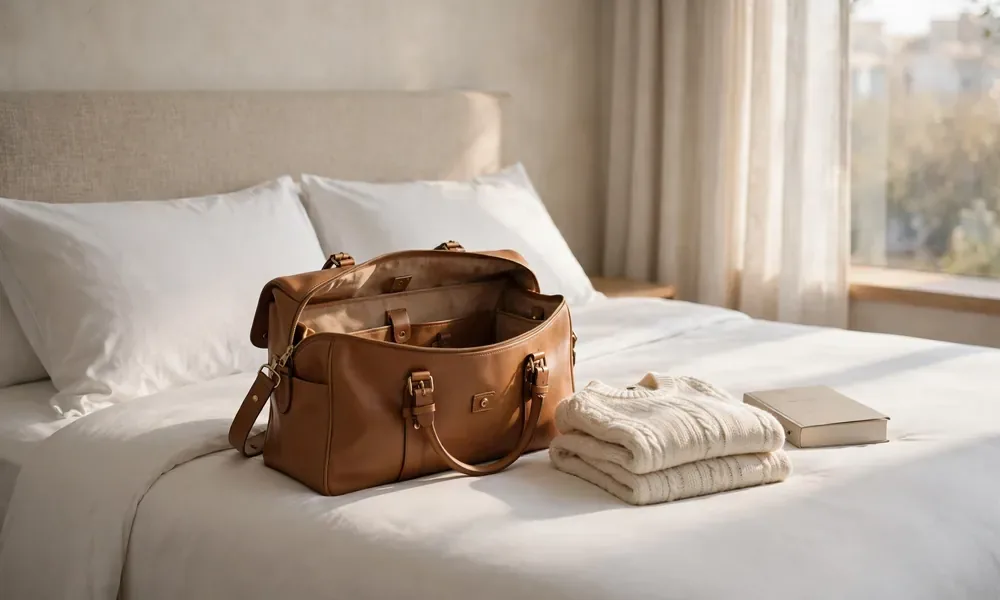
Before you fall for a logo, check the details that decide whether a travel bag is a pleasure or a chore. A heavy leather weekender can eat a third of a cabin allowance before you pack a thing, zips should run smoothly under load, and wheels should roll straight without wobbling.
Look at the interior as carefully as the exterior. A good travel bag has a flat base, a pocket for documents you need at security, and enough structure not to collapse when half full. Finally, ask about repairs before you buy: a brand with its own workshops can keep a bag going for decades.
Louis Vuitton
Louis Vuitton has made travel luggage since 1854, when the house was founded in Paris as a trunk maker. Its signature pieces are the Keepall, a soft holdall introduced in 1930, and the Horizon range of rolling luggage.
What we like: the breadth of the range, from the compact Keepall 45 to full rolling cases, and a global store network that advises on repairs.
What to consider: monogram canvas is a statement that draws attention, which not every traveller wants, and some styles hold their shape better than others.
Background: the house began with flat-topped trunks that stacked neatly in the age of steam travel.
Caveat: prices sit firmly in the luxury bracket, and popular pieces are frequently copied, so buy only from the house itself or an authorised retailer.
Rimowa
Rimowa is the German engineering name in luxury luggage, founded in Cologne in 1898 and known for its grooved aluminium and polycarbonate cases. The Original aluminium case is the brand’s icon, while the Essential range offers the same design in lightweight polycarbonate. Rimowa joined the LVMH group in 2016.
What we like: exceptionally well-engineered cases, with smooth multi-wheel systems, sturdy telescopic handles and dent-resistant shells, plus a lifetime guarantee.
What to consider: aluminium cases show scratches more visibly than polycarbonate and are heavier, and the grooved design is very distinctive.
Background: the grooved aluminium look dates to the 1930s, inspired by the corrugated metal of early aircraft.
Caveat: the hard shell has no outside pocket for a book or boarding pass, so frequent flyers often pair it with a soft personal item.
Hermès
Hermès is the quietest name on this list and, for many collectors, the most desirable. Founded in Paris in 1837 as a harness maker, the house still makes leather goods by hand in French workshops. Its travel pieces include the Haut à Courroies holdall and the structured Victoria weekender.
What we like: the leather quality and hand finishing are unmatched, and a well-kept Hermès travel bag looks better after a decade than most bags look new.
What to consider: availability is limited, prices are the highest on this list, and many pieces are made to order.
Background: Hermès began making saddles and harnesses for horse-drawn carriages, and its leather craft comes from that tradition.
Caveat: fine, lightly finished leathers mark and darken with rain and handling, so these bags need more care than canvas or polycarbonate cases.
Goyard
Goyard is the most discreet of the Parisian trunk makers, founded in 1853 and still family owned. Its signature is the hand-painted Goyardine canvas, a chevron-patterned coated cloth used for trunks and the Saint Louis tote. The house does not sell online and does not advertise.
What we like: the canvas is light, water resistant and very hard wearing, and the bags are made to order in the Paris workshop.
What to consider: there is no online shop, so buying means visiting a store, and waiting times for made-to-order pieces can be long.
Background: Goyard began as a trunk maker for the age of ocean liners, and its workshop still paints the Goyardine pattern by hand.
Caveat: the soft, unstructured shape of many Goyard pieces means they hold less form when partly packed, so use packing cubes if you like a bag that stands up.
Tumi
Tumi is the modern American answer to luxury travel, founded in 1975 and built around ballistic nylon, a fabric first developed for flak jackets. Its Alpha Bravo and 19 Degree collections cover everything from backpacks to aluminium cabin cases, and the brand has been part of the Samsonite group since 2016.
What we like: the interiors are the best organised in this guide, with thoughtful pockets, padded laptop sleeves and add-a-bag straps.
What to consider: the styling is functional rather than romantic, and the brand’s look is more boardroom than boulevard.
Background: the company was named after a Peruvian ceremonial knife, and its founder set out to make luggage that worked as hard as its owner.
Caveat: the range is wide, and the entry-level pieces are far from the quality of the flagship lines.
Globe-Trotter
Globe-Trotter is the oldest name in this guide, founded in England in 1897, and it still makes its cases by hand from vulcanised fibreboard, a layered material that is both light and remarkably strong. The Safari and Centenary cases are the icons, with leather corners, brass fittings and hand-painted stripes.
What we like: the cases are handmade in England, beautifully finished and lighter than they look.
What to consider: most models have no built-in wheels, so they are carried rather than rolled, which suits car and train travel better than long airport walks.
Background: the company supplied cases to explorers and diplomats in the age of ocean travel, and its cases have appeared in films from the James Bond series to period dramas.
Caveat: fibreboard is not waterproof, so these cases need care in heavy rain, and the lack of wheels means you should pack light.
Moynat
Moynat is a Parisian trunk maker founded in 1849, one of the great names of nineteenth-century travel, relaunched in 2011 after decades of quiet. Today it makes handcrafted leather luggage in its Paris ateliers, including the Réjane bag.
What we like: the leather quality and hand finishing are exceptional, the designs are elegant without being showy, and the small scale means a more personal service in store. The bags that hold their value best tend to come from houses with this craft heritage, as our guide to bags that hold their value over time explains.
What to consider: the store network is small, so trying a bag in person may mean a trip to Paris or another major city.
Background: Pauline Moynat founded the house in 1849 and pioneered lightweight, waterproof trunks for the age of rail travel.
Caveat: because the brand is less widely known, resale values are less predictable than those of the biggest names.
Bottega Veneta
Bottega Veneta brings Italian leather craft to travel, founded in Vicenza in 1966 and famous for its intrecciato woven leather, in which thin strips of leather are woven by hand into a supple, durable surface. Its travel pieces include woven weekenders and cabin totes, and it is part of the Kering group.
What we like: the woven leather is soft, strong and instantly recognisable, and the bags are made in Italy to a very high standard.
What to consider: the soft structure means woven bags can lose their shape when underpacked, and the leather needs conditioning.
Background: the intrecciato weave was developed to make leather strong enough for a bag without stiffening it, and it remains the house’s signature.
Caveat: woven leather can catch on rough surfaces and sharp hardware, so keep the bag away from velcro and the edges of overhead bins.
Background
Luxury travel bags began with the trunk. In the nineteenth century, when journeys were made by steamship and railway, luggage had to survive weeks of handling, and the great Parisian trunk makers built their reputations on trunks that were light, waterproof and stackable. Their innovations, flat tops that stacked and coated canvas that resisted rain, set the standard for everything that followed.
The twentieth century changed the shape of travel luggage. Air travel made weight matter more than ever, and the holdall and the wheeled case replaced the trunk. Hermès and Bottega Veneta brought fine leather craft to the weekender, Globe-Trotter kept the handmade case alive, and later Rimowa and Tumi rebuilt the cabin case around aluminium, polycarbonate and ballistic nylon.
Today the luxury travel bag sits between two ideas: the bag as a status object, bought for the name it carries, and the bag as a tool, bought for the journeys it will make. The best brands serve both at once. For a lighter, seasonal take on the same houses, our roundup of summer designer bags for 2027 shows how these brands handle warm-weather travel.
The caveats that matter
The first caveat is weight. A luxury leather weekender can weigh two kilograms before you pack it, so check your airline’s cabin allowance and weigh the bag empty before you buy. The second is size: cabin dimensions differ between airlines, so measure the bag yourself rather than trusting a label that says cabin approved.
The third caveat is maintenance. Fine leather needs conditioning and protection from rain, and hard shells need their wheels and handles checked before a long trip. The fourth is security: a bag that advertises its value also attracts attention. The table below summarises the eight brands at a glance.
| Brand | Signature piece | Best for | Watch out for |
|---|---|---|---|
| Louis Vuitton | Keepall, Horizon | Iconic style, global service | High profile, premium price |
| Rimowa | Original aluminium case | Frequent flyers, durability | Weight, visible scratches |
| Hermès | Victoria, Haut à Courroies | Finest leather, discretion | Price, limited availability |
| Goyard | Saint Louis, trunks | Light, hard-wearing canvas | No online shop, soft shape |
| Tumi | Alpha Bravo, 19 Degree | Organisation, business travel | Functional styling, wide range |
| Globe-Trotter | Safari, Centenary cases | Classic style, car and train | No wheels, not waterproof |
| Moynat | Réjane, leather weekenders | Craft, understated elegance | Small store network |
| Bottega Veneta | Woven leather weekenders | Quiet luxury, soft leather | Weave can catch and scuff |
Checklist
- Measure the bag against your airline’s cabin dimensions and weigh it empty before you commit.
- Test the zips, handles and wheels with the bag packed, and check that it stands upright on its own.
- Look inside: check the lining, the document pocket, the laptop sleeve and the base reinforcement.
- Ask about the warranty, the repair service and the availability of spare parts before you buy.
- Choose the material for your real journeys: leather for car and train, hard shell for frequent flying, canvas for light travel.
- Buy from the brand or an authorised retailer, and keep the receipt, dust bag and certificates.
FAQ
Which luxury travel bag brand is best overall?
There is no single best brand, because the right choice depends on how you travel. Louis Vuitton offers the widest range and the best global service network, Rimowa is the strongest choice for frequent flyers, and Hermès is the finest leather option.
Are luxury travel bags worth the price?
They can be, if you travel often and keep the bag for years. A well-made luxury bag spreads its cost over hundreds of journeys, and the best brands offer repairs that extend its life far beyond a cheaper alternative.
What size travel bag should I buy for cabin use?
Most airlines accept cabin bags around 55 by 40 by 20 centimetres, but the exact limits vary, so check your usual carrier. A 45-litre weekender covers most two to three day trips.
Leather or hard-shell: which is better for travel?
Leather is softer and more flexible, and it ages beautifully, which suits car, train and short-haul travel. Hard-shell cases protect better against impact and rain and roll more easily, which suits frequent flyers.
Do luxury travel bags hold their value?
Some do, and some do not. Classic pieces from the biggest houses, in popular colours and well-kept condition, tend to hold their value best, while seasonal styles depreciate faster. Buy a bag because you will use it and love it, and treat any resale value as a bonus.
How do I care for a luxury leather travel bag?
Keep it out of prolonged rain, wipe it clean with a soft dry cloth, and condition the leather a few times a year. Store it stuffed with tissue in its dust bag, away from sunlight and heat.
The bottom line
The best luxury travel bags brands treat travel as a craft: Louis Vuitton and Goyard for the trunk-making tradition, Hermès, Moynat and Bottega Veneta for the finest leather work, Rimowa and Tumi for engineering and organisation, and Globe-Trotter for the handmade case. Each has earned its place through decades of making luggage that works.
Start with your journey, not the logo. Decide whether you need a weekender or a cabin case, leather or hard shell, discretion or display, then choose the brand whose strengths match. Check the weight, the warranty and the repair service, buy from an authorised source, and look after the bag once it is yours.
Meet Our Experts
Our fashion and travel editors cover luxury goods, accessories and travel, drawing on years of reporting on the fashion houses, their workshops and their collections.
Why Trust BrassSmile
BrassSmile covers fashion, beauty and luxury lifestyle with independent editorial judgement. We do not accept payment for placement in our guides, and we update our recommendations as collections and warranties change.
Sources
Vogue, Harper’s Bazaar, Elle, The Financial Times, Louis Vuitton, Rimowa, Hermès, Goyard, Tumi, Globe-Trotter, Moynat, Bottega Veneta.