

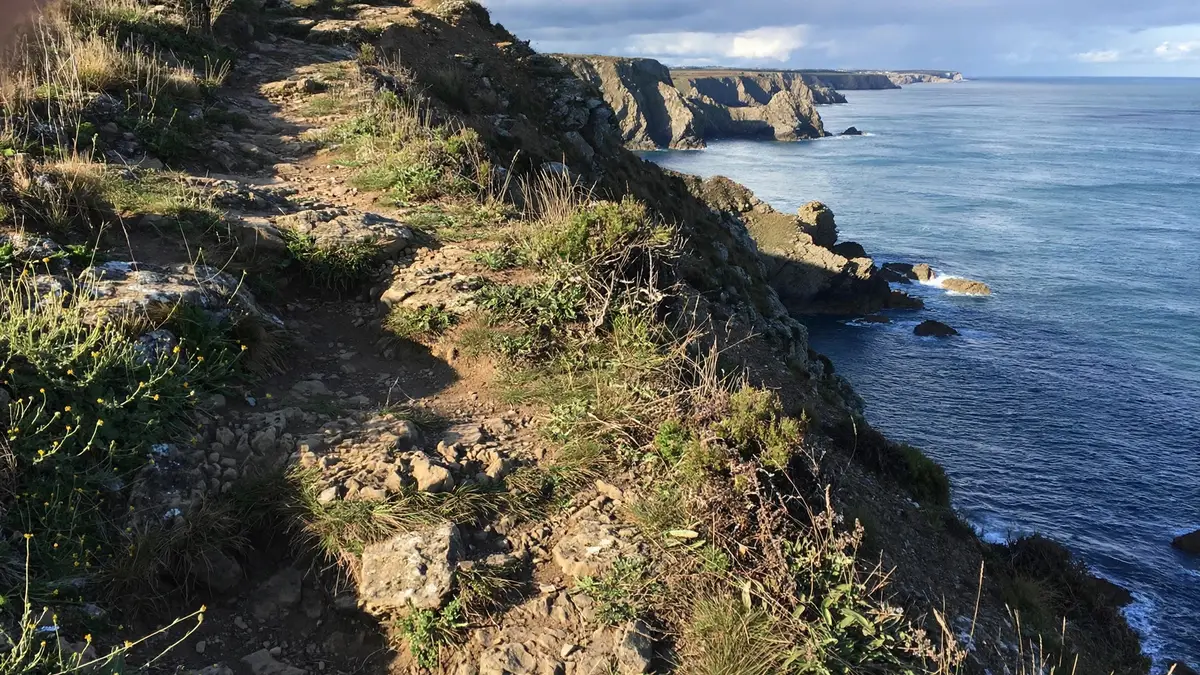
A cliff escape is a holiday built around a dramatic edge: a few days at a retreat set into a cliff above the sea, where the view is the main event and the days are shaped by the landscape.
The most common mistake is to book the room first and think about the rest later. A cliff escape works when the room, the season, the transport and the daily rhythm fit together: a sheltered terrace for the windy afternoons, a plan for getting to the beach without a hundred steps, a restaurant booked before you arrive, and a day or two with nothing scheduled at all. Get those right and the cliff does the rest.
This guide walks through the planning in the order that matters, from choosing the cliff to packing for it, so that the escape feels like an escape.
Key takeaways
- Choose the cliff first and the room second: the setting decides the weather, the access and the daily rhythm of the whole trip.
- Book the shoulder season where you can, when the weather is warm, the crowds are thinner, and the rates are lower.
- Sort transport before anything else, because cliff retreats are rarely near an airport, a station or a town centre.
- Plan one or two days with nothing scheduled, so the cliff itself has time to be the experience.
- No cliff escape suits every traveller, and heights, vertigo and limited mobility are reasons to choose a gentler setting, not to push through.
What a cliff escape is, and how it differs from an ordinary holiday
A cliff escape is a short break — usually three to six nights — at a stay built into a cliff edge, where the landscape is the reason for the trip rather than the background to it. The days are slower than a city break and quieter than a beach resort.
That is what makes it different from an ordinary hotel holiday. On a cliff, the hotel is the experience, and the days are filled by the setting itself: the light changing on the water, the wind, the walk along the cliff path, the meal on the terrace. If you want space and quiet, it will feel like exactly enough.
The other difference is the planning. A city break can be improvised; a cliff escape cannot. The retreat may be an hour from the nearest airport, the coast road may be narrow and slow, and the restaurants and beaches nearby may need booking days ahead.
How to plan a cliff escape, in the right order
Start with the setting, not the hotel.

Next, sort the journey. Cliff retreats are almost never near an airport, and the last stretch is usually a narrow coast road or a mountain pass. Work out how you will get from the airport to the retreat, how long it really takes, and whether you need a car, a transfer or a boat.
Then book the room, the restaurants and the activities, in that order. Restaurants near a cliff retreat are often small and book up early, so reserve before you travel. Our guide to planning a valley escape follows the same order for a gentler setting, and the logic is the same: setting first, journey second, room third, and everything else after.
The 9 steps to planning a cliff escape
Pick the cliff and the season together
What to do: Choose the destination and the month at the same time, because the season changes the cliff completely. Look at average temperatures, rainfall and wind for your month, and check whether the retreat is open at all in the low season.
What to avoid: Do not pick a month for the price alone. The cheapest weeks on a cliff are often the windiest and the greyest, and a bargain rate is no bargain if the view is hidden by fog. Best For: First-time cliff travellers. Time Needed: An evening of research. Standout Tip: Shoulder season — May and September in the Mediterranean, spring and autumn elsewhere — is the sweet spot for most cliff destinations.
A caldera in Santorini in June is a different trip from the same caldera in October, and the right month matters more than the right hotel.
Decide how long to go for
What to do: Plan for three to six nights. Three nights is enough to settle into the rhythm of a cliff retreat; six nights is enough to explore the coast as well.
What to avoid: Do not try to do a cliff escape in a single weekend unless the retreat is close to home. The journey is long, and two nights is barely enough to recover from it. Best For: Anyone with a busy schedule. Time Needed: Half an hour, once the dates are roughly set. Standout Tip: Add a buffer night at the start if the journey involves a flight and a long drive.
The first day you notice the view. The second day you start to relax into it. By the third day, the cliff feels like yours.
Choose the stay before the transport
What to do: Book the retreat before you book flights or transfers, because the room you want may not be available on your dates, and the retreat’s location decides the journey.
What to avoid: Do not book a non-refundable flight before the room is confirmed. Cliff retreats are small, and the best rooms sell out months ahead in the shoulder season. Best For: Travellers booking in peak or shoulder season. Time Needed: A day of comparing options. Standout Tip: Email the retreat directly with your questions; the answers are usually more useful than the booking site’s description.
Compare rooms by their terrace, their shelter and their privacy, not just by their size.
Sort the transfer before anything else
What to do: Arrange the journey from the airport to the retreat as soon as the room is booked. Use the retreat’s own transfer where possible, or hire a car if you plan to explore the coast. Check the driving time on the coast road, not just the distance.
What to avoid: Do not assume a taxi will be waiting at a small airport, and do not rely on public transport to reach a cliff retreat. Buses on coast roads are infrequent and slow. Best For: Anyone arriving by plane. Time Needed: An hour of planning. Standout Tip: Ask the retreat how long the transfer really takes, including the last stretch on the coast road.
A retreat that is forty miles from the airport can be two hours away on a winding coast road, and arriving tired and late is a poor start to a holiday built on calm.
Set a total budget, not just a room budget
What to do: Add up the room, the transfer, the meals, the spa and the activities before you commit, and set a total figure for the trip. Cliff retreats often charge separately for dining, spa treatments and excursions, and the extras add up fast.
What to avoid: Do not compare cliff retreats by the room rate alone. A retreat that includes breakfast, a transfer and a spa credit can be better value than a cheaper room that charges for everything. Best For: Anyone watching the total cost. Time Needed: An hour with a spreadsheet or a notebook. Standout Tip: Ask what is included in the rate, and what a typical day of meals and activities costs on top.
A total budget keeps the extras from creeping up on you, and it lets you enjoy the terrace dinner and the spa without doing the sums at the table.
Plan activities for the morning and evening
What to do: Put the active parts of the day in the morning and the evening, and keep the middle of the day for the terrace, the pool and a long lunch.
What to avoid: Do not plan a full day of sightseeing in the middle of the day. The sun is strong on an exposed cliff, and the coast roads are at their busiest. Best For: Active travellers. Time Needed: An evening of planning. Standout Tip: Book the boat trip for the morning, when the sea is usually calmer and the light is softer.
The mornings are for walking and exploring, the afternoons are for rest, and the evenings are for the view. Fight it and they feel tiring.
Pack for the cliff, not the hotel
What to do: Pack layers, a windproof jacket, comfortable shoes with grip, sun protection, and a small bag for day trips. Cliff paths are uneven, the wind is constant, and the temperature can drop sharply after sunset.
What to avoid: Do not pack only for the photographs. Heels, white linen and delicate fabrics are hard work on a cliff, and the wind will undo a careful outfit in minutes. Best For: Anyone who likes to walk. Time Needed: An hour the night before. Standout Tip: Bring a light scarf or shawl: it works against the wind, the sun and the evening chill in one piece.
The right bag is a small one you can carry on a cliff path without thinking about it, with room for water, sun protection and a layer for the evening.
Book restaurants and activities early
What to do: Reserve the retreat’s restaurant for at least the first night, and book any popular restaurant nearby before you travel. Do the same for the spa and for boat trips, which have limited places and fill up in the season.
What to avoid: Do not assume you can walk in anywhere near a cliff retreat. The villages nearby are small, the restaurants are few, and the best tables go to the people who booked ahead. Best For: Food lovers and spa-goers. Time Needed: An hour, a week before departure. Standout Tip: Ask the retreat to book the restaurants for you; they know which ones are worth the trip and which tables to request.
It is the difference between a table with a view and a table nowhere at all.
Build rest into the days
What to do: Leave at least one day with nothing scheduled, and keep the other days light. A cliff escape works when the setting has time to be the experience, and that only happens when the schedule has gaps in it.
What to avoid: Do not fill every day with excursions. The coast will still be there tomorrow, and the best moments of a cliff trip — the sunset, the quiet morning, the long lunch — happen in the gaps, not on the itinerary. Best For: Anyone who arrives tired. Time Needed: Nothing, except the discipline to leave a day blank. Standout Tip: Treat the unscheduled day as the main event, not the leftover: it is the day the cliff becomes yours.
A cliff escape is not a checklist of sights. It is a few days of living on an edge, and the edge needs time.
Choosing the right cliff setting
The setting decides the trip, so it deserves a careful choice. A caldera cliff in Greece gives you white villages, blue water and a sunset that draws a crowd every evening. A headland in California gives you fog, redwoods and a quiet that is hard to find anywhere else. A terraced coast in Italy gives you villages, food and history in the same view.
Think about what you want the cliff to do. If you want romance, choose a setting with private terraces and a view that faces the sunset. If you want activity, choose a setting with a beach, a boat and a village within reach, so the cliff is a base rather than a cage. The hillside retreats are a useful comparison here: a hillside gives you the view with gentler paths and easier access, and for some travellers that is the better trade.
Also think about who is travelling. A cliff escape is at its best with two people who want the same thing: quiet, views and slow days. With a larger group, or with children, a gentler setting usually works better, because the group needs more space, more choice and easier access.
The caveats that matter
Cliff escapes are wonderful, but they are not without risks, and the honest planning includes the things that can go wrong. The weather is the biggest variable. Wind and fog can hide the view for days, especially on exposed headlands, and a cliff that is spectacular in sunshine can feel bleak in a storm.
| Detail | What is known |
|---|---|
| Ideal length | Three to six nights; three to settle in, six to explore the coast as well |
| Best time to go | Spring and autumn in most destinations, when the weather is warm and the crowds are thinner |
| What to book first | The retreat, then the transfer, then the restaurants; activities can wait until arrival |
| Biggest hidden cost | Meals, spa treatments and transfers, which are usually charged separately |
| What to pack | Layers, a windproof jacket, grippy shoes, sun protection, and a small day bag |
| Who should think twice | Anyone with vertigo, limited mobility, or a fear of heights |
| What the weather does | Wind and fog can hide the view for days, especially on exposed headlands |
| What to leave unscheduled | At least one full day, so the cliff itself has time to be the experience |
Heights are the other honest caveat. A cliff escape is built on a drop, and the drop is always there: below the terrace, beyond the pool, at the end of the path. If anyone in your party is uneasy with heights, the holiday can become a series of avoided edges rather than a relaxing break. The lagoon retreats offer the same sense of seclusion at water level, and for some travellers that is the kinder choice.
Checklist: planning a cliff escape honestly
Use these checks before you book, and again a week before you travel.
- Check the season: look at temperature, wind and rainfall for your exact month, not just the destination in general.
- Check the journey: time the transfer from the airport on the real coast road, not the map distance.
- Check the room: confirm the terrace, the shelter, the steps, and what is included in the rate.
- Check the restaurants: book the retreat’s restaurant for the first night and any popular spot nearby.
- Check the packing: layers, a windproof jacket, grippy shoes and sun protection, not just holiday clothes.
- Check the gaps: leave at least one day with nothing scheduled, and protect it.
Frequently asked questions
How far ahead should I book a cliff escape?
Three to six months ahead for the shoulder season, longer for the best rooms in high summer. Cliff retreats are small, and the rooms with the best terraces sell out first.
Do I need travel insurance for a cliff escape?
Yes, as for any holiday, and check that it covers the activities you plan: boat trips, cliff walks and water sports are sometimes excluded from basic policies.
Can I visit a cliff retreat without a car?
It depends on the destination. Some retreats run their own transfers and shuttles, and some coastlines are best explored by boat. If you do not want to drive, choose a retreat with a transfer service and a village within walking distance.
What if the weather is bad for the whole trip?
It happens, especially on exposed headlands. Build a grey-day plan before you go: a spa treatment, a village to explore, a long lunch, a book on the terrace.
Are cliff escapes good for a first luxury trip?
Yes, if you choose a gentler setting. A full-service cliff hotel with a spa, a restaurant and a sheltered terrace is a good first step.
How do I choose between a cliff retreat and a hillside retreat?
Choose the cliff if the drop and the drama are the point of the trip. Choose the hillside if you want the view with easier paths, gentler weather and more choice nearby.
The bottom line
Planning a cliff escape is mostly about order: choose the cliff and the season together, book the stay before the transport, sort the journey before anything else, and leave a day blank so the setting has time to work. They are the ones with the most space in them.
Check the steps, pack for the wind, and book the table with the view. That is the honest way to plan a cliff escape, and the way to come home feeling like you actually escaped.



