



A lagoon is the quiet side of the sea. Sheltered from open waves by a reef or a sandbar, the water stays shallow, warm and almost still, which is exactly why the best lagoon retreats feel so different from a beach resort. You step off a jetty into water that barely moves, you swim before breakfast without fighting a current, and the whole stay runs at the pace of the tide rather than the pace of a schedule.
The problem is that the word lagoon gets used loosely. Plenty of resorts sit near a lagoon without actually being part of it, and plenty of overwater rooms look out over deep water that has nothing calm about it. A true lagoon retreat puts you on the water itself, with direct access from your room, a house reef you can snorkel in an afternoon, and staff who know the tides the way a good hotel knows its restaurant bookings.
Below are nine lagoon retreats worth considering in 2027, from a classic Maldivian atoll to a quiet French Polynesian motu and a lesser-known lagoon in the Philippines. Each one is described by what it does well, what to watch for, and who it suits best, so you can choose with the water in mind, not just the photographs.
Key takeaways
- A lagoon retreat is defined by calm, shallow, sheltered water with direct access from the room, not just a lagoon nearby.
- The best time to visit most tropical lagoons is the dry season, when the water is clearest and the wind is lowest.
- Overwater villas, beach villas and lagoon suites suit different travellers, and the right choice depends on how much time you actually spend in the water.
- Seaplane and boat transfers add real time and cost to a trip, so check the transfer before you book the room.
- No lagoon is guaranteed calm every day, and weather, tides and seasonal algae can change the water even at the best resorts.
What a luxury lagoon retreat actually is
A lagoon is a shallow body of water separated from the open sea by a reef, a sandbar or a chain of small islands. The barrier breaks the swell, so the water inside stays calm, and the shallow depth lets the sun warm it through.
A luxury lagoon retreat is built around that water rather than beside it. The rooms sit on stilts over the lagoon or on a narrow strip of sand with steps straight into it. There is usually a house reef a short swim from the shore, a dive centre on site, and a restaurant that serves the catch of the day.
How we chose these retreats and what to look for
Look first at the water itself. A good lagoon has a house reef within a short swim, water clear enough to see the sand ten metres down, and a depth that lets you stand in places and swim in others. Ask the resort how far the reef is from the shore and whether the water stays calm through the season you are visiting. A lagoon that is perfect in February can be choppy in July.
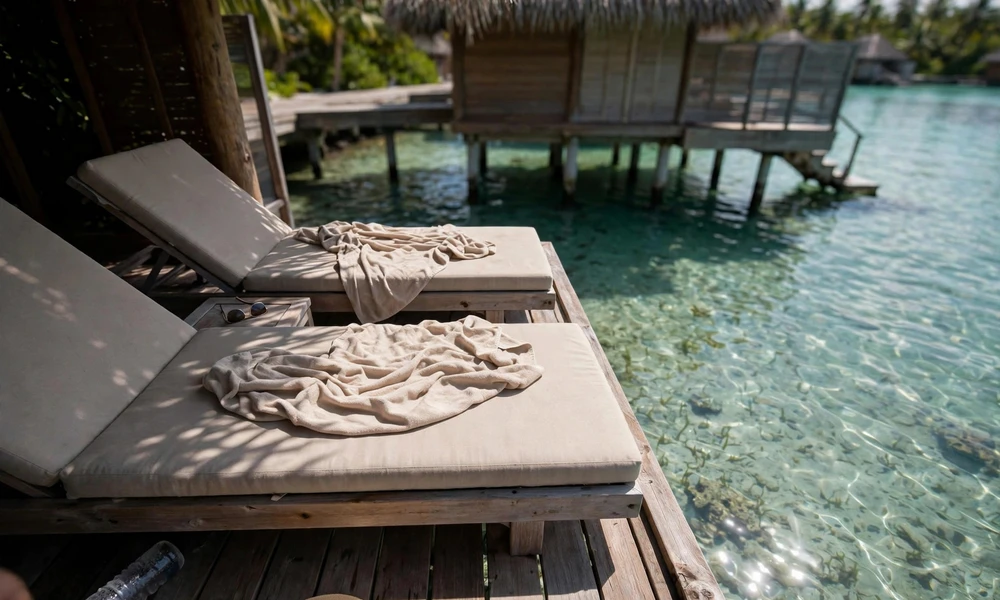
Look next at the transfer. Many lagoon retreats are reached by seaplane, speedboat or a combination of the two, and the transfer can add hours and hundreds of pounds to the trip. Check the transfer time, the cost, and what happens if your flight is delayed, before you book.
Finally, look at the room. An overwater villa puts you above the lagoon with steps into the water, and it is the most direct way to experience it. A beach villa gives you sand at your door and is often better for families with small children. Our guide to the best luxury island retreats explains how the setting changes the stay, because the island you choose shapes the water you swim in.
The 9 best luxury lagoon retreats of 2027
Soneva Jani, Maldives
What we like: A vast, shallow lagoon with some of the clearest water in the Maldives, overwater villas with slides into the sea, and a house reef that is genuinely good for snorkelling straight from the jetty.
What to consider: One of the most expensive lagoon stays anywhere, and the seaplane transfer is long. Best For: Couples and families who want the best lagoon in the Maldives and do not mind paying for it. Style: Barefoot luxury, open-air villas. Price Range: Premium, from around £1,500 a night. Standout Feature: The lagoon itself, wide, shallow and calm enough for children to swim in safely.
The lagoon at Soneva Jani is the reason to come. It is enormous, shallow and protected, and the water stays warm and still through most of the year.
Four Seasons Resort Bora Bora, French Polynesia
What we like: A lagoon framed by Mount Otemanu, overwater bungalows with glass floor panels, and some of the most reliable snorkelling in French Polynesia, with rays and reef sharks in the shallows.
What to consider: Bora Bora is a long journey from most places, and the resort is at its best in the dry season. Best For: Honeymooners and couples who want the classic South Pacific lagoon. Style: Polynesian, elegant and low-key. Price Range: Premium, from around £1,200 a night. Standout Feature: The mountain backdrop, which makes the lagoon feel like a private world.
Bora Bora is the lagoon other lagoons are measured against. The water is a gradient of blues, the reef is close to the shore, and the resort has kept its scale small enough that the lagoon never feels crowded. It is a long way to go, but the water is the reward.
Conrad Maldives Rangali Island, Maldives
What we like: Two islands joined by a bridge, a superb house reef, and an underwater restaurant that sits five metres below the lagoon surface.
What to consider: The resort is large by Maldivian standards, so book early for the best villas. Best For: Travellers who want a big-resort lagoon with plenty of choice. Style: Modern, spacious, family-friendly. Price Range: High, from around £900 a night. Standout Feature: The underwater restaurant, Ithaa, with views of the reef while you eat.
Rangali is a good choice if you want a lagoon stay with options. There are two islands, several restaurants, and a reef that rewards a slow snorkel.
Amanpulo, Pamalican Island, Philippines
What we like: A private island with a calm, protected lagoon, casitas set back from a white sand beach, and a reef that is excellent for snorkelling and diving.
What to consider: Reached by a private plane from Manila, so the journey needs planning. Best For: Travellers who want privacy and a quieter lagoon than the Maldives. Style: Understated, Filipino-inspired, very private. Price Range: Premium, from around £1,100 a night. Standout Feature: The sense of seclusion, with only a few dozen casitas on the whole island.
Pamalican is a different kind of lagoon from the Maldives. The water is just as calm, but the island feels wilder, with more wildlife and fewer people. It suits travellers who want the lagoon without the resort crowds.
Six Senses Laamu, Maldives
What we like: A quieter atoll with a healthy house reef, overwater and beach villas, and a strong focus on marine conservation, including a resident marine biologist.
What to consider: Laamu is further south than the main atolls, so the transfer is longer. Best For: Snorkellers and divers who care about the reef as much as the room. Style: Rustic luxury, natural materials. Price Range: High, from around £800 a night. Standout Feature: The marine programme, which includes guided snorkels with the resort biologist.
Laamu is the Maldives for people who have already been to the Maldives.
Le Taha’a Island Resort, French Polynesia
What we like: A coral garden in the lagoon that is one of the best snorkelling spots in French Polynesia, overwater suites with views of Bora Bora, and a quieter, more local feel.
What to consider: Smaller and simpler than the big Bora Bora resorts, with fewer restaurants. Best For: Snorkellers who want the best coral without the crowds. Style: Traditional Polynesian, relaxed. Price Range: High, from around £700 a night. Standout Feature: The coral garden, a protected patch of reef full of fish.
Taha’a is often overlooked in favour of its famous neighbour, which is exactly its appeal.
El Nido Resorts, Miniloc Island, Philippines
What we like: A lagoon ringed by limestone cliffs, with hidden lagoons you reach by kayak, and water so clear it looks lit from below.
What to consider: The rooms are simpler than a Maldivian villa, and the journey from Manila takes time. Best For: Adventurous travellers who want to kayak and explore. Style: Eco-luxury, simple and scenic. Price Range: Mid to high, from around £400 a night. Standout Feature: The hidden lagoons, reached by kayak through narrow gaps in the cliffs.
Miniloc is the most dramatic lagoon on this list. The cliffs rise straight out of the water, the lagoons are hidden behind them, and the whole place feels discovered rather than built. It is less polished than the Maldives, and better for it.
One&Only Reethi Rah, Maldives
What we like: One of the largest islands in the Maldives, with a long, calm lagoon, twelve kilometres of beach, and villas that feel genuinely private.
What to consider: The island is large, so you will use buggies or bicycles to get around. Best For: Families and groups who want space and a long beach. Style: Grand, polished, classic Maldivian luxury. Price Range: Premium, from around £1,300 a night. Standout Feature: The scale of the island, which gives the lagoon room to breathe.
Reethi Rah suits travellers who find the small Maldivian islands too quiet.
Four Seasons Resort Maldives at Landaa Giraavaru, Maldives
What we like: A lagoon in the Baa Atoll, a UNESCO Biosphere Reserve, with manta rays in season, and a marine discovery centre on site.
What to consider: Manta season is June to November, so time your trip if that is the draw. Best For: Wildlife lovers and families who want to see manta rays. Style: Natural, spacious, family-friendly. Price Range: Premium, from around £1,400 a night. Standout Feature: The manta ray season, when dozens gather in the atoll.
Landaa Giraavaru is the lagoon for wildlife.
Which lagoon is right for your kind of trip
Couples on a honeymoon usually want the classic picture: an overwater villa, a calm lagoon, and a restaurant worth dressing for. Bora Bora and Soneva Jani are the obvious choices, and both deliver exactly that. Families with children are better off with a beach villa on a larger island, where the water is shallow enough to paddle in and there is sand to play on. Reethi Rah and Landaa Giraavaru both work well for families.
Snorkellers and divers should choose by the reef, not the room. Laamu, Taha’a and Miniloc have the best house reefs on this list, and they reward a slow, patient swim. A luxury lake hotel is a different kind of water holiday, and it is worth comparing the two, because a lake stay is easier to reach and often better value, even if the water is not as warm.
Travellers on a tighter budget should look at the Philippines. Miniloc and Amanpulo are both cheaper than the Maldives at the same level of comfort, and the lagoons are just as beautiful.
The caveats that matter
Lagoons are natural, and natural means changeable. A lagoon that is glassy in the morning can be choppy by afternoon, and a reef that is full of fish in one season can be quiet in another. Seasonal algae, plankton blooms and heavy rain can all reduce visibility, sometimes for days. That does not mean the trip is ruined, but it does mean you should not plan a holiday around a single snorkelling day.
| Detail | What is known |
|---|---|
| Best water for snorkelling | Calm, shallow lagoon with a house reef close to shore |
| Best season for most lagoons | The dry season, when the water is clearest and the wind is lowest |
| How to reach most retreats | Seaplane or speedboat from the main island, often in daylight only |
| Overwater vs beach villa | Overwater for direct water access, beach for families and sand |
| What to check before booking | Transfer time and cost, reef distance, and what happens if flights are delayed |
| What can change the water | Wind, rain, tides, seasonal algae and plankton blooms |
| Who should be cautious | Weak swimmers in deeper lagoon sections, and anyone prone to seasickness on boat transfers |
| What a lagoon does not guarantee | Calm water every day, or reef fish on every swim |
Ask the resort what happens if you miss the transfer, and whether the cost is included in the room rate or added on top. A luxury treehouse retreat is a useful comparison here, because it shows how much of a holiday is shaped by the journey, not just the destination.
Checklist: choosing a lagoon retreat honestly
Use these checks before you book, and again before you travel.
- Check the water: ask how far the house reef is from the shore and whether the lagoon stays calm in your season.
- Check the transfer: confirm the time, the cost, and what happens if your flight is delayed.
- Check the room: overwater for direct access, beach villa for families, lagoon suite for a view without the water under the floor.
- Check the season: dry season for the clearest water, and manta season if that is the draw.
- Check the reef: look for a resort with a marine programme or a resident biologist, which usually means the reef is looked after.
- Check the small print: confirm what is included, from transfers to meals, so the price you see is the price you pay.
Frequently asked questions
What is the best time of year to visit a lagoon retreat?
The dry season is usually best, when the water is clearest and the wind is lowest. In the Maldives that is roughly November to April, and in French Polynesia it is roughly May to October. Check the specific atoll, because the seasons vary by location.
Is a lagoon safe for children?
Yes, in the shallow sections, and many lagoon resorts are very family-friendly. Choose a beach villa rather than an overwater villa for small children, and check whether the resort provides life jackets and supervised snorkelling.
Do I need to be a strong swimmer to enjoy a lagoon?
No. Most lagoon water is shallow enough to stand in, and you can enjoy it from the steps of your villa. A life jacket helps if you want to snorkel further out, and most resorts provide them free of charge.
How do I get to a lagoon retreat?
Usually by seaplane or speedboat from the main island. Seaplanes only fly in daylight and good weather, so plan your international flight to arrive in the morning. The transfer is often booked through the resort.
Are lagoon retreats worth the price?
That depends on how much time you spend in the water. If you swim several times a day and snorkel most mornings, the setting is the holiday, and the price makes sense. If you mostly stay by the pool, a cheaper resort on the same island may be better value.
What should I pack for a lagoon holiday?
Reef-safe sunscreen, a rash guard for snorkelling, water shoes for the reef, and light clothes for the evenings. Most lagoon resorts are barefoot, so leave the formal shoes at home, and bring a dry bag for the boat.
The bottom line
The best lagoon retreat in 2027 is not the most expensive or the most photographed. It is the one whose water you will actually swim in, whose reef is close enough to reach without a boat, and whose transfer you can manage without stress. Soneva Jani and Bora Bora are the classics for a reason, but Laamu, Taha’a and Miniloc offer just as much water for less money and fewer people.
Choose by the lagoon first and the room second. Check the transfer, check the season, and book the villa that puts you closest to the water you came for. That is the honest way to pick a lagoon retreat, and it is what makes the difference between a good holiday and a memorable one.



