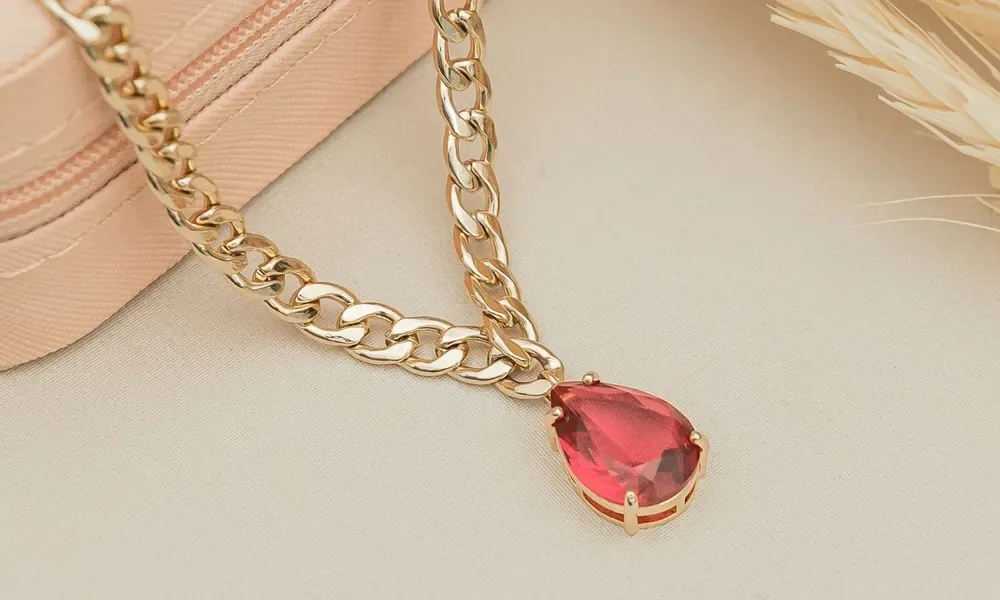
A garnet necklace is one of the easiest fine-jewellery buys to get right, and one of the easiest to get wrong. The stone is affordable, rarely treated, and hard enough for daily wear, so most of what you pay goes into the metal, the cut, and the craftsmanship.
The first thing to understand is that garnet is not a single stone. It is a family of related minerals in red, orange, pink, purple, green, and colour-change varieties, at 6.5 to 7.5 Mohs hardness. The deep red almandine most people picture is only one member, and the garnet in a necklace can just as easily be a raspberry-pink rhodolite, a vivid orange spessartine, or a bright green tsavorite. Each type has its own price and look, so knowing which one you are buying matters more than any single grading number.
This guide covers how to judge the stone, choose the style and length, pick the metal, spot imitations, and know what to pay.
Key takeaways
- Colour matters most: look for a saturated, even red without heavy brown or black tones, and check the stone in daylight as well as shop lighting.
- Garnet is a family: almandine and pyrope are affordable, rhodolite is the best-value red, tsavorite and demantoid are the rare greens.
- Choose the chain as carefully as the stone: solid links, a secure clasp, and the right length.
- Most garnets are untreated, so ask for disclosure anyway, and be wary of stones that look too perfect or too cheap.
- Clean garnet with warm soapy water and a soft brush, store it away from harder gems, and have the setting checked once a year.
Start with the stone, not the setting
Every good garnet necklace starts with the stone, judged on colour, clarity, cut, and carat weight. Colour carries the most weight by far. For red garnet, seek a saturated pure red to purplish red, lively rather than muddy, with no heavy brown or black cast. Hold the necklace near a window in daylight before you decide, because shop lights flatter everything.
Clarity is next, and garnet is forgiving here. Most red and orange garnets are eye-clean, with no inclusions visible to the naked eye, so visible flaws noticeably reduce value. A jeweller’s loupe at ten times magnification is the right tool: minor inclusions are normal, but avoid cracks, cloudiness, or anything sitting right under the table of the stone.
Cut is what brings a dark stone to life. A well-cut garnet returns light instead of letting it disappear into the stone, so look for even brightness across the face with no large dark window in the middle. Ovals, rounds, pears, and cushions are the most common pendant shapes. Carat weight matters less for common red garnet than for diamonds, but rare tsavorite and demantoid above two carats cost far more.
Garnet types at a glance
The table below covers the varieties you are most likely to meet.
| Garnet type | Colour | Rarity and price | Best for |
|---|---|---|---|
| Almandine | Deep red, often slightly brownish | Common; very affordable | Everyday pendants and beaded strands |
| Pyrope | Bright blood red | Common; affordable | Vintage-style cluster pendants |
| Rhodolite | Raspberry pink to purplish red | Moderate price | Solitaire pendants that need sparkle |
| Spessartine | Orange to reddish orange | Mid to high price | Statement pendants and warm outfits |
| Hessonite | Honey to cinnamon brown | Affordable to moderate | Earthy, bohemian designs |
| Tsavorite | Bright green | Rare; high price | Fine jewellery and green-stone lovers |
| Demantoid | Vivid green | Rare; highest price | Collector pieces and fine pendants |
| Colour-change garnet | Shifts with the light | Rare; high price | Conversation pieces and collectors |
One rule of thumb: rhodolite is the best-value red garnet for most buyers. It is brighter and livelier than plain almandine, cleaner than many pyropes, and still priced far below the rare greens.
Pendant styles and settings that suit a necklace
A necklace protects its stone far better than a ring does, which opens up more setting choices. A solitaire pendant is the safest starting point: one stone, one clean setting, nothing competing for attention. Bezel settings, where a rim of metal wraps the edge of the stone, are the most practical for daily wear because they shield the girdle from knocks. Prong settings show more stone and light, but need a yearly check.
Beyond the solitaire, beaded garnet strands are the other classic form. A strand of matched deep-red beads is timeless and shows off the colour in a way no single stone can. Check that the beads are evenly matched in colour and size, and that the strand is knotted between beads so a single break does not scatter the whole necklace. Our guide to the best statement necklaces of 2027 compares necklace styles.
Chain lengths and how they sit
Length changes everything about how a garnet necklace looks, so try the piece on with the neckline you will actually wear it with. A 14 to 16 inch choker sits high on the neck and suits open necklines and evening dresses, The 17 to 19 inch princess length is the most versatile: it rests just below the collarbone and works with most necklines. An 18 inch chain is the default choice for a pendant, and if you buy only one length, buy that one.
Longer lengths have their own uses. A 20 to 24 inch matinee chain drops to the centre of the chest and suits business outfits, knitwear, and layering, Whatever length you choose, check the chain itself: even, well-closed links with no gaps, kinks, or thin spots. Cable, curb, and rope chains are sturdy everyday choices. The clasp matters too: a lobster clasp is secure and easy to use, and a good chain should include an extender of one or two inches.
Metal choices: gold, silver, and vermeil
Garnet’s deep red looks good in almost every metal, so the choice comes down to budget, skin tone, and how often the necklace will be worn. Yellow gold warms the stone and suits the classic, romantic look, flattering warm skin tones best. Rose gold softens the red into something more modern and suits fair to medium skin. Sterling silver is the most affordable option and looks lovely with garnet,
Whatever metal you choose, check the hallmark stamped on the clasp or the back of the pendant: 14k or 18k for gold, 925 for sterling silver, and a clear vermeil or plated marking if the piece is not solid. Vermeil, gold over sterling silver, is a fair compromise, but it wears through with daily use. For a necklace you plan to wear for years, solid 14k gold is usually the best balance of durability and price.
Spotting fakes, glass, and undisclosed treatments
Garnet is one of the least-treated gems in jewellery, which is part of its appeal: most stones on the market are natural and untreated. That does not mean every red stone in a shop is garnet. Glass imitations are the most common problem. Real garnet feels cool to the touch and warms slowly in the hand, while glass warms quickly. Under a loupe, glass often shows tiny round air bubbles, while natural garnet shows angular inclusions or none at all.
A reputable seller should be able to tell you the stone’s variety, its origin if known, and whether it has had any treatment, and should put that in writing on the receipt. For pricier necklaces, ask for an independent gemmological report, and be wary of sellers offering only an in-house certificate. Our diamond buying guide for 2027 explains certification and the four Cs.
What a garnet necklace should cost in 2027
Most of the price of an affordable garnet necklace is the metal and the workmanship, not the stone, which is why prices vary so widely. A simple silver pendant with a small red garnet can cost well under a hundred, while a solid 14k gold solitaire with a fine one-to-two-carat rhodolite typically sits in the low to mid hundreds. Tsavorite and demantoid pendants start far higher and climb quickly with size, and a fine tsavorite solitaire in gold can cost several thousand.
Use those bands as a sanity check rather than a price list, because design, brand, and craftsmanship move the number in both directions. What should worry you is a price far below the band for the metal and stone claimed: solid gold at silver prices, or a vivid green garnet at red-garnet prices, usually means the description is wrong.
Your before-you-buy checklist
Run through this list in the shop.
- Colour checked in daylight: saturated and even, not too dark, brown, or black, with no dull window in the centre.
- Clarity checked with a loupe: eye-clean or only minor inclusions, no cracks, cloudiness, or chips around the girdle.
- Variety named on the receipt, with carat weight stated.
- Chain and clasp inspected: even, well-closed links, a secure lobster or spring-ring clasp, and an extender for adjustable length.
- Metal hallmarked: 14k or 18k gold, 925 silver, or vermeil clearly stated.
- Treatment disclosed in writing, with an independent report for pricier pieces.
Caring for your garnet necklace
Garnet is durable enough for daily wear, with most jewellery varieties sitting at 7 to 7.5 on the Mohs scale, but it is still softer than sapphire and diamond. Clean it with warm soapy water and a soft brush, then rinse and dry it. Ultrasonic cleaning is generally safe for clean, untreated stones, but avoid it if the stone has fractures, and skip steam cleaning altogether. Have the setting and clasp checked yearly.
Frequently asked questions
Is garnet durable enough for an everyday necklace?
Yes. Most jewellery garnets sit at 7 to 7.5 Mohs, and garnet has no cleavage plane along which it can split. A pendant is also far better protected than a ring, since it rarely takes knocks.
Which garnet colour is best for a necklace?
For most buyers, a saturated red to purplish red is the best choice, and rhodolite offers the brightest, liveliest red at a fair price. Spessartine suits warm outfits; tsavorite is the priciest alternative.
How can I tell if a garnet necklace is real?
Check that the stone feels cool and warms slowly, and look for angular inclusions rather than round air bubbles under a loupe. Ask the seller to name the variety and put any treatment disclosure in writing,
What chain length is best for a garnet pendant?
An 18 inch chain is the best default, since it sits just below the collarbone and works with most necklines. Choose 16 inches for a closer fit with open necklines, and 20 to 24 inches for layering over knitwear or business outfits.
Does garnet go with gold or silver?
Both. Yellow gold warms the red and suits the classic look, rose gold softens it into something more modern, and white gold or platinum makes the red look sharper. Sterling silver is the most affordable option and looks lovely with garnet, though it needs regular polishing.
How much should I spend on a garnet necklace?
A simple silver pendant with a small red garnet can cost well under a hundred, a solid 14k gold solitaire with a fine rhodolite typically sits in the low to mid hundreds, and fine tsavorite or demantoid pendants cost several thousand. Spend what the metal, stone, and craftsmanship justify, and compare like with like. Our best diamond necklaces of 2027 round-up shows what the same money buys elsewhere.
The bottom line
A garnet necklace rewards buyers who look at the stone first and the sparkle second. Choose a saturated, even colour in daylight, favour rhodolite for the best-value red, pick a sturdy chain in the right length, and buy from a seller who names the variety and discloses treatment in writing.
Note: Garnet prices and availability shift with supply and fashion, so treat the price bands in this guide as a starting point rather than a fixed quote, and always confirm the stone variety, weight, and metal with the seller before you buy.