



An itchy scalp is one of those small problems that takes over your whole day. You catch yourself scratching during a meeting, you notice flakes on a dark top, and by the evening your scalp feels sore as well as itchy. The good news is that most itchy scalps calm down with a few simple changes. The cause is usually dryness, product build-up, a shampoo that does not suit you, or washing in water that is too hot. Fixing those four things, in the right order, is what this guide is about.
That is why the steps below start with what to stop doing, not what to buy. Scratching with your nails, piling on styling products, and washing with very hot water all make an itchy scalp worse, and no oil or shampoo can outwork those habits. Once the habits are fixed, a gentle shampoo, a light scalp oil, and a cooler rinse do most of the remaining work.
Below is a nine-step routine for soothing an itchy scalp in 2027, from the first thing to change tonight to the longer habits that keep the itch from coming back. Each step says what to do, what to avoid, who it suits, and how long it takes, so you can follow the routine in order without guessing.
Key takeaways
- Stop scratching with your nails first: fingertips only, because broken skin itches more and heals more slowly.
- Most itchy scalps improve with lukewarm water, a gentle fragrance-free shampoo, and less styling product, not with a new expensive treatment.
- Massage a light scalp oil in before washing, leave it for 20 minutes, then shampoo twice to remove it properly.
- Give the routine three weeks before judging it, and change only one product at a time so you know what helped.
- No home routine treats an underlying skin condition, and an itch with sores, heavy flaking, hair loss or spreading redness should be checked by a dermatologist.
Why your scalp itches
A healthy scalp keeps its own moisture and sheds skin cells without you noticing. When that balance breaks, the skin tightens and the itch starts. Dry winter air, hot showers, and washing too often strip the scalp of its natural oils. At the other end, washing too little lets sebum, styling products and dead skin pile up, which irritates the skin in a different way. Both ends of the spectrum itch, which is why the fix is balance, not more washing or less washing on its own.
Sensitivity is the third common cause. A new shampoo, a fragranced styling product, or a hair dye can leave the scalp red and itchy within a day. The itch usually fades once the product is removed, which is why this guide asks you to simplify the routine before adding anything new. A fourth cause is the yeast that lives naturally on every scalp. When it overgrows, it causes dandruff, and dandruff almost always itches.
That is the context for the routine below. The steps are ordered so that each one makes the next one work better: stop the damage first, then clean gently, then soothe, then protect. If the itch has lasted more than a few weeks, or your scalp is sore, bleeding or losing hair, skip the routine and see a dermatologist first. A good scalp treatment for dry scalp can help once you know the cause, but it is not a substitute for a diagnosis when something more serious is going on.
How to soothe an itchy scalp: the routine at a glance
The whole routine takes about 30 minutes on a wash day, and most of that is waiting while the oil sits. Start by parting the hair and checking the scalp in a mirror. Look for redness, flakes, or sore spots, because those change what you should do next. If the skin is broken or bleeding, skip the oil and the scrub steps entirely and just wash gently until it heals.
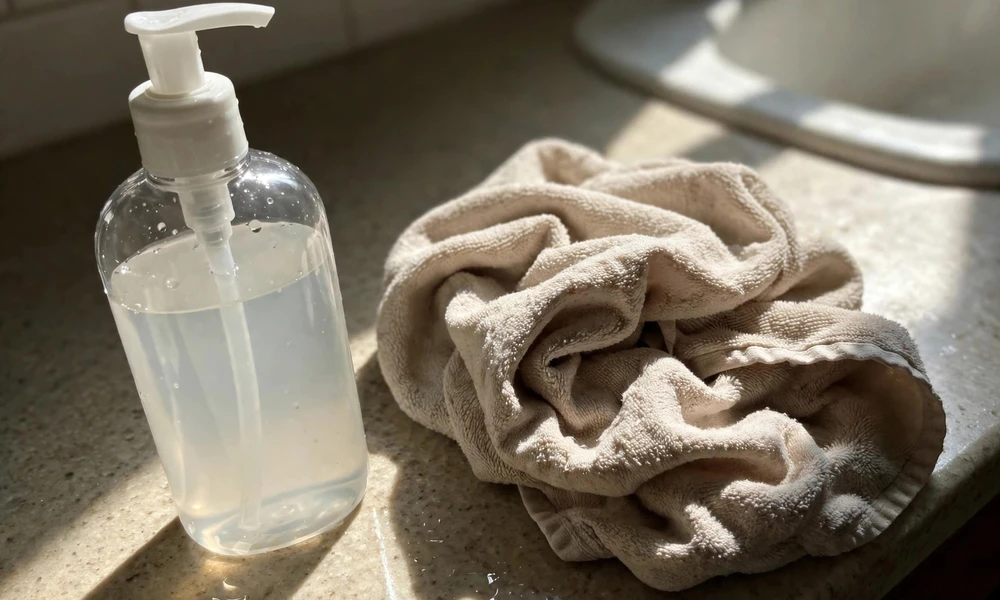
On a normal wash day, the order is: oil first, then shampoo, then a cool rinse, then nothing else on the scalp until the next wash. Oil before washing softens flakes and calms the skin. Shampoo removes the oil and the build-up underneath it. A cool rinse closes the routine without drying the skin out again. Styling products go on the lengths, not the scalp, until the itch is gone.
Between wash days, the rule is simple: leave the scalp alone. Do not scratch, do not pile on dry shampoo, and do not reapply oil every day. An itchy scalp heals when it is left calm and clean, not when it is constantly treated. If you wear hats or helmets, make sure they are clean and dry, because a damp hat traps sweat against the skin and brings the itch straight back.
9 steps to soothe an itchy scalp
Stop scratching with your nails
What to do: When the itch strikes, press your fingertips firmly against the spot for a few seconds instead of scratching, or massage in small slow circles. What to avoid: Scratching with nails, combs or brushes, which breaks the skin and makes the itch worse within hours. Best For: Everyone, and especially anyone with sore or flaky patches. Time Needed: A few seconds, every time the itch strikes. Standout Tip: Keep your nails short while your scalp heals, so an absent-minded scratch does less damage.
Switch to a gentle, fragrance-free shampoo
What to do: Choose a mild, fragrance-free shampoo and use it for at least three weeks, so you can tell whether the old shampoo was the problem. What to avoid: Shampoos with strong fragrance, heavy silicones, or harsh sulphates while your scalp is irritated. Best For: Sensitive scalps and anyone who started itching after changing products. Time Needed: 5 minutes per wash. Standout Tip: If the itch fades within a week of switching, the old shampoo was almost certainly the cause.
Wash with lukewarm water, not hot
What to do: Turn the water down until it feels comfortably warm on your wrist, and keep it there for the whole wash. What to avoid: Very hot water, which strips the scalp of its natural oils and leaves it tight and itchy within minutes. Best For: Dry, tight scalps and anyone who showers in very hot water. Time Needed: No extra time, just a cooler shower. Standout Tip: Finish with a 10-second cool rinse, which calms the skin and closes the routine.
Massage oil into the scalp before washing
What to do: Part the hair into sections, apply a few drops of a light scalp oil to the skin, and massage with your fingertips for 2 to 3 minutes. Leave it on for 20 minutes. What to avoid: Pouring oil over the whole head at once, using a heavy oil, or leaving it on overnight on a flaky scalp. Best For: Dry, tight scalps and flaky patches. Time Needed: 20 to 25 minutes before washing. Standout Tip: Rosemary and tea tree oils suit itchy scalps best; jojoba and argan are the gentlest carriers.
Oil before washing softens flakes and calms the skin, and the massage itself helps by lifting dead skin and boosting blood flow. Our guide to how to use hair oil for dandruff explains the same technique, because dandruff and itch usually arrive together.
Rinse thoroughly and shampoo twice
What to do: After the oil has sat, shampoo twice: a first wash to lift the oil and build-up, and a second wash to clean the scalp properly. Rinse until the water runs clear. What to avoid: One quick wash, which leaves oil and residue on the scalp and brings the itch straight back. Best For: Everyone, and especially anyone using oil or heavy styling products. Time Needed: 5 to 10 minutes. Standout Tip: Use half the shampoo you think you need for the second wash; a little goes a long way on a clean scalp.
Skip styling products for a week
What to do: For one week, use nothing on the scalp except shampoo and oil. Put styling products on the lengths only, if you use them at all. What to avoid: Dry shampoo, gels, mousses and sprays applied to the roots, which pile up on an irritated scalp. Best For: Anyone whose itch started after a new styling product, and anyone with heavy build-up. Time Needed: A week of simpler styling. Standout Tip: If the itch fades during the week, reintroduce products one at a time, a week apart, to find the culprit.
Cool the scalp with a cold rinse or compress
What to do: After washing, rinse the scalp with cool water for 10 to 20 seconds, or press a cool damp cloth against the itchiest spot for a minute. What to avoid: Ice directly on the skin, or a cold rinse so long that it chills you. Best For: Hot, irritated scalps and itch that is worst at night. Time Needed: 1 minute. Standout Tip: A cool rinse after every wash is the cheapest soothing step in this guide, and it works immediately.
Protect the scalp from sun and hats
What to do: Wear a clean, breathable hat in strong sun, and wash hats and helmets regularly so they do not trap sweat and bacteria. What to avoid: Tight, damp or unwashed hats worn for hours, which trap heat and moisture against an irritated scalp. Best For: Anyone outdoors a lot, and anyone who wears a helmet or cap daily. Time Needed: A few minutes a week to wash hats. Standout Tip: Sunburn on the scalp itches as it heals, so protect a parting or thinning area with sunscreen or a hat.
Track triggers and give it three weeks
What to do: Keep a short note of what you changed, when the itch is worst, and what you used that day. Judge the routine after three full weeks, not three days. What to avoid: Changing everything at once, which makes it impossible to know what helped, or giving up after a few days. Best For: Recurring itch that keeps coming back. Time Needed: A minute a day for notes. Standout Tip: Common triggers to watch are new products, hot water, stress, and hats worn for long hours.
What to use, and what to skip
Use a gentle, fragrance-free shampoo, a light scalp oil with rosemary or tea tree, and lukewarm water. Those three cover almost every itchy scalp. If flakes are part of the problem, add an anti-dandruff shampoo once or twice a week, and keep the gentle shampoo for the other washes. That split works better than using a medicated shampoo every day, which can dry the scalp out further.
Skip dry shampoo while the itch lasts, because it is powder sitting on irritated skin. Skip heavy oils and butters applied to the roots, because they trap residue. Skip scalp scrubs with rough particles until the skin has healed, because they scratch the same skin you are trying to calm. And skip any product with a strong fragrance while the scalp is sensitive, even if you have used it happily for years. Sensitivity can appear suddenly, and a product that was fine last year can be the trigger this year.
The simplest test is the one-week test: use only the gentle shampoo and the light oil for seven days. If the itch fades, the routine is working, and you can add products back one at a time. If nothing changes, the cause is probably not a product at all, and it is time to see a dermatologist rather than buying a fourth or fifth product.
The caveats that matter
Home care soothes most itchy scalps, but it is not a cure-all. It will not clear seborrhoeic dermatitis on its own, it will not treat psoriasis or a fungal infection, and it will not work if the real trigger is a product you keep using. It can also make things worse if it is overdone. Too much oil, left on too long, can trap sweat and bacteria against the scalp, especially in warm weather, and scrubbing too hard can break the skin you are trying to heal.
| Detail | What is known |
|---|---|
| First step | Stop scratching with nails; press with fingertips instead |
| Best shampoo | Gentle and fragrance-free, used for at least three weeks |
| Water temperature | Lukewarm, with a 10-second cool rinse to finish |
| Scalp oil | A few drops massaged in before washing, left for 20 minutes, then shampooed out twice |
| What to skip for a week | Styling products on the roots, dry shampoo, and rough scalp scrubs |
| How long to judge it | Three full weeks, changing one product at a time |
| When to see a doctor | Sores, bleeding, heavy flaking, hair loss, or an itch that lasts more than a few weeks |
| What it does not do | It does not treat eczema, psoriasis or fungal infection, or replace medicated shampoo |
If you are pregnant, breastfeeding, or using prescription scalp treatment, check with your clinician or dermatologist before adding a new oil or medicated shampoo. That is not a formality. Prescription treatments change what your scalp can tolerate, and a simple check avoids weeks of irritation.
Checklist: soothing an itchy scalp honestly
Use these checks before you start, and again after three weeks.
- Check the cause first: dryness, build-up, sensitivity or dandruff, because the cause decides the fix.
- Check your nails: keep them short while your scalp heals, and press with fingertips instead of scratching.
- Check the water: lukewarm for the whole wash, with a short cool rinse to finish.
- Check the products: gentle fragrance-free shampoo, light scalp oil, and nothing on the roots for a week.
- Check the wash: oil first, then shampoo twice, then rinse until the water runs clear.
- Check the timeline: three full weeks, one change at a time, with a short note of what helped.
Frequently asked questions
How long does it take for an itchy scalp to calm down?
Most people notice a difference within a week of switching to lukewarm water and a gentle shampoo, and a real improvement within three weeks. If nothing has changed after three weeks of a consistent routine, see a dermatologist.
Can I wash my hair every day if my scalp itches?
Usually yes, if the water is lukewarm and the shampoo is gentle. Daily washing helps when the cause is build-up, but it makes dryness worse, so watch which way your scalp responds and adjust from there.
Is it better to oil an itchy scalp or leave it dry?
Oil helps a dry, tight scalp, but only as a pre-wash treatment that is shampooed out properly. Oil left on a flaky or dirty scalp traps residue and can make the itch worse, so always oil before washing, never instead of it.
Does dry shampoo make an itchy scalp worse?
Often yes. Dry shampoo is powder sitting on the scalp, and on irritated skin it adds to the build-up that causes the itch. Skip it while your scalp heals, and use it sparingly afterwards, only on the roots and never two days in a row.
Can stress make my scalp itch?
Yes. Stress can trigger flare-ups of eczema and seborrhoeic dermatitis, and it makes people scratch more without noticing. Sleep, a cooler shower, and a simpler routine all help, but a stress-related itch that keeps returning is worth discussing with a doctor.
When should I see a dermatologist for an itchy scalp?
See one if the itch lasts more than a few weeks, if the scalp is sore, bleeding or losing hair, or if flakes are thick, yellow or greasy. Those signs point to a condition that home care alone will not fix.
The bottom line
Soothing an itchy scalp in 2027 is not about buying a new treatment. It is about stopping the habits that hurt, washing gently with lukewarm water, and giving a simple routine three weeks to work. Fingertips instead of nails, a gentle fragrance-free shampoo, a light oil before washing, and a cool rinse will calm most itchy scalps without a single expensive product.
Start tonight with the water temperature and the nails, add the oil and the shampoo swap on your next wash day, and judge the result after three weeks. If the itch fades, you have found your routine. If it does not, you have ruled out the common causes, and a dermatologist can take it from there.



