Walk into any beauty aisle in 2027 and the jars seem endless: day, night, gel, barrier, and SPF creams. Yet one simple question keeps coming up — what is a face cream, and what is it supposed to do?
A face cream is a moisturiser in cream form: a rich emulsion of water and oils, blended with humectants that draw in water, emollients that soften the skin, and occlusives that slow water loss. It seals in everything applied before it and keeps your barrier comfortable day and night.
This guide explains how a face cream differs from a serum and a lotion, breaks down the ingredients that matter, and matches textures to skin types.
Key takeaways
- A face cream is a rich water-and-oil emulsion that hydrates skin and slows water loss.
- Serums treat concerns with concentrated actives; creams seal in hydration — they work best together.
- A lotion is a lighter, water-heavy moisturiser; a cream is thicker and richer in oils.
- Choose by skin type: gel-creams for oily skin, balanced creams for normal skin, rich creams for dry skin.
- Apply cream after serums and treatments, on slightly damp skin, and finish the morning routine with sunscreen.
What is a face cream, exactly?
A face cream is a semi-solid moisturiser for the face. At its core it is an emulsion: tiny droplets of oil suspended in water, held together by emulsifiers. A typical face cream is roughly 60 to 80 per cent water, with 10 to 25 per cent oils and butters, plus humectants and occlusives.
What it does comes down to three ingredient groups. Humectants such as glycerin and hyaluronic acid pull water into the skin. Emollients such as squalane and plant oils fill the tiny gaps between skin cells, making the surface feel smooth. Occlusives such as dimethicone, shea butter, and petrolatum sit on top and slow water loss — the evaporation that leaves skin tight and dry. A good cream contains all three. It does not replace a cleanser, a sunscreen, or a treatment: actives in a cream usually sit at lower levels, often 0.5 to 5 per cent, than in a serum.
Face cream vs serum: what is the difference?
A serum is a light, mostly water-based formula with a high concentration of one or a few actives — vitamin C for brightness, niacinamide for tone, hyaluronic acid for hydration, retinol for renewal. It delivers those actives fast, with few thickeners or occlusives, so it absorbs quickly and does little to seal in moisture.
A face cream, by contrast, is built around comfort and protection. Its formula spends a large share of its capacity on lipids that soften the skin and slow evaporation, while its actives sit at gentler levels. The serum treats; the cream protects and seals. Dermatologists call them partners, not substitutes: the serum goes on clean skin first, and the cream follows to lock it in. For a fuller explanation of the serum side of the partnership, read What Is a Face Serum 2027.
Face cream vs lotion vs moisturiser: the naming problem
Part of the confusion is language. Moisturiser is the umbrella term for any product that hydrates skin and protects its barrier — creams, lotions, gels, and ointments included. Cream and lotion are texture words within that family. A lotion is lighter: more water, less oil, a thinner texture that spreads easily and absorbs quickly. It suits normal to slightly dry skin, warm weather, and daytime use. A cream is thicker and richer, with a higher oil content, and it suits dry or mature skin, cold weather, and nighttime use.
A gel-cream sits between the two — watery and cooling, but with enough emollients to moisturise — and it often suits oily or combination skin best. The name on the jar is a guide, not a guarantee. The test is simple: a cream should feel rich but sink in within a minute or two, leaving skin soft rather than greasy.
What is inside a face cream?
Humectants come first in most formulas: glycerin, hyaluronic acid, panthenol, and urea all attract and hold water in the skin. That is why a cream applied to slightly damp skin feels more hydrating. Emollients are the softeners: squalane, jojoba oil, shea butter, ceramides, and fatty alcohols. Ceramides matter because they are lipids your barrier already contains; replenishing them helps repair damage from over-cleansing, cold weather, or strong treatments.
Occlusives are the seal: petrolatum, dimethicone, and beeswax form a thin film that slows evaporation. Petrolatum is the most effective occlusive known, which is why it appears in the richest creams. Beyond those three groups, creams carry actives at supporting levels — niacinamide, peptides, vitamin E, and antioxidants. A short list with key ingredients near the top beats a long list of exotic extracts at the bottom.
Types of face cream
A day cream is lighter and often includes SPF; a night cream is richer, with more occlusives and repair-focused actives such as peptides or retinol. Neither is compulsory — one well-chosen cream can serve both. You will also see gel-creams, rich creams, barrier-repair creams, and anti-ageing creams built on a rich base. For richer formulas for dry skin, see Best Moisturizers for Dry Skin 2027, for the heavier end, Best Night Creams 2027.
Which face cream suits your skin type?
Matching the cream to your skin type matters more than the brand or the price. Dry skin needs the richest texture: ceramides, glycerin, hyaluronic acid, and shea butter, applied generously. Oily skin still needs moisturiser — skipping it often makes skin produce more oil — but the right choice is a lightweight gel-cream or lotion with hyaluronic acid and niacinamide, labelled non-comedogenic. Combination skin does best with a balanced cream, or two textures: lighter on the T-zone, richer on the cheeks.
Sensitive skin should look for fragrance-free formulas with few ingredients and ceramides, and patch-test any new cream on the jawline first. Mature skin wants the richest textures, with peptides and antioxidants. Climate matters too: a cream that feels perfect in a humid summer can feel thin in a dry winter, so many people keep two textures.
How to layer a face cream in your routine
Layering order is physics, not ritual: water-based formulas cannot push through an oil film, so the lightest products go first and the heaviest last. The sequence is simple: cleanse, treat, hydrate, moisturise, protect. In the morning: a gentle cleanser, an antioxidant serum such as vitamin C, a hydrating serum, eye cream, face cream, then broad-spectrum sunscreen with SPF 30 or higher as the final step, before makeup.
At night, cleanse — double-cleanse if you wore sunscreen or makeup — apply your treatment such as retinol on dry skin, follow with a hydrating serum, and finish with your face cream. A face oil goes after the cream, as the final seal. Give each layer 30 to 60 seconds to stop feeling wet before adding the next. Apply hydrating products to slightly damp skin, so humectants have water to bind and the cream locks it in.
How to apply face cream properly
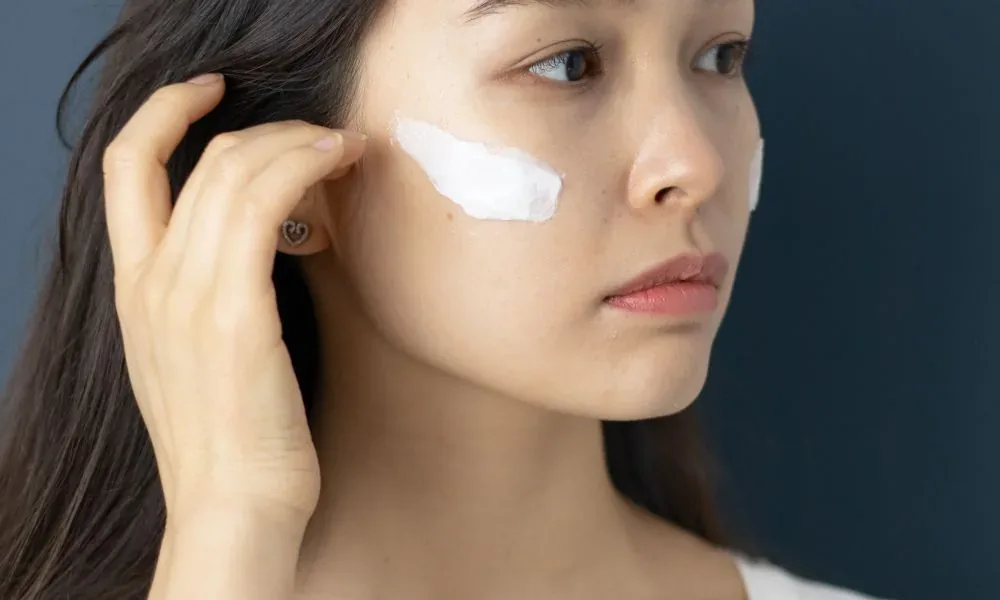
A fingertip-length strip — roughly a pea to a blueberry-sized amount — is enough for most creams. Using too much does not hydrate more; it just sits on the surface, pills, and wastes product. Warm the cream between your fingertips, then smooth it over the face and neck in upward strokes. Do not forget the neck, which ages alongside the face but is routinely skipped. Apply twice a day, after cleansing.
Face cream compared: texture, ingredients, and use
| Product | Texture | Main job | Key ingredients | Best for | When to apply |
|---|---|---|---|---|---|
| Face cream | Thick, smooth | Hydrate and seal the barrier | Humectants, emollients, occlusives | Normal, dry, mature skin | After serums, AM and PM |
| Face lotion | Thin, light | Light hydration | Water, glycerin, light oils | Normal to slightly dry skin | Daytime, warm weather |
| Gel-cream | Cool, watery gel | Hydrate without heaviness | Hyaluronic acid, glycerin | Oily, combination skin | Morning |
| Face serum | Fluid or light gel | Target one concern | Concentrated actives | Specific concerns | On clean skin, before cream |
| Face oil | Slippery, liquid | Seal in moisture | Plant oils, squalane | Dry skin, final seal | After cream, last step |
| Night cream | Rich, heavy | Overnight repair | Ceramides, peptides, retinol | Dry, mature, stressed skin | Evening, final step |
| Day cream with SPF | Light to medium | Hydrate, protect from UV | UV filters, humectants | Daytime, under makeup | Morning, before sunscreen top-up |
| Barrier-repair cream | Rich, cushiony | Rebuild a damaged barrier | Ceramides, cholesterol, fatty acids | Sensitive, over-treated skin | AM and PM |
Choosing the right face cream: a checklist
- Match texture to skin type: gel-cream for oily skin, balanced cream for normal skin, rich cream for dry skin.
- Check the first five ingredients: water, glycerin, or hyaluronic acid early, followed by emollients such as squalane or ceramides.
- Pick fragrance-free if your skin is sensitive or recovering from strong treatments.
- Choose a day cream with SPF, or layer sunscreen over a plain cream — never skip sun protection.
- Patch-test a new cream on your jawline for three to four days before using it all over your face.
- Judge a cream after two to three weeks of twice-daily use — barrier benefits build slowly.
Common face cream mistakes
The most frequent mistake is applying a serum over a cream rather than under it: a rich cream forms a film that blocks the thinner serum, so the actives sit on the surface. The second is using too much — a thick layer only increases pilling and wasted product. The third is skipping moisturiser on oily skin, which often leaves the barrier stressed and skin looking shinier. The fourth is mixing too many strong actives — retinol, acids, and vitamin C all at once — under one cream. Keep actives to one or two at a time.
Frequently asked questions
Is a face cream the same as a moisturiser?
Not exactly. Moisturiser is the umbrella term for any product that hydrates the skin and protects its barrier, and a face cream is one type — the thicker, richer form. Lotions, gels, and balms are also moisturisers.
Do I need both a serum and a face cream?
Not necessarily, but they do different jobs. A serum delivers concentrated actives for a specific concern, while a cream hydrates and seals the barrier. With a specific concern, a serum plus a cream works better than either alone; if your skin is already comfortable, a good cream alone can be enough.
Can I use a face cream instead of sunscreen?
No, unless the cream itself carries a labelled broad-spectrum SPF of 30 or higher and you apply enough of it. Most face creams offer no sun protection, so sunscreen remains a separate, non-negotiable morning step.
How much face cream should I use?
About a fingertip-length strip — a pea to a blueberry-sized amount — for the face, plus a little extra for the neck. If the cream disappears instantly and skin still feels tight, you may need a richer texture rather than a larger amount.
Should I use a different face cream in the morning and at night?
It helps, but it is not essential. A lighter cream, ideally with SPF, suits the morning, while a richer cream supports overnight repair. Many people use one cream for both and switch only in winter.
How long does a face cream take to work?
Hydration improves within minutes, and skin usually feels softer after the first few days. Barrier repair and visible texture changes take two to four weeks of consistent twice-daily use. If a cream stings, breaks you out, or reddens skin after a week, stop and try a simpler formula.
The bottom line
A face cream is the anchor of a skincare routine: a rich emulsion of water, oils, humectants, emollients, and occlusives that hydrates skin and protects the barrier holding that hydration in. It is not a treatment and it is not a sunscreen, but it makes treatments work better and keeps skin comfortable day after day. Choose the texture for your skin type, layer it after serums and before sunscreen, and give it a few weeks. The right face cream is rarely the most expensive one — it is the one your skin likes, used consistently.
Note: This article is for general information only and is not medical advice. If you have a skin condition such as eczema, rosacea, or persistent acne, or if a product causes ongoing irritation, speak to a dermatologist before continuing use.