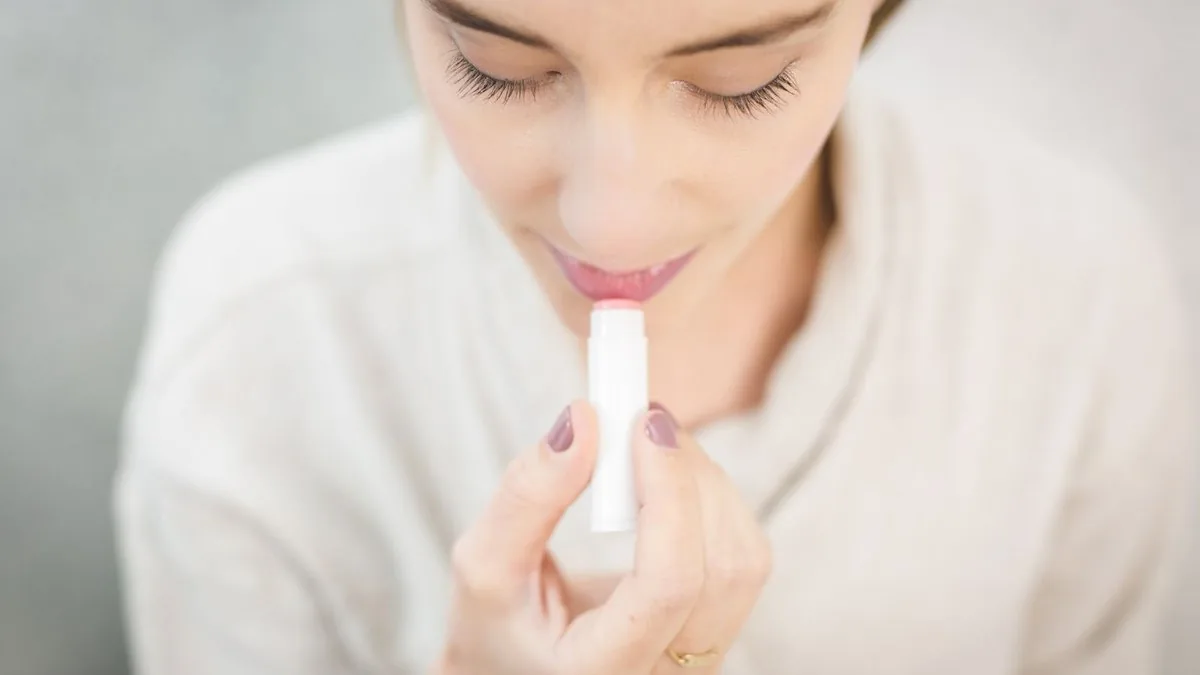
A lip balm is a small, solid or semi-solid product you smooth over your lips to protect them, seal in moisture, and keep them soft. Your lips have no oil glands of their own, so they cannot moisturise themselves the way the rest of your skin can. A balm does that work for them, forming a thin layer that guards against wind, cold, dry air, and sun.
Most of us reach for a lip balm without thinking. It lives in a coat pocket, a handbag, or beside the bed, and it gets used several times a day without ceremony. That familiarity is why it is worth understanding: not all balms work the same way.
This guide explains what a lip balm is, how it works, what its key ingredients do, and how it differs from lip oil, lip mask, and lip gloss — plus how to apply it, when to choose SPF, and the mistakes that keep lips dry.
Key takeaways
- A lip balm is a protective lip product, usually wax-based, that seals in moisture and shields lips from wind, cold, dry air, and sun.
- Lips have no sebaceous oil glands, so they dry out faster than other skin and depend on outside help to stay soft.
- The best balms combine three ingredient types: occlusives such as beeswax and petrolatum, emollients such as shea butter, and humectants such as glycerin.
- A balm with SPF 30 or higher is the sensible daytime choice, since lips are a common site for sun damage.
- Lip balm, lip oil, lip mask, and lip gloss have different jobs: protection, shine, or overnight repair.
What Is a Lip Balm, Exactly?
At its simplest, a lip balm is a waxy, moisturising preparation made for the lips. It usually comes as a stick, a small tube, or a pot, and it feels solid at room temperature before melting slightly on warm skin. The waxes give it shape, help it stay in place, and create the barrier that does most of the protective work.
Lip skin is thinner and more delicate than the skin on the rest of your face. It has no sebaceous glands, so it produces none of the natural oils that keep other skin supple, and it has very little melanin, the pigment that gives other skin some defence against sunlight. Constant exposure to air, food, and weather is why they chap so readily. A balm compensates for all of this in one quick swipe.
How Lip Balm Works
A good balm works through three mechanisms. First, occlusive ingredients form a physical barrier over the lips, slowing the steady evaporation of moisture into the air. Beeswax, petrolatum, and dimethicone are classic occlusives, and petrolatum is one of the most effective barriers available. It is also hypoallergenic, which is why dermatologists often recommend plain petrolatum-based balms for very sore lips.
Second, emollient ingredients soften and smooth the lips, filling in tiny cracks and rough patches so the surface feels even again. Shea butter, cocoa butter, lanolin, and plant oils such as jojoba and coconut oil all work this way. Third, humectants such as glycerin and hyaluronic acid attract water toward the surface. They need an occlusive partner, though: used alone in very dry air, a humectant can pull moisture out of the lips instead of into them.
Sun protection is a fourth job many daytime balms take on. Lips have so little melanin that they burn easily. The American Academy of Dermatology advises using a lip balm with SPF 30 or higher when outdoors, applying it about fifteen minutes before sun exposure and reapplying every two hours. Either mineral or chemical filters can work well.

Inside the Tube: The Ingredients That Matter
Waxes come first. Beeswax is the classic choice: it gives a balm its firm structure, forms a durable protective film, and is generally well tolerated, even by sensitive skin. Plant-based alternatives such as carnauba wax and candelilla wax do a similar job and are the standard choice in vegan formulas, though they tend to feel slightly firmer and drier.
Butters and oils are the softening ingredients. Shea butter is rich in fatty acids and has both emollient and mildly occlusive qualities, making it one of the most useful single ingredients in a balm. Cocoa butter adds similar richness, coconut and jojoba oils feel lighter, and castor oil adds the glossy slip many tinted balms rely on. Lanolin is a remarkably effective emollient, though a small number of people are sensitive to it.
A few supporting ingredients appear regularly. Vitamin E is an antioxidant that protects the formula and the skin. Just as important is what to avoid: strong fragrances, flavourings, and essential oils such as peppermint can irritate sensitive lips, while menthol and camphor feel soothing at first but can be drying when used constantly on cracked lips.
Types of Lip Balm Compared
No single lip balm suits every situation. A light daytime stick, a rich overnight ointment, and a tinted balm all serve different purposes, and the table below makes the differences easy to see.
| Type | Texture | Key ingredients | Best for | Watch out for |
|---|---|---|---|---|
| Classic stick balm | Firm, waxy, portable | Beeswax, shea butter, oils | Everyday protection | Too light in deep winter |
| SPF lip balm | Firm to creamy | Zinc oxide, avobenzone, beeswax | Outdoors and sunny days | Reapply every two hours |
| Tinted lip balm | Soft, sheer colour | Pigments, castor oil, butters | Colour plus light care | Colour settles into dry cracks |
| Lip butter | Rich, creamy, soft | Shea butter, cocoa butter | Very dry lips, evenings | Less portable than a stick |
| Medicated balm | Firm, sometimes cooling | Menthol, camphor, petrolatum | Sore, chapped lips | Cooling agents can irritate |
| Overnight ointment | Thick, dense, glossy | Petrolatum, lanolin, ceramides | Cracked lips, overnight repair | Too heavy for daytime |
| Vegan balm | Firm, plant-wax based | Candelilla wax, plant butters | Plant-based routines | Feels firmer and drier |
| Fragrance-free balm | Plain, neutral | Petrolatum, beeswax, glycerin | Sensitive or reactive lips | Easy to skip using |
Most people need only two: a daytime balm with SPF for daily use, and a richer ointment or butter for nights and cold weather.
Lip Balm vs Lip Oil, Lip Mask, and Lip Gloss
A lip balm is the everyday protector. It is solid or semi-solid, wax-based, and designed to sit on the lips for hours, sealing in moisture and shielding the skin underneath. It may be clear or lightly tinted, but care comes first and colour is secondary.
A lip oil is the glossy cousin. It is a fluid product built around plant oils, giving lips a juicy, high-shine finish without the stickiness of an old-fashioned gloss. Lip oils do nourish and soften, but they leave a thinner layer than a balm, absorb more quickly, and need reapplying more often.
A lip mask is the intensive treatment of the group. Despite the name, it is not something you rinse off. It is a thick, rich formula, usually worn overnight, that stays on the lips while you sleep so the skin can repair itself. A thick layer of plain ointment does much the same job, so a dedicated mask is a luxury rather than a necessity.
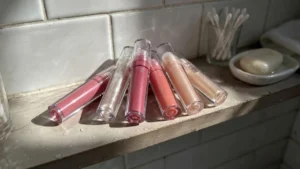
A lip gloss is the odd one out because it is primarily a makeup product. Gloss is designed to make lips look shiny and fuller, and modern glosses often include moisturising ingredients, but shine is their purpose and care is secondary. A gloss wears off quickly and does not replace a protective balm.
How to Apply Lip Balm Properly
Start with clean lips, and if the surface feels rough, exfoliate gently first. A soft toothbrush, a damp cloth, or a gentle sugar scrub used once or twice a week removes loose flakes so the balm can sit evenly. Never exfoliate cracked or bleeding lips, and never peel flakes off by hand. For more on preparing the lips before balm, see our guide to lip exfoliation at home.
Apply a thin, even layer across both lips, including the corners, which are the first place to crack. A single pass is usually enough; piling on extra product does not add protection. In the morning, use a balm with SPF before you go outside. Before bed, switch to a richer ointment and apply a slightly thicker layer, since it has hours to work undisturbed.
Your Lip Balm Checklist
- Choose a fragrance-free formula first if your lips are sensitive, sore, or cracked.
- Pick SPF 30 or higher for daytime, and reapply every two hours outdoors.
- Check the label for beeswax or petrolatum plus shea butter and glycerin.
- Exfoliate gently once or twice a week, never on cracked or bleeding lips.
- Apply a thin, even layer, and switch to a richer ointment at night.
- Replace a balm that smells off, feels gritty, or has been open for over a year.
Common Mistakes That Keep Lips Dry
The most common mistake is licking your lips. Saliva feels moisturising for a few seconds, but as it evaporates it takes the lips’ own moisture with it, leaving them drier than before. If you catch yourself licking your lips, apply balm instead.
The second mistake is choosing a balm that irritates. Fragrance, flavour, menthol, and camphor can create a cycle in which the balm feels soothing for a moment and then makes the dryness worse, prompting another application. If you apply balm ten times a day and your lips are still dry, the formula is the first suspect, and a plain, fragrance-free balm for a week is the simplest test. For the wider routine, our round-up of the best hydrating lip balms 2027 shows how different formulas fit into a daily routine.
Frequently Asked Questions
Is lip balm actually good for your lips?
Yes, when the formula is right. A balm with occlusives such as beeswax or petrolatum, emollients such as shea butter, and humectants such as glycerin protects the lips and slows moisture loss. Heavily fragranced or mentholated formulas can irritate sensitive lips, so switch formulas if your lips feel worse the more you apply.
How often should you apply lip balm?
As often as your lips feel dry, which for most people is three to five times a day: in the morning, before going outside, after meals, and before bed. An SPF balm needs reapplying every two hours outdoors.
Can lip balm be addictive?
No, lip balm is not chemically addictive, though the habit can feel that way. Lips have no oil glands, so they genuinely need outside moisture, and regular use is normal rather than a dependency. Needing it constantly usually points to an irritating formula or very dry air.
What is the difference between lip balm and lipstick?
Lip balm is a care product designed to protect and moisturise, while lipstick is a colour product designed to change how the lips look. A balm may be clear or lightly tinted, but its purpose is protection. Many lipsticks are drying, which is why balm underneath is a common routine. For colour ideas, see our guide to the best lipsticks 2027.
Should you use lip balm at night?
Yes, night is one of the best times to use it. While you sleep, your lips lose moisture for hours without any chance to reapply. A thicker ointment or butter before bed gives the lips a long, undisturbed period to recover.
Does lip balm expire?
Yes, most lip balms last about one to two years. Replace a balm if it smells stale or sour, feels gritty, has changed colour, or has been open for more than a year.
The Bottom Line
A lip balm is a simple, wax-based protector that seals moisture into lips that cannot moisturise themselves, and shields them from wind, cold, dry air, and sun. The best formulas balance occlusives such as beeswax and petrolatum, emollients such as shea butter, and humectants such as glycerin, with SPF 30 or higher for daytime. Lip oil, lip mask, and lip gloss each have their place, but none replaces the everyday protection of a good balm. Choose a plain formula, apply it a few times a day, and use something richer at night.
Note: This article is for general information only and is not medical advice. If your lips are cracked, bleeding, or painful for more than a few weeks, or if you notice sores that do not heal, speak to a dermatologist or another qualified health professional.