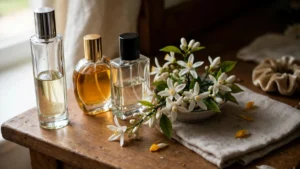

A petitgrain perfume is a fragrance built around petitgrain oil, a green, woody, lightly floral note distilled from the leaves and small twigs of the bitter orange tree. It is the note that makes a fresh perfume smell clean and leafy rather than sweet, and it is the backbone of many classic colognes, from Italian eau de Cologne to modern neroli blends.
The confusion around petitgrain is understandable. It comes from the same tree as neroli and bitter orange, and the three oils are often used together in a single formula. But they are not the same thing, and they do not smell the same. Neroli comes from the blossoms and smells soft and floral. Bitter orange oil comes from the peel and smells bright and zesty. Petitgrain comes from the leaves and twigs, and it smells green, woody and a little bitter, like a garden after rain.
This guide explains what petitgrain is, how it is made, how it behaves on skin, and how to choose a petitgrain perfume that suits you. It covers the nine facts that matter most, from the distillation process to the difference between petitgrain and its better-known cousins.
Key takeaways
- Petitgrain is distilled from the leaves and twigs of the bitter orange tree, not from its flowers or fruit.
- It smells green, woody and lightly floral, and it is most often used as a top or heart note in fresh perfumes.
- Petitgrain is not the same as neroli or bergamot, although all three are related and often appear together.
- It helps citrus notes last longer on skin, but a petitgrain perfume still fades within a few hours and needs reapplying.
- No petitgrain perfume suits every taste, and a formula that smells harsh or soapy on your skin will not improve with time.
What petitgrain is and where it comes from
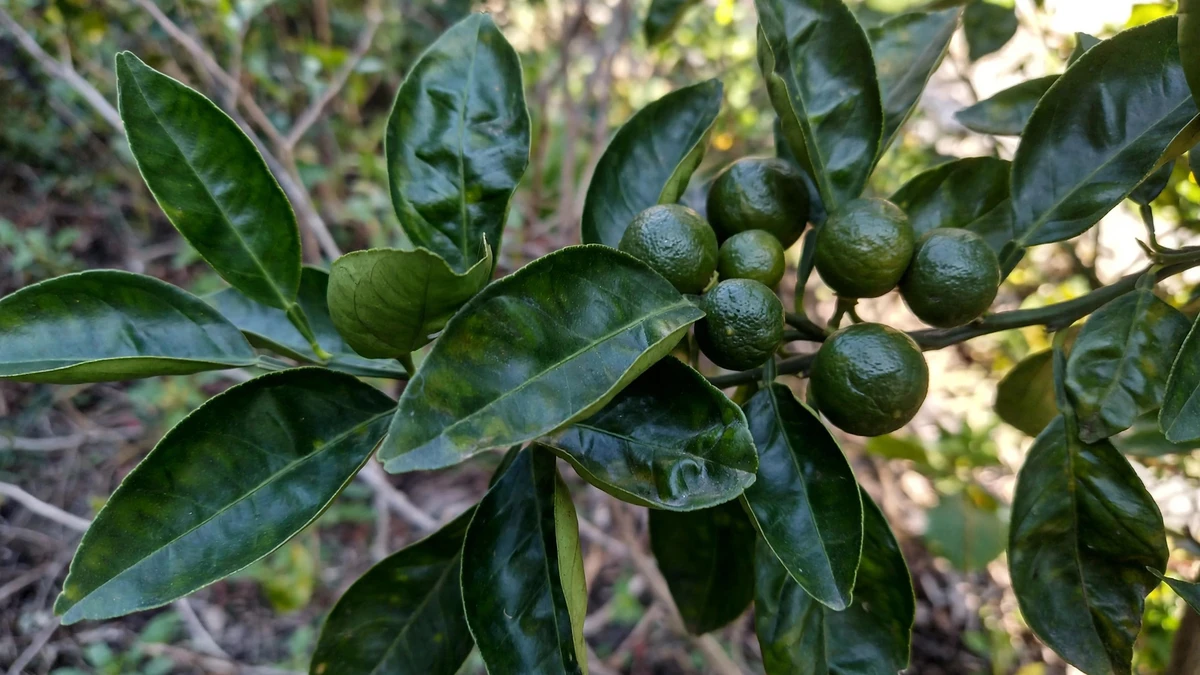
Petitgrain is an essential oil obtained by steam-distilling the leaves and young twigs of the bitter orange tree, Citrus aurantium. The name comes from the French for “small grain”, a reference to the small, unripe green fruits that were once distilled along with the leaves. Today the oil is made mostly from leaves and twigs, and the best-known sources are Paraguay, Tunisia, France and Italy, each producing an oil with a slightly different character.
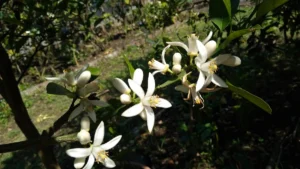
The bitter orange tree is a generous plant. Almost every part of it is used in perfumery. The blossoms give neroli, the peel of the fruit gives bitter orange oil, and the leaves and twigs give petitgrain. That is why the three notes appear together so often: they are a family, and perfumers use them to build a complete picture of the tree in a single bottle.
Petitgrain has been used in perfumery for centuries, and it was one of the defining notes of the original eau de Cologne formulas of the 1700s. Those early colognes were built on citrus, herbs and light woods, and petitgrain gave them their green, clean backbone. That long history is why petitgrain still feels like the natural home of fresh, clean perfumery.
How petitgrain is made and what to look for
The oil is made by steam distillation. Fresh leaves and twigs are placed in a still, steam passes through them, and the aromatic oil is carried off with the steam and then separated from the water. The process is gentle, and it preserves the green, leafy character of the plant. The resulting oil is pale yellow, thin, and strongly scented, with a fresh herbal opening and a woody, slightly sweet drydown.

Quality varies, and it matters. A well-made petitgrain oil smells clean, green and rounded, with a soft floral edge. A poor one can smell thin, harsh or medicinal, like a cleaning product rather than a garden. The difference usually comes from the freshness of the leaves, the skill of the distillation, and the origin.
When you shop, look at the concentration and the supporting notes. An eau de Cologne will be light and short-lived, which is right for hot weather. An eau de parfum will last longer and smell rounder, because the petitgrain is supported by woods or musk. Our guide to how to make perfume last longer is a useful companion here, because fresh notes like petitgrain need the right application and the right base to perform their best.
9 facts about petitgrain perfumes
It comes from leaves, not flowers
What it shows: Petitgrain is distilled from the leaves and young twigs of the bitter orange tree, which is why it smells green and woody rather than sweet and floral.
What to consider: If you expect a floral perfume, petitgrain will surprise you. Its character is herbal and leafy, closer to crushed herbs than to a bouquet. Best For: Anyone who likes green, clean scents. Material: Bitter orange leaves and twigs. Price Range: Colognes from $100; eau de parfum from $180. Standout Feature: The only major perfume note made from citrus leaves.
It comes from the bitter orange tree
What it shows: The bitter orange tree, Citrus aurantium, supplies three different perfume oils: petitgrain from the leaves, neroli from the blossoms, and bitter orange oil from the peel.
What to consider: The three oils are related but not interchangeable, and a perfume that lists all three is layering different parts of one plant. Best For: Understanding a perfume label. Material: Citrus aurantium, leaves, blossoms and peel. Price Range: Colognes from $100; eau de parfum from $180. Standout Feature: One tree, three distinct perfume materials.
Knowing the tree helps you read a fragrance pyramid. When petitgrain, neroli and bergamot appear together, the perfumer is building a complete citrus picture, not repeating the same note.
It is made by steam distillation
What it shows: Fresh leaves and twigs are steam-distilled, a gentle process that preserves the green, leafy character of the plant in a pale yellow oil.
What to consider: Distillation skill matters. A careful distillation gives a clean, rounded oil, while a rushed one can smell harsh or thin. Best For: Judging quality by smell rather than by price. Material: Steam-distilled leaf and twig oil. Price Range: Colognes from $100; eau de parfum from $180. Standout Feature: A centuries-old method that has barely changed.
Petitgrain is not neroli
What it shows: Neroli comes from the blossoms of the same tree and smells soft, sweet and floral, while petitgrain comes from the leaves and smells green, woody and herbal.
What to consider: Many perfumes use both, and the balance between them decides whether a scent feels romantic or clean. Best For: Choosing between a soft floral and a clean green scent. Material: Petitgrain from leaves, neroli from blossoms. Price Range: Colognes from $100; eau de parfum from $250. Standout Feature: The clearest example of how one plant can give two very different notes.
This is the most common confusion in citrus perfumery. If a perfume smells soft and romantic, neroli is leading. If it smells clean and awake, petitgrain is doing the work.
Petitgrain is not bergamot either
What it shows: Bergamot comes from the peel of the bergamot fruit, a different citrus, and it smells bright, sparkling and lemony, while petitgrain is greener and woodier.
What to consider: The two are often paired, with bergamot giving the sparkle and petitgrain giving the green depth underneath. Best For: Understanding fresh citrus openings. Material: Petitgrain from leaves, bergamot from fruit peel. Price Range: Colognes from $100; eau de parfum from $200. Standout Feature: Two citrus notes that do completely different jobs.
Our guide to what a bergamot perfume is explains the sparkling side of the family, and the contrast with petitgrain is worth knowing before you buy.
It is usually a top note
What it shows: Petitgrain is volatile, so it is most often placed at the top of a fragrance pyramid, where it shapes the first impression and then fades within a few hours.
What to consider: A perfume that opens with petitgrain will change quickly. Judge it after twenty minutes, not on the first spray. Best For: Fresh daytime wear and warm weather. Material: Petitgrain as a top or heart note. Price Range: Colognes from $100; eau de parfum from $180. Standout Feature: The note that decides the first impression of a fresh perfume.
It helps citrus notes last longer
What it shows: Petitgrain acts as a natural fixative for citrus, giving bright, short-lived notes something woody to hold on to, so the opening lasts longer.
What to consider: It extends freshness by hours, not by a whole day. Even with petitgrain, a citrus perfume is a morning scent that needs reapplying. Best For: Anyone frustrated by citrus perfumes that vanish in an hour. Material: Petitgrain with bergamot, lemon or neroli. Price Range: Colognes from $100; eau de parfum from $180. Standout Feature: The quiet anchor behind most long-lasting fresh scents.
This is petitgrain’s most practical job. Without it, a citrus opening would disappear almost immediately. With it, the brightness has time to settle into something wearable.
It smells different on skin than on paper
What it shows: Body heat changes volatile top notes quickly, so petitgrain can smell sharp on a blotter and calm, woody and rounded on skin.
What to consider: Always test on skin and wait twenty minutes. A perfume that smells harsh on paper may be lovely on you, and the reverse is also true. Best For: Smart testing before buying. Material: Petitgrain on skin versus on paper. Price Range: Colognes from $100; eau de parfum from $180. Standout Feature: One of the notes most changed by body heat.
Quality varies by origin
What it shows: Petitgrain from Paraguay tends to be woodier and drier, French petitgrain is softer and more floral, and Tunisian petitgrain sits somewhere in between.
What to consider: Origin is rarely listed on a bottle, so use your nose. A clean, rounded green note usually means a good oil, whatever its source. Best For: Understanding why two petitgrain perfumes smell different. Material: Petitgrain from Paraguay, France, Tunisia or Italy. Price Range: Colognes from $100; eau de parfum from $200. Standout Feature: A single note with a distinct character in every growing region.
Origin is a useful detail, but it is not a rule. The skill of the perfumer and the quality of the distillation matter more than the country on the label.
How petitgrain compares with neroli and bergamot
The three notes are a family, and the differences are clear once you know them. Neroli is the softest and most floral, because it comes from the blossoms. It smells romantic, slightly sweet, and a little powdery, and it suits people who want their freshness to feel gentle. Bergamot is the brightest and most sparkling, because it comes from fruit peel. It smells lemony and effervescent, and it gives a perfume its lift. Petitgrain is the greenest and woodiest, because it comes from the leaves, and it gives a perfume its calm, clean backbone.
In practice, most fresh perfumes use at least two of the three. A classic cologne might open with bergamot, soften with neroli, and anchor with petitgrain. A modern unisex scent might lead with petitgrain and vetiver, with bergamot only as a sparkle on top. The combination matters more than any single note, and the best way to learn the difference is to test them side by side. Our roundup of the best neroli perfumes is a good place to start, because neroli-led scents show the soft side of the family clearly.
Price is a poor guide to which note is leading. A cheap cologne and an expensive eau de parfum can both be built around petitgrain, and the difference is usually in the quality of the oil and the skill of the blending, not in the note itself.
The caveats that matter
Petitgrain is a fresh note, and fresh notes fade. Most petitgrain perfumes last two to four hours as a cologne, and up to six hours as an eau de parfum with a woody base. That is normal for this kind of scent, and it is not a sign of poor quality. Fresh perfumes are designed to be reapplied, and a small travel spray is more useful than a large bottle that sits unused.
| Detail | What is known |
|---|---|
| Source | Leaves and small twigs of the bitter orange tree, steam-distilled |
| Scent profile | Green, woody, lightly floral, with a clean citrus lift |
| Related notes | Neroli from the blossoms, bitter orange oil from the peel |
| Role in a formula | Usually a top or heart note; lifts citrus and anchors freshness |
| Typical longevity | Two to four hours for cologne; up to six for eau de parfum |
| Best season | Spring and summer, and warm climates year-round |
| Who should test first | Anyone sensitive to green or herbal notes; test on skin, not paper |
| What it does not do | It does not provide long-lasting base depth on its own |
If you are sensitive to fragrance, patch-test first and use one spray. Petitgrain itself is not a common irritant, but citrus oils can sensitise skin in strong sun, so avoid spraying directly on skin that will be in bright sunlight for hours. That is a practical caution, not a reason to avoid the note.
Checklist: choosing a petitgrain perfume honestly
Use these checks before you buy, and again after a week of wear.
- Test on skin and wait twenty minutes: the green opening softens and the woody base appears.
- Check the concentration: cologne for light daytime freshness, eau de parfum for longer wear.
- Check the supporting notes: neroli for softness, lavender for tradition, vetiver for a modern dry finish.
- Spray once, then again after an hour: petitgrain perfumes are meant to be reapplied, not oversprayed.
- Try it on a warm day: heat is where petitgrain smells its best and lasts its longest.
- Keep the bottle cool and dark: citrus and green notes fade faster in heat and light.
Frequently asked questions
What does petitgrain smell like?
Petitgrain smells green, woody and lightly floral, like crushed leaves with a hint of orange blossom. It is fresh without being cold, and herbal without being medicinal, and it becomes calmer and more rounded as it settles on skin.
Is petitgrain a top note or a base note?
It is usually a top or heart note. Petitgrain is volatile, so it shapes the opening of a perfume and fades within a few hours. In some woody formulas it is used in the heart, where it lasts a little longer.
Is petitgrain natural or synthetic?
Petitgrain oil is a natural material, steam-distilled from the leaves and twigs of the bitter orange tree. Some perfumes also use synthetic green notes alongside it, but the oil itself is natural.
Can petitgrain cause skin irritation?
Petitgrain itself is not a common irritant, but citrus oils can sensitise skin in strong sunlight. Patch-test new perfumes, avoid spraying on skin that will be in bright sun for hours, and stop using a perfume if it causes redness or itching.
What perfumes contain petitgrain?
Many classic colognes contain it, including Acqua di Parma Colonia, Penhaligon’s Blenheim Bouquet and Guerlain Eau de Cologne Impériale, as well as modern fresh scents such as Tom Ford Neroli Portofino and Maison Francis Kurkdjian Aqua Universalis.
Is petitgrain good for sensitive skin?
It is generally well tolerated, but sensitive skin should still patch-test. Choose an eau de toilette or eau de parfum rather than a concentrated oil, spray on clothing rather than directly on skin if you are unsure, and introduce one new perfume at a time.
The bottom line
A petitgrain perfume is a fresh, green, woody fragrance built around an oil from the leaves of the bitter orange tree. It is not the same as neroli or bergamot, although the three are related and often used together, and its job is to give a fresh scent a clean, leafy backbone that keeps citrus from fading too fast. For a classic introduction, Acqua di Parma Colonia shows the note in its purest form. For a modern take, Maison Francis Kurkdjian Aqua Universalis shows how petitgrain works in a polished, contemporary blend.
Choose one perfume, test it on skin, give it twenty minutes, and judge it in warm weather.