



A velvet blazer is a beautiful thing to own and a fussy thing to clean. The pile that makes it look so rich is also what makes it vulnerable: water can leave marks, heat can crush it, and a harsh detergent can flatten the nap for good. Most owners learn this the hard way, usually after a spill or a well-meaning trip to the washing machine.
The good news is that velvet is not as fragile as its reputation suggests. Most marks can be dealt with at home if you act gently and early, and the blazer itself only needs a professional clean a few times a year. The key is knowing what velvet can tolerate and what it cannot, and treating the fabric with patience rather than force.
Below are nine steps that cover the full routine, from reading the care label to storing the blazer properly. Each step explains what to do, what to avoid, and how long it takes, so you can clean your blazer with confidence instead of guessing.
Key takeaways
- Read the care label first: most velvet blazers are dry-clean only, and that instruction is worth following.
- Brush the pile regularly and deal with small marks quickly, before they settle into the fabric.
- Steam restores crushed velvet; a hot iron flattens it, so never press velvet directly.
- Water can leave rings on velvet, so spot-cleaning needs a light touch and even drying.
- No home method removes deep stains or odours safely, and a professional clean is the right call when in doubt.
Why velvet needs a different approach
Velvet is a pile fabric, which means its surface is made of thousands of tiny upright fibres. When those fibres stand up evenly, the fabric looks deep and rich. When they are crushed, wet, or rubbed the wrong way, the light catches them unevenly and the fabric looks patchy. That is why velvet care is mostly about protecting the pile rather than scrubbing the surface.
The other problem is water. Velvet absorbs moisture unevenly, and a damp patch can dry with a visible ring or a flattened area. This is true of cotton velvet, silk velvet and most blends, though silk velvet is the most sensitive of all. It is also why the standard advice for most fabrics — soak it, scrub it, wash it — is exactly wrong for velvet.
The good news is that velvet is not dirty in the way everyday clothes are. A blazer is usually worn for a few hours at a time, over other layers, and it rarely needs a full wash. Regular brushing, quick attention to marks, and proper storage will keep it looking good for years, with a professional clean only when it genuinely needs one.
What you need before you start
Gather a soft clothes brush, a clean white cloth, a small bowl of lukewarm water, a gentle detergent or a dedicated velvet cleaner, and a handheld steamer if you have one. Avoid coloured cloths, which can transfer dye, and avoid any brush with stiff bristles, which can damage the pile.
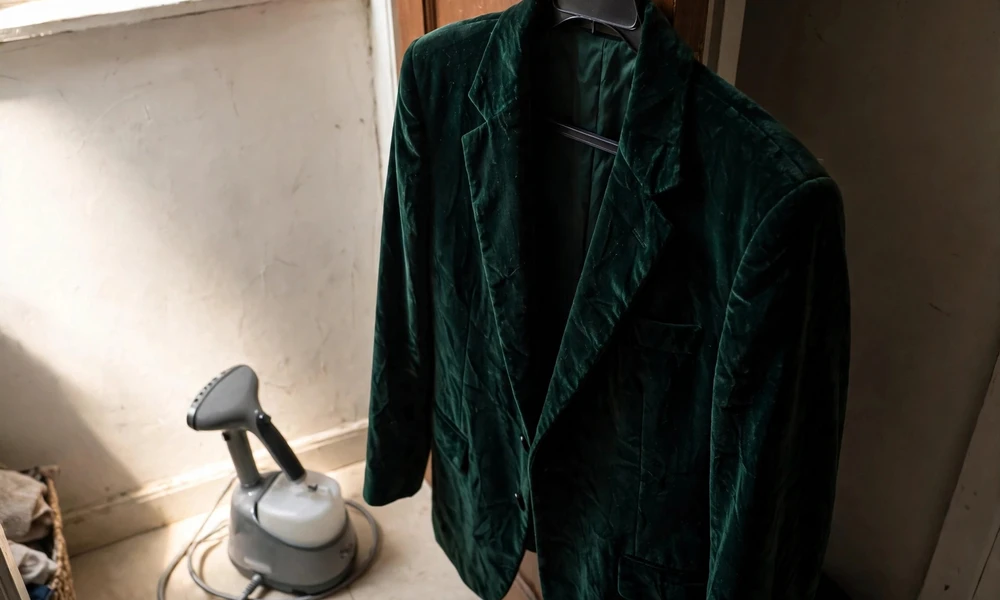
Work in good light, on a clean, flat surface, and give yourself time. Velvet care is slow work, and rushing it is how marks get worse. If the blazer has a care label that says dry-clean only, treat the steps below as maintenance and spot care, not as a substitute for professional cleaning. Our guide to care for a velvet coat covers the same principles for heavier velvet pieces, and the advice overlaps closely.
Finally, test everything on a hidden area first — inside the hem or under a lapel. Apply a tiny amount of water or cleaner, let it dry, and check for marks or colour change. If the test area looks fine, you can proceed. If it does not, stop and take the blazer to a professional.
How to clean a velvet blazer, step by step
Read the care label first
What to do: Check the label inside the blazer for the fabric content and the cleaning symbols, and follow them before anything else. Note whether it says dry-clean only, and whether the velvet is cotton, silk or a synthetic blend.
What to avoid: Ignoring the label and assuming all velvet can be treated the same way. Silk velvet and dry-clean-only velvet need professional care. Best for: Every velvet blazer, before any cleaning. Time needed: 2 minutes. Standout tip: Photograph the label so you have the instructions even if it fades.
The label is the only reliable source for your specific blazer. Two blazers that look identical can have different care needs, and the label is what tells you which one you own.
Brush the pile gently
What to do: Brush the blazer with a soft clothes brush, always in the direction of the pile, using light, even strokes from shoulder to hem.
What to avoid: Brushing against the pile, pressing hard, or using a stiff brush, all of which can crush or roughen the fibres. Best for: Regular maintenance after every wear. Time needed: 5 minutes. Standout tip: Brush after each wear, not just when the blazer looks dirty.
Brushing is the single most useful thing you can do for velvet. It lifts dust, restores the pile, and keeps the fabric looking fresh between professional cleans.
Deal with dust and lint straight away
What to do: Use a lint roller or a strip of sticky tape to lift dust, hair and lint from the surface, working in short, even passes.
What to avoid: Rubbing the fabric with your hands or a damp cloth, which pushes lint deeper into the pile. Best for: Everyday dust, pet hair and fluff. Time needed: 3 minutes. Standout tip: Keep a lint roller by the door so it becomes a habit, not a chore.
Velvet attracts lint because of the pile, and it is much easier to remove when it is sitting on the surface. Once lint is pressed into the fibres, it takes far more effort to lift out.
Spot-clean small marks carefully
What to do: Dampen a clean white cloth with lukewarm water and a tiny amount of gentle detergent, blot the mark lightly, and work from the outside of the stain towards the centre.
What to avoid: Pouring water directly onto the velvet, scrubbing in circles, or using a coloured cloth that can transfer dye. Best for: Small food or drink marks caught early. Time needed: 10 minutes. Standout tip: Blot, never rub, and use as little water as possible.
Spot-cleaning is about lifting the mark out of the pile, not washing the fabric. A light touch and a barely damp cloth are usually enough, and you can repeat the process rather than pressing harder.
Steam the blazer, never iron it
What to do: Hold a handheld steamer a few centimetres from the fabric and let the steam relax the pile, then brush gently in the direction of the nap while it is still slightly warm.
What to avoid: Pressing a hot iron directly onto velvet, which crushes the pile permanently, or holding the steamer too close. Best for: Creases, crushed pile and refreshing the fabric. Time needed: 10 minutes. Standout tip: Steam from the inside of the blazer for stubborn creases.
Steam is the safest way to revive velvet. It relaxes the fibres without flattening them, and it is the method professional cleaners use. A hot iron does the opposite, and the damage is usually permanent.
Hand wash only if the label allows it
What to do: If the label says the velvet is washable, fill a basin with cool water and a small amount of gentle detergent, submerge the blazer briefly, and press the water through the fabric without wringing or twisting.
What to avoid: Hot water, strong detergent, soaking for more than a few minutes, or wringing the blazer out. Best for: Washable cotton velvet only, and only when the label allows it. Time needed: 20 minutes. Standout tip: If the label says dry-clean only, skip this step entirely.
Most velvet blazers should never be hand washed, and this step only applies to the minority that are labelled washable. When in doubt, the answer is no, and a professional clean is the safer choice.
Dry it flat and out of direct heat
What to do: Lay the blazer flat on a clean towel, reshape it gently, and let it dry naturally in a well-ventilated room away from radiators and direct sunlight.
What to avoid: Hanging a wet blazer, which stretches the shoulders, or using a tumble dryer or a hair dryer, which can crush the pile. Best for: Any blazer that has been spot-cleaned or hand washed. Time needed: Several hours to dry fully. Standout tip: Roll the blazer in a towel first to remove excess water without wringing.
Velvet dries slowly, and rushing it with heat is one of the fastest ways to damage it. Patience is part of the process, and a blazer that dries naturally will keep its shape and its pile.
Remove odours without washing
What to do: Hang the blazer in fresh air for a few hours, or lightly mist it with a fabric freshener designed for delicates, holding the bottle well away from the fabric.
What to avoid: Spraying perfume directly onto velvet, which can stain, or sealing the blazer in a bag while it still smells. Best for: Smoke, food and musty storage smells. Time needed: A few hours of airing. Standout tip: Air the blazer after every wear, and odours rarely build up.
Velvet holds odours because of the pile, but it also releases them easily in fresh air. Most smells will fade with a few hours outside the wardrobe, and a full wash is rarely needed for odour alone.
Store it properly so it stays clean
What to do: Hang the blazer on a wide, padded hanger inside a breathable garment bag, with space around it so the pile is not crushed by neighbouring clothes.
What to avoid: Folding velvet, hanging it on a wire hanger, or storing it in a plastic bag, which traps moisture. Best for: Long-term storage between seasons. Time needed: 5 minutes. Standout tip: Add a cedar block nearby to deter moths without scented sachets touching the fabric.
Good storage is the last step of cleaning, not a separate job. A blazer that is stored well stays clean longer, and it comes out of the wardrobe ready to wear instead of needing a full refresh. Velvet robes need the same treatment, and the same hanging and bagging routine works for them too.
When to take it to a professional
Some problems belong to a professional cleaner, and recognising them early saves both the blazer and the money you would spend trying to fix them yourself. Oil-based stains, red wine, ink, and any mark that has dried and set are all professional jobs. So is any stain on silk velvet, where water can leave a permanent ring even when the stain itself would have come out.
A professional clean is also the right choice when the blazer simply looks tired overall — when the pile is flattened across the shoulders and elbows, when the lining smells musty, or when the colour looks uneven after a season of wear. A good cleaner can steam and press velvet back to life in a way that home methods cannot match, and the cost is modest compared with replacing the blazer. Tell the cleaner what the fabric is and what caused any stains, because that information changes how they treat it.
The caveats that matter
Home cleaning has limits, and knowing them is part of looking after velvet. Deep stains, oil marks, and anything that has been left to dry for days are unlikely to come out with a damp cloth, and aggressive attempts usually make them worse. A professional cleaner has solvents and steam equipment that are not available at home, and the cost of a clean is far less than the cost of replacing a blazer.
| Detail | What is known |
|---|---|
| First step, always | Read the care label and follow it before anything else |
| Best regular care | Brush gently after each wear, in the direction of the pile |
| Spot-cleaning | Blot with a barely damp white cloth, never rub or pour water on |
| Creases and crushed pile | Steam, never iron directly onto velvet |
| Hand washing | Only if the label allows it, in cool water, no wringing |
| Drying | Flat, naturally, away from heat and direct sunlight |
| When to go professional | Deep stains, oil marks, silk velvet, or any doubt at all |
| What it does not do | Home cleaning does not replace professional care for dry-clean-only velvet |
Silk velvet deserves special caution. It is the most delicate common velvet, and water can leave permanent marks on it even when the same method works fine on cotton velvet. If your blazer is silk velvet, treat every step above as maintenance only, and leave any actual cleaning to a professional. The same caution applies to any blazer with beading, embroidery or a bonded lining, all of which can be damaged by water and steam. For comparison, cleaning a leather jacket follows a different set of rules entirely, which is a useful reminder that each material needs its own approach.
Checklist: cleaning a velvet blazer honestly
Use these checks before you start, and again before you put the blazer away.
- Check the care label: dry-clean only means professional cleaning, not a home wash.
- Check the fabric: silk velvet needs more caution than cotton velvet.
- Test first: try any water or cleaner on a hidden area and let it dry before proceeding.
- Brush before you clean: lifting dust first stops it from being pressed into the pile.
- Blot, never rub: rubbing spreads stains and crushes the fibres.
- Store it right: a padded hanger and a breathable bag keep it clean between wears.
Frequently asked questions
Can I wash a velvet blazer in a washing machine?
Almost never. Most velvet blazers are dry-clean only, and a machine wash can crush the pile, shrink the fabric and distort the shape. Only wash a velvet blazer at home if the care label explicitly says it is washable, and then only by hand in cool water.
How do I remove a water mark from velvet?
Lightly steam the whole area so the pile evens out, then brush gently in the direction of the nap. A water mark is usually a flattened patch rather than a stain, so restoring the pile is more effective than adding more water.
Can I iron a velvet blazer?
No, not directly. A hot iron crushes the pile and can leave a permanent shine. Use a steamer held a few centimetres away, or press from the inside with a thick cloth between the iron and the fabric if you have no steamer.
How often should a velvet blazer be dry cleaned?
Two or three times a year is enough for most people, or once a season if you wear it often. Over-cleaning is as bad as under-cleaning, because the solvents can dry out the fabric over time.
What removes red wine from a velvet blazer?
Blot immediately with a clean white cloth, then take it to a professional cleaner as soon as possible. Do not scrub, do not add salt or soda water, and do not try a home stain remover on velvet, because the risk of setting the stain is high.
How do I keep velvet from crushing in the wardrobe?
Hang it on a wide padded hanger with space around it, inside a breathable garment bag. Never fold velvet, never squash it between heavy coats, and brush it after each wear so the pile stays even.
The bottom line
Cleaning a velvet blazer is mostly about restraint. Brush it after wear, deal with marks quickly and gently, steam rather than iron, and leave anything serious to a professional. That routine is enough to keep a good blazer looking good for years, and it costs almost nothing.
The one rule that matters most is the care label. If it says dry-clean only, believe it, and treat the steps above as maintenance rather than a substitute for professional cleaning. Velvet rewards patience, and a blazer that is looked after properly is one you will keep reaching for.


