Straight-leg jeans are the quiet workhorse of a denim wardrobe. They are not the trendiest cut in the shop, and that is exactly why they last. The leg falls in a straight line from the hip to the ankle, without flaring out like a bootcut, tapering in like a skinny jean, or ballooning through the thigh like a mom jean.
The problem is not finding straight-leg jeans. It is finding a pair that actually fits the way the label promises. One brand’s straight leg is another brand’s slim leg. A rise that sits neatly on one person gaps at the back on another. And a wash that looks rich and deep in the shop can fade unevenly after three washes at home.
Below are nine straight-leg jeans worth considering in 2027, from a classic American original to clean, affordable high-street pairs. Each one is described by what it does well, what to watch for, and who it suits best, so you can choose by fit and fabric rather than by the label on the waistband.
Key takeaways
- A true straight leg runs in an even line from hip to ankle, with no flare, no taper and no ballooning through the thigh.
- Rise matters as much as leg shape: a high rise flatters most figures in a straight leg, while a mid rise suits a longer torso.
- Rigid or low-stretch denim holds the straight line best, while high-stretch blends soften it into something closer to a slim leg.
- Check the pocket placement and the back rise before you buy, because those two details decide whether the jeans sit well or gape.
- No single pair suits every body, and a straight leg that fits perfectly in the waist can still need a hem taken up.
What straight-leg jeans actually are
A straight-leg jean is cut so the leg opening is roughly the same width as the knee. The seam runs down the side of the leg in a clean line, and the fabric hangs rather than clings. That sounds simple, but it is what separates the cut from everything around it. A straight leg does none of those things, which is why it reads as neutral and why it pairs with almost anything.
The cut has been around for decades because it solves a practical problem. It gives the leg shape without squeezing it, and it gives structure without stiffness. On a taller frame it reads as long and lean. On a shorter frame it reads as tidy, provided the hem lands in the right place.
There is one thing a straight leg cannot do, and it is worth knowing before you buy. It will not hide a fit problem the way a wider leg can, and it will not stretch to cover a sizing mistake the way a high-stretch slim jean can. If the waist gaps or the thigh pulls, the straight line shows it.
How we chose these jeans and what to look for
Look first at the rise and the leg opening. A high rise, around 10 to 11 inches, anchors the waistband at the natural waist and gives the straight line a clean starting point. A mid rise sits lower and suits a longer torso or anyone who dislikes a waistband that reaches the ribs. The leg opening on a true straight leg is usually 14 to 16 inches around, measured flat at the hem.
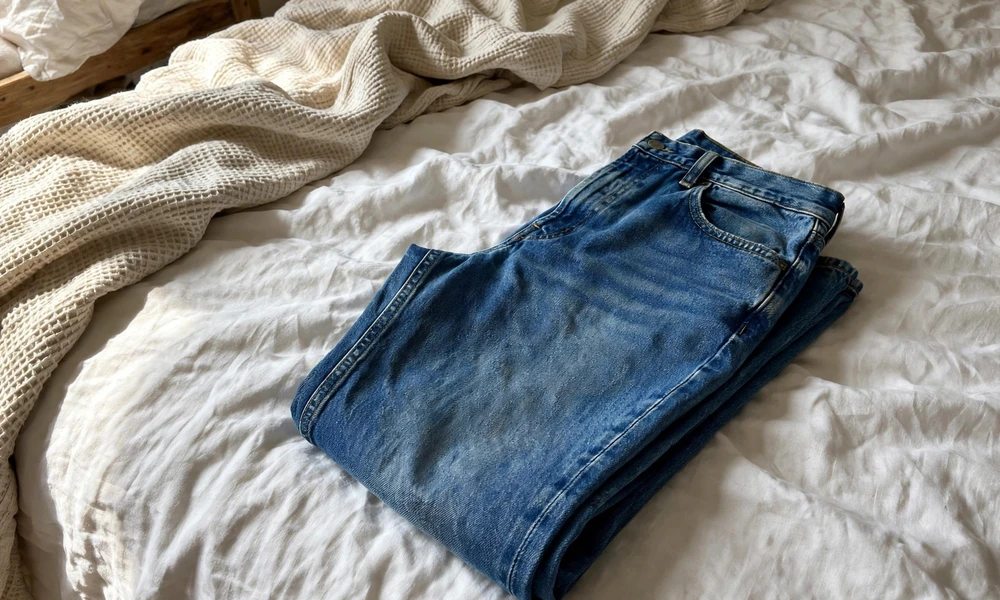
Look next at the fabric. Denim with 1 to 2 percent stretch, usually elastane, gives enough to sit comfortably without losing the straight line. Pure cotton denim, with no stretch at all, holds the shape best and ages beautifully, but it needs a day or two to soften and it will not forgive a size that is too small. Denim with more than 3 percent stretch starts to behave like a jegging, hugging the knee and ankle and losing the clean line that defines the cut. Our guide to choosing the perfect denim jeans explains how fabric weight and stretch change the way any pair wears, and it is a useful companion to this list.
Finally, look at the details that show quality. The pockets should sit high enough that they do not pull open when you sit down. The back rise should be deep enough that the waistband does not dip when you bend. The stitching should be even, the rivets should sit flat, and the wash should look the same on both legs.
The 9 best straight-leg jeans of 2027
Levi’s 501 Original Straight Jeans
What we like: The original straight leg, with a high rise, a button fly and a leg that falls dead straight from hip to ankle. The rigid cotton denim softens beautifully with wear and holds its shape for years. What to consider: The rigid fabric feels stiff for the first few wears, and the sizing runs snug in the waist, so many people go up one size. Best For: Anyone who wants the classic straight leg and is willing to break it in. Material: 100% cotton denim. Price Range: Around $70 to $100. Standout Feature: The button fly and the straight, unbroken leg line.
Everlane The Original Straight Jean
What we like: A clean, mid-weight straight leg with a high rise and a small amount of stretch, made in a factory Everlane names publicly. The leg line is neat and even, and the wash range is restrained. What to consider: The fabric is thinner than the Levi’s, so it drapes rather than holds, and tall wearers may find the inseam short. Best For: Everyday wear and anyone who wants a tidy, modern straight leg. Material: 98% cotton, 2% elastane. Price Range: Around $78. Standout Feature: The consistent, even leg line at a fair price.
Frame Le Straight Jeans
What we like: A polished straight leg with a high rise and a slightly longer inseam, cut from a smooth, mid-weight denim that looks smart enough for the office. The pocket placement is neat and the back rise is generous. What to consider: Premium price, and the fabric has very little give, so the size has to be right. Best For: Smart daytime looks and anyone who wants a straight leg that reads as polished. Material: 98% cotton, 2% elastane. Price Range: Around $200 to $230. Standout Feature: The long, clean inseam and the neat pocket placement.
Citizens of Humanity Daphne Straight Jeans
What we like: A soft, comfortable straight leg with a high rise and a gentle drape, made from a breathable cotton blend that moves easily. The wash is rich and even, and the leg stays straight through the day. What to consider: The softer fabric means the leg line relaxes by the end of a long day, and the price sits at the premium end. Best For: All-day comfort and anyone who dislikes rigid denim. Material: 92% cotton, 6% polyester, 2% elastane. Price Range: Around $220 to $240. Standout Feature: The soft hand feel and the even, rich wash.
J.Crew Vintage Straight Jean
What we like: A classic American straight leg with a mid-to-high rise and a slightly worn-in wash that looks lived-in from the first wear. The fit is true to size and the price is fair for the quality. What to consider: The wash fades a little faster than a darker rinse, and the leg can feel long on shorter wearers. Best For: Weekend wear and anyone who likes a vintage-looking straight leg. Material: 99% cotton, 1% elastane. Price Range: Around $110 to $130. Standout Feature: The worn-in wash and the true-to-size fit.
Gap High Rise Straight Jeans
What we like: An affordable straight leg with a proper high rise and a leg that stays straight without clinging. Gap’s sizing is consistent, and the range of inseams is genuinely useful. What to consider: The denim is lighter than premium pairs, so it softens quickly and the line relaxes with wear. Best For: A first straight leg and anyone who needs a choice of inseam lengths. Material: 99% cotton, 1% elastane. Price Range: Around $70 to $90. Standout Feature: The choice of inseam lengths at a high-street price.
& Other Stories Straight Leg Jeans
What we like: A neat, European-cut straight leg with a high rise and a slightly tapered ankle that keeps the line tidy. The washes are modern and the price is reasonable for the finish. What to consider: The cut runs slim through the thigh, so curvier figures may need to size up, and the ankle is narrower than a classic straight leg. Best For: A neat, modern straight leg and slimmer figures. Material: 98% cotton, 2% elastane. Price Range: Around $69. Standout Feature: The neat, slightly tapered ankle.
COS Straight-Leg Jeans
What we like: A minimal, architectural straight leg with a high rise and a wide, even leg opening. The denim is firm and the cut is precise, which gives the pair a quietly expensive look. What to consider: The firm fabric needs a few wears to soften, and the wide leg opening can swallow a small shoe. Best For: A minimal wardrobe and anyone who likes a wider straight leg. Material: 100% cotton denim. Price Range: Around $90. Standout Feature: The wide, even leg opening and the minimal design.
Mango Straight High-Rise Jeans
What we like: The most affordable pair on this list, with a high rise, a straight leg and a surprisingly neat finish for the price. The dark wash looks more expensive than it is. What to consider: The fabric is thin and the stretch is higher than ideal, so the leg line softens quickly, and the sizing can vary between washes. Best For: A budget straight leg and anyone trying the cut for the first time. Material: 96% cotton, 3% polyester, 1% elastane. Price Range: Around $40 to $60. Standout Feature: The dark wash and the low price.
Which straight-leg jeans suit your shape
For a taller frame, a straight leg is straightforward. The line is already long, so the main decision is the inseam. Look for a pair with a 32-inch inseam or a long option, and let the hem fall to the top of your shoe rather than pooling on it. A high rise works well here, because it keeps the proportions balanced and stops the waistband from sitting too low on a long torso.
For a shorter frame, the hem is everything. A straight leg that pools at the ankle shortens the leg, while one that ends just above the ankle bone lengthens it. A cropped jean can be a useful alternative here, because the shorter hem does the same lengthening work without a tailor.
For a curvy figure, the pocket placement and the back rise matter more than the leg. Pockets that sit too low or too far apart pull open and add width where you do not want it. A deeper back rise stops the waistband from dipping when you sit. Look for a straight leg with a touch of stretch and a waistband that sits at the natural waist, and try the pair sitting down as well as standing up.
The caveats that matter
Straight-leg jeans are forgiving, but they are not foolproof. The most common mistake is buying the wrong rise, because a straight leg with a low rise sits differently from one with a high rise, and the leg line changes with it.
| Detail | What is known |
|---|---|
| What defines the cut | Leg opening roughly the same width as the knee, with no flare and no taper |
| Best rise for most figures | High rise, around 10 to 11 inches, which anchors the waistband at the natural waist |
| Best fabric | Cotton with 1 to 2 percent stretch, which holds the line without clinging |
| Ideal hem | Just above the ankle bone, or touching the top of the shoe without pooling |
| Who should size up | Anyone between sizes, or anyone buying rigid cotton with no stretch |
| What to check first | Pocket placement and back rise, which decide whether the jeans sit well or gape |
| Wash advice | Dark rinse for a longer, leaner line; light wash for a relaxed, casual look |
| What it does not do | It does not hide a poor fit, and it will not stretch to cover a wrong size |
One more honest note: a straight leg will not suit every outfit in your wardrobe. It looks best with tops that are tucked, cropped or fitted, because the clean leg line needs a clean top line to match. A long, boxy top over a straight leg can swallow the shape entirely, and the result looks unfinished rather than relaxed. Our mom jeans roundup covers a roomier cut if you prefer more volume through the hip, but for a tidy, even silhouette, the straight leg is hard to beat.
Checklist: buying straight-leg jeans honestly
Use these checks before you buy, and again after the first wear.
- Check the leg opening: it should be roughly the same width as the knee, not narrower and not much wider.
- Check the rise: high rise for most figures, mid rise if you have a long torso or dislike a high waistband.
- Check the pockets: they should sit high and lie flat when you sit down, not pull open.
- Check the back rise: bend forward and sit down; the waistband should stay put, not dip.
- Check the hem: it should end just above the ankle bone or touch the top of your shoe, never pool.
- Check the wash: dark rinse for a longer line, light wash for a relaxed look, and check both legs match.
Frequently asked questions
What makes a jean straight-leg rather than slim?
The leg opening. A straight leg has roughly the same width at the knee and the ankle, so the seam falls in an even line. A slim jean narrows from the knee to the ankle, so it hugs the calf. If the hem is noticeably narrower than the knee, it is a slim cut, whatever the label says.
Are straight-leg jeans in style in 2027?
Yes. The straight leg has been a steady wardrobe staple for years, and it is not tied to a single trend cycle the way skinny or ultra-wide jeans are. It works because it is neutral, and neutral cuts stay in style longer than extreme ones.
What rise works best with straight-leg jeans?
A high rise works best for most figures, because it anchors the waistband at the natural waist and gives the straight line a clean starting point. A mid rise suits a longer torso or anyone who finds a high waistband uncomfortable. A low rise rarely works with a straight leg, because it breaks the line at the hip.
Can I wear straight-leg jeans to the office?
Yes, in a dark rinse with a clean finish. Pair them with a blazer or a smart blouse and a loafer or a heeled ankle boot, and keep the top tucked or cropped so the waistband shows. Avoid light washes, distressing and frayed hems for work, because those details read as casual.
Do straight-leg jeans suit curvy figures?
Often yes, because the straight line skims rather than grips. The key is the fit through the waist and hip: look for a pair with a little stretch, a deep back rise and pockets that sit high. Try the pair sitting down as well as standing up, and size for the hip, not the waist, then have the waist taken in if needed.
How should straight-leg jeans fit at the ankle?
The hem should end just above the ankle bone, or touch the top of your shoe without pooling. If the hem pools, the leg looks shorter and the outfit looks unfinished. If it ends well above the ankle, the jean is closer to a cropped cut, which is a different look entirely.
The bottom line
The best straight-leg jeans in 2027 are not the most expensive or the most fashionable. They are the pair whose rise sits at your natural waist, whose leg falls in an even line from hip to ankle, and whose fabric holds that line all day. For most people, that means a high rise, cotton with a little stretch, and a dark rinse that keeps the line looking long.
Buy the waist first and the length second, check the pockets and the back rise before you pay, and budget for a hem if the length is not right. A straight leg that fits properly will outlast every trend in your wardrobe, and it will pair with almost everything you already own.