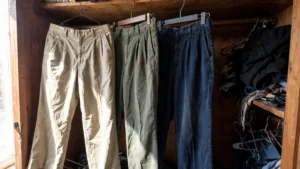
A high-rise jean changes the rules of an outfit. The waistband sits on your natural waist, so the shirt has somewhere to go, the belt has something to hold, and the leg starts higher than it does on a mid-rise pair. Style it like a mid-rise jean and it looks wrong — the shirt hangs over the waistband, the proportions go flat, and the whole point of the cut is lost.
The fix is not complicated, but it is specific. The shirt goes in, the jacket ends at the hip, the belt earns its place, and the shoe is chosen to finish the leg rather than fight it. Get those four things right and a high-rise pair looks deliberate; get them wrong and it looks like a sizing mistake.
Below are nine steps for styling high-rise jeans for men in 2027, from finding the right rise for your torso to the shoes, belts and jackets that finish the look. Each step says what to do, what to avoid, and how long it takes, so you can build the outfit once and repeat it.
Key takeaways
- A high rise only works when the shirt goes in — an untucked shirt hides the waistband and kills the proportion.
- The waistband is the feature: let it show, keep it smooth, and match the belt to the rest of the outfit.
- A jacket that ends at the hip frames a high waist; a long coat swallows it.
- Heavier denim holds the high waist in place; thin stretch denim slides down and undoes the fit.
- A high rise suits most builds, but a rise above 12.5 inches can crowd a short torso — measure before you buy.
What a high rise changes about an outfit
The first thing a high rise changes is proportion. The leg starts higher, so it reads longer, and the torso reads shorter, which is the opposite of what a low rise does. That shift is the whole appeal of the cut, and it is also why the styling has to change with it. A shirt that hung neatly over a mid-rise waistband will hang past a high-rise one and cover the very line the cut is meant to show.
The second change is the waistband itself. On a mid-rise pair the waistband is a detail you can ignore; on a high-rise pair it is the centre of the outfit. The belt becomes visible, the shirt tuck becomes visible, and the line from the waistband to the shoe becomes the line the eye follows. Everything you add above or below the waist either supports that line or breaks it.
The third change is the shoe. Because the leg starts higher, the shoe finishes a longer line, and a bulky shoe at the bottom shortens what the waist just lengthened. If the high waist still feels like a big change, the way slim jeans are styled is the closest middle ground — our guide to how to style slim jeans for men shows the same tuck-and-belt logic on a lower waistband.
How to get the fit right before you style anything
Start with the rise number, not the waist size. Measure the front rise from the crotch seam to the top of the waistband, or ask the shop to do it: eleven to twelve inches suits most men, and anything above twelve and a half starts to crowd a short torso. The waist size on the label tells you nothing about where the waistband will sit, and two pairs in the same size can sit two inches apart.

Look at the denim weight next. Thirteen ounces or more holds a high waist in place through a full day, while thin stretch denim tends to slide down as you move, which undoes the fit before the outfit has a chance. A straight or tapered leg is the safest shape with a high waist; a skinny leg pulls the waistband down, and a wide leg swallows the line the rise creates. The tapered jeans styling guide shows the leg shape that pairs best with a high rise.
Finally, do the sit-down test in the shop. Sit, stand, and walk, and watch the waistband: it should stay where you put it and not dig in when you bend. If it digs in, the rise is too long for your torso, not the wrong waist size, and the fix is a shorter rise rather than a bigger waist.
9 steps to style high-rise jeans for men
Buy the rise that reaches your belly button, not your hips
What to do: Measure your natural waist first — the narrowest point of your torso, roughly at the level of your belly button — and buy the rise that reaches it. Eleven to twelve inches suits most men. What to avoid: Buying your usual waist size without checking the rise number, and assuming every brand measures the rise the same way. Best For: a first high-rise pair. Time Needed: Five minutes, tape measure in hand. Standout Tip: The top button should sit just above your hip bones when you stand.
A rise that is too short is just an expensive mid-rise, and a rise that is too long bunches at the front and crowds the chest, so the tape measure earns its five minutes.
Pick a top that finishes at the waistband, not halfway down the thigh
What to do: Choose shirts with a shorter body, so the fabric tucks in without bunching at the waistband. A shirt that ends near the waistband is easy to tuck and stays flat all day. What to avoid: Long tunics and oversized tees that cover the waistband and hide the rise entirely. Best For: tucked-in outfits. Time Needed: Sixty seconds in front of the mirror. Standout Tip: A shirt that ends at the waistband tucks in without bunching.
The shirt body is the detail most men get wrong with a high rise. The waistband is the feature, and a shirt that covers it turns a deliberate cut into a sizing mistake.
A hip-length jacket frames the high waist best
What to do: Wear jackets that end at the hip, so the waistband stays visible below the hem. A cropped trucker jacket or a hip-length bomber is the easiest match. What to avoid: Long coats that cover the waistband and hide the rise. Best For: cooler days. Time Needed: Thirty seconds to check the hem. Standout Tip: A cropped trucker jacket is the easiest match for a high waist.
The jacket hem is the line that decides whether the high waist reads as a choice. A hip-length hem frames it; a long hem swallows it, and the whole outfit goes back to looking like a mid-rise pair.
Choose heavier denim so the high waist holds its line all day
What to do: Pick denim of thirteen ounces or more, which has enough body to hold the waistband in place through a full day of sitting, standing and walking. What to avoid: Thin stretch denim, which slides down as you move and undoes the fit before lunch. Best For: all-day wear. Time Needed: No extra time — check the label once. Standout Tip: Rigid denim softens with wear but keeps its hold.
Denim weight is the invisible part of the outfit. Nobody sees the ounces, but everybody sees the waistband sliding down, and heavy denim is what stops it.
Take the pair for a sit-down test in the shop
What to do: Sit down in the fitting room, stand up, and walk a few steps, watching the waistband the whole time. It should stay where you put it and not dig in when you bend. What to avoid: Judging the fit standing still in front of the mirror, which tells you nothing about how the pair behaves. Best For: any first high-rise buy. Time Needed: Two minutes in the fitting room. Standout Tip: The waistband should stay put and not dig in when you sit.
Standing still is the easiest test a jean can pass, and the least useful. The sit-down test is the one that finds the rise that is too long for your torso before you pay for it.
Turn the hem up a single time and leave the shoe clear
What to do: Give the hem one neat turn-up, so the shoe shows and the leg keeps its line from waist to ankle. What to avoid: Stacking the hem in several folds, or letting it pool around the shoe. Best For: straight-leg pairs. Time Needed: Twenty seconds. Standout Tip: One fold shows the shoe without shortening the leg.
One fold is enough. More than that shortens the leg the high waist just lengthened, and a pooled hem breaks the clean line from the waistband to the shoe.
Keep the high rise for outfits where the shirt goes in
What to do: Save the high rise for tucked-in looks — a shirt tucked in, a knit tucked in, a tee tucked in — and let the waistband do its job. What to avoid: Wearing the high rise with an untucked shirt, which hides the waistband and kills the proportion. Best For: smart-casual days. Time Needed: No extra time — a wardrobe choice. Standout Tip: If the shirt stays out, reach for a mid-rise pair instead.
The high rise is a tucked-in cut. Worn untucked it offers nothing a mid-rise pair does not, so the honest move is to keep it for the outfits where the shirt goes in.
Match the belt buckle to the hardware on your watch
What to do: Match the metal of the belt buckle to the metal on your watch, your rings, or your jacket hardware, so the waistband reads as one finished line. What to avoid: A chunky buckle that fights the waistband, or mixed metals that split the outfit in two. Best For: evenings out. Time Needed: Thirty seconds. Standout Tip: A slim buckle keeps the waistband line clean.
The belt is visible on a high-rise pair in a way it is not on a mid-rise one, so the buckle stops being an afterthought. A slim buckle in the right metal is the cheapest upgrade in this whole guide.
Wear a slim-shaft boot so the leg falls cleanly
What to do: Choose boots with a slim shaft, so the leg falls cleanly onto the boot and the line from waist to shoe stays unbroken. A Chelsea boot is the simplest match. What to avoid: Bulky trainers that widen the ankle and shorten the leg the high waist just lengthened. Best For: autumn and winter. Time Needed: A minute to swap shoes. Standout Tip: A Chelsea boot is the simplest match for a straight high-rise leg.
The shoe is the last thing the eye reaches, and it decides whether the long line holds. A slim shaft keeps it; a bulky trainer breaks it.
How a high rise changes the rest of your outfit
Shirts change first. The body needs to end near the waistband, the tuck needs to be full rather than half-hearted, and the fabric needs to sit flat instead of bunching. A half-tuck, which works well on a mid-rise pair, looks unfinished on a high rise, because the untucked half hides the waistband the cut is built around. Tuck it all in, smooth it flat, and the shirt becomes part of the line instead of an interruption in it.
Jackets and coats change second. A hip-length jacket frames the waist; a long coat covers it, and a jacket that ends below the hip cuts the outfit in half at the wrong place. The safest outer layers are the trucker jacket, the bomber, and the short blazer — all of them end at the hip, and all of them leave the waistband on show.
Shoes and belts change third. The shoe finishes the leg, so a slim shaft or a clean trainer keeps the line, and a bulky runner breaks it. The belt anchors the waist, so a slim buckle in matching metal keeps the line clean. A skinny leg needs a different shoe strategy altogether — our guide to how to style skinny jeans for men shows the contrast, and why the high rise works best with a straight leg.
The caveats that matter
A high rise is not a cure-all for a bad fit. A waistband that is too tight will dig in whatever rise it sits at, and a rise that is too long will bunch at the front and crowd the chest on a short torso. The untucked shirt is the other common mistake: it hides the waistband, kills the proportion, and turns a deliberate cut into a pair of jeans that just looks long in the body.
| Detail | What is known |
|---|---|
| Front rise to aim for | 11 to 12 inches for most men |
| Shirt rule | Tuck it in; an untucked shirt hides the waistband |
| Jacket length that works | Hip-length; a long coat swallows the waist |
| Denim weight that holds | 13 oz or above; thin stretch slides down |
| Shoe that finishes the leg | A slim-shaft boot or a clean trainer |
| Belt rule | Slim buckle, matched to the metal on your watch |
| Who should measure twice | Short torsos; above 12.5 inches the rise can crowd the chest |
| What it does not do | It does not fix a bad waist size; the fit still has to be right |
If the waistband digs in when you sit, the rise is too long for your torso — go down a rise, not up a waist size, and the problem usually disappears.
Checklist: styling high-rise jeans honestly
Use these checks before you walk out the door, and again after an hour of wearing the outfit.
- Check the front rise in inches — 11 to 12 suits most men.
- Tuck the shirt in fully and check the waistband stays smooth.
- Wear a jacket that ends at the hip, not below it.
- Match the belt buckle to the metal on your watch.
- Pick a slim-shaft boot or a clean trainer to finish the leg.
- Sit down in the pair before you wear it out — the waistband should stay put.
Frequently asked questions
How do I know if a high-rise jean fits me properly?
The waistband sits on your natural waist, stays put when you sit down, and the crotch does not pull when you walk. The shirt should tuck in flat without bunching, and the leg should fall straight from the waistband to the shoe without dragging or pooling.
Does a high rise still work if I leave the shirt out?
Rarely. An untucked shirt hides the waistband, which is the feature the cut is built around, and the outfit reads like a mid-rise pair with a long body. If the shirt stays out, a mid-rise pair is the honest choice.
Will a high rise shorten the look of my legs?
No — it usually lengthens the leg line, because the waistband starts higher and the eye follows the leg from further up. The exception is a very long rise on a short torso, where the shirt has nowhere to go and the proportion crowds the chest.
Does my shirt need to be shorter with a high waist?
Not shorter exactly, but the body should end near the waistband rather than halfway down the thigh. A shirt that ends at the waistband tucks in without bunching, which is what keeps the line clean from waist to shoe.
Is my normal jeans size right for a high rise?
Often, yes — the waist size and the rise are separate measurements, and the same waist size can sit two inches higher or lower depending on the cut. Check the rise number rather than sizing up or down, and let the sit-down test decide.
Is a high-rise jean office-ready with a blazer?
Yes, with a dark wash, a tucked-in shirt, and a hip-length blazer. The high waist reads as deliberate rather than casual when the shirt is tucked and the belt is slim, and the dark wash keeps the whole outfit smart enough for a smart-casual office.
The bottom line
Styling a high-rise jean comes down to one habit: tuck the shirt in and let the waistband show. Everything else — the hip-length jacket, the slim belt, the slim-shaft boot — exists to keep that line clean from waist to shoe.
Try it with one pair for a week before you judge it. If the waistband stays where you put it and the shirt sits flat, the high rise is working — and the rest of the outfit gets easier from there.