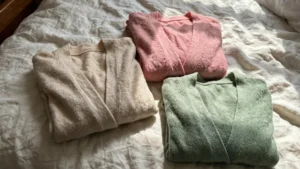
A soy blend cardigan does not behave like a wool cardigan, and that is the whole point of it. Wool is warm, springy, and structured. Soy fibre is soft, fluid, and cool against the skin, closer to silk than to any animal fibre. It drapes instead of holding a shape, which means it flatters a completely different set of outfits and fails at a completely different set of jobs.
The fibre itself is made from the protein left over when soybeans are processed for food, which is why it is often called soy silk or vegetable cashmere. Blended with cotton or lyocell, it makes a knit that is smooth, breathable, and light enough for warm weather, with a gentle sheen that reads as expensive without trying. MUJI’s Soy Fiber Series and KD New York’s Vegetable Cashmere line both use it blended with cotton or lyocell.
Below are nine ways to style a soy blend cardigan for women, from an open layer over a bias-cut skirt to a knotted waist over a midi dress, with the fitting, layering, and care details that make the difference between a cardigan that looks quietly luxurious and one that looks limp.
Key takeaways
- Soy fibre drapes like silk and feels cool on the skin, so let the cardigan move instead of forcing it into a structured shape.
- Layer it over smooth, fluid pieces such as camisoles, slip skirts, and poplin shirts, and avoid bulky knits underneath, because the soft knit cannot absorb extra bulk.
- A soy cardigan needs a defined waist, a tuck, or a knot, or it will hang as a shapeless curtain.
- Balance the sheen with matte textures such as cotton, denim, and linen, so the outfit does not look shiny all over.
- Soy blend cardigans are still rare in shops, so check the fibre label carefully, because many cardigans with soy in the brand name contain no soy fibre at all.
What makes a soy blend cardigan style differently
Soy protein fibre is a plant-based protein fibre, made from the pulp left after soybeans are pressed for food. It is smooth on the surface, which gives it the silk-like hand that people notice first, and it is naturally breathable, which is why it suits warm weather better than wool.
The blend changes the behaviour. Cotton keeps a soy cardigan grounded and washable, which suits everyday open-front styles that are meant to be worn often and washed without fuss. Lyocell adds fluidity and a cool drape, so a soy and lyocell cardigan falls in long, clean lines and suits evening and occasion looks.
That softness is also the styling challenge. A soy cardigan has almost no structure of its own, so it follows the shape of whatever is underneath it. Worn over a shapeless dress, it looks shapeless. Worn over a defined waist and a clean line, it looks deliberate and expensive. The fibre rewards simple outfits and punishes busy ones.
Before you style it: fit, fabric, and first checks
Start with the fit, because a fluid knit shows every mistake. Try the cardigan on over the top you actually plan to wear with it, not over a thick jumper, and check three places: the shoulders, the button band, and the length.
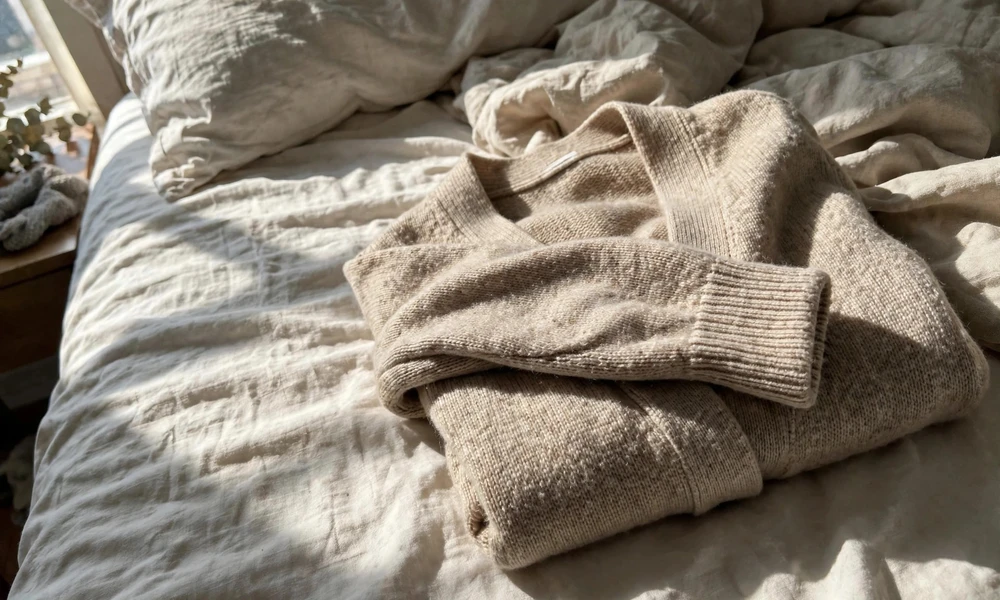
Then check the label, because this matters more with soy than with almost any other fibre. Read the composition and look for soy protein fibre, soybean fibre, or azlon listed as a percentage, as MUJI lists 52 percent protein fibre and 48 percent cotton on its soy pieces. A brand name that sounds like soy, such as Soyaconcept, is not proof of soy fibre: that brand’s fleece cardigan is 100 percent recycled polyester.
9 ways to style a soy blend cardigan
Open it over a bias-cut skirt and let the fluid knit follow the skirt’s line
What to do: Choose a bias-cut skirt in a plain colour, wear a smooth camisole on top, and leave the cardigan open so the two fluid fabrics move together.
What to avoid: Do not wear it over a stiff A-line skirt or a heavy pleated skirt, because the cardigan’s softness fights the skirt’s structure and the outfit looks unfinished. Best For: Warm evenings and fluid, relaxed dressing. Time Needed: Five minutes. Standout Tip: Keep the skirt plain so the cardigan’s sheen is the interesting part.
Tuck a fine soy cardigan into wide-leg trousers and wear it as a blouse
What to do: Fasten the buttons of a fine-gauge soy cardigan, tuck it into high-waisted wide-leg trousers, and let it read as a blouse rather than a layer. A soy cardigan is smooth enough to tuck neatly, and the wide trousers balance the slim top.
What to avoid: Do not try this with a chunky or open-knit cardigan, because the tuck will look bulky and the cardigan will not lie flat. Best For: Smart daytime dressing and work outfits. Time Needed: Five minutes. Standout Tip: Choose a cardigan with small, flat buttons so the front lies smooth under the tuck.
The tuck is what gives a fluid knit its shape. Without it, the cardigan hangs straight down and the outfit has no waist.
Slip it beneath a linen blazer and let only the collar and cuffs show
What to do: Wear the soy cardigan buttoned under a relaxed linen blazer, with the cardigan’s collar and cuffs just visible at the edges.
What to avoid: Do not wear it under a tight, tailored jacket, because the extra layer will bunch at the shoulders and the cardigan will ride up. Best For: Office days and smart-casual meetings. Time Needed: Five minutes. Standout Tip: Match the cardigan to the blazer in tone, so the layering reads as one outfit.
Put a cream soy knit against dark jeans and let the light fabric stand out
What to do: Choose a pale soy cardigan in cream, sand, or soft white, and wear it open over a plain top with dark straight-leg jeans. The dark denim makes the pale, slightly shiny knit stand out, and the matte denim keeps the sheen from looking too dressy.
What to avoid: Do not pair a pale soy cardigan with pale jeans as well, because the outfit loses all contrast and the cardigan disappears into the jeans. Best For: Easy weekends and daytime plans. Time Needed: Five minutes. Standout Tip: Keep the top underneath plain and dark, so the cardigan stays the lightest piece.
Contrast is what makes a soft knit visible. Without it, even the prettiest soy cardigan fades into the background.
Show a deep camisole neckline under the open cardigan at dinner
What to do: Leave the cardigan open over a silk or satin camisole, and let the deep neckline show at the front.
What to avoid: Do not button it all the way up for evening, because a fully closed cardigan hides the camisole and looks like a daytime layer, not an evening outfit. Best For: Dinners, drinks, and evenings out. Time Needed: Five minutes. Standout Tip: A camisole in a deeper tone than the cardigan makes the neckline read clearly.
Gather the front panels and tie a loose knot at the waist over a midi dress
What to do: Wear the cardigan open over a plain midi dress, then gather the two front panels and tie them in a loose knot at your waist. The knot gives the fluid knit a waist without a belt, and the loose ends add movement.
What to avoid: Do not knot a short or cropped cardigan this way, because there is not enough length to tie, and the knot will pull the hem up unevenly. Best For: Holidays, warm days, and relaxed daytime looks. Time Needed: Two minutes. Standout Tip: Tie the knot loosely, so the fabric falls softly rather than creasing into a hard point.
A knot suits soy better than a belt does, because the fibre is too soft to hold a belted shape and too fluid to need one.
Match it with a cotton poplin shirt and let the two plant fibres breathe together
What to do: Wear a crisp cotton poplin shirt under an open soy cardigan, with the shirt collar and cuffs showing.
What to avoid: Do not pair the cardigan with a heavy wool shirt or a shiny satin blouse, because the weights and the sheens clash and the outfit feels neither crisp nor soft. Best For: Warm days, holidays, and garden lunches. Time Needed: Five minutes. Standout Tip: Keep the shirt white or pale, so the cardigan’s colour stays the focus.
Push the sleeves up over a long-sleeve tee so two soft cuffs show
What to do: Wear a long-sleeve tee under the cardigan, then push both sleeves up to just below the elbow so the tee cuff and the cardigan cuff show together. The double cuff breaks up the long vertical of the cardigan and makes the whole outfit feel lighter.
What to avoid: Do not push the sleeves up past the elbow, because the soft knit will slide down again and the cuff will bunch at the wrist. Best For: Mild days and relaxed daytime looks. Time Needed: One minute. Standout Tip: Match the tee to the cardigan in tone, so the two cuffs read as one layer.
This small change makes a fluid cardigan feel casual, which is useful when the sheen itself feels a little formal.
Keep it folded in your bag and pull it on over a sundress at dusk
What to do: Carry the cardigan folded over your arm during the day, then slip it on open over a sundress when the temperature drops.
What to avoid: Do not wear it as your main layer on a cold day, because soy is breathable rather than warm, and it will not replace a coat or a wool knit. Best For: Summer evenings, holidays, and garden parties. Time Needed: One minute. Standout Tip: Choose a cardigan in a colour that works with every dress you own, so it earns its place in your bag.
A soy cardigan is at its best as a second layer in warm weather, so plan your soy outfits for the months when breathability matters, and reach for wool when the temperature drops.
Matching a soy blend cardigan to the occasion
For the office, choose a fine-gauge cardigan in a muted colour, such as cream or dusty blue, and wear it tucked into wide-leg trousers or layered under a linen blazer. The soy knit looks polished without trying too hard, and the smooth surface reads as professional rather than casual. Keep the jewellery simple and the shoes plain, because the cardigan’s sheen is already doing the work. A bamboo blend cardigan is the softer alternative for the office if soy feels too fluid, and a merino blend cardigan is the warmer choice for a cold office.
For the weekend, a pale soy cardigan over dark jeans is the easiest combination, and an open cardigan over a camisole works just as well for an evening out. For holidays and hot weather, the poplin-shirt pairing is the most comfortable, and the cardigan doubles as a light cover over a sundress when the evening cools.
For evening, the open cardigan over a camisole is the one to remember, with dark, slim bottoms and one piece of simple jewellery.
The caveats that matter
The main caveat is durability. Soy protein fibre is softer and less hard-wearing than wool or cotton, and the fibre is known for lower durability than most knitting fibres, which is one reason it appears in small runs and capsule collections rather than in every high-street knit.
| Detail | What is known |
|---|---|
| Best under-layer | A smooth camisole, a poplin shirt, or a fine long-sleeve tee, never a bulky knit |
| Best bottom | Wide-leg trousers, dark straight-leg jeans, or a bias-cut skirt, so the drape stays clean |
| Defining the waist | A tuck, a loose knot, or a half-buttoned line, rather than a heavy belt |
| Sleeves | Push to just below the elbow over a long-sleeve tee, never past the elbow |
| Colour pairing | Pale soy against dark denim or dark bottoms, so the sheen stays visible |
| Care before wearing | Steam lightly to remove creases, and hang rather than folding tightly |
| What to avoid underneath | Bulky knits and heavy layers, because soy has no structure to absorb them |
| Price expectation | No standard range yet; the fibre appears in small runs, so prices vary widely |
Soy fibre also needs gentle care. Wash it cold on a gentle cycle or by hand, dry it flat, and do not tumble dry it. Snags are a risk with fine-gauge knits, so keep the cardigan away from rough jewellery, Velcro, and cross-body bag hardware. If you decide soy’s softness is not for you after all, a ramie blend cardigan offers the opposite feel, crisp and structured where soy is soft and fluid.
Checklist: styling a soy blend cardigan honestly
Use these checks before you get dressed, and again before you leave the house.
- Check the label: look for soy protein fibre, soybean fibre, or azlon as a percentage, not just a soy-sounding brand name.
- Check the fit: shoulders sit at the shoulder, the front edges hang straight, and the length ends where you want it.
- Define the waist: a tuck, a knot, or a half-buttoned line, so the cardigan does not hang shapelessly.
- Choose a smooth under-layer: a camisole, a poplin shirt, or a fine tee, never a bulky knit.
- Balance the sheen: matte denim, cotton, or linen elsewhere, so the outfit does not look shiny all over.
- Keep it gentle: handle it softly, wash it cold, and dry it flat, because soy fibre is less hard-wearing than wool or cotton.
Frequently asked questions
Can I wear a soy blend cardigan to the office?
Yes, if you choose a fine-gauge style in a muted colour and wear it tucked into wide-leg trousers or layered under a linen blazer. The smooth knit looks polished, and the open front reads as professional. Avoid novelty prints and very sheer styles at work.
What should I wear under a soy blend cardigan?
A smooth camisole, a cotton poplin shirt, or a fine long-sleeve tee. The under-layer should be slim and plain, because soy has no structure to absorb bulk, and a lumpy layer shows through the knit.
Does a soy blend cardigan feel like silk?
Close to it. Soy protein fibre is often called soy silk or vegetable cashmere because it is smooth, soft, and slightly shiny, and it drapes in a similar way.
Can I wear a soy blend cardigan in summer?
Yes, and summer is where it does its best work. The fibre is breathable and light, so it suits warm days as a layer and cool summer evenings as a cover. It is not a winter fibre on its own, because it is breathable rather than warm.
How do I wash a soy blend cardigan?
Wash it by hand when you can, or use a cold gentle machine cycle, and always dry it flat. Do not tumble dry it, and steam it lightly before the next wear. Always check the care label first, because the blend partner, cotton or lyocell, can change the care instructions.
Why are soy blend cardigans hard to find?
Because the fibre is still a niche material. Soy protein fibre is made in small volumes compared with cotton or wool, and it is less durable, so brands use it in small runs and capsule collections, such as MUJI’s Soy Fiber Series and KD New York’s Vegetable Cashmere line, rather than in core ranges. Most cardigans with soy in the brand name contain no soy fibre at all, so the label is the only reliable check.
The bottom line
Styling a soy blend cardigan is mostly about respecting the fibre. Let it drape instead of forcing it into a shape, layer it over something smooth, define the waist with a tuck or a knot, and keep the rest of the outfit quiet. The softness that makes soy awkward when it is styled like wool is exactly what makes it elegant when it is styled on its own terms.
Start with the simplest combination, an open cardigan over a camisole and wide-leg trousers or dark jeans, and add one detail at a time: a tuck, a half-buttoned line, a pushed sleeve. Once you know how your cardigan moves, the rest of the styling follows naturally, and the soft knit stops looking like a curiosity and starts looking like a deliberate choice.