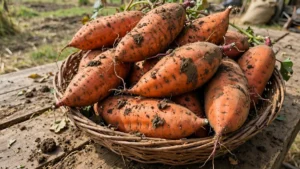
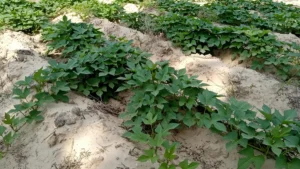
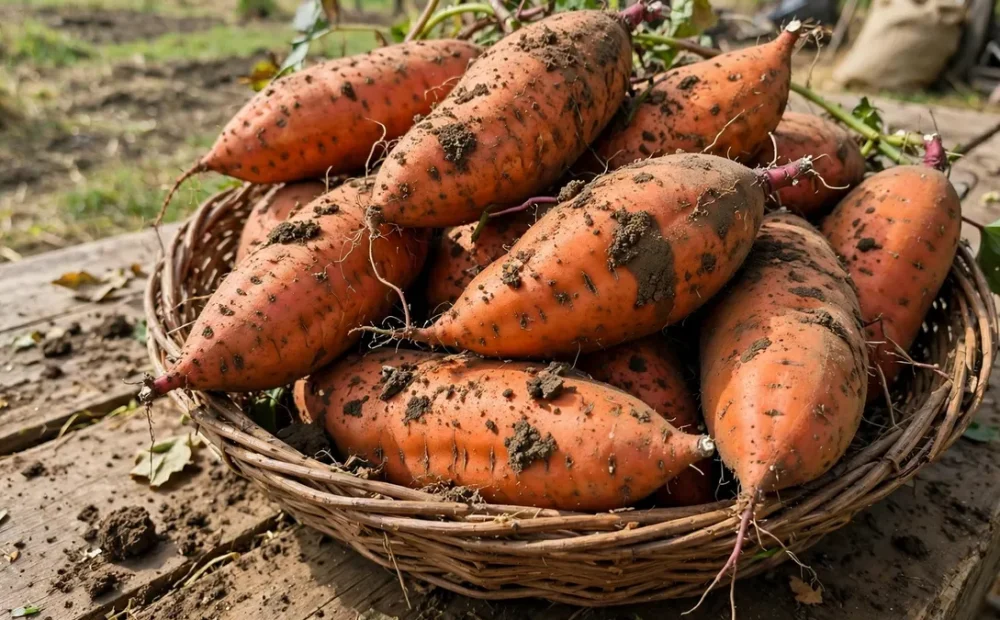
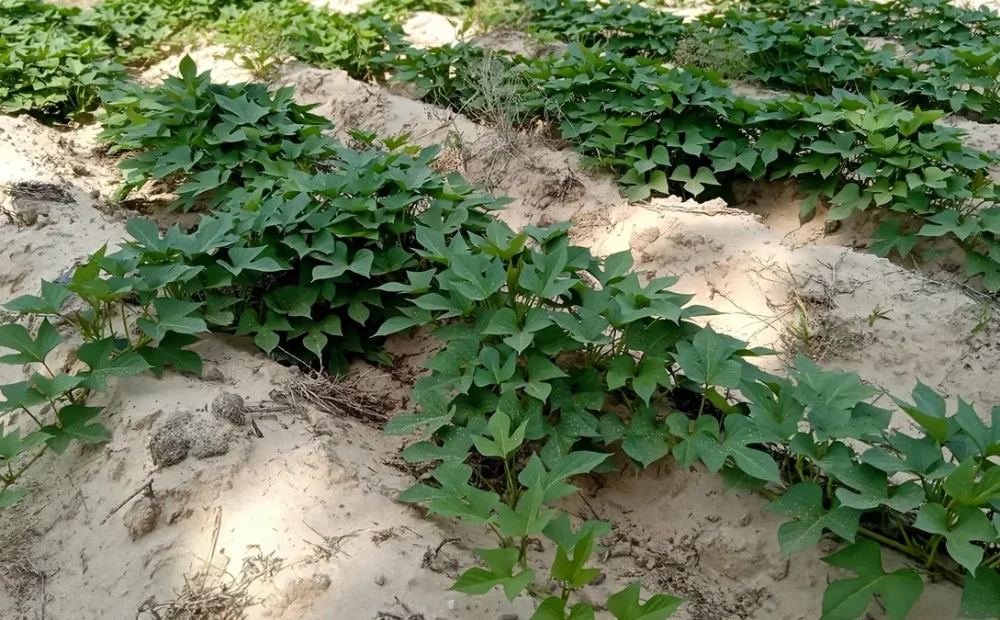
A sweet potato is dug, not picked. The vine runs along the ground, the roots swelling in loose sandy soil, and the harvest comes when the leaves begin to yellow and the first frost threatens. A fork goes in beside the ridge, the roots lift out in clusters, and they go into a warm shed to cure, where the starch turns to sugar and the flesh sweetens over a week.
A sweet potato farm retreat is a few nights on a working farm in the digging weeks, when the ridges are opened and the curing shed smells warm. You sleep in a farmhouse room, eat roots from the farm’s own ground, walk the rows while the vines are still green, and watch the roots come up out of the soil. The farms run from the coastal plain of North Carolina to the far north of New Zealand, and the root ties them together.
Here are nine sweet potato farm retreats to weigh for 2027, from the cheapest coastal-plain stay to the dearest northern farm. Each one is judged on its strong points, its weak points and the kind of traveller it suits, so the choice turns on how you travel rather than where on the map.
Key takeaways
- The sweet potato grows from slips, vine cuttings set into ridges after the last frost, so the first question to any farm is when its digging week falls.
- Orange, purple and white roots are different varieties of the same plant, and a farm that grows one may never grow the others, so settle which root you want before you choose.
- Digging runs through September and October in the north and March and April in the south, and the week shifts with the rain, so get the digging window before you buy flights.
- Sweet potato farms run small, with a handful of rooms and meals at one table, so expect plain comfort and red dirt on your shoes.
- Sweet potatoes carry no gluten, but the bread and pastry served beside them are usually wheat, so settle the kitchen and the calendar before you pay.
What a sweet potato farm retreat actually is
A sweet potato farm retreat means three to five nights on a working farm that grows sweet potatoes, with the digging weeks as the reason for the trip. Guests sleep in a farmhouse room or a converted barn, eat what the farm kitchen cooks, and join the harvest, walking the ridges to see the roots dug, cured and cooked while still warm from the ground.
Sweet potatoes have fed warm countries for centuries, and the great growing regions took shape around the dishes they served. The coastal plain of North Carolina fed the American south on orange roots, the volcanic soils of Kagoshima fed Japan with satsumaimo and shochu, and the far north of New Zealand fed Māori tables with kūmara. The root also feeds the ground it grows in, since the vines shade the soil and hold it against the rain.
The day on these farms runs on the field’s clock, not a hotel’s, with supper at one long table and real work on offer to guests who ask.
How we picked these stays, and what to ask first
We began with where sweet potatoes truly grow, not where they sell best. A genuine sweet potato farm offers ridges to walk along, vines to stand among at digging time, and a kitchen working with its own root. A farm that buys its roots in is not a sweet potato farm, whatever the website says.

The best ones also set out what the nightly rate covers, with meals, the lift in from town and field walks included in the price rather than added on arrival. Plain talk about digging, curing and cooking is usually a sign the farm looks after its guests well too.
The 9 best luxury sweet potato farm retreats of 2027
North Carolina, United States — Sweet Potatoes on the Coastal Plain
What we like: Sweet potatoes in North Carolina grow on the sandy coastal plain, and the farm digs Covington roots for candied yams and sweet potato pie. The farmhouse is white clapboard with a wide porch, the kitchen serves baked sweet potatoes with butter and brown sugar, and the evenings smell of wood smoke.
What to consider: The plain is flat and the sun is strong at digging time, so the work starts early and the farmhouse rooms stay plain.
Style: American coastal-plain farm stay. Best for: Travellers who want sweet potatoes where America grows most of them. Price range: $65–$95 per night. Standout feature: Candied yams from Covington roots dug that morning.
Louisiana, United States — Sweet Potatoes in the Bayou Parishes
What we like: Sweet potatoes in Louisiana grow in the bayou parishes, and the farm bakes them for sweet potato casserole with pecans. The land is low, the live oaks stand over the fields, and the kitchen serves casserole, pork and warm cornbread.
What to consider: The air is heavy at harvest time, and the digging week is short, so the dates move with the weather.
Style: Louisiana bayou farm stay. Best for: Travellers who want sweet potatoes cooked the southern way. Price range: $100–$130 per night. Standout feature: Sweet potato casserole from roots dug in the bayou parishes.
Aljezur, Portugal — Sweet Potatoes on the Atlantic Sands
What we like: Sweet potatoes in Aljezur grow in the sandy soils near the Atlantic, and the farm roasts them for the batata-doce that carries the town’s name. The coast is wild, the cliffs stand over the beach, and the kitchen serves roast sweet potato, grilled fish and warm bread.
What to consider: The wind off the ocean is sharp at digging time, and the farm sits far from the railway.
Style: Portuguese Atlantic farm stay. Best for: Travellers who want sweet potatoes from sandy Atlantic soil. Price range: $135–$165 per night. Standout feature: Roast batata-doce from the sandy fields above the cliffs.
Kagoshima, Japan — Sweet Potatoes Below the Volcano
What we like: Sweet potatoes in Kagoshima grow in the volcanic ash below Sakurajima, and the farm steams satsumaimo for imo-jochu and sweet potato tempura. The volcano stands over the bay, the fields run in black soil, and the kitchen serves steamed satsumaimo, miso soup and warm rice.
What to consider: The ash falls on the fields after an eruption, and the farmhouse rooms stay plain.
Style: Japanese volcanic farm stay. Best for: Travellers who want satsumaimo from volcanic ground. Price range: $170–$200 per night. Standout feature: Steamed satsumaimo from the ash fields below Sakurajima.
Okinawa, Japan — Purple Sweet Potatoes on the Island
What we like: Sweet potatoes in Okinawa grow in the red soil of the island, and the farm bakes beni-imo for purple sweet potato tarts. The sea is close on every side, the sugar cane stands beside the fields, and the kitchen serves beni-imo tarts, pork and warm rice.
What to consider: The island heat is strong at harvest time, and the farm is a long drive from Naha.
Style: Okinawan island farm stay. Best for: Travellers who want purple sweet potatoes from island soil. Price range: $205–$235 per night. Standout feature: Beni-imo tarts from purple roots grown on the island.
Tarlac, Philippines — Sweet Potatoes on the Central Plain
What we like: Sweet potatoes in Tarlac grow on the central plain of Luzon, and the farm fries kamote for kamote cue sold at the roadside. The plain is wide, the mountains stand to the west, and the kitchen serves kamote cue, grilled fish and warm rice.
What to consider: The plain heat is fierce at digging time, and the farm sits far from Manila.
Style: Filipino plain farm stay. Best for: Travellers who want kamote from the Luzon plain. Price range: $240–$270 per night. Standout feature: Kamote cue from roots dug on the central plain.
Mbale, Uganda — Sweet Potatoes on the Elgon Slopes
What we like: Sweet potatoes in Mbale grow on the slopes of Mount Elgon, and the farm steams them for the staple dish served with groundnut sauce. The mountain stands over the town, the fields climb in terraces, and the kitchen serves steamed sweet potato, beans and warm matoke.
What to consider: The slopes are steep and the rains are heavy at harvest time, so the digging starts late in the morning.
Style: Ugandan mountain farm stay. Best for: Travellers who want sweet potatoes grown high in East Africa. Price range: $275–$305 per night. Standout feature: Steamed sweet potato with groundnut sauce from the Elgon slopes.
Bundaberg, Australia — Sweet Potatoes in the Burnett Country
What we like: Sweet potatoes in Bundaberg grow in the red soil of the Burnett country, and the farm roasts them for sweet potato wedges served with the region’s rum. The soil is red, the cane fields run beside the sweet potato ridges, and the kitchen serves roast wedges, beef and warm bread.
What to consider: The Queensland sun is fierce at digging time, and the farm is a long drive from Brisbane.
Style: Queensland country farm stay. Best for: Travellers who want sweet potatoes from red Australian soil. Price range: $310–$340 per night. Standout feature: Roast sweet potato wedges from the red soil of the Burnett.
Northland, New Zealand — Kūmara in the Far North
What we like: Kūmara in Northland grows in the sandy soils of the far north, and the farm roasts it for the hāngī and the roast dinners of the region. The light is long, the fields run to the dunes, and the kitchen serves roast kūmara, lamb and warm bread.
What to consider: This is the dearest stay on the list, and its harvest runs in the opposite season to the northern farms, so book a year ahead.
Style: New Zealand far-north farm stay. Best for: Travellers who want kūmara at the far end of the map. Price range: $345–$380 per night. Standout feature: Roast kūmara from the sandy soils of the far north.
Which sweet potato region fits your trip
If you want the deepest root story, start with North Carolina or Louisiana, where the root has been grown longest and the kitchens run to candied yams and casserole. Both make an easy first trip, with short walks and long meals taken together at the table.
If you want scenery with your sweet potatoes, Northland and Mbale put the fields in wide open country, Kagoshima beside a volcano, and Aljezur above Atlantic cliffs.
If you want the root that goes with the sweet potato, our guide to the pumpkin farm retreats covers a different autumn crop altogether, with giant pumpkins and autumn shows instead of roots and curing sheds, and the corn farm retreats offer another field crop, with tall stalks and harvest mazes instead of vines and digging forks.
The caveats that matter
Sweet potato farming answers to the weather: farms give a best guess, never a promise, and a trip pinned to one digging day gambles on rain. The real warning is the root itself, easy to miss when the stay is sold as gentle country.
| Detail | What is known |
|---|---|
| Best time to visit | September into October in the north, March into April in the south, once the leaves yellow and the roots fill; the precise week shifts with the rain |
| What the work involves | Walking the ridges, watching the roots dug and cured, and seeing the sweet potatoes cooked in the farm kitchen while they are still warm from the ground |
| How long a stay runs | Three to five nights, set around the digging weeks |
| Who should take care | Guests with a nightshade sensitivity, and anyone unused to fierce sun, red dust or thin mountain air |
| What the kitchen serves | Candied yams, sweet potato casserole and roast kūmara, with fresh bread and farm butter poured beside the plate |
| Gluten note | Sweet potatoes carry no gluten, but the bread and pastry served beside them are usually wheat, so ask the kitchen what it can safely serve |
| What to pack | Closed walking shoes, a broad sun hat, a warm layer for chilly nights, and clothes that wash easily by hand |
| What it does not do | No promised digging day, no fixed menu, and no hotel-style service on a working farm |
Anyone with a nightshade sensitivity or a strict gluten-free diet should ring the farm before booking. A single question about the kitchen and the roots can save you a difficult stay, and a farm that answers honestly is usually worth the visit. The same warning runs through our pea farm retreats, where the bread on those tables is baked from grain too.
Checklist: booking a sweet potato farm stay honestly
Work through this list before you pay, and go over it again in the week before you travel.
- Get the digging window in writing, and ask what happens if the roots are still small when you arrive.
- Check that supper, the lift in from the nearest town and the field walks are all part of the nightly rate.
- Ask whether the digging and cooking happen on the farm, and whether the kitchen can serve a meal without sweet potato.
- Look over the bedroom before you pay, and test the bed, the taps and the heater, since the rooms are simple.
- Pack for sun and red dust: closed shoes, a hat, a warm layer for cold evenings, and clothes you can wash by hand.
- Leave one day free for the nearest town, so a digging week that shifts still leaves a good trip.
Frequently asked questions
Is a sweet potato the same thing as a yam?
No. A sweet potato is Ipomoea batatas, a root from the morning glory family, while a true yam is a Dioscorea, a different plant altogether. The orange roots sold as yams in American shops are sweet potatoes, usually Beauregard or Garnet, and the name stuck from a time when the two were confused. True yams are drier, starchier and rarely sweet, and they grow in Africa and Asia rather than the Americas.
Which months does the sweet potato harvest fall in?
The northern crop is dug in September and October, the southern crop in March and April, and the digging takes a week or two. The precise week shifts with the rain, so ask the farm for its digging window instead of a single date, and hold off booking flights until that window is fixed.
What shows a sweet potato root is ready to dig?
A ready root sits fat in the ridge, with the vine leaves yellowing and the skin firm enough to resist a thumbnail. Dig one root first and check the flesh inside — it should be dense, moist and sweet to the bite — and the field should smell of warm earth and green vines.
Can guests join the digging and the curing?
Most farms let guests walk the ridges, join the digging and watch the curing shed, and some invite you into the kitchen to cook with the roots. The digging itself is steady work, so ask the farm what guests can do before you book, and expect red dirt on your hands either way.
Where should a first-time sweet potato traveller begin?
North Carolina is the easiest first trip: the sweet potato fields are widest there, the farms are used to guests, and the candied yams best show what the root can do. If you want the story as well as the plate, Kagoshima is the volcanic region where the root feeds the shochu stills as well as the table.
What can a gluten-free guest eat on a sweet potato farm?
Mostly. The fields, the digging and the harvest are worth the trip alone, and sweet potatoes carry no gluten, but the bread and pastry served beside the roots are usually wheat. Ask the farm what it can serve a gluten-free guest, and choose the digging week over the baking week.
The bottom line
A sweet potato farm retreat suits travellers who prefer sandy ridges, curing sheds and roots cooked the farm’s own way to a hotel. The roots come fresh and sweet, and the finest stays feed you from ground they worked themselves.
Choose the digging week before the travel dates, and leave a spare day at the end. When the sweet potato roots fill on time you will eat roots dug that morning, and when they do not, the hills, the valleys and the old towns will still carry the trip.