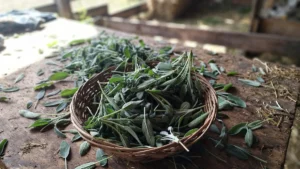
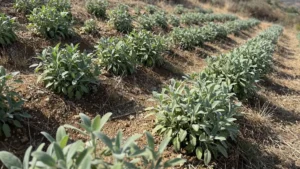
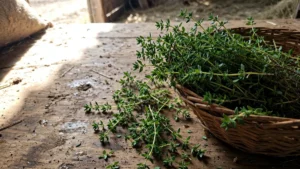
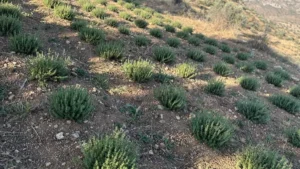
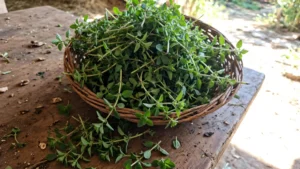
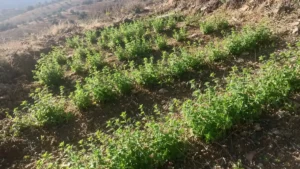
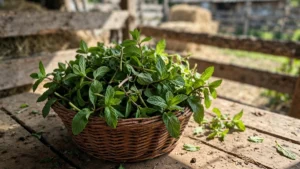
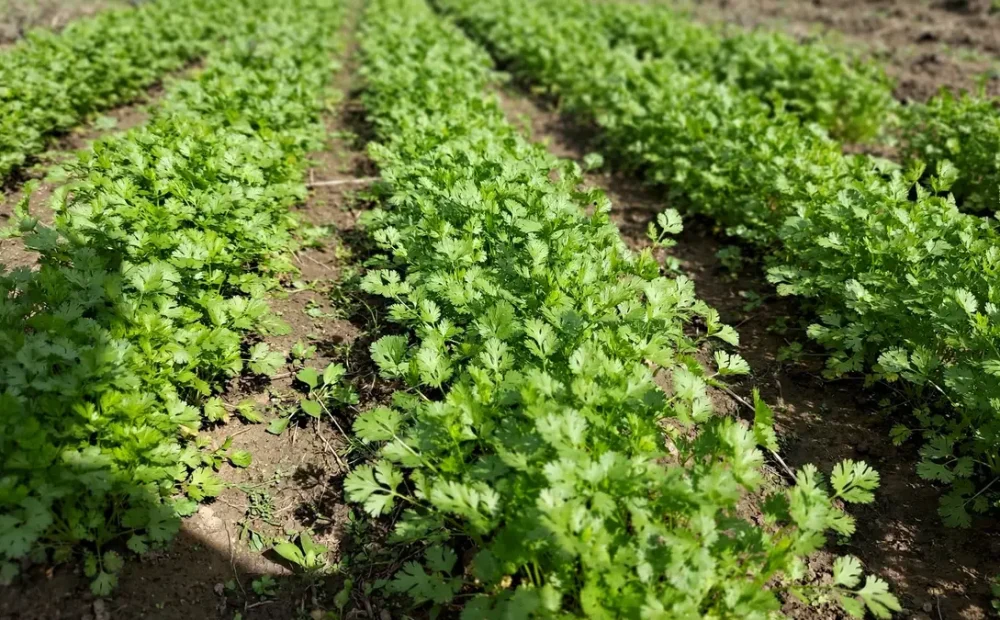
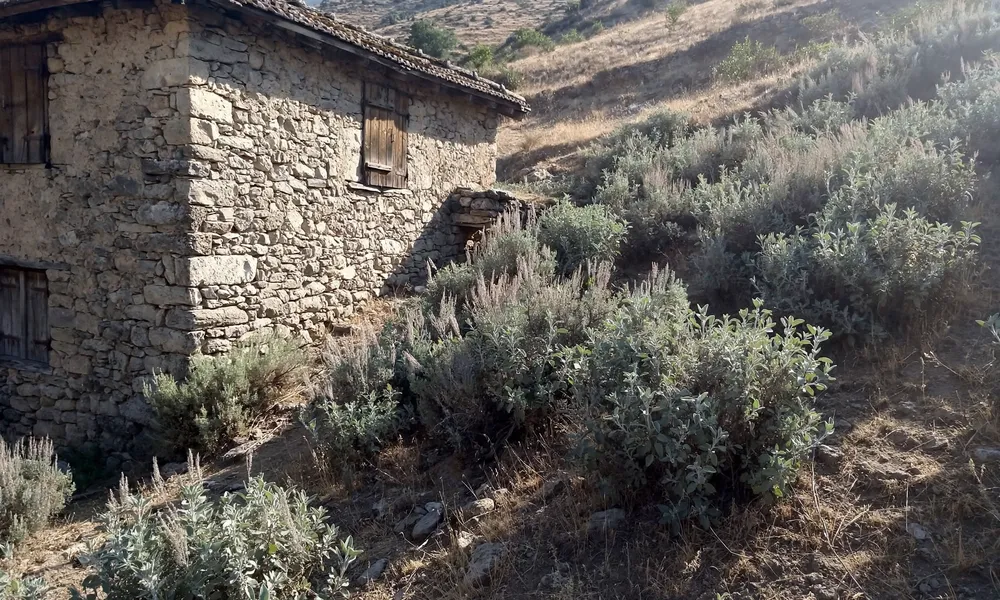
Sage is the herb that perfumes the dry Mediterranean. It grows on limestone islands, on stony peninsulas, on mountain slopes where the soil is thin and the sun is fierce, a woody shrub with soft grey-green leaves that carry their scent from the first warm morning of the year. A leaf rubbed between thumb and finger smells of pine and earth and something faintly sweet, and the honey the bees make from its flowers is the clearest, lightest honey on any farm table.
A sage farm retreat is a few nights on a working herb farm at cutting time, when the leaves are at their strongest and the drying sheds are full. You sleep in a farmhouse room, eat food cooked with the herb the farm grows, walk the rows while the morning dew is still on the leaves, and watch sprigs cut, bundled and hung to dry in the shade. The farms run from the Dalmatian islands to the Balearics, and the shrub ties them together.
Here are nine sage farm retreats to weigh for 2027, from the cheapest Pag stay to the dearest Menorca farm, so the decision turns on the way you travel rather than the place on the map.
Key takeaways
- Sage is a woody Mediterranean shrub that loves dry, sunny slopes and poor limestone soil, and its leaves give their strongest scent in the morning, before the heat draws the oils out.
- Common sage and clary sage are different plants, so ask which one the farm grows.
- The cutting season runs from late spring into early summer, and the farm names its week, not a month, so settle the window before you book the flights.
- Sage honey, dried leaves and seed are the farm shop staples, and the drying shed is where the trip turns from a walk into a craft.
- Sage oil is strong, so ask the farm before joining any distilling if you are pregnant or sensitive to strong scents, and settle the kitchen and the calendar before you pay.
What a sage farm retreat actually is
A sage farm retreat means three to five nights on a working farm that grows sage, with the cutting weeks as the reason for the trip. Guests sleep in a farmhouse room or a converted barn, eat what the farm kitchen cooks, and join the harvest, walking the rows to see the leaves cut at dawn, the bundles tied for drying, and the honey drawn from hives set beside the rows.
Sage has grown around the Mediterranean for as long as people have cooked with herbs, and the great sage regions took shape around the dishes and remedies they served. Dalmatia turned it into honey and tea, Tuscany folded it into butter and beans, the Greek mountains kept it for lamb and tea, and the Turkish coast carried it to the stills and the spice markets.
Days on these farms run on the shrub’s clock rather than a hotel’s, with supper at one long table and real work on offer to guests who ask for it.
How we picked these stays, and what to ask first
We began with where sage truly grows, not where it sells best. A genuine sage farm offers rows to walk through, shrubs to stand among at cutting time, and a kitchen working with its own herb. A farm that buys its leaves in is not a sage farm, whatever the website says.
The finest farms take few guests, so the cutting stays honest work rather than a display staged for visitors. They also spell out in the first email what the nightly rate takes in, with supper, the ride in from the nearest town and walks among the rows folded into the price rather than billed on arrival. Plain talk about leaves, cutting and drying is usually a sign the farm looks after its guests well too.
The 9 best luxury sage farm retreats of 2027
Pag, Croatia — Sage Honey from the Island Hills
What we like: Sage on Pag grows on the bare limestone hills of the island, and the farm serves it with roast lamb, sheep’s cheese and warm bread. The hills are pale and open, the stone walls run for miles, and the kitchen serves herb lamb, sage potatoes and the island’s famous honey beside the plate.
What to consider: The cutting season is short, and the island wind is sharp in spring, so the farm books its rooms well ahead.
Style: Dalmatian island farm stay. Best for: Travellers who want sage where the honey is made. Price range: $65–$95 per night. Standout feature: Sage honey from hives set beside the island rows.
Korčula, Croatia — Sage Above the Walled Town
What we like: Sage on Korčula grows on the dry hills above the walled old town, and the farm grills fish and chicken with the herb for supper. The coast is bright, the old town keeps its stone lanes, and the kitchen serves grilled fish, sage potatoes and warm bread.
What to consider: The island is a ferry ride from the mainland, and the farm sits above the town, so arrange the lift in advance.
Style: Dalmatian island farm stay. Best for: Travellers who want sage above the Adriatic. Price range: $100–$130 per night. Standout feature: Island sage grilled into the evening meal.
Karst, Slovenia — Sage on the Limestone Plain
What we like: Sage on the Karst grows on the pale limestone plain between the mountains and the sea, and the farm folds it into pasta, beans and roast pork. The plain is quiet, the stone villages keep their old cellars, and the kitchen serves herb pasta, sage beans and warm bread.
What to consider: The plain wind is cold in spring, and the farm sits a drive from Ljubljana, so the journey up is slow.
Style: Slovenian limestone farm stay. Best for: Travellers who want sage from the Karst plain. Price range: $135–$165 per night. Standout feature: Sage cut from limestone soil between the mountains and the sea.
Datça, Turkey — Sage on the Aegean Peninsula
What we like: Sage on the Datça peninsula grows on the dry hills between two seas, and the farm serves it with grilled fish, olives and warm bread. The peninsula is wild, the almond trees run down to the bays, and the kitchen serves herb fish, sage olives and honey.
What to consider: The peninsula is far from the main roads, and the farm books its cutting weeks early, so write well ahead.
Style: Turkish Aegean farm stay. Best for: Travellers who want sage between two seas. Price range: $170–$200 per night. Standout feature: Sage tea poured from leaves cut that morning.
Bodrum, Turkey — Sage and Honey on the Bays
What we like: Sage near Bodrum grows on the dry slopes above the bays, and the farm serves it with lamb, beans and village bread. The slopes are golden, the white houses stand above the water, and the kitchen serves roast lamb, sage beans and honey.
What to consider: The summer heat arrives early, and the farm sits outside the town, so travel in the cool of the morning.
Style: Turkish coastal farm stay. Best for: Travellers who want sage above the Aegean bays. Price range: $205–$235 per night. Standout feature: Sage honey from hives above the bays.
Samos, Greece — Sage on the Island Slopes
What we like: Sage on Samos grows on the green slopes of the Aegean island, and the farm serves it with lamb, beans and island bread. The slopes are gentle, the white villages stand above the bays, and the kitchen serves roast lamb, sage beans and honey.
What to consider: The island is a ferry ride from Athens, and the farm sits above the coast, so allow a day for the journey.
Style: Greek island farm stay. Best for: Travellers who want sage from the Aegean island. Price range: $240–$270 per night. Standout feature: Island sage brewed into tea at the farm table.
Naxos, Greece — Sage on the Marble Island
What we like: Sage on Naxos grows on the dry hills of the largest Cycladic island, and the farm serves it with roast pork, potatoes and warm bread. The hills are pale, the marble quarries run behind the villages, and the kitchen serves herb pork, sage potatoes and honey.
What to consider: The island sun is strong by midday, and the farm is a ferry ride from Athens, so plan the journey before the cutting week.
Style: Greek island farm stay. Best for: Travellers who want sage from the Cyclades. Price range: $275–$305 per night. Standout feature: Island sage cut from hills above the marble quarries.
Gozo, Malta — Sage on the Sister Island
What we like: Sage on Gozo grows in the dry soil of Malta’s smaller island, and the farm serves it with rabbit, beans and warm bread. The island is quiet, the stone farmhouses stand among the fields, and the kitchen serves herb rabbit, sage beans and honey.
What to consider: Gozo is reached by ferry from Malta, and the farm is small, so book the cutting week well ahead.
Style: Maltese island farm stay. Best for: Travellers who want sage from the quieter island. Price range: $310–$340 per night. Standout feature: Sage cut from dry soil on the sister island.
Menorca, Spain — Sage from the Balearic Hills
What we like: Sage on Menorca grows on the green hills of the quietest Balearic island, and the farm serves it with lamb, seafood and warm bread. The coast is gentle, the stone walls run across the fields, and the kitchen serves roast lamb, sage seafood and honey.
What to consider: This is the priciest stay of the nine, and the island is reached by ferry or a small flight, so plan a year ahead.
Style: Balearic island farm stay. Best for: Travellers who want sage from the Balearic hills. Price range: $345–$380 per night. Standout feature: Sage cut from green hills by the quiet sea.
Which sage region fits your trip
If you want sage where the herb is treated as a feast, start with Pag or Datça, where the leaves are cut, dried and served the same day they were picked. Both suit a first visit, with easy walks and long meals at the farm’s own table.
If you want scenery with your sage, Menorca puts the rows beside a gentle sea, Samos on green Aegean slopes, and Korčula on hills above a walled old town.
If you want the herb that grows beside the sage, our guide to the mint farm retreats covers a cooler, greener herb altogether, with tea and runners instead of dry hills and drying sheds, and the rosemary farm retreats offer a sharper shrub for the same dry slopes, with needle leaves and distilled oil instead of soft leaves and honey.
The caveats that matter
Sage farming answers to the weather: farms give a best guess, never a promise, and a trip pinned to one cutting day gambles on rain. The warning that counts is the oil itself, easy to overlook when the stay is sold as gentle country.
| Detail | What is known |
|---|---|
| Best time to visit | Late spring into early summer in the north for the strongest leaves, with the southern season running the other way round |
| What the work involves | Walking the rows, watching the leaves cut at dawn, the bundles tied for drying, and the honey drawn from hives beside the rows |
| How long a stay runs | Three to five nights, set around the cutting weeks |
| Who should take care | Guests who are pregnant or sensitive to strong scents, and anyone unused to fierce sun, dry slopes or thin mountain air |
| What the kitchen serves | Sage roast lamb and pork, herb potatoes and beans, sage bread and honey, with fresh bread and farm butter beside the plate |
| Gluten note | Sage carries no gluten, but the bread and pastry served beside it are usually wheat, so ask the kitchen what it can safely serve |
| What to pack | Closed walking shoes, a broad sun hat, a warm layer for chilly nights, and clothes that wash easily by hand |
| What it does not do | No promised cutting day, no fixed menu, and no hotel-style service on a working farm |
Anyone with a strict gluten-free diet should ring the farm before booking. A single question about the kitchen and the sage can save you a difficult stay, and a farm that answers honestly is usually worth the visit. The same caution appears in our saffron farm retreats, where the loaves on those tables are wheat as well.
Checklist: booking a sage farm stay honestly
Work through this list before you pay, and go over it again in the week before you travel.
- Get the cutting window in writing, and ask what happens if the leaves are still small when you arrive.
- Make sure supper, the ride in from the nearest town and the walks among the rows are all folded into the nightly rate.
- Ask whether the cutting and drying happen on the farm, and whether the kitchen can serve a meal without sage.
- Before you pay, look at the room in person, and run the taps, sit on the bed and try the heater, because farm rooms are simple.
- Pack for sun and dry earth: strong shoes, a hat, a warm layer for cold evenings, and clothes you can wash in a bowl.
- Leave a day spare for the nearest town, so a cutting week that shifts still leaves you a good trip.
Frequently asked questions
When are sage leaves at their strongest?
In the morning, before the heat draws the oils from the leaves. Cut sprigs in the first hour after dawn and the scent is deep and clean, while leaves cut at midday smell flatter and drier. Ask the farm to take you out at first light, and rub a leaf between your fingers to judge the strength yourself.
How do farms cut sage?
With shears or a small sickle, taking the top growth and leaving the woody base so the shrub grows again. The sprigs are tied into bundles for drying in the shade or taken straight to the kitchen, where the leaves are stripped for cooking and tea. A healthy shrub can be cut two or three times a year, and the morning cut gives the best leaves.
What is sage honey?
Honey made by bees working sage flowers, which open pale blue in late spring. It is pale, clear and faintly herbal, and the farms that keep hives beside the rows sell it in little jars. Buy it from the farm itself, because the flavour changes with the hillside, and a jar from Pag tastes different from one cut on Samos.
Can guests join the cutting and the drying?
Most farms let guests walk the rows, join the cutting and sit at the kitchen table, and some invite you to tie bundles and hang them in the drying shed. Cutting is gentle work, so ask the farm what guests may do before you book, and expect dust on your hands in any case. If you are pregnant or sensitive to strong scents, ask before joining any distilling, because the still room smells very strong.
Where should a first-timer start with sage farms?
Pag is the easiest first trip: the sage rows are widest there, the farms are used to guests, and the honey with roast lamb best shows what the herb can do. If you want the story as well as the plate, Datça is the peninsula where sage has been cut for generations.
Is a sage farm stay easy for a gluten-free traveller?
Mostly. The fields, the cutting and the harvest are worth the trip alone, and sage carries no gluten, but the bread and pastry served beside it are usually wheat. Ask the farm what it can cook without wheat for a gluten-free guest, and settle the cutting week before any week the kitchen bakes bread.
The bottom line
A sage farm retreat suits travellers who prefer dry hills, farm kitchens and sage cooked the farm’s own way to a hotel. The leaves come fresh and strong, the honey runs from the farm hives, and the finest stays feed you from ground they worked themselves.
Settle the cutting week before you book travel, and hold a spare day at the end of the trip. When the sage ripens on time you will eat leaves cut that morning, and when it does not, the hills, the valleys and the old towns will still carry the trip.