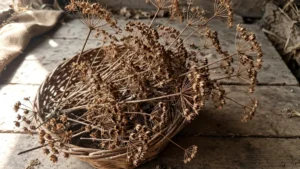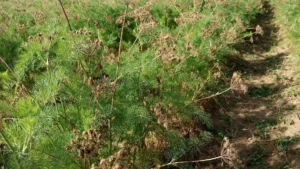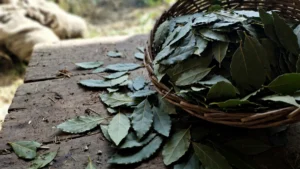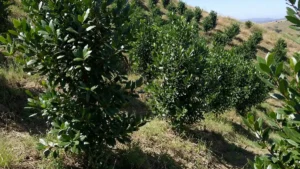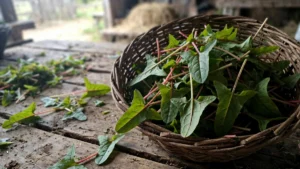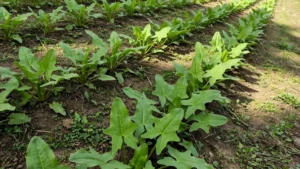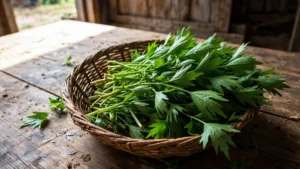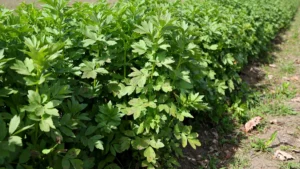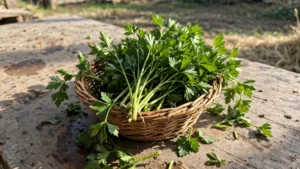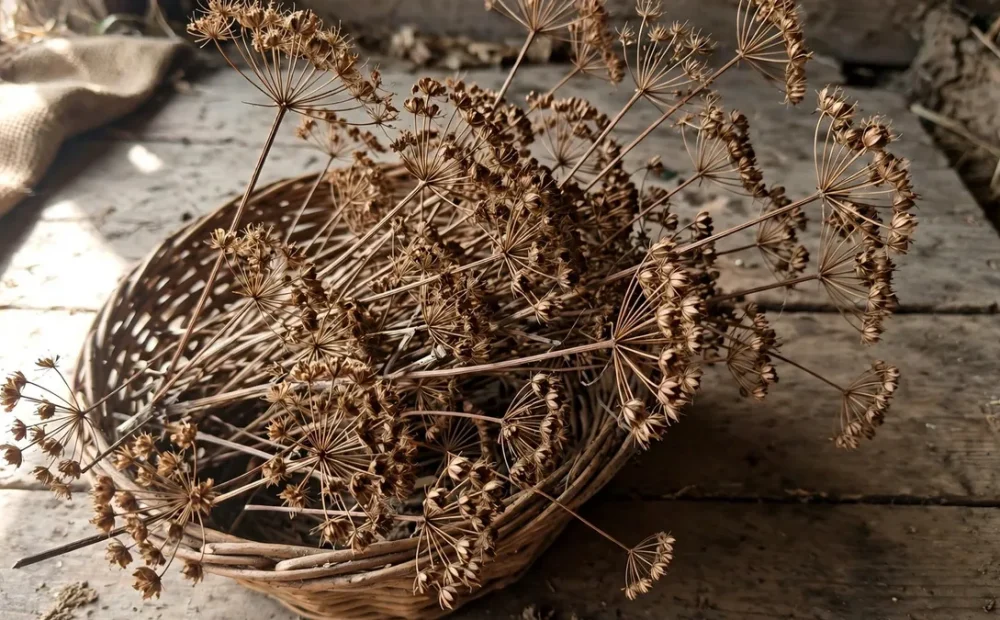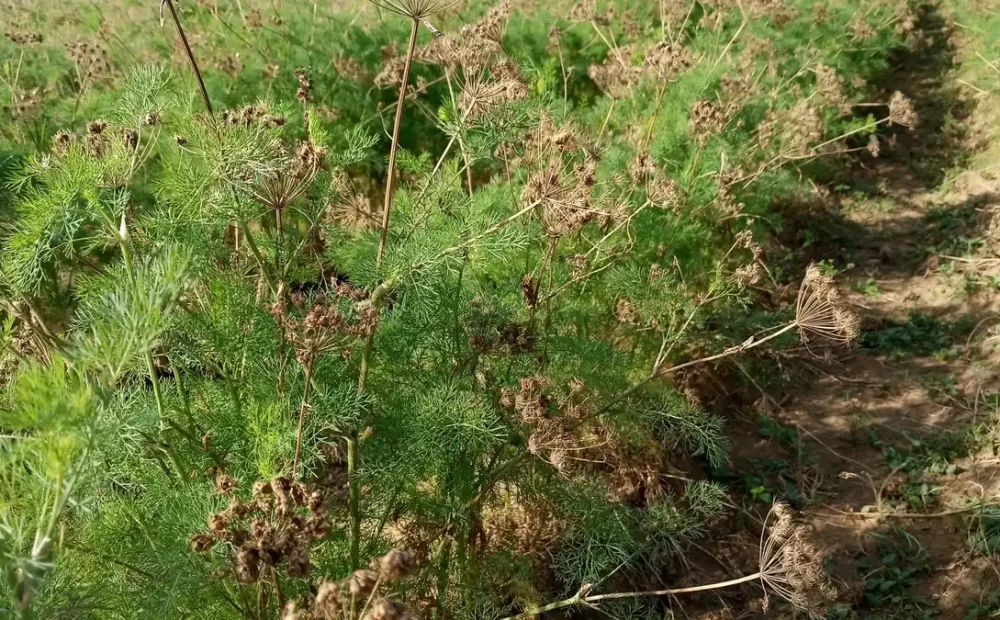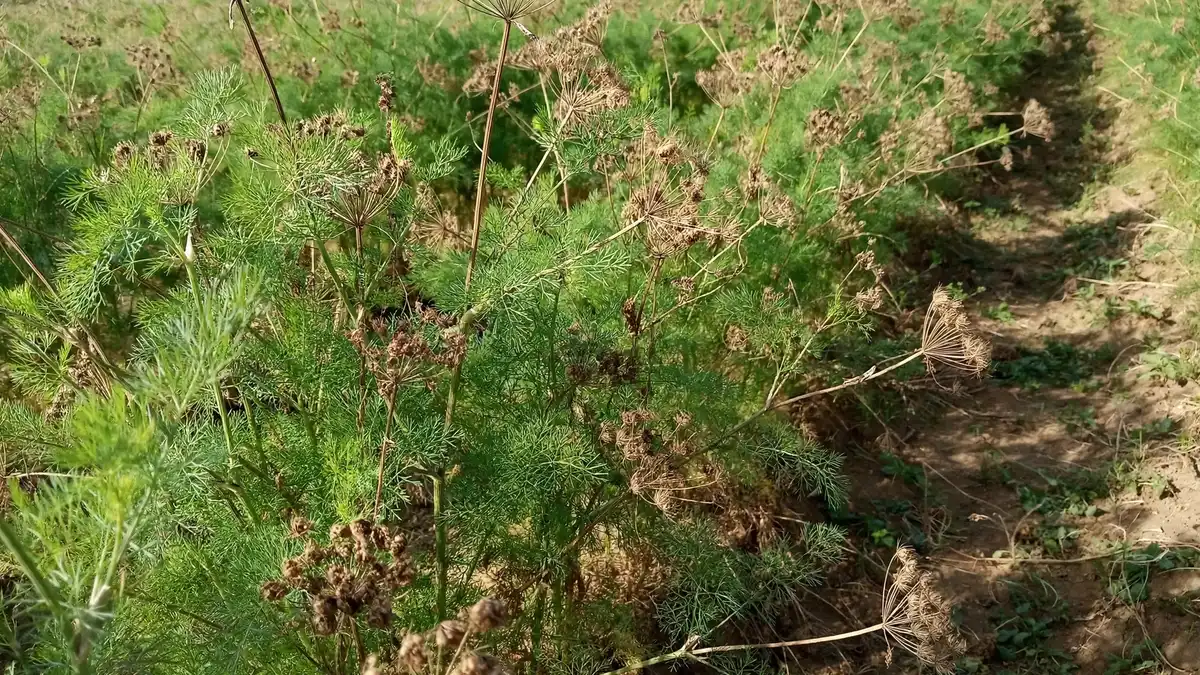

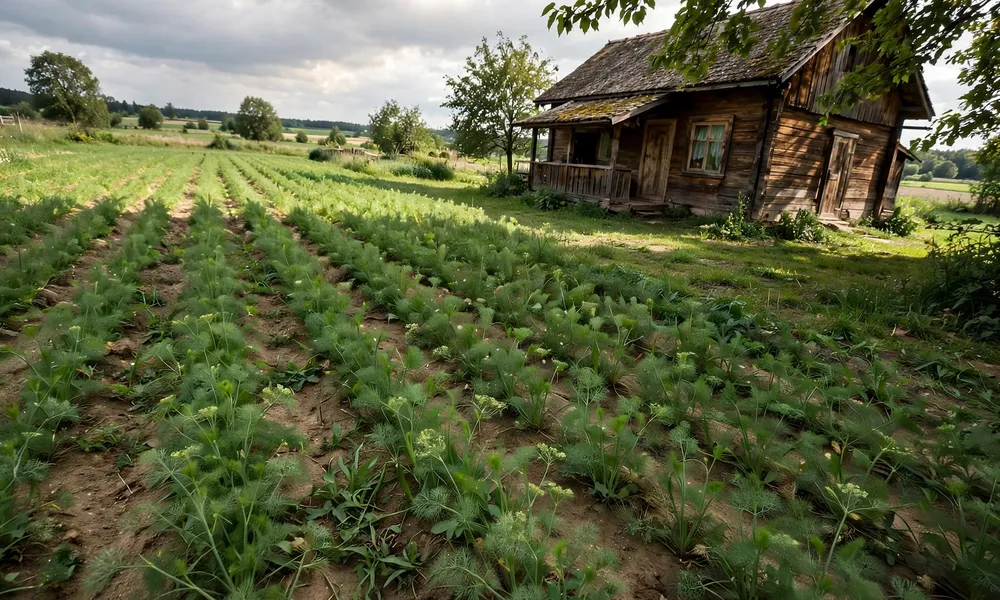
Caraway is the seed that gives rye bread its flavour, and it is one of the slowest crops a traveller can visit. The plant spends its first year as a flat rosette of feathery leaves, close to the ground and easy to miss. It flowers in its second summer, throws up tall umbels of white flowers, and only then sets the curved, ridged seed that bakers prize. A caraway farm retreat is a stay on a working seed farm at threshing time, when the umbels are cut, barn-dried, and threshed once the seed rattles in the hand.
Most people meet caraway in a loaf, ground into the crumb, and never think about where it comes from. On the farm it is a patient crop, grown by people who plan two years ahead. The first year is all leaves and roots, with nothing to harvest. The second year is the one worth travelling for, when the fields turn white with flowers in early summer and brown with ripening seed by late summer, and the barn fills with drying umbels.
Below are nine caraway farm stays worth considering in 2027, from a lakeside smallholding in Finland to a prairie seed farm in Saskatchewan. Each one is described by what it does well, what to watch for, and who it suits best, so you can choose with the threshing week in mind, not just the price.
Key takeaways
- Caraway is a biennial: a leafy rosette in year one, flowers and seed in year two, so only second-year fields are worth visiting.
- The seed is cut when the umbels turn brown, dried in the barn, and threshed once it rattles, and the farm names that week a month ahead.
- Caraway and cumin are different plants with different seeds, and a good farm will show you the difference in the field.
- Pick a stay by whether you want to see the cutting, the drying, or the threshing, because the three happen on different days.
- Caraway itself is naturally gluten-free, but farm kitchens bake rye bread every morning, so check how the kitchen handles flour before you book.
What a caraway farm retreat actually is
A caraway farm retreat is a stay on a working seed farm during the second-year harvest, usually three to five nights, with a room on the farm and meals from the farm kitchen. The days follow the seed: out in the rows in the morning to see the umbels cut, back to the barn to watch them hung, and an evening meal where the seed appears in the rye bread, the sauerkraut, and the cheese. Nothing is staged for show. The farm is growing caraway for bakers and spice merchants, and you are there while it happens.
The best stays keep the group small, often no more than eight guests, because a threshing crew cannot work around a crowd. You sleep on the farm itself, in a farmhouse bedroom or a converted barn, and supper is served at the family’s long table.
How we picked these stays, and what to ask first
We started with farms that grow caraway as a real crop, sold to bakers and spice buyers, rather than a patch beside the door for show. Each stay on the list cuts its own seed, dries its own umbels, and bakes with the harvest. We then checked that the farm welcomes guests during the threshing season, that the rooms are on the farm itself, and that the kitchen can feed a table of strangers well. Any farm that fell short on one of those three did not earn a place here, no matter how fine its fields look in a picture.
Before you book, ask three questions. First, is the field in its second year, and which week does the farm cut the umbels, because a first-year field has no seed to see. Second, whether the kitchen bakes with its own caraway, or buys seed in, because a farm that eats its own crop will show you more. Third, how the farm handles flour and bread, if you eat gluten-free, because a kitchen that bakes rye every morning needs a clear answer. Our guide to the rye farm retreats follows the same three questions, and they work just as well there.
The 9 best luxury caraway farm retreats of 2027
Satakunta, Finland — Caraway on the Western Fields
What we like: Caraway is Finland’s national spice, and Satakunta grows it on the flat western fields where the summer light lasts long into the evening. The farm cuts its seed for the rye bakers of the region, and the kitchen serves dark rye bread, smoked fish, and new potatoes with caraway butter.
What to consider: The season is short, and the farm is a long drive from Helsinki, so the journey in takes most of a day.
Style: Finnish western-fields farm stay. Best for: Travellers who want caraway where it matters most. Price range: $65–$95 per night. Standout feature: Seed cut for the rye bakers the same week it is threshed.
Viljandi County, Estonia — Caraway in the Southern Valleys
What we like: Caraway in Viljandi grows in the rolling southern valleys, and the farm dries its umbels in the same timber barns that hold the region’s rye. The valleys are quiet, and the kitchen serves black bread, pickled cabbage, and caraway cheese with the farm’s own honey.
What to consider: The farm is small and books out early, and the Estonian summer rain can arrive without warning.
Style: Estonian southern-valleys farm stay. Best for: Travellers who want caraway from a Baltic seed farm. Price range: $100–$130 per night. Standout feature: Umbels drying in a timber barn above the valley.
Grodno, Belarus — Caraway on the Neman Plain
What we like: Caraway in Grodno grows on the wide plain beside the Neman river, and the farm sells its seed to the bakers of the old market towns. The fields are flat and open, and the kitchen serves rye bread, beetroot soup, and caraway potatoes with the farm’s sour cream.
What to consider: The plain wind is strong at threshing time, and the farm sits far from the railway, so arrange the lift in advance.
Style: Belarusian river-plain farm stay. Best for: Travellers who want caraway from the eastern plains. Price range: $135–$165 per night. Standout feature: Seed threshed beside the Neman for the town bakers.
Kashubia, Poland — Caraway in the Lake Villages
What we like: Caraway in Kashubia grows among the lakes and pine woods of northern Poland, and the farm cuts it for the village bakers who put it in their rye loaves. The lakes are still, and the kitchen serves smoked fish, pickled cucumbers, and caraway bread with the morning catch.
What to consider: The villages are small and the farm’s English is limited, so learn a few Polish words first.
Style: Polish lake-villages farm stay. Best for: Travellers who want caraway with lake air and village bread. Price range: $170–$200 per night. Standout feature: Seed cut for the village rye the morning it is baked.
Aukštaitija, Lithuania — Caraway in the Pine Country
What we like: Caraway in Aukštaitija grows in the pine country of eastern Lithuania, and the farm dries its seed for the spice merchants of Vilnius. The forests are deep, and the kitchen serves dark rye, mushroom soup, and caraway cheese with the farm’s own beer.
What to consider: The mosquitoes are fierce at dusk, and the farm is a long drive from Vilnius, so travel early in the day.
Style: Lithuanian pine-country farm stay. Best for: Travellers who want caraway from the Baltic forests. Price range: $205–$235 per night. Standout feature: Seed drying on open racks in the farmyard air.
Latgale, Latvia — Caraway on the Blue Lakes
What we like: Caraway in Latgale grows beside the blue lakes of eastern Latvia, and the farm cuts it for the bakers of Daugavpils. The lakes are wide, and the kitchen serves rye bread, lake fish, and caraway butter with the farm’s pickles.
What to consider: The season is short, and the farm is remote, so book the threshing week as soon as the farm names it.
Style: Latvian blue-lakes farm stay. Best for: Travellers who want caraway at the edge of the lakes. Price range: $240–$270 per night. Standout feature: Seed cut beside the lakes for the Daugavpils bakers.
Volhynia, Ukraine — Caraway on the Forest Steppe
What we like: Caraway in Volhynia grows on the forest steppe of western Ukraine, and the farm sells its seed to the bakers of Lutsk. The land is a mix of woods and open fields, and the kitchen serves rye bread, borscht, and caraway cabbage with the farm’s own cheese.
What to consider: The farm is far from the nearest city, so check the travel guidance before you book.
Style: Ukrainian forest-steppe farm stay. Best for: Travellers who want caraway from the western steppe. Price range: $275–$305 per night. Standout feature: Seed threshed on the steppe for the Lutsk market.
South Iceland, Iceland — Caraway Under the Volcanoes
What we like: Caraway in South Iceland grows wild on the black sands and lava fields, and the farm gathers it for the distillers who flavour Brennivín. The volcanoes stand close, and the kitchen serves rye bread baked in the hot ground, lamb, and caraway butter with the farm’s skyr.
What to consider: The weather turns fast, and the farm is a long drive from Reykjavík, so pack for wind and rain.
Style: Icelandic volcanic farm stay. Best for: Travellers who want caraway where it grows wild. Price range: $310–$340 per night. Standout feature: Wild seed gathered on the lava fields for the distillers.
Regina, Saskatchewan, Canada — Caraway Across the Wheat Belt
What we like: Caraway on the Saskatchewan prairie grows in huge second-year fields, and the farm harvests its seed by machine for the spice buyers of North America. The sky is wide, and the kitchen serves rye bread, prairie beef, and caraway potatoes with the farm’s own pickles.
What to consider: The harvest is mechanised, so the work is less hands-on than on the small European farms, and the prairie wind is strong at threshing time.
Style: Canadian northern-prairie farm stay. Best for: Travellers who want caraway on a grand scale. Price range: $345–$380 per night. Standout feature: Seed harvested across the prairie for the continent’s spice trade.
Which caraway region fits your trip
If you want the seed at its most traditional, go to Satakunta or Kashubia, where caraway goes straight into the village rye. If you want the wildest setting, choose South Iceland, where the seed is gathered on lava fields. If you want the biggest fields, Regina is the farm to pick, where the harvest runs across the prairie.
For a first trip, Satakunta is the simplest choice: easy to reach from western Finland, a generous threshing week, and a kitchen that bakes with caraway every day, so you taste the seed at every meal. Our guide to the dill farm retreats uses the same first-timer logic, and it holds here too: pick the farm that cooks with its crop daily, and the rest of the trip follows.
The caveats that matter
Caraway farming answers to the weather more than most crops, because the seed only comes in the second year. A wet summer can spoil the umbels where they stand, and a dry one can leave the seed small and light. A farm can lose its threshing week to a single storm, and a cold spring can push the whole season back by a fortnight. A good farm will let you know the day the dates shift. Choose a stay that lets you move the week without losing the deposit, and go by the farm’s own weather reading instead of the national forecast.
| Detail | What is known |
|---|---|
| Caraway seed | The curved, ridged seed from the second-year umbels, warm and faintly aniseed |
| The biennial cycle | A leafy rosette in year one, flowers and seed in year two only |
| Best harvest time | Late summer, when the umbels turn brown and the seed rattles in the hand |
| Caraway vs cumin | Different plants and different seeds; cumin is warmer, caraway is cooler and sharper |
| Who should check first | Anyone with a celery-family allergy, and anyone who eats gluten-free |
| What to avoid | Booking a first-year field, where there is no seed to see at all |
| How it travels | Dried seed in paper packets, never fresh umbels, which wilt and crush |
| What it does not do | It does not flavour bread on its own; the rye and the bake matter just as much |
Caraway is also easy to confuse with cumin, its warmer cousin in the spice trade. The seeds look alike in a jar, but cumin seeds are straighter and paler, with a warm, earthy scent, while caraway seeds are curved and ridged, with a cool, sharp, faintly aniseed one. A farm that grows caraway will show you the difference in the field, and it is worth learning, because the two seeds cook very differently. Our guide to the coriander farm retreats carries the same warning about lookalike crops, and the lesson is the same: trust the farmer’s eye, not the photograph.
Checklist: booking a caraway farm stay honestly
Work through these checks before you pay, and again the week before you travel.
- Check the year: ask the farm whether the field is in its second year, because a first-year field has no seed.
- Check the cutting week: ask which week the farm cuts the umbels, and which week it threshes.
- Check the kitchen: ask whether the farm bakes with its own caraway, or buys seed in.
- Check the flour: ask how the kitchen handles rye bread and pasta, if you eat gluten-free.
- Check the room: confirm you sleep on the farm, not in a town an hour away.
- Check the shift: confirm the week can move without costing you the deposit if the season slips.
Frequently asked questions
Why does caraway only seed in its second year?
Caraway is a biennial. In its first year it grows a flat rosette of leaves and a strong root. In its second summer it flowers, sets seed on tall umbels, and then dies. That is why a farm plants a new field every year.
When do the farms cut their caraway?
Most farms cut the umbels in late summer, once they turn brown and the seed rattles in the hand. The cutting week is named a month ahead, and the dates can move with wet or hot weather. Threshing follows after the umbels dry in the barn, usually a week or two later.
Is caraway the same plant as cumin?
No, although the seeds look alike in a jar. They are different plants in the same family. Cumin seeds are straighter and paler, with a warm, earthy scent. Caraway seeds are curved and ridged, with a cool, sharp, faintly aniseed scent, and they cook very differently.
May guests cut umbels in the rows themselves?
Yes, on most of these farms, so long as you ask the day before. The work is simple, cutting the umbels with a sickle and laying them in bundles, but the crew sets the pace, and guests follow it. Wear gloves if your skin reacts easily, and cut only the rows the farmer shows you.
Which caraway farm region should a first-timer pick?
Satakunta, for the easiest journey and the most generous threshing week. The farm bakes with caraway every day, the kitchen is used to guests, and the long summer evenings give you somewhere to walk when the sun is high and the cutting stops.
Can you eat well gluten-free on a caraway farm?
Yes, if you tell the farm when you book. Caraway itself is naturally gluten-free, and the fish, potatoes, and pickles are usually safe. The risk is the rye bread the kitchen bakes every morning, so ask how the farm keeps it apart from your plate.
The bottom line
A caraway farm retreat suits travellers who like their food to come from the field they are standing in, and who are happy to let the farm set the day. The seed is simple, the season is short, and the best stays are the ones that cut it, dry it, and bake with it without fuss.
Pick the region by whether you want the village rye, the wild lava fields, or the open prairie, ask the farm for its threshing week before you book anything else, and leave the fresh umbels behind. The seed you carry home will keep the trip alive longer than any photograph.