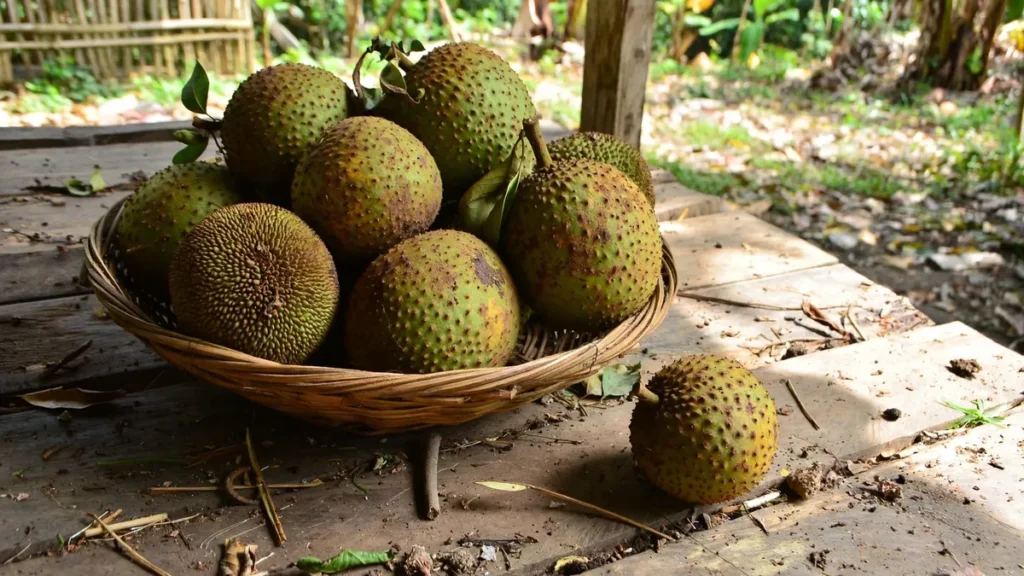
What a marang farm escape involves
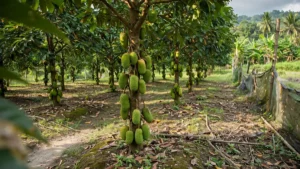
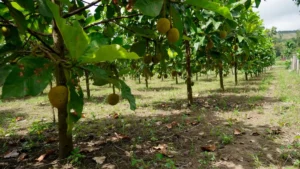
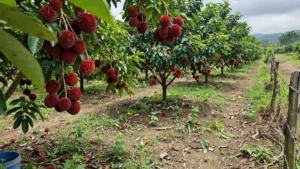
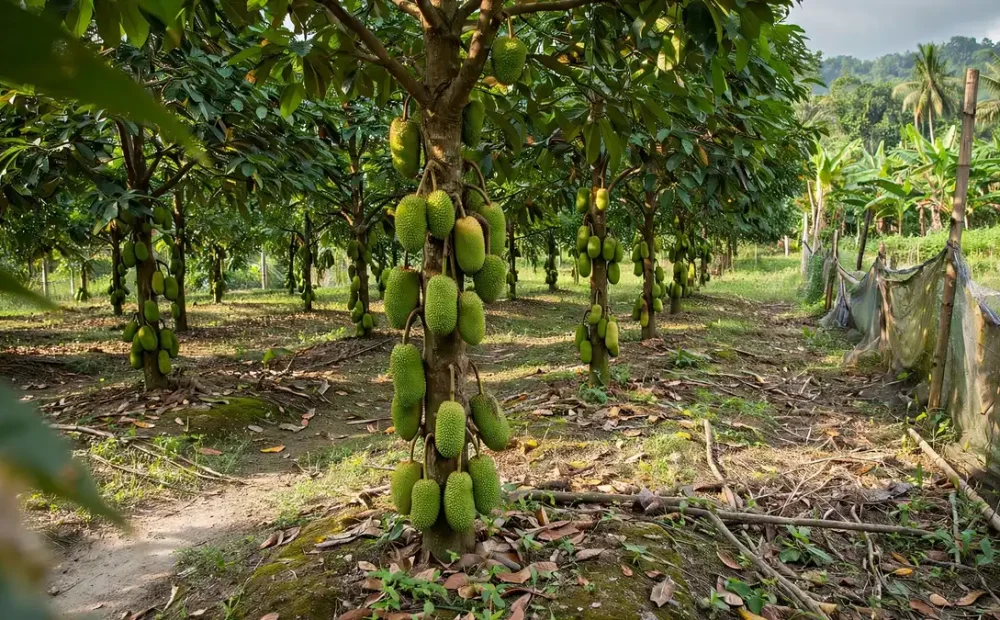
Three nights, one orchard, and a fruit that splits open when it is ready: that is the whole shape of a marang farm escape. You sleep within earshot of the trees, you rise before the heat, and you eat segments that were hanging in the canopy an hour before breakfast. No lobby, no concierge, no programme — the orchard sets the day, and you follow. The trees are tall enough that the fruit is gathered with poles and nets, and the morning work is done before the heat settles.
That reliance on the tree is the gamble and the charm together. The flush is brief and the flesh goes soft within a day; the best fruit never leaves the farm — it is eaten at the table the morning it is cut. Arrive in the middle of the flush and the branches hang heavy; arrive a week late and you will sleep beside bare wood. Planning here means choosing a fortnight, not a hotel.
Nine decisions carry the trip, from the first taste at a market stall to the seeds you pack for home. They run in order below: dates, region, kitchen, room, packing, and the questions worth asking before any money moves. Because the husks split a few at a time rather than all at once, a good stay keeps you near the trees for several mornings, so you catch each branch at its sweetest. A longer stay also gives you a second chance if the first morning brings rain.
Key takeaways
- Marang fruits for a few weeks a year, and the weeks move with the rain, so fix the dates with the farm before you book anything else.
- Taste a segment at a market first; the smell is strong, and a farm stay is the wrong trip for anyone who dislikes it.
- The kitchen is the heart of the stay, and wheat is the risk, so tell the farm about gluten in writing before you pay.
- The fruit hangs high and the flesh is soft, so let the host climb and take home jam or roasted seeds, never fresh fruit.
- Pack boots, gloves and dry bags, because the orchards are muddy, the harvest is sticky, and the rain comes often.
How to plan it, and what to ask first
Start with the fruit, not the map. Buy a ripe marang at a market, eat it slowly with a spoon, and decide whether you like it custardy or sharp. A market fruit is cheap, and it teaches you more than any photograph. The flavour you like best points to the region: Borneo gives the deepest scent, the Philippines gives the sweetest flesh, and Queensland gives the smallest, neatest fruit. A market seller will often open the fruit for you and let you taste before you buy, and the price of one fruit is small against the cost of a wasted trip.
Then ask the farms three questions in writing. When does the fruiting start this year, and how long does it usually last. Whether guests may join the morning harvest, and whether the farm lends gloves and baskets. And what the kitchen does about wheat, because marang fritters and pancakes are fried in flour batter on most farms, and a gluten-free guest needs the kitchen to know before the first meal is cooked.

The nine steps below run in order, and each one has a time, a best-for, and a tip. If you want a sense of how the wider family of fruit farms is planned, the jackfruit farm escape guide covers a close cousin of marang with the same short season and the same kitchen-first stays.
The 9 steps to plan a marang farm escape
Let one market fruit decide which region you pick
What to do: Buy a ripe marang at a market and eat it slowly with a spoon, noting whether you like it sweet or sharp. A market fruit is cheap, and it shows you more than any picture can. The flavour you like best points to the region: Borneo gives the deepest scent, the Philippines gives the sweetest flesh. What to avoid: Choosing a region from photographs alone, without knowing whether you like the smell. Best for: Travellers who have never tasted a farm marang. Time needed: An afternoon at a market. Standout tip: Eat the fruit chilled, because the cold softens the sharp edge.
Let the flush dates fix your flights, not the other way round
What to do: Ask each farm when the flush starts, then book flights that land the day before. The trees carry fruit for a few weeks at a time, and the finest flesh comes mid-flush. What to avoid: Buying flights before the trees have set their fruit. Best for: Guests whose dates can move. Time needed: One afternoon of messages. Standout tip: Aim for the middle of the flush, when the fruit arrives at its sweetest. If the farm will not commit to dates, wait; a farm that guesses is a farm that may leave you eating last week’s fruit.
Pick a farm that opens the fruit in front of you
What to do: Read what each region does with its fruit: fritters in Sarawak, jam in Laguna, smoothies in Hilo. A farm that opens the husk at the table and serves the flesh straight away is a farm that trusts its fruit. What to avoid: A stay where the fruit arrives already cut and wrapped, with no sign of the orchard. Best for: Travellers who want the cooking as much as the picking rows. Time needed: An evening of reading. Standout tip: Ask the farm what it served for supper yesterday, and judge the farm from the answer.
Ask if visitors can lend a hand at first light
What to do: Ask the farm whether guests may walk the rows at dawn, and whether the farm lends gloves and baskets. The fruit hangs high, so the host usually climbs while guests hold the net, and the morning is the best part of the day. What to avoid: Arriving to pick, then finding the rows closed to guests. Best for: Travellers who want to lend a hand, not only look on. Time needed: One brief email before any payment is made. Standout tip: Wear gloves, because the sap is sticky and the husk is spiked.
Sleep beside the orchard, not beside the road
What to do: Ask for a room that faces the trees, and check whether the window looks onto the rows or the garden. The view is part of the trip, and rooms facing the rows are usually the first to go. What to avoid: Taking whatever room is left and waking up to a blank wall. Best for: Travellers who want the trees just past their window. Time needed: Fifteen minutes with the farm’s reply. Standout tip: Ask for the room above the garden, where the smell of ripe fruit drifts in at dawn.
Flag the wheat question with the cook before departure
What to do: Write to the farm about wheat and gluten before you pay anything, and ask whether the kitchen can use rice flour for the fritters and pancakes. Get the answer in writing, and repeat it when you arrive. What to avoid: Arriving hungry and hoping the kitchen can improvise. Best for: Guests who must keep wheat out of every meal. Time needed: One short email before you pay a cent. Standout tip: Bring a card in the local language that says no wheat, no flour, no soy sauce.
Pack for sun, rain and sap on your hands
What to do: Pack boots for the mud, a light rain shell for the afternoon showers, and gloves for the harvest. A spare pair of shoes is worth the bag space, because the first pair will be caked by noon. The sap is sticky and the husk is spiked, so long sleeves help. What to avoid: Packing only sandals and a sun hat, then finding the paths ankle-deep in mud. Best for: Travellers who like to be ready for the weather. Time needed: An evening of packing. Standout tip: Pack a dry bag for the phone, because the rain comes without warning.
Tag along when the cook heads to the dawn market
What to do: Ask the cook whether you may join the morning market run, and go along to see what the region grows. The market is where the farm buys what it does not grow, and the cook will point out the best stalls. What to avoid: Sleeping through the market and eating a breakfast you never saw being bought. Best for: Travellers whose holidays revolve around eating. Time needed: A morning at the market. Standout tip: Buy a second fruit to compare with the farm’s own, and taste them side by side.
Bring home seeds and jam, leave the fresh fruit
What to do: Buy jam, dried flesh or roasted seeds at the farm gate, and leave the fresh fruit behind. The flesh goes soft within a day, and customs will not let it through in any case. What to avoid: Packing fresh segments in your bag and finding them leaking by lunchtime. Best for: Travellers who want the trip to stay with them once home. Time needed: Fifteen minutes poking around the farm shop. Standout tip: Roast the seeds at home the way the farm does, in salted water, and eat them warm.
Picking the right season and region
Borneo is where marang belongs, and the Sabah and Sarawak farms are the truest stays on this list. The trees are old, the hosts are growers first, and the fruit is eaten within hours of falling. If you want the deepest experience, start in Kinabatangan and end in Kuching, with a night in Tutong between them. The Philippines is the easier trip for most travellers, with Davao for the sweetest fruit and Palawan for the quietest stay.
Sumatra and Hawaii and Queensland are for the second trip, or for travellers who want marang as part of a wider journey. Bukit Lawang pairs the orchard with the jungle, Hilo pairs it with a familiar island, and Cairns pairs it with a tasting table no other farm on this list can match. The wider Artocarpus family is worth knowing before you go, and the breadfruit farm escape guide shows another member of the family planned the same way, with the same kitchen-first stays and the same short season.
Wherever you go, the dates matter more than the region. Marang fruits for a few weeks, and the weeks shift with the rain. Ask the farm when the flush starts, book the middle of it, and leave the flights until the farm has answered in writing. Keep a second region in mind as a fallback, because a late rain can push the flush by a fortnight and leave your first choice bare.
The caveats that matter
Marang does not suit every traveller. The smell is strong, and anyone who dislikes durian should taste a segment at a market before booking a whole stay. The flesh is rich and soft, and a large portion can sit heavily, so eat slowly and in small amounts at first. The seeds must be cooked; raw seeds are not for eating, and the farm will boil or roast them before they reach the table.
The other caveat is wheat. On most farms, marang fritters and pancakes are fried in flour batter, and the same boards and pans serve everything. If you eat gluten-free, write to the farm before you pay, and ask what the kitchen can do with rice flour instead. The strongest-smelling fruit of the family needs the same care, and the durian farm escape guide shows how the best farms handle a powerful fruit and a careful kitchen.
| Detail | What is known |
|---|---|
| Best time to visit | The fruiting weeks, which move with the rain and differ by country |
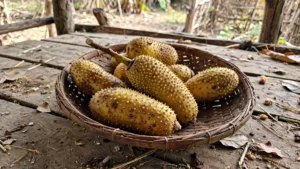
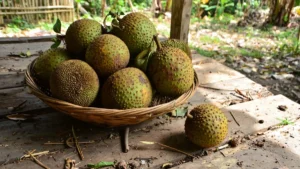
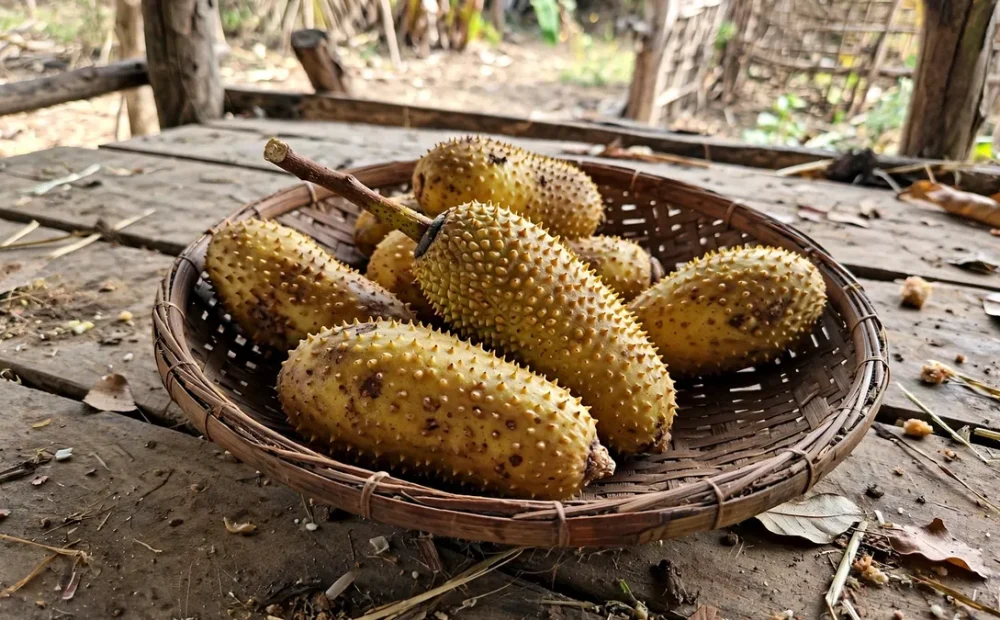
| The fruit at a glance | Artocarpus odoratissimus, a large spiky fruit with soft white flesh that splits open when ripe |
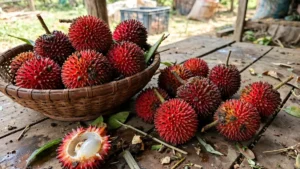
| How ripe fruit looks | The husk splits along its seams, the flesh smells sweet and sharp, and the segments come away easily |
| What is usually included | Room and breakfast with an orchard walk or tasting; cooking sessions and lifts often cost extra |
| How the fruit is eaten | Fresh and chilled, in fritters and pancakes, as jam, or with the seeds boiled or roasted |
| What to pack | Boots for mud, a light rain shell, gloves for the harvest, and dry bags for the wet season |
| What to avoid | Raw seeds, unripe flesh, and booking flights before the farm confirms the fruiting dates |
| Who it suits best | Travellers who like strong-smelling fruit, farm kitchens, and slow mornings in the orchard |
Checklist: before you book a marang farm escape
- Ask the farm in writing when the fruiting starts and how long it lasts this year.
- Taste a segment at a market before you book, and decide whether the smell suits you.
- Tell the kitchen about wheat and gluten before you pay, and get the answer in writing.
- Check whether guests may join the dawn harvest, and whether gloves and baskets are provided.
- Confirm the lift from the nearest town, and whether the farm’s car comes with the price.
- Plan to carry home jam, dried flesh or roasted seeds, never fresh fruit.
Frequently asked questions
How long should a marang farm escape last?
Three nights is the right length. The first morning is for the harvest, the second for the market and the kitchen, and the third for the tasting table. Longer stays suit travellers who want to slow down further, but the flesh holds for days, so lingering for the fruit alone is pointless. A fourth night is worth it only if you want to cook with the host or walk the jungle trails beyond the orchard.
Do you need a hire car for a marang farm?
At most farms, no. The farm’s car is usually the best way to get there, and the orchard is walked on foot. A small car gives you the run of the valley and a way to reach the market before dawn, but the farm’s lift is simpler and often included in the price.
May guests gather fruit on the morning walk?
Yes, at most farms, provided you walk the rows with a guide and ask before you set off. The fruit hangs high, so the host usually climbs while guests hold the net. Never tug at a husk that has not split, because the flesh inside will be sour.
What is the difference between marang and jackfruit?
Marang and jackfruit are cousins in the genus Artocarpus, but marang is smaller, softer, and splits open when ripe, while jackfruit stays shut and needs cutting. Marang flesh is eaten fresh with a spoon; jackfruit flesh is firmer and often cooked.
Is a marang farm escape suitable for children?
Yes, if the children are old enough to walk the orchard and mind the spikes. Ask the farm whether a cot fits in the room, and whether small feet can manage the paths. The tasting table is the best part for children, and the seeds, once roasted, are a favourite.
How do gluten-free travellers eat safely on a marang farm?
Tell the farm in writing before you pay, and ask whether the kitchen can use rice flour for the fritters and pancakes. Ask whether the boards and pans are shared, and get the answer in writing. The fruit itself has no gluten; the kitchen is where the risk sits.
The bottom line
Marang is a fruit for the patient traveller. The season is short, the fruit is perishable, and the best stays are working farms with simple rooms and strong kitchens. Book the middle of the flush, warn the farm about wheat before you pay, and eat the flesh within hours of picking.
If you do that, the reward is a fruit few travellers have tasted, eaten where it grew, with the smell of the orchard still in the air. Begin with Davao or Kinabatangan, keep the dates loose, and let the trees decide the day.