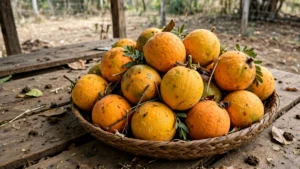
Planning a macaúba farm escape is different from planning an ordinary holiday, because the fruit sets the calendar. The clusters of Acrocomia aculeata ripen in the wet season, roughly November to March, and the farms press the yellow-orange pulp into oil and juice while the harvest is running. Book around that window and you will see the whole process; book outside it and you will see quiet groves and a press that only runs on request.
The second thing to understand is distance. Macaúba farms sit in the cerrado, an hour or more from the nearest town, down roads that turn to mud in the rain. That distance is part of the appeal, but it means the trip needs more planning than a city break: a car and driver arranged in advance, a farm that answers messages promptly, and a realistic sense of how long each leg of the journey takes.
This guide walks through the nine steps that make the difference, from choosing the harvest weeks to buying oil to take home. Follow them in order and you will arrive at a farm that expects you, eat well, and leave with a clear sense of how the fruit goes from palm to bottle.
Key takeaways
- Macaúba is the yellow-orange fruit of the Acrocomia aculeata palm, and the harvest runs through the wet season, roughly November to March.
- Choose the harvest weeks first, then the farm, then the flights, because the fruit ripens on its own schedule and does not wait for a cheap fare.
- Book a car and a local driver before you travel, since most farms sit an hour or more from the nearest town on unpaved roads.
- Ask for the price in writing, with the walk, the tasting, the meals and the transfers named separately.
- Send the farm your wheat and gluten note before you book, since farm kitchens bake with wheat flour every day and need time to cook a separate menu.
What a macaúba farm escape actually involves
A macaúba farm escape is a short stay on a working palm farm in the Brazilian cerrado, built around the harvest of a yellow-orange fruit that most travellers have never tasted. The days are simple: a morning walk through the groves, time at the press shed watching the pulp become oil and juice, and meals at a long table where the fruit appears in more forms than you would expect. There is no spa, no concierge and no programme of activities; the farm is the activity.
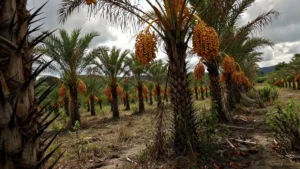
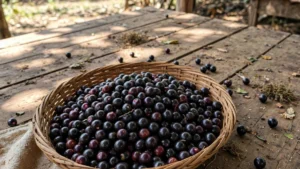
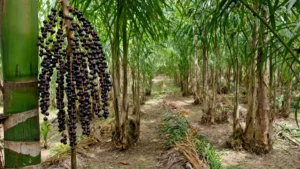
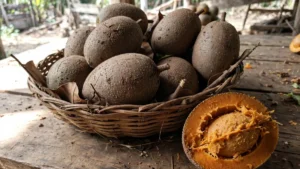
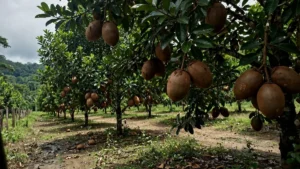
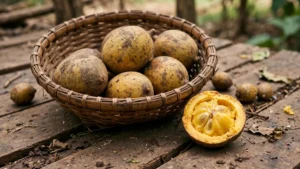
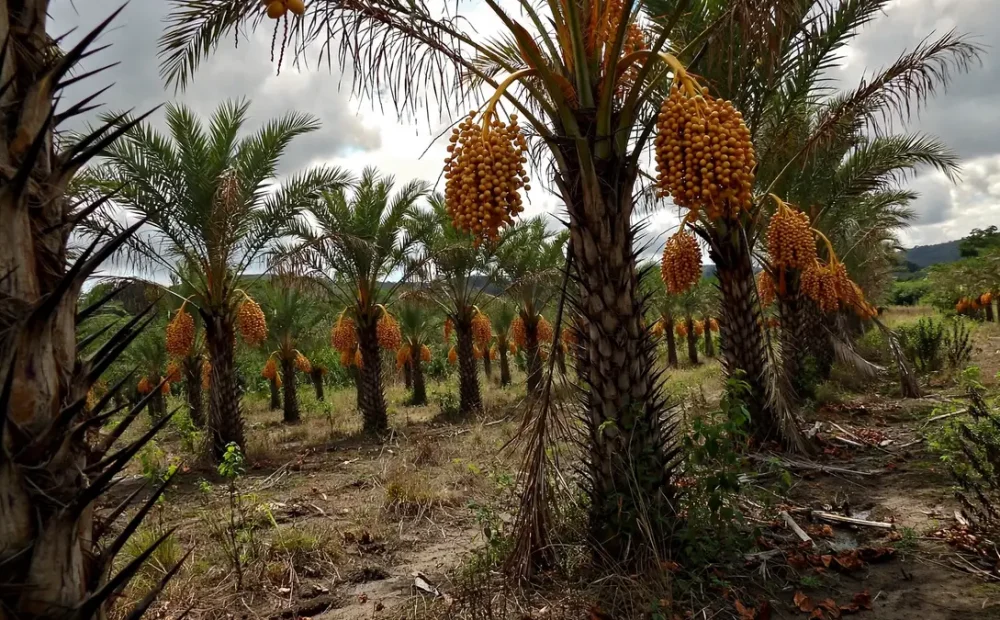
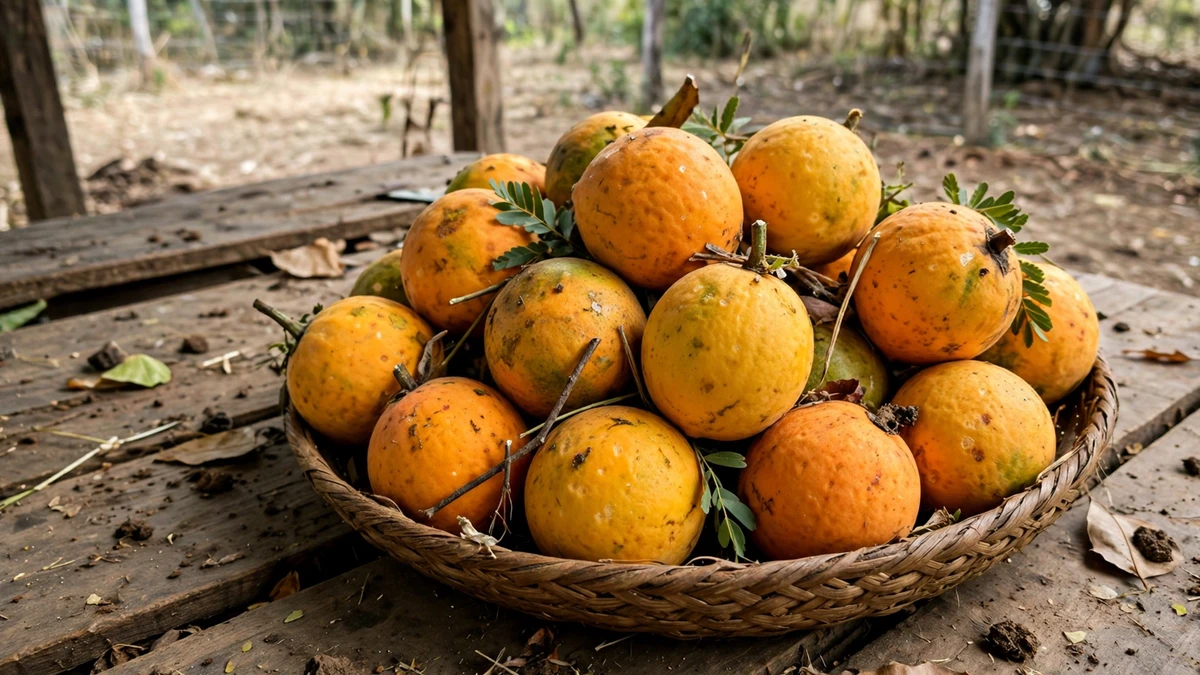
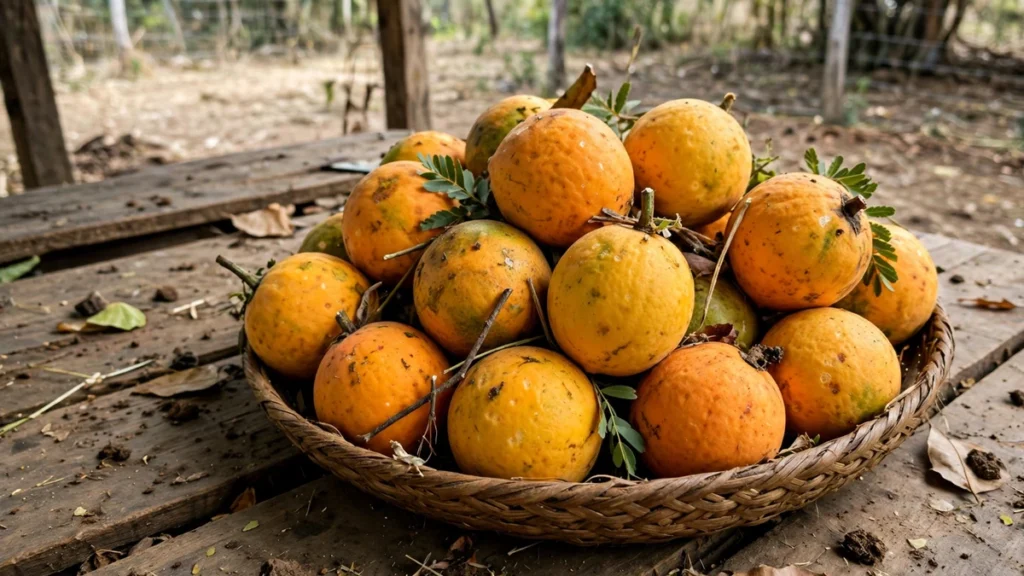
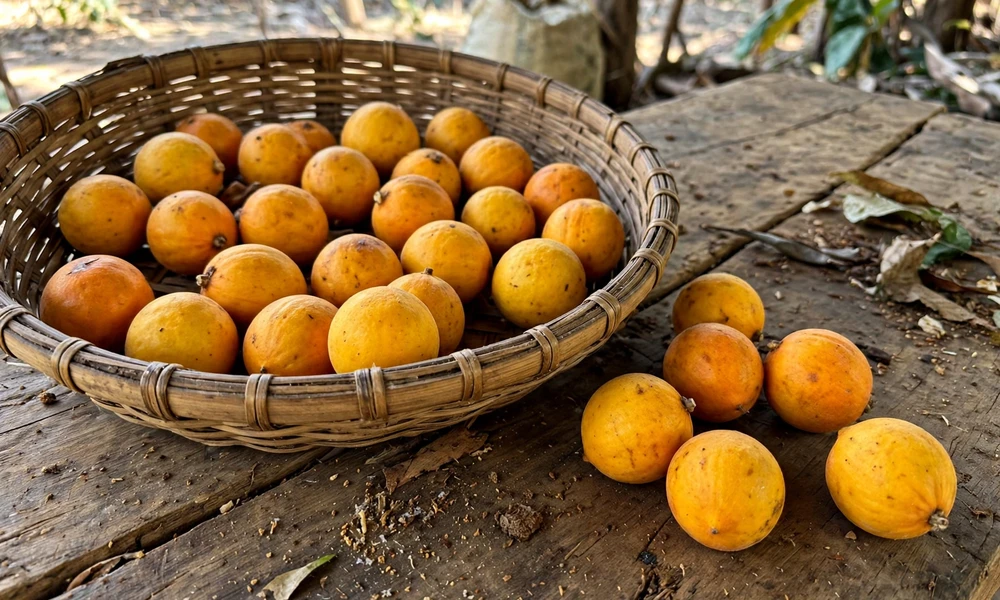
The fruit shapes everything about the stay. Macaúba grows in heavy clusters on tall, spiny palms, and the harvest crew picks it with long poles while guests watch from the ground. The pulp is washed, pulped and pressed the same day, and the juice is served cloudy and fresh at breakfast. The oil is golden, rich and slightly nutty, and the farms cook with it, sell it by the litre, and use it in the kitchen for almost everything. It is a different world from the Amazon palm fruits: buriti, for instance, grows in flooded forest and comes to the table as a scaly reddish-brown fruit with bright orange flesh, while macaúba grows on dry hills and arrives as smooth yellow-orange clusters.
Expect the pace to be set by the weather and the harvest crew, not by you. Rain can delay a walk, a full press day can run long, and the best farms will tell you that before you arrive. That honesty is a good sign. A farm that promises a fixed schedule regardless of the harvest is a farm that has not thought hard enough about what it is selling.
How to plan the escape and what to look for
Start with the fruit calendar, not the flight calendar. Write to two or three farms and ask when their harvest peaks, when the press runs, and what happens if the fruit ripens late. The farm that answers with dates, not with general reassurance, is the one to book. Then look at how the farm handles guests: small walking groups, a guide who works the groves, rooms with a real bed and a working bathroom, and a kitchen that cooks from the farm.
Look next at the journey itself. The tucumã farms of the Amazon face the same problem, and our guide to planning a tucumã farm escape covers the same ground: arrange the car and driver before you travel, confirm the price for the round trip, and build in a buffer for rain. Finally, check the farm’s messages. A farm that replies within a day, names its prices, and asks about your diet before you ask about theirs is a farm that takes guests seriously.
The 9 steps to plan your macaúba farm escape
1. Fix the harvest weeks before you look at flights
Write to the farms first and ask for their harvest dates, then plan your travel around the answer. The fruit ripens roughly November to March, but the peak moves by a few weeks from farm to farm and from year to year, and a trip booked for the wrong month will find quiet groves and a cold press.
Ask for the dates in writing and ask what happens if the harvest runs late. A farm that gives you a range and a plan for a late season is being honest; a farm that promises a single fixed week in any weather is not.
2. Choose a farm that presses its own fruit on site
The press is the heart of the visit, so choose a farm that runs its own press and lets you stand beside it. Ask whether the press runs daily during the harvest, whether guests can watch the whole process, and whether the oil and juice you taste come from that day’s pressing.
A farm that buys its oil elsewhere or presses only for show is selling a photograph, not a harvest. The difference is obvious the moment you ask a detailed question about yield or storage and watch whether the answer comes from experience or from a script.
3. Book the car and driver before you book the room
Most macaúba farms sit an hour or more from the nearest town, down unpaved roads that turn to mud in the rain. Arrange a car and a local driver before you travel, confirm the price for the round trip, and make sure the driver knows the farm by name rather than by a pin on a map.
Do not rely on a rental car unless you have driven cerrado dirt roads in the wet season before. A local driver knows which stretches flood, which bridges hold, and which shortcuts are worth taking, and that knowledge is worth more than the saving.
4. Sleep on the farm, not in a town an hour away
Staying on the farm changes the whole trip. You wake to the groves, you eat breakfast with the harvest crew’s schedule in mind, and you are there when the press starts rather than arriving halfway through. A room in town means a long drive in the dark and a day that starts late.
Ask about the room before you book: a real bed, a fan or air conditioning, a bathroom that works in the rain, and shade in the afternoon. If the farm cannot describe the room plainly, it is probably simpler than you want.
5. Tell the farm about wheat before you discuss dates or prices
Farm kitchens bake with wheat flour every day, and they need time to prepare a separate menu. Send your wheat and gluten note with your first message, before you discuss dates or prices, and ask what the kitchen will serve instead of bread, cake and pasta.
A farm that answers with a plan, naming the substitute dishes, is a farm that has done this before. A farm that replies with a vague promise is one you will have to remind at every meal, and that is a poor way to spend a holiday.
6. Start day one at the market beside the cook
If the farm offers a market visit, take it on your first morning. You will see what the region grows alongside the macaúba, you will meet the people who supply the kitchen, and you will understand the food on your plate for the rest of the stay.
Buy something small at the market, even if it is only fruit for the walk back. The habit of buying from the people you meet is what turns a farm stay from a tour into a visit, and the cooks notice who bothers.
7. Try juice, oil and dried pulp side by side before you leave
Do not settle for a single tasting. Ask to try the fresh juice in the morning, the oil at lunch, and the dried pulp if the farm makes it. Each one shows a different side of the fruit: the juice is rich and cloudy, the oil is golden and nutty, and the dried pulp is concentrated and chewy.
Taste in small amounts and in that order, and write down what you notice. The differences between farms are real, and your notes will tell you more about which oil to buy than any label will.
8. Leave the oil and souvenir buying until the morning you go
Wait until your last morning to buy oil and other products to take home. By then you will know which farm’s oil you prefer, which bottles are properly sealed, and how much you can carry without breaking anything in your bag.
Ask the farm to pack the bottles for travel, with lids taped and each bottle wrapped separately. Oil leaks are the most common souvenir disaster on these trips, and a few minutes of packing at the farm saves a ruined suitcase.
9. Follow one full pressing from washing to bottling and note the method
On your last full day, ask to watch a complete pressing from the washing of the fruit to the bottling of the oil. The full cycle takes a few hours, and seeing it end to end is what turns a pleasant stay into a real understanding of the crop.
Write the method down while you watch: how the fruit is washed, how the pulp is separated, how long the pressing takes, and how the oil is stored. Those notes are the most useful thing you will bring home, and they will outlast the oil itself.
Matching the trip to you
If you are short on time, choose a farm close to a city, such as the one outside Brasília, and plan a two-night stay around a single press day. You will see the harvest, taste the juice and the oil, and be back in the city without a long drive. If you have a week, choose a quieter farm further out, such as the one near Palmas, and let the days stretch.
For food lovers, the farms that cook their whole menu in macaúba oil are the right choice, and the buriti farms of the Amazon offer a useful comparison if you want to see how a different palm fruit shapes a different kitchen. Our guide to planning a buriti farm escape covers the same questions for a flooded-forest fruit. For travellers who want to understand the oil itself, choose a farm that presses both pulp and kernel and is willing to talk through the process in detail.
Whatever you choose, match the farm to your dates and your appetite for rough roads. The wet-season harvest is the richest time to go, but the roads are at their worst; the dry season is easier to travel in, but the fruit is thinner. A farm that tells you that plainly is a farm you can trust.
The caveats that matter
Macaúba palms have spines, and the groves are not a place to wander alone. Wear closed shoes and long trousers, stay with your guide, and do not try to pick the clusters yourself: they are heavy, the palms are tall, and the harvest crew does the picking for a reason. The fruit is safe to eat fresh and as juice, but the kernel is pressed rather than eaten, and the oil is rich, so start with a small tasting.
| Detail | What is known |
|---|---|
| Best season | The wet-season harvest, roughly November to March, when the press runs most days |
| How long to stay | Two nights for a first visit, four or five for a full harvest stay |
| Getting there | Arrange a car and a local driver in advance; most farms are an hour or more from town |
| What to pack | Closed shoes, long trousers, a hat, repellent, and a notebook for the pressing |
| What to taste | Fresh juice, golden oil and dried pulp, in small amounts and in that order |
| Buying oil to take home | Buy on your last morning, ask for sealed bottles packed for travel |
| Who should ask first | Anyone with a palm-fruit or nut allergy, and anyone avoiding wheat or gluten |
| What it does not do | It is not a spa retreat, and the harvest sets the schedule, not the guest |
If you are pregnant, breastfeeding, or managing an allergy, tell the farm before you book rather than at the table. The camu camu farms of the Amazon work the same way, and our guide to planning a camu camu farm escape shows how another remote fruit farm handles guest diets and rough roads.
Checklist: planning your macaúba farm escape honestly
Use these checks before you book, and again the week before you travel.
- Check the harvest dates in writing, and ask what happens if the fruit ripens late.
- Check the press: confirm it runs on site and guests can watch the full process.
- Check the car and driver: confirm the price for the round trip before you travel.
- Check the room: ask for a real bed, a working bathroom and shade in the afternoon.
- Check the food: send the wheat and gluten note with your first message, and ask what the kitchen will serve instead.
- Check the packing: ask the farm to tape and wrap oil bottles for travel on your last morning.
Frequently asked questions
How many nights does a macaúba escape need?
Two nights is enough for a first visit, with one full press day and one morning in the groves. Four or five nights is better if you want to see the harvest across several days and taste the oil from more than one pressing.
Do I need a boat to reach the farm?
No. Macaúba farms are reached by road, not by river, which is one of the ways they differ from the Amazon fruit farms. Book a car and a local driver, and confirm the price for the round trip before you travel.
Can children join the walk through the groves?
Usually yes, if they are old enough to walk in closed shoes and stay with the guide. The palms are spiny and the clusters are heavy, so young children stay near the press shed while the adults walk the groves.
What should you pack for a macaúba farm stay?
Closed shoes, long trousers, a hat, repellent, sunscreen and a notebook. Pack light and leave room for the oil bottles you will buy on your last morning.
What sets macaúba apart from buriti?
Buriti comes from Mauritia flexuosa, a palm of the flooded Amazon forest, and its fruit has scaly reddish-brown skin with bright orange flesh inside. Macaúba comes from Acrocomia aculeata, a palm of the dry cerrado hills, and its smooth yellow-orange fruit is pressed for golden oil.
Can I take macaúba oil home with me?
Yes. Most farms sell oil by the litre and some sell dried pulp. Buy on your last morning, check that the bottles are sealed, and ask the farm to pack them for travel.
The bottom line
The best macaúba farm escape in 2027 is not the most expensive or the most remote. It is the trip timed to the harvest, booked with a farm that presses its own fruit, and planned around a car and driver you arranged in advance. Fix the harvest weeks first, send the wheat note early, and let the farm set the pace once you arrive.
Do that, and you will come home with a clear sense of how a fruit most travellers have never heard of goes from a spiny palm on a dry hill to a bottle of golden oil on your shelf. That is the whole point of the trip, and it is worth planning properly.