Planning an arracacha farm escape is not like booking a hotel. The root is dug in a short season, the farms are small, the roads are slow, and the altitude asks you to move at half speed on your first day. Get those four things right and the rest falls into place: a terrace to walk, a kitchen that smells of wood smoke, and a root you will remember long after the flight home.
This guide walks through the planning in the order that matters, from choosing the digging week to buying roots at the farm gate on your last morning.
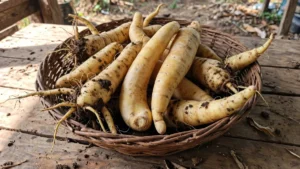
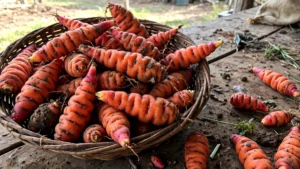
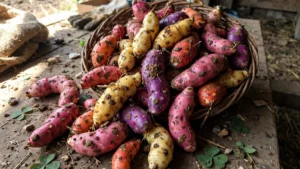
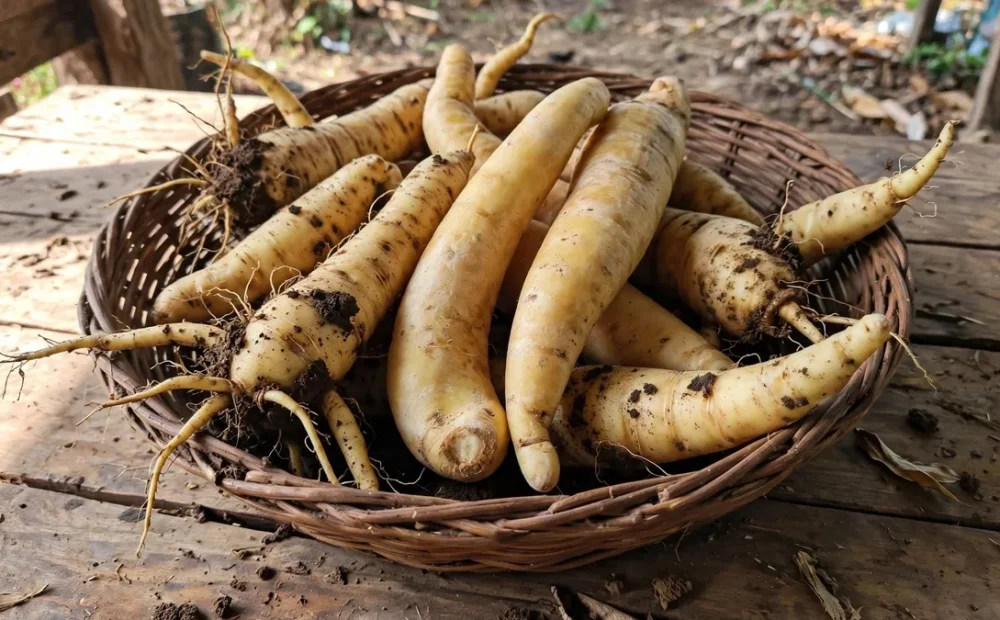
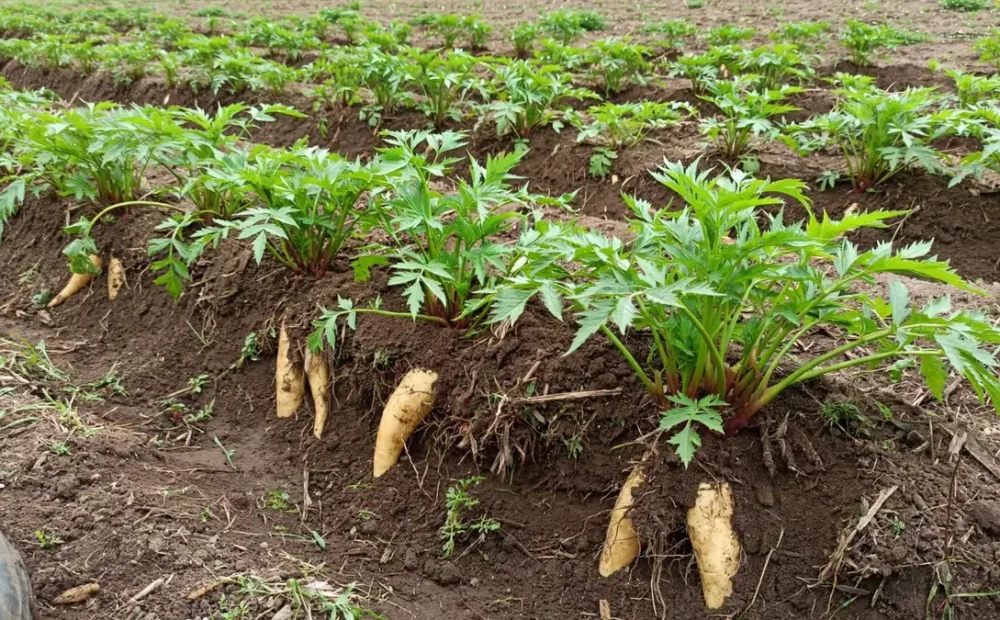
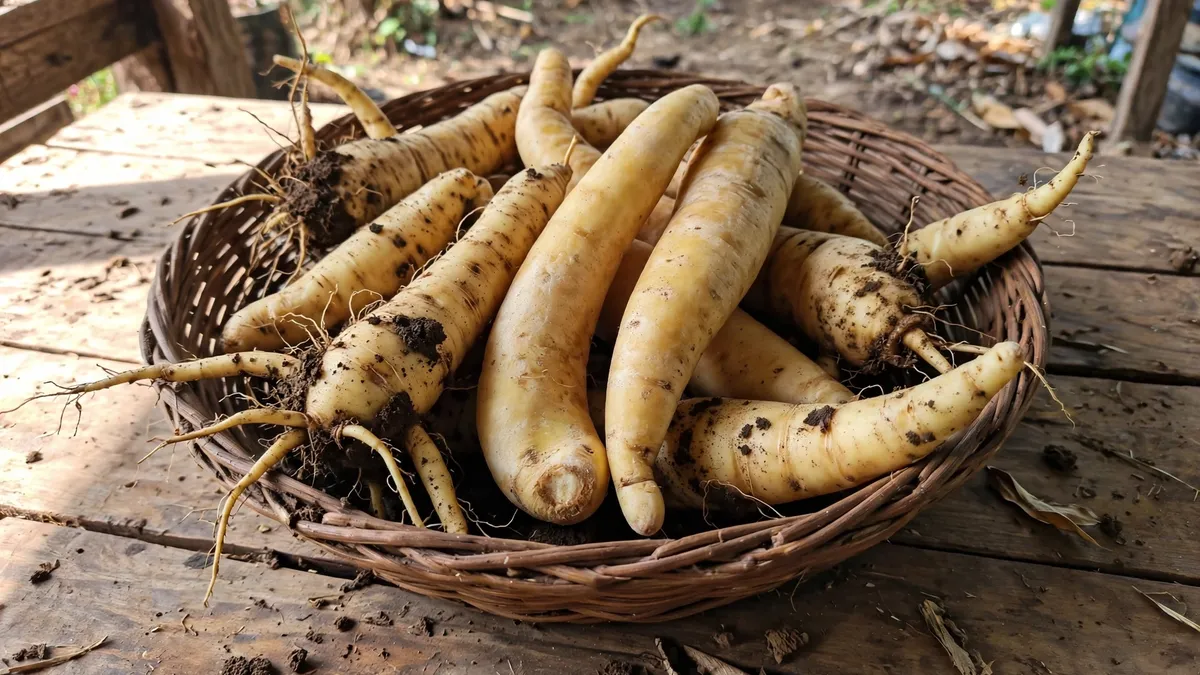
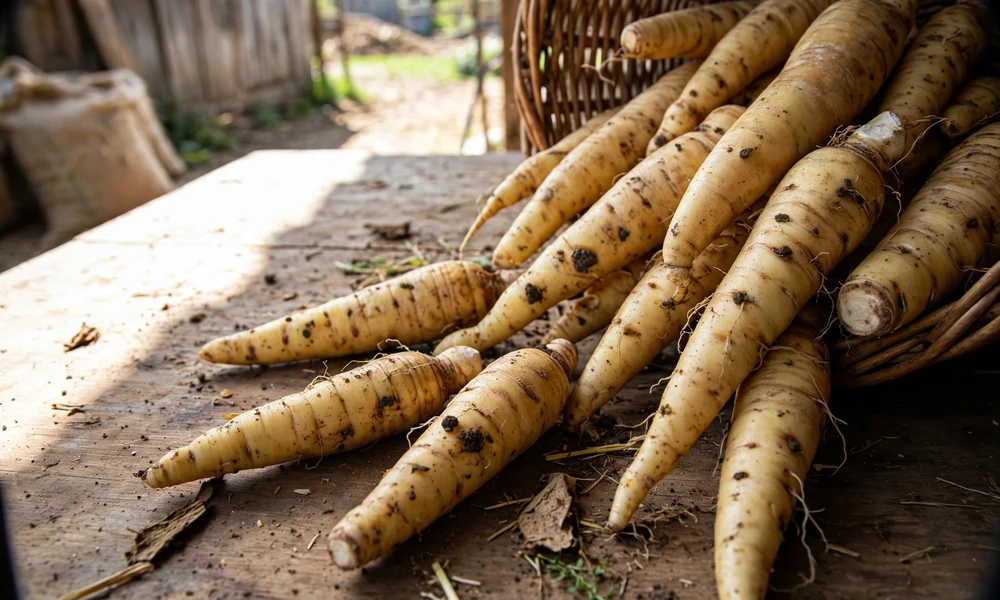
Arracacha, Arracacia xanthorrhiza, is the reason for the trip, but the planning is about the valley around it. The root is a cream-yellow Andean vegetable, eaten cooked, never raw, with a buttery, nutty flavour a little like a sweet carrot crossed with celery. It is not a parsnip and not a carrot, and the farms that grow it properly are worth the slow roads and the cold nights.
Key takeaways
- Book inside the digging season, roughly May to September, and confirm the exact digging weeks with the farm before you pay.
- Most arracacha farms sit between 2,000 and 3,800 metres, so plan a slow first day and drink plenty of water.
- Choose a farm that digs the roots while you are there and cooks them the same day, and ask for a cooking class if you want to learn the root properly.
- Three nights is the honest minimum: one to arrive and rest, one for the digging and the cooking, and one for the walks and the market.
- Arracacha has no gluten, but farm kitchens bake bread and share frying oil, so send your food needs in writing before you book and check again on arrival.
What an arracacha farm escape actually covers
An arracacha farm escape is a stay on a working farm where the root is grown, dug and cooked on site, usually for three to five nights, with meals included and farm activities built into the day. You sleep in a farmhouse room or a small lodge, you eat what the farm and the valley produce, and you spend your days walking terraces, digging roots, learning to cook them, and visiting the nearest market town.
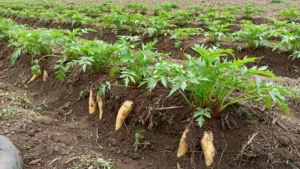
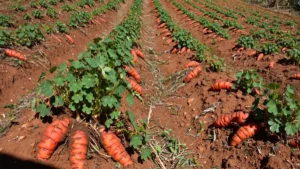
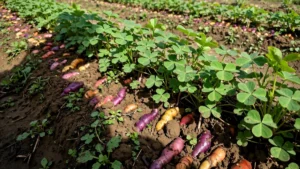
The escape covers the whole chain, from soil to plate. On a good farm you will see the beds where the root grows, pull roots from the ground yourself, learn to peel and boil them, and eat them in several forms: mashed with butter, fried as crisps, simmered in soup, and made into dumplings.
What it does not cover is luxury in the usual sense. There is no spa, no room service, and often no reliable phone signal, and the rooms are warm and clean rather than grand. If that sounds like a holiday, this guide will help you plan it well. If it sounds like hard work, the lowland fruit farms, such as our guide to planning a mangaba farm escape, ask less of a visitor and may suit you better.
How to plan the escape, step by step
Start with the season, not the flight. Arracacha is dug in the dry months, and the farms are at their best when the roots are mature, the roads are passable, and the skies are clear. Once you know your dates, choose the valley, then the farm, then the room, in that order.
Book directly with the farm wherever you can, by message or email, and ask the questions in this guide before you pay. Small farms answer slowly but honestly.
The 9 steps to planning your arracacha farm escape
Choose a week when the farm is actually digging roots
What to do: Ask the farm for its digging dates before you look at flights, and book inside that window. The dry season, May to September, is the reliable period, but each farm digs on its own schedule, and the best weeks are the ones when the roots are mature and the kitchen is cooking them daily. What to avoid: Do not book on price alone, and do not assume a farm is digging just because it is open.
Best for: Everyone, because this one decision shapes the whole trip. Time needed: One message and one reply, before you book anything else. Standout tip: Ask for the digging week in writing, .
Pick a farm that cooks the roots on the day they are dug
What to do: Ask how the arracacha gets from the field to the table, and choose a farm where the answer is the same day. What to avoid: Do not choose a farm that buys its arracacha from a market, or one where the root appears only as a side dish once during your stay.
Best for: Food lovers who want to taste the root properly. Time needed: A single line in your opening message to the farm. Standout tip: Ask what the cook made with arracacha yesterday.
Choose a room above the kitchen garden, where the mornings smell of wood smoke
What to do: Ask for a room near the garden and the kitchen, on the side of the house that catches the morning sun. What to avoid: Do not take a room beside the road or the parking area, and do not choose a room at the bottom of the house, where the cold air settles at night.
Best for: Light sleepers and early risers who like to start the day with the farm. Time needed: One line in your booking message, asking for the garden side. Standout tip: Ask whether the room has heating or thick blankets.
Learn to peel and boil arracacha before you taste it in any other form
What to do: Ask the cook to show you the peeling and boiling on your first morning, and do it yourself before you try the fried crisps, the mash, or the soup. What to avoid: Do not taste the root raw, and do not skip the basic cooking to get to the fancy dishes. Raw arracacha is starchy and unpleasant, and it can upset your stomach.
Best for: Anyone who wants to cook arracacha at home afterwards. Time needed: Half an hour on the first morning, in the farm kitchen. Standout tip: Watch how thin the cook peels.
Hand the cook a written list of what you cannot eat
What to do: Write down your food needs, in Spanish if you can, and hand it to the cook on your first morning, after sending the same list before you booked. What to avoid: Do not rely on a verbal mention at dinner, and do not assume a small kitchen knows what gluten is. A written list, given early, is the only reliable way.
Best for: Anyone avoiding wheat, dairy, or any other food, and anyone travelling with children who have allergies. Time needed: Ten minutes to write the list, and a minute to hand it over. Standout tip: Ask the cook to show you the pan and the oil they will use for your roots.
Taste the root three ways: boiled, mashed, and fried
What to do: Ask the cook to serve the root boiled one day, mashed the next, and fried as crisps on the third, so you learn what it actually tastes like. What to avoid: Do not eat it only one way and decide you know it, and do not drown it in sauce on the first tasting, because the sauce will hide the root.
Best for: Anyone who wants to understand the root, not just eat it. Time needed: Three meals across two days, which is why a three-night stay is the minimum. Standout tip: Taste the boiled root plain first, with just salt.
Walk the terraces with the farmer before the midday sun
What to do: Ask the farmer to walk the terraces with you in the early morning, when the air is cool and the light is good, and let them set the pace. What to avoid: Do not set off at midday, when the sun is strong and the altitude makes every step harder, and do not walk the terraces alone, because the paths are uneven and the farmer knows where the loose stones are.
Best for: Walkers and anyone who wants to understand the farming, not just the food. Time needed: One to two hours, starting just after breakfast. Standout tip: Wear sturdy shoes with grip, a hat, and sunscreen, and carry water.
Buy roots and flour at the farm gate on your last morning
What to do: On your last morning, buy fresh roots and a bag of arracacha flour from the farm, and ask the cook to write down the boiling time and the mash recipe for you. What to avoid: Do not buy roots at the airport or from a market stall on your way out, because you will not know how fresh they are, and do not buy more than you can cook within a week.
Best for: Cooks who want to keep eating arracacha after the trip. Time needed: Twenty minutes at the farm gate, before you leave. Standout tip: Ask for roots with the skin on and undamaged.
Leave a morning free for the nearest market town
What to do: Keep one morning free for the nearest market town, and go with the cook if you can. What to avoid: Do not fill every day with farm activities and leave no time for the town, and do not go to the market without cash, because most stalls do not take cards.
Best for: Anyone who wants to see the valley beyond the farm gate. Time needed: A morning, usually Sunday in Huancayo and Saturday in Cajamarca. Standout tip: Buy your lunch at the market, from a stall the cook recommends.
Our guide to planning a muruci farm escape makes the same point in a different region, because a farm without a market nearby is a farm without a context.
When to go, and how long to stay
The dry season, May to September, is the honest answer for almost every arracacha farm, because the roots are mature, the roads are passable, and the skies are clear enough for the walks and the views. The wet season, October to April, brings rain, muddy roads, and roots that are still growing, and while some farms stay open, the digging is unreliable and the terraces are slippery.
Three nights is the minimum that works, and four or five is better if you can manage it. The first day is for arriving and resting at altitude, the second is for the digging and the cooking, the third is for the walks and the market, and the fourth is for doing the thing you liked best a second time.
The caveats that matter
Altitude is the caveat that shapes the whole trip, and it deserves more attention than any other part of this guide. Most arracacha farms sit between 2,000 and 3,800 metres, and the air is thin enough to make a staircase feel long on your first day. The honest advice is to arrive, rest, drink water, eat lightly, and save the digging for the second morning.
| Detail | What is known |
|---|---|
| Best months to go | May to September, the dry season, when the roots are dug and the roads are passable |
| How long to stay | Three nights minimum, four or five is better; one night is not enough |
| Altitude range | Most farms sit between 2,000 and 3,800 metres; rest on arrival |
| First day plan | Arrive by afternoon, rest, drink water, eat lightly, save the digging for day two |
| What to book first | The digging week, confirmed with the farm in writing, before flights or rooms |
| Food needs | Send a written list before booking; arracacha has no gluten, but kitchens share oil and pans |
| What to bring home | Fresh roots from the farm gate and a bag of flour; cook roots within a week |
| What to pack | Sturdy shoes, a hat, sunscreen, warm layers for cold nights, and cash for the market |
The second caveat is the kitchen, and it matters most for anyone avoiding wheat. Farm kitchens are small, they bake their own bread, and they often fry with the same oil for more than one dish, which is why the written list in step five matters. A good farm will cook your roots separately without making a fuss, but only if you ask clearly, early, and in writing. Our guide to planning a pitomba farm escape covers the same kitchen question in a lowland setting, and the answer is the same there: ask early, ask in writing, and check again on arrival.
Checklist: planning your arracacha farm escape
- Confirm the digging dates with the farm in writing, and book inside that window, not just inside the dry season.
- Check the farm’s altitude in metres, and plan a slow first day with plenty of water and light food.
- Send your food needs in writing before you pay, and ask whether the arracacha is cooked separately from wheat foods.
- Ask for a room on the garden side with heating or thick blankets, because Andean nights are cold even in summer.
- Check the road from the nearest town, how long it takes, and whether it needs a four-wheel drive in the wet season.
- Leave a morning free for the market town, bring cash, and pack sturdy shoes, warm layers, and sunscreen.
Frequently asked questions
Is arracacha safe to eat every day?
Yes, when it is cooked properly, arracacha is a normal, everyday food in the Andes, eaten boiled, mashed, fried, and in soups by families who grow it.
What is the best way to cook arracacha at home?
Peel it thinly, cut it into chunks, and boil it in salted water until a fork goes in easily, usually fifteen to twenty minutes, then mash it with butter and salt. That is the simplest and most reliable method, and the one the farm cooks teach first.
Can I bring arracacha roots home on a flight?
Usually yes, in checked luggage, if the roots are whole, unpeeled and undamaged, and wrapped in cloth. Flour is easier to carry than fresh roots, keeps for months, and is sold at most farm gates and markets, so buy a bag of that too.
Do I need to speak Spanish on an arracacha farm?
It helps a great deal, but it is not essential if you plan ahead. Most farm families speak Spanish, some speak Quechua as well, and very few speak English, so a few phrases, a written food list in Spanish, and a translation app will carry you through.
What altitude are arracacha farms at, and how do I cope?
Most farms sit between 2,000 and 3,800 metres, with Puno the highest at about 3,800 and Cochabamba among the lowest at about 2,500. Cope by arriving in the afternoon, resting, drinking water, eating lightly, and saving the digging and the walks for the second morning.
What if I have a wheat allergy and the farm bakes its own bread?
Send a written list of what you cannot eat before you book, ask whether the arracacha is cooked in a separate pan with fresh oil, and check again with the cook when you arrive. If that is not enough for your allergy, choose a farm that confirms the separate cooking in writing, or pick a lower-altitude stay with a larger kitchen.
The bottom line
Planning an arracacha farm escape comes down to four decisions, made in order: the digging week, the valley, the farm, and the room. Get the week right and the root will be there. Get the valley right and the scenery and the food will follow. Get the farm right and the kitchen will cook the root the same day it is dug.
Book three nights or more, tell the farm about your food needs in writing, arrive ready to rest on day one, and taste the root in as many forms as the kitchen will make it. Arracacha is a small, quiet crop, and a farm stay is the best way to meet it, because the root tastes like the valley it grew in, and the valley is worth the slow roads, the cold nights, and the planning it takes to get there.