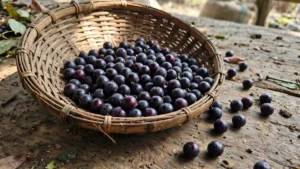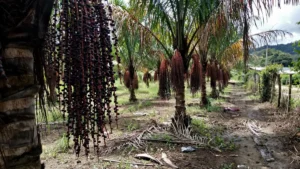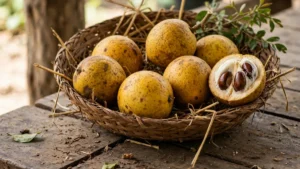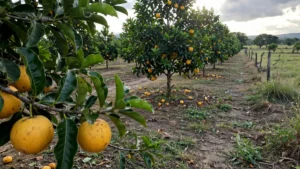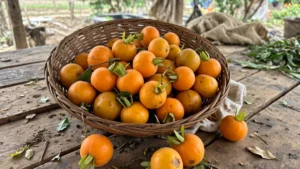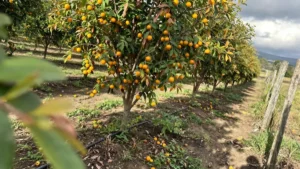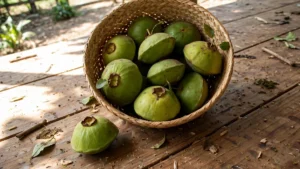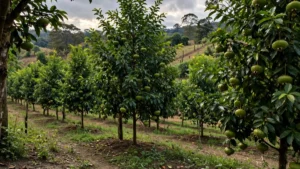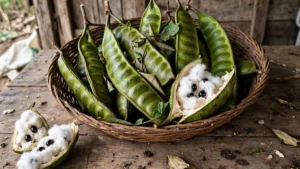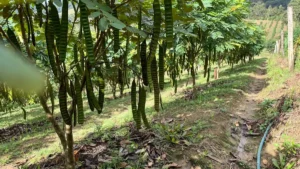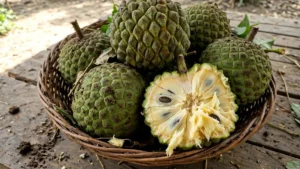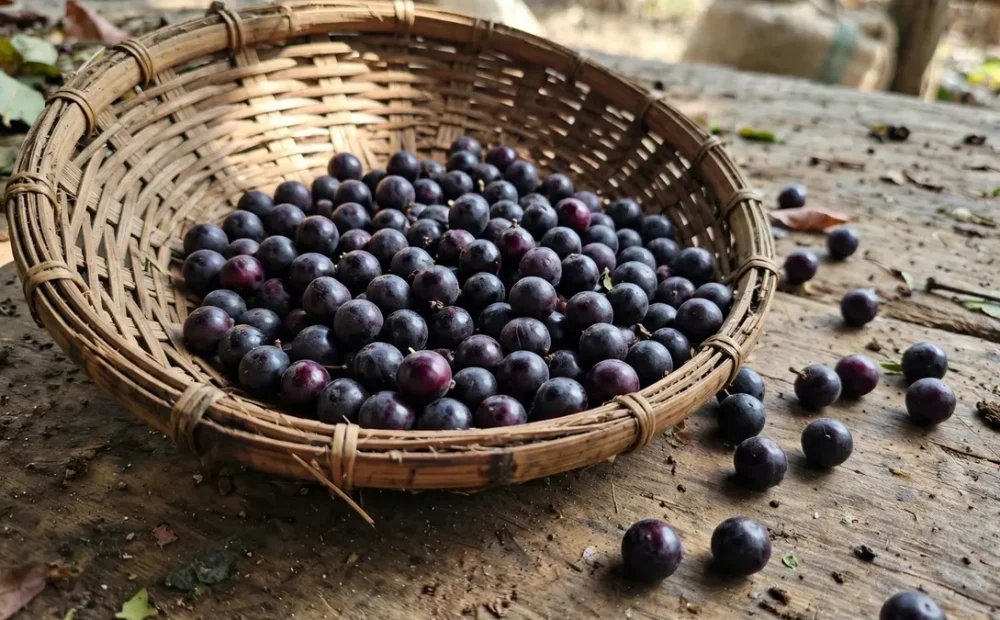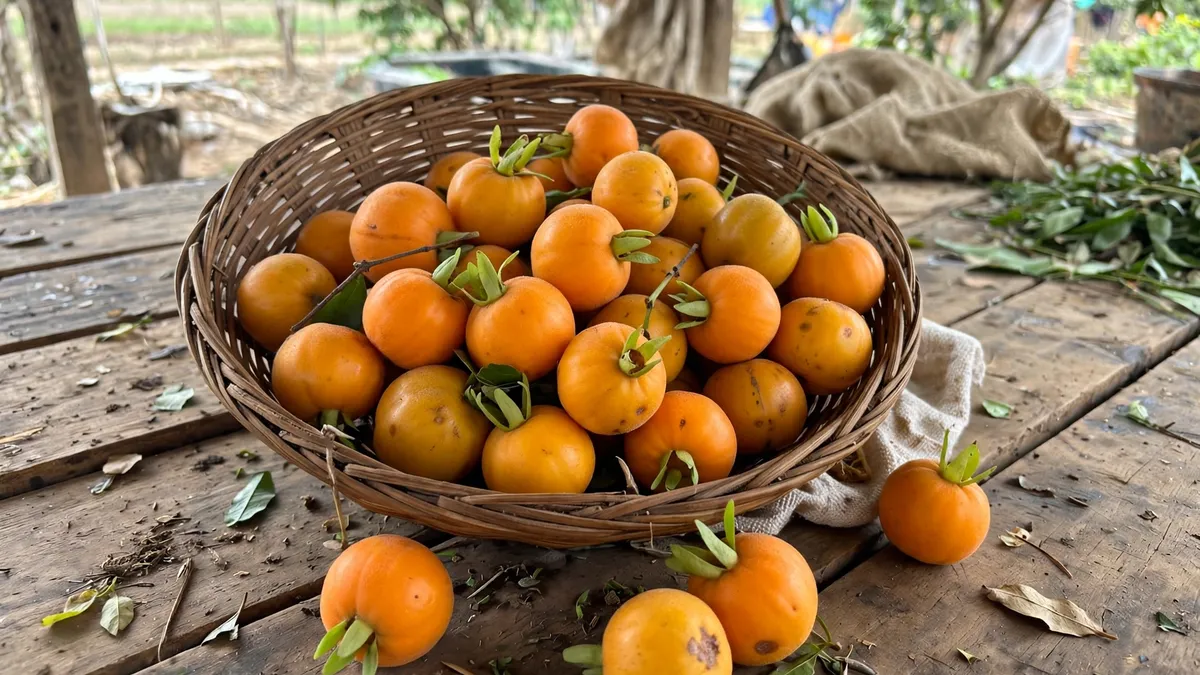
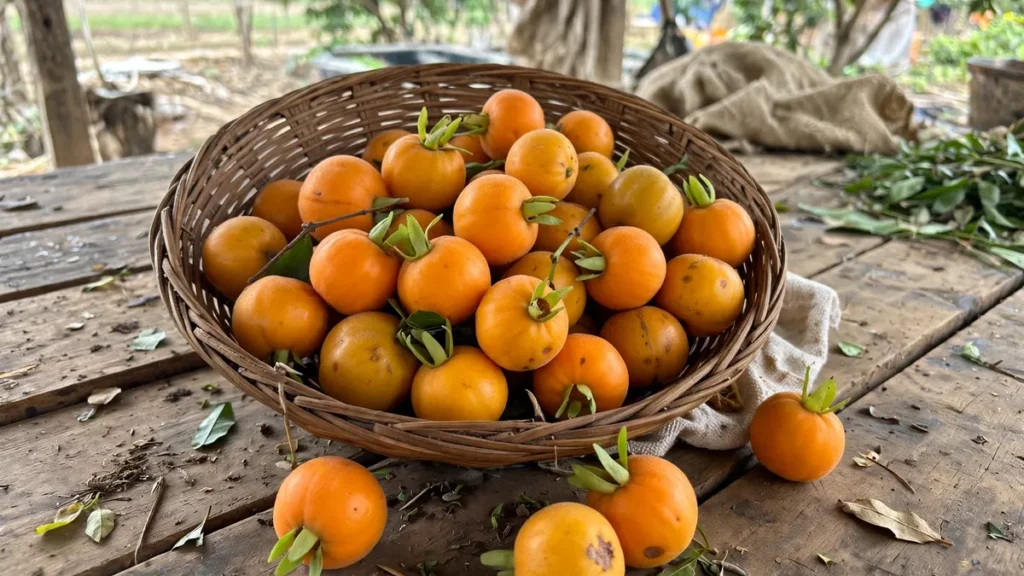
A pitomba farm escape is a trip with one fruit at its centre and a short season around it. Pitomba ripens on tall Amazon trees in the rains, about December to March, and the farms that take guests open for those weeks: a few rooms, a long table, and an orchard walk each morning while the fruit is at its best.
Planning it is mostly a matter of order. The fruit fixes the dates, the farm fixes the price, and the road from the nearest town fixes how you arrive. Settle those three in writing before you pay anything, and the rest falls into place: fresh fruit at breakfast, juice in the afternoon, and evenings that end early under a loud forest sky.
The nine steps below take you from choosing a region to settling the bill on your last morning. Follow them in order, keep every answer in writing, and you will arrive in the right week, on the right farm, with ripe fruit above your head instead of a polite apology about the season.
Key takeaways
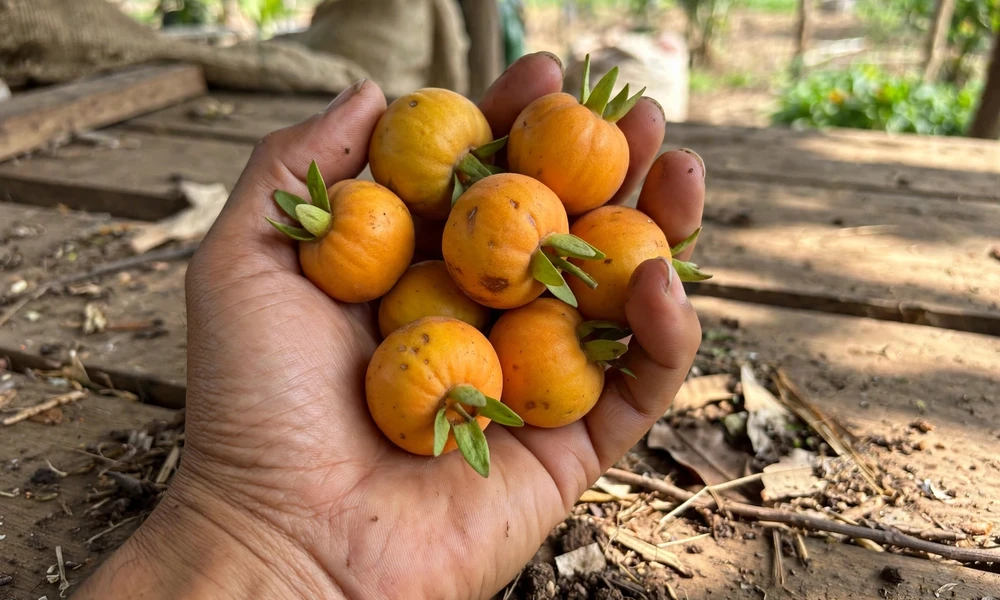
- Pitomba, Talisia esculenta, is a tart-sweet yellow-orange fruit of the Amazon, eaten fresh and pressed into juice, with a rainy-season harvest, about December to March.
- Choose the region first and let its fruiting weeks set your dates, because the harvest moves with the rains from year to year.
- Three answers belong in writing before you pay: the fruiting dates, wheat-free and gluten-free cooking, and the road from the nearest town.
- Three or four nights is the right length: enough time to taste the fruit, walk the orchard, and take a boat trip without hurrying.
- Eat the pulp and spit out the big seed, and taste a few fruit first: pitomba is sharp, and a whole bowl on an empty stomach is too much for a first try.
What a pitomba farm escape actually is
An escape on a pitomba farm is a stay on a working Amazon orchard, where the trees are the reason you came. You sleep in a farmhouse or a small lodge, walk the orchard rows early before the heat builds, and eat what the farm picked that day: fresh fruit at breakfast, juice in the afternoon, and sorbet or ice cream from frozen pulp in the evening.
The farms are small, usually five to eight rooms, and the host is often the farmer. They will tell you when the fruit ripens, how the harvest works, and what the farm does with the pulp, and they will walk the orchard with you rather than handing you a map. That personal welcome is what separates a farm stay from a hotel in the countryside.
It is also a slow trip by design. There is no packed schedule, no tour bus, and no list of activities to tick off. The day is shaped by the rain, the river, and the fruit, and the best moments are usually unplanned: a basket of fruit on the table, a swim in the creek, a long lunch under the trees.
Arrival is part of the trip, not a chore before it. Most guests come by bus or boat to the nearest town, where the farm meets them or sends a driver for the last stretch. The first evening is quiet by design: a welcome drink of pitomba juice, a simple dinner, and an early night, so you are rested for the dawn walk the next morning.
How to plan the trip, and what to ask first
Begin with the season, not the farm. Write to two or three farms in your chosen region and ask for their fruiting dates for your year, in writing. Compare the answers, choose the farm whose dates fit your calendar, and only then discuss rooms and prices. A farm that cannot give you dates is a farm that does not track its own trees.
Next, ask about the kitchen. Warn the farm about wheat and gluten before you agree on dates, because farm kitchens use wheat every day and need time to plan around it. Ask what the meals are, whether the kitchen can cook without wheat, and whether the fruit desserts are safe for you. A farm that answers clearly is a farm that takes its guests seriously.
Then ask about the road. Find out how you reach the farm from the nearest town, whether the farm collects guests, and what the final stretch is like after rain. Amazon roads change with the weather, and a clear answer now avoids a costly surprise on arrival day. If the farm cannot describe the road clearly, treat that as a warning: a host who drives it every week should know every bend. Our guide to how to plan a mangaba farm escape asks the same questions in the same order.
The 9 steps to a pitomba farm escape
Let the region choose your dates
Pick between Belém and Manaus for a first trip, Santarém or Macapá for the river, Boa Vista for open views, or Palmas and Araguaína for a quieter stay. Each region fruits in its own weeks, so the region you choose fixes the dates you can travel. Do not set your holiday dates first and then hunt for a farm: the fruit will not wait for your calendar, and a farm with no ripe fruit is only a farm.
Write to three farms and ask when the fruit ripens
Send the same message to three farms in your region: your dates, your party, and a request for their fruiting weeks in writing. Compare the replies, look for the farm that answers with real dates instead of vague promises, and notice which hosts reply quickly and clearly. The quality of the reply says a lot about the quality of the stay, and a slow or vague answer is a warning worth heeding. If two farms give you different weeks for the same region, trust the one that names exact dates and explains why, since it is watching its trees more closely.
Weigh the full stay, not only the nightly rate
Weigh what the price covers: rooms, meals, orchard walks, juice-making, boat trips, and collection from town. A cheaper farm that charges for every meal and every walk can end up costing more than a dearer farm that includes everything. Ask for the full price in writing, and ask what happens if the season moves and your dates have to shift.
Flag wheat and gluten with the kitchen before you book
Send the wheat and gluten note before you book, not after. Farm kitchens bake bread daily, fry with wheat flour, and serve fruit desserts that may contain it, so they need time to plan. Ask what the kitchen will cook for you, and get the answer in writing. If a farm cannot answer, choose another farm.
Put down a deposit and get the terms in writing
Once the dates and the kitchen are settled, hold the room with a deposit, and get a written note that says what the deposit covers, what comes back if the season moves, and what the cancellation terms are. Keep that note with your travel documents. Small farms run on trust, and a clear note protects both sides when plans change.
Work out the journey, the town, and the final road
Book your flight or bus to the nearest town, then confirm how you reach the farm: a collection by the farm, a local driver, or a boat. Agree on a time and a meeting point in writing, and carry the farm’s phone number with you. Taxis are scarce in small Amazon towns, and the farm road is not a walk to make with luggage in the rain. Leave a generous gap between your arrival in town and the pickup time, because buses and boats on the Amazon run late more often than they run on time.
Dress for rough ground and strong sun
Bring light clothes, a hat, sunscreen, insect repellent, and sturdy closed shoes, because the ground is uneven and the sun is strong. Add a small bag for fruit, a bottle of water, and a light layer for the evenings, when the forest cools quickly after sunset. Leave the smart clothes at home: the orchard does not care about them, and the mud will ruin them anyway.
Go out with the host on the first morning
Walk the orchard with the host on your first morning, before the heat builds, and let them show you which trees are ready and which need a few more days. Taste the fruit from the tree, learn how to pick it without bruising it, and ask what the farm does with the pulp. That first walk sets up the whole stay, and it is the fastest way to learn the farm. Bring your water bottle and a small bag: the host will hand you fruit as you go, and you will want somewhere to put it.
Leave the final morning free
Leave your last morning free for a final orchard walk, a last glass of juice, and buying frozen pulp to take home. Do not book an early departure: the best fruit is picked at dawn, and a rushed morning wastes it. Settle the bill the evening before you leave, so the last morning belongs to the fruit and not to paperwork.
Which pitomba region fits your trip
Start with the two big gateways if this is your first Amazon trip: Belém and Manaus both have airports, short transfers, and farms that are used to newcomers. Give yourself three or four days and Santarém or Macapá work well, with farms on the water and a slower daily rhythm. For a longer break with almost no other visitors, the far north around Boa Vista is the quiet choice, all open savanna and big skies.
Want more than the farm itself? Rio Branco gives you a lively town, a river to swim in, and restaurants a short drive from the gate. Travelling with children? The flat orchard near Palmas lets them pick fruit at their own height. Prefer walking? The forest trails around Porto Velho are the most demanding on this list. In all cases, settle the region first and let its fruiting weeks settle your dates. Turning up in the wrong week wastes the whole trip, and no farm’s charm can fix that. Our roundup of how to plan a muruci farm escape says the same for the cerrado.
Families should look for level ground and low branches, like the farm near Palmas, and keep the first tasting to a few fruit. Couples who want privacy will be happiest at the hill farm near Boa Vista or the riverside farm near Santarém. Travelling alone, the farms near Belém and Manaus are the simplest to reach and the most comfortable with solo guests.
The caveats that matter
Go gently at the first tasting. Pitomba is sharp, and a big bowl before breakfast is more than most first-timers enjoy. Try a few fruit, give it half an hour, and then help yourself to more. Any decent host will warn you before you load a bowl, children should begin with just a handful, and the big seed goes in the bin rather than between your teeth.
| Detail | What is known |
|---|---|
| Botanical name | Talisia esculenta, a tall Amazon tree from the soapberry family |
| Flavour | Sharp yet sweet, somewhere between a plum and a passion fruit, best eaten the day it is picked |
| Season | The rains, about December to March, with the exact weeks moving year to year |
| How it is eaten | Straight from the tree, pressed into juice, or frozen as pulp for sorbet and ice cream |
| The seed | One big seed inside each fruit; eat the flesh and throw the seed away |
| Best trip length | Three or four nights, planned around the fruiting weeks |
| Who should take care | Children and anyone tasting it for the first time; begin with a few fruit |
| What to ask first | Written fruiting dates, wheat-free cooking, and the route from the nearest town |
Food allergies belong in a written message before you book, and any medicine you depend on should come with you, since the closest pharmacy may be an hour’s drive away. Farm kitchens cook from whatever the land provides, and a clear note ahead of time is what keeps every guest safe at the table.
Checklist: planning a pitomba farm escape honestly
Go over these before you book, and again in the week before you leave.
- Get this year’s fruiting dates in writing, and treat last year’s dates as a rough guide only.
- Make sure wheat-free and gluten-free cooking is agreed in writing before any money changes hands.
- Work out the journey from the nearest town to the farm, including what the final stretch is like in the rain.
- Find out how many guests the farm takes at once, and how the rooms are cooled.
- Know what your deposit pays for, what is refunded if the season shifts, and keep it all in writing.
- Start with a small taste of pitomba, pause, and only then eat more, above all with children.
Frequently asked questions
Which months are best for a pitomba farm visit?
The fruit ripens in the rains, about December to March, yet the precise weeks shift with the weather and vary between regions. Ask the farm for its dates for your year and book inside them. A farm that puts dates in writing is one that pays attention to its trees.
What should I do if the harvest is late?
A decent host will tell you before you set off, since they walk the orchard every day. When the season has moved, ask to shift your dates rather than turning up anyway. Most small farms are happy to move a booking if you ask early, and they prefer guests in the right week to guests in the wrong one.
Is it possible to reach a pitomba farm without a car?
Yes, as long as the final leg is arranged. Ride a bus to the closest town, then have the farm collect you or book a local driver. Agree the pickup in writing, with a time and a place to meet, before you leave home. Taxis are hard to find in small Amazon towns, and the farm track is no place to walk with suitcases.
Can I take pitomba pulp home?
Nearly every farm sells frozen pulp, which holds up far better on a journey than fresh fruit. Pick it up on your final morning, keep it frozen while you travel, and turn it into juice, ice cream, or sorbet at home. Fresh pitomba bruises at a touch and seldom survives a long trip.
Does a pitomba farm suit a first Amazon trip?
Yes, it is one of the gentlest ways to start. The farms are small, the hosts are warm, and the fruit gives the whole trip a purpose. Begin near Belém or Manaus, where getting there is straightforward and the farms are accustomed to guests who have never been to the Amazon.
What should I pack for walking the orchard?
Pack light clothes, a hat, sunscreen, insect repellent, and solid closed shoes, because the paths are rough and the sun is fierce. Throw in a small bag for fruit, a water bottle, and a light layer for after sunset, when the forest cools quickly.
The bottom line
Pick a small working farm for 2027, one where the fruit is ripe on your dates, the host walks the orchard beside you, and the kitchen cooks from that morning’s pick. Settle the region, get the fruiting weeks in writing, tell the kitchen about wheat and gluten well ahead, and begin with just a few fruit.
Give it three nights, eat the fruit fresh, drink the juice, and measure the trip by the orchard at dawn rather than by a list of activities. That is the straightforward way to meet a fruit you will not find at home, without the haste that turns a farm stay into a tour. Our guide to how to plan an uvaia farm escape works the same way for southern Brazil: let the season draw the plan, not the brochure.