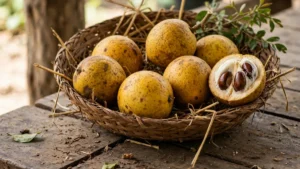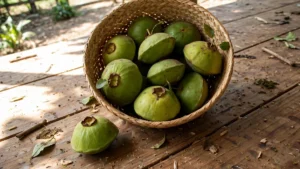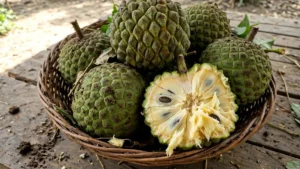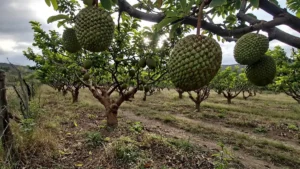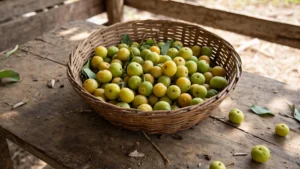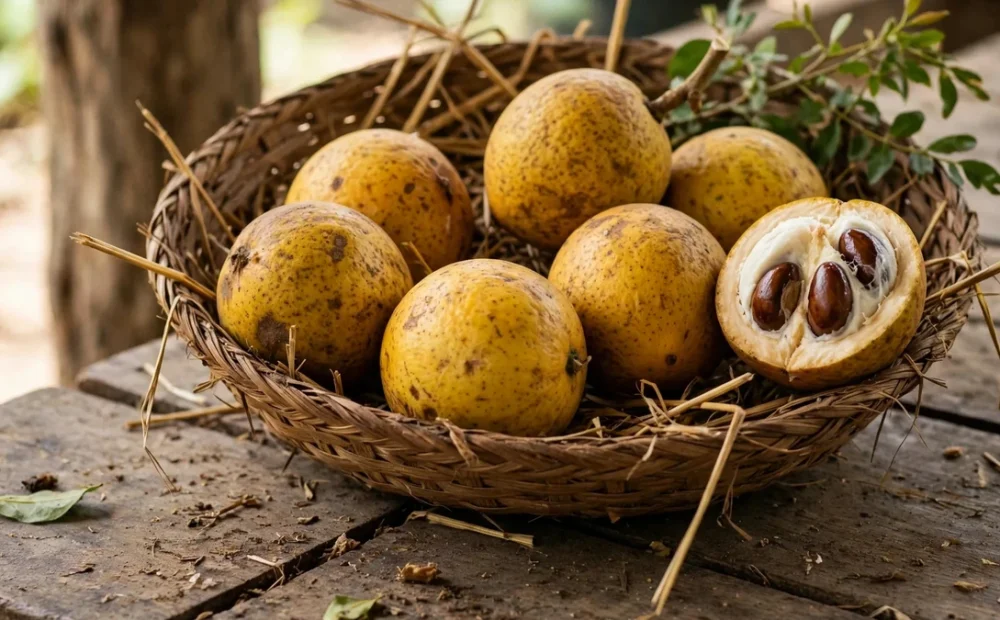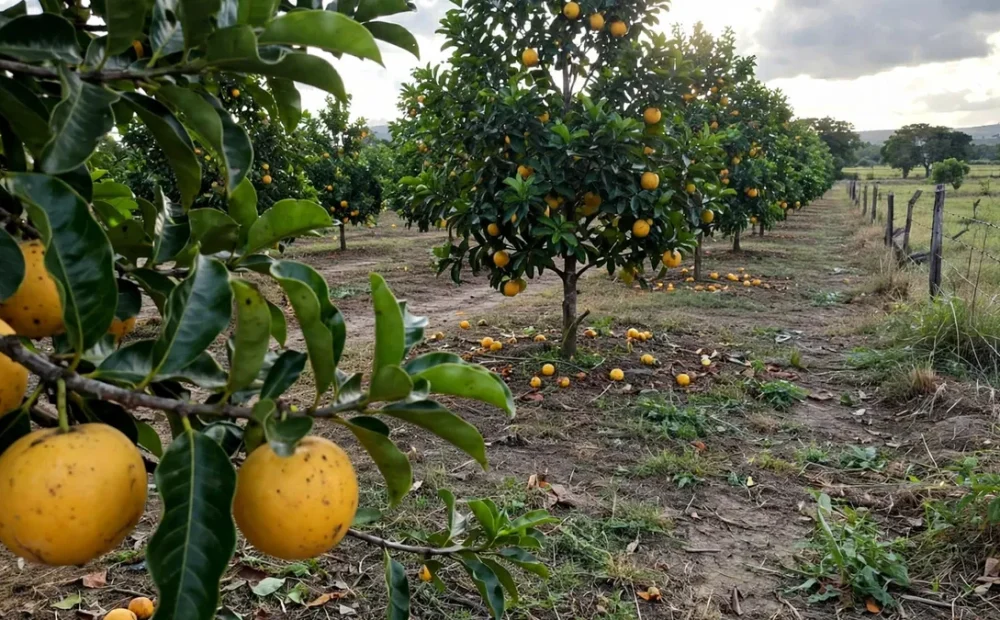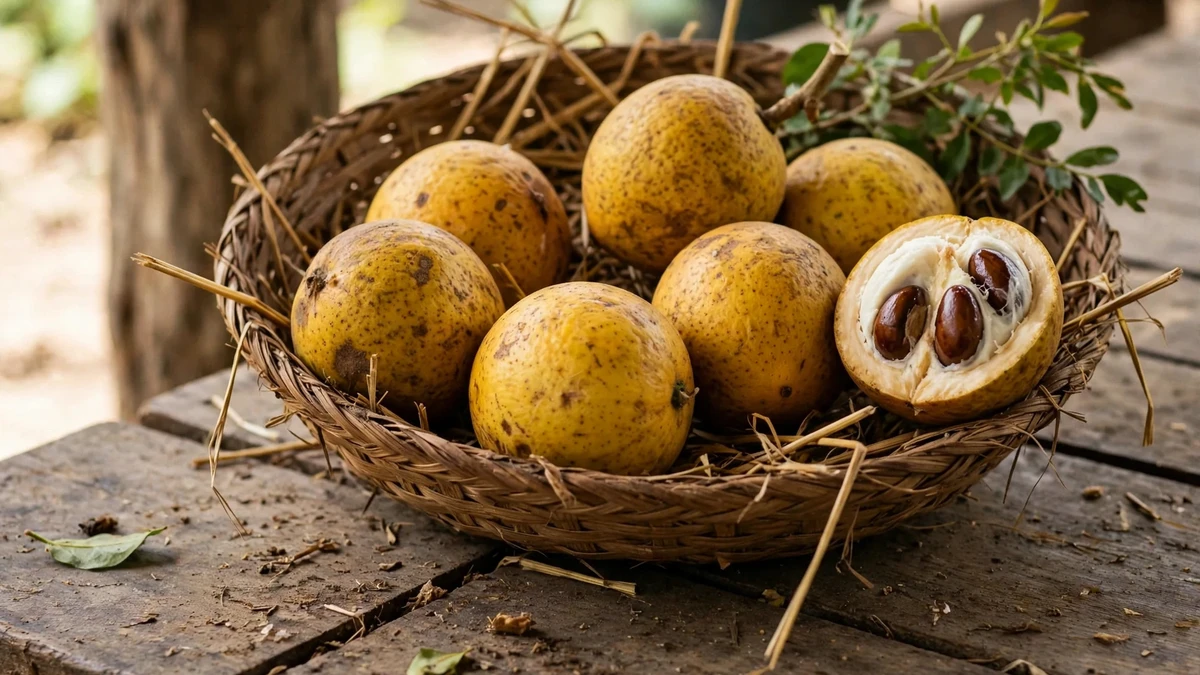

A bacuri farm escape is a trip built around a fruit most travellers have never tasted. The fruit is large and round, yellow on the outside and white inside, with flesh so creamy it is churned into ice cream across the Amazon. To eat it at its best, you need to be at the farm when it is ripe, which means planning the trip around the fruiting season rather than around a date on a calendar.
That is what makes this trip different from an ordinary holiday. The fruiting weeks move with the rains, the farms are small and far apart, and the journeys between town, river and farm take longer than the map suggests. A good plan handles all of that before you leave home: the region, the dates, the farm, the road, and the kitchen. A bad plan leaves you arriving a week after the fruit has gone.
Below is a plan that works, step by step, from choosing a region to the drive home. It is written for a first trip, but the same steps hold for a second one, and the same warnings about fruit, wheat and weather apply wherever in the Amazon you go.
Key takeaways
- Bacuri, Platonia insignis, is a large round yellow Amazon fruit with thick white flesh, eaten fresh, as juice, and as ice cream.
- Choose the region first, then the farm, because the fruiting weeks and the journeys differ from one region to the next.
- Confirm the fruit season in writing before you pay a deposit, and ask the farm to check its own trees.
- Plan the river and road journeys with a spare half day at each end, because both run longer than expected.
- The seeds are never eaten, and farm kitchens use wheat daily, so mention gluten before you book.
What a bacuri farm escape actually is
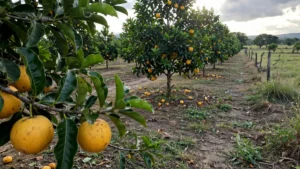
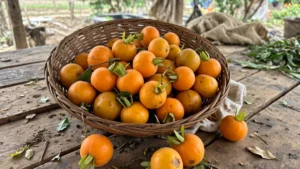
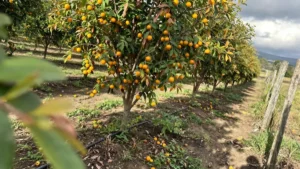
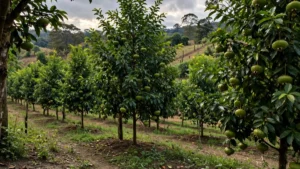
A bacuri farm escape is a few days at a working farm in the Amazon, built around the bacuri harvest. You sleep in a farmhouse or a small lodge, walk the orchard in the cool of the morning, taste the fruit at different stages of ripeness, and eat meals cooked from the farm’s own harvest. Some farms add a river trip, a market visit, or a horse ride. The best ones leave time unplanned, because the heat, the rain and the river set the pace, not a schedule.
The trip is seasonal in a way most holidays are not. Bacuri fruits for a few weeks each year, during the rainy season, and the exact weeks shift with the rain and the region. A farm in Pará may fruit in one month and a farm in Roraima in another. That is why the dates matter more than the destination: a perfect farm visited a week after the fruit has gone is a pleasant stay, but it is not a bacuri trip.
The stays themselves are simple. Rooms are clean and comfortable, the food is generous, and the hosts know their fruit, their river and their weather. There is no spa, no concierge and often no reliable wifi. What you get instead is a place that will walk you through its orchard, show you how to judge a ripe bacuri, and feed you ice cream made from fruit picked that morning.
How to plan the trip, and what to ask first
Start with the region, not the farm. Belém and the Guamá river are the easiest first choice, because the city is close and the farms are used to guests. Santarém and the Tapajós suit a slower trip. Manaus and Macapá suit a traveller who wants a city as a base. Boa Vista, Palmas, Araguaína, Imperatriz and São Luís suit a second trip, or someone who already knows the Amazon and wants its savanna, cerrado, forest edge and coast.
Once the region is chosen, ask the farm three things before you pay anything: which weeks the bacuri will be ripe, how you reach the farm from the nearest town, and what the kitchen can do about wheat and gluten. The first answer tells you whether your dates work. The second tells you whether you need a boat, a car or a farm transfer. The third matters because farm kitchens cook with wheat every day. Our guide to planning a cupuacu farm escape asks the same three questions, because the same small farms and the same seasonal fruit are involved.
The 9 steps to a bacuri farm escape
Start with Belém or Manaus and work outwards
For a first trip, pick a region with a city close by. Belém gives you the Guamá river and farms used to guests, and Manaus gives you the most to do outside the farm. Once you know the region, shortlist three farms in it. A second trip can start further out, in Roraima, Tocantins or Maranhão, where the farms are quieter and the journeys longer.
Ask three farms for their bacuri weeks in the same week
Write to three farms in the same week and ask the same question: which weeks will your bacuri be ripe this year? Comparing the answers side by side tells you more than any single answer can. If two farms agree and one is vague, trust the two. If all three give different weeks, the season is still settling, and you should wait a week and ask again.
Confirm the fruit season on paper before you hand over money
When a farm gives you its fruiting weeks, ask for them in a message you can keep, with the farm confirming it has checked its own trees. If the fruit is late, that message lets you move your dates without losing your deposit. A farm that will not put its fruiting weeks in writing is a farm to skip.
Pay the deposit only after the fruit is confirmed in writing
Hold the room with a deposit once the fruit is confirmed, and get the deposit, the dates and the cancellation terms in the same written message. Ask what happens if the fruit is late: can you move your dates, or is the deposit lost? The best farms will move you without fuss, because they know the season shifts. A farm that keeps the deposit when its own fruit is late is telling you how it treats guests.
Sort the river leg before the road leg
Many bacuri farms are reached by a mix of road and river, and the river leg is the one that causes delays. Ask the farm which boat, which landing and which time of day works, and whether the farm sends someone to meet you. Book the boat first, then the road around it. A taxi booked for a boat that has already left is money wasted, and a boat missed because of a late road journey can cost you a day.
Ask what the kitchen cooks with wheat before you choose your dates
Farm kitchens in the Amazon cook with wheat every day: bread, cakes, pasta and battered fish. If you need wheat-free or gluten-free meals, ask before you choose your dates, not after you arrive. A kitchen warned in advance can plan rice, tapioca and fruit-based meals for you. A kitchen told at the table can only apologise. Put the question in your first message to the farm, alongside the fruiting weeks and the journey.
Pack for river heat, rain and early starts
Pack light, but pack for the Amazon: a hat, repellent, long sleeves for the evening, shoes you can walk in on wet ground, and a bag that keeps its contents dry in a sudden downpour. Mornings start early on a farm, and the orchard walk is best at dawn, when the fruit is cool and the light is soft. Bring a torch for the walk back after dark, and leave the heavy luggage at home. A small bag and a dry bag cover most trips.
Spend the first morning in the orchard, not at the table
On your first morning, go to the orchard before breakfast. The fruit is coolest then, the light is best, and your host has the most time to talk. Learn to judge a ripe bacuri by its weight and the give of its skin, taste the flesh at different stages of ripeness, and ask which trees fruit first and which last. The tasting you do on the first morning will shape every meal that follows, because you will know what ripe really tastes like.
Use the last morning for the market, then head for home
Keep the final day free. Visit the market in the nearest town, where bacuri is sold in season as fruit, pulp and ice cream, and buy frozen pulp to take home if your journey allows it. Then allow a spare half day for the journey itself, because river and road journeys in the Amazon run long. A trip that ends with a missed boat or a missed flight is a trip that ends badly, and a free last day is the cheapest insurance there is.
Which bacuri region fits your trip
For a first trip, Belém and the Guamá river are the simplest choice: the city sits close to the farms, the farms are used to visitors, and the fruit is easy to find in season. Santarém and the Tapajós move more slowly, with a wide river, small towns, and farms that have time for long walks and longer lunches. If the Amazon of the photographs is what you want, begin with one of these two.
Manaus and Macapá work well when you want a city to fall back on and a farm to escape to. Manaus offers the most beyond the farm, while Macapá offers the equator line and a calmer pace. Either can carry a first visit, provided you accept that getting in and out of the city takes time. Our guide to planning a buriti farm escape covers the same river country, and the same advice about leaving a spare half day for the journey holds there too.
Boa Vista, Palmas, Araguaína, Imperatriz and São Luís belong on a second trip, or in the plans of a traveller who already knows the Amazon and wants its other faces: the Roraima savanna, the Tocantins cerrado, the Maranhão forest edge, and the coast near São Luís. These farms are quieter and see fewer guests, which is part of their charm, but they ask more of you: longer drives, earlier starts, and a readiness to follow the farm’s day instead of your own.
The caveats that matter
The fruit is the first caveat. Bacuri fruits for a few weeks each year, and the weeks shift with the rain. A farm that had fruit in one month last year may have it in another month this year. That is why the fruiting weeks must be confirmed in writing, with the farm checking its own trees, and why a farm that promises fruit without checking is a farm to be wary of.
| Detail | What is known |
|---|---|
| Scientific name | Platonia insignis, the bacurizeiro of the Amazon |
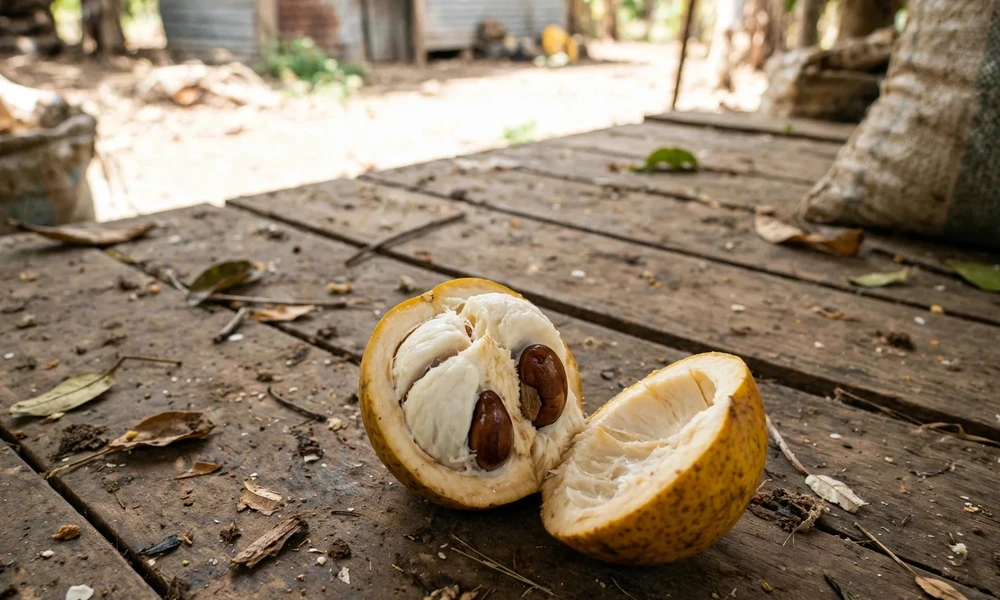
| The fruit | Large round yellow fruit, thick skin, white creamy flesh, large hard seeds |
| Where it grows | The Amazon basin, including Pará, Amazonas, Amapá, Roraima, Tocantins and Maranhão |
| How it is eaten | Fresh, pressed into juice, frozen as pulp, churned into ice cream and sorbet |
| Best season | The rainy season, with fruiting weeks shifting by region and by the rain |
| Not to confuse with | Cupuacu, a different Amazon fruit with a sour, creamy pulp and a brown skin |
| Who should ask first | Anyone who needs wheat-free or gluten-free meals, as farm kitchens use wheat daily |
| What it does not do | It does not keep well fresh, so most bacuri outside the Amazon is sold as frozen pulp |
The seeds are the second caveat. Inside the white flesh sit large, hard seeds, and those seeds are never eaten. The flesh is the part you want, and your host can show you how to lift it away from the seed without a mess. If you have a nut or seed allergy, mention it before you taste anything, since the seeds rest inside the flesh itself. Warn the farm in advance and it can prepare the fruit for you. Our guide to planning an arazá farm escape carries the same warning, because the same small kitchens and the same seed-in-fruit eating apply.
Checklist: planning a bacuri farm escape honestly
Use these checks before you book, and again the week before you travel.
- Choose the region first, then the farm, and shortlist three farms in that region.
- Ask all three farms for their bacuri weeks in the same week, and compare the answers.
- Get the fruit season in writing, with the farm confirming it has checked its own trees.
- Pay the deposit only after the fruit is confirmed, and get the cancellation terms in writing.
- Tell the kitchen about wheat and gluten in your first message, before you choose your dates.
- Keep a spare half day at each end of the trip, and keep the last day free for the market.
Frequently asked questions
How far ahead should I book a bacuri farm stay?
Two to three months ahead is a good rule, because the farms are small and the fruiting weeks are short. Book earlier if you want a particular farm, and later only if the farm confirms the fruit is still coming. Do not book a year ahead on the strength of last year’s fruiting weeks, because the season shifts.
What if the rains come late and the fruit is late too?
Then the fruiting weeks move, and your dates should move with them. This is why the fruit season must be confirmed in writing, with the cancellation terms in the same message. A good farm will move your booking without fuss. A farm that keeps your deposit when its own fruit is late is not a farm to book again.
Can I bring bacuri pulp home with me?
Often yes, as frozen pulp, which is how most bacuri travels. Buy it from the farm or the market in the nearest town, keep it frozen, and check your airline’s rules for frozen food. Fresh fruit does not travel well, so do not try to carry a bag of bacuri home in your hand luggage.
How do I reach a farm at the end of a dirt road?
Ask the farm. Some farms send a car, some meet you at the nearest town, and some expect you to hire a driver who knows the road. The last stretch is often unpaved, and after rain it can be rough. Arrive before dark, and do not rely on a map app that has never seen the road.
Is a bacuri farm escape a good first Amazon trip?
Yes, if you choose the right region. Belém and the Guamá river are the easiest first choice, because the city is close and the farms are used to guests. A first trip to a remote savanna or cerrado farm is harder, and better saved for a second visit, when you know the heat, the rain and the pace.
Will I manage at a bacuri farm with no Portuguese?
Often yes, with patience. Hosts in the north are used to guests who speak little Portuguese, and a handful of phrases carries you a long way. Learn the words for the fruit, for meal times and for the road, and carry your booking details in a message on your phone.
The bottom line
A bacuri farm escape is a trip planned around a fruit, and the plan is simple: choose the region first, ask three farms for their fruiting weeks, get the season in writing, and pay the deposit only after the fruit is confirmed. Sort the river leg before the road leg, tell the kitchen about wheat before you choose your dates, and keep a spare half day at each end.
Do that, and the trip gives you something no market stall can: the fruit at the tree, hours after picking, eaten in the orchard where it grew, with a host who knows the season better than any calendar. That is the trip in full, and the planning is what makes it work.