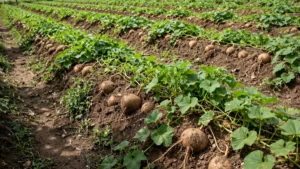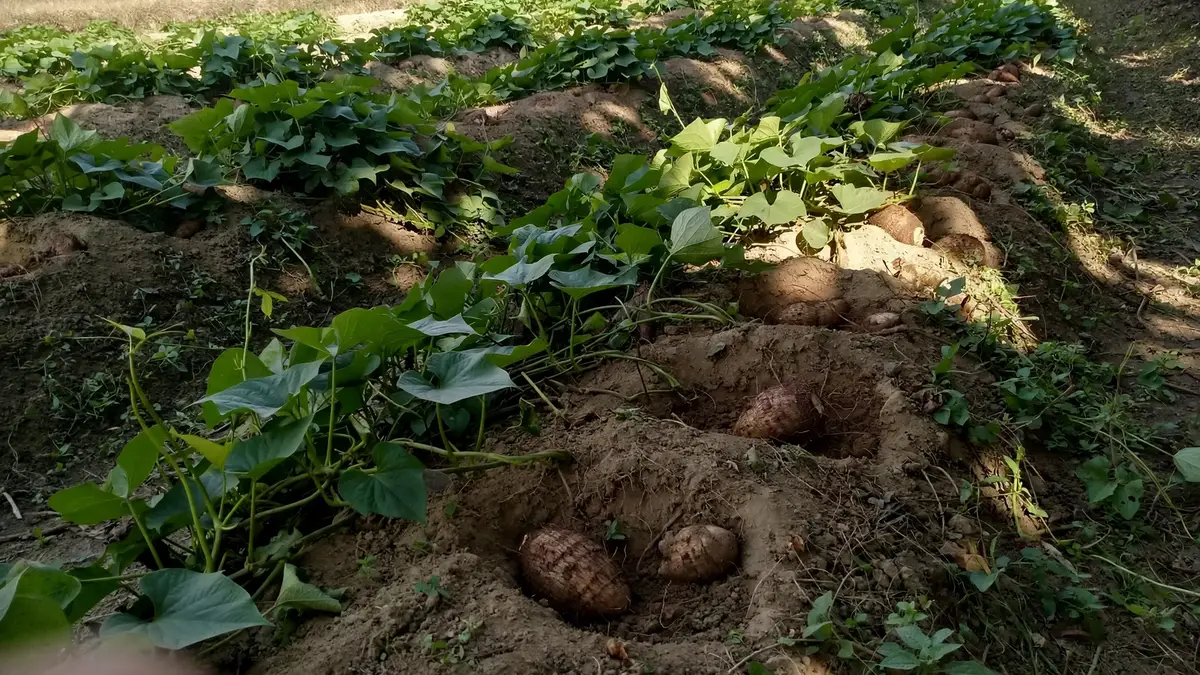
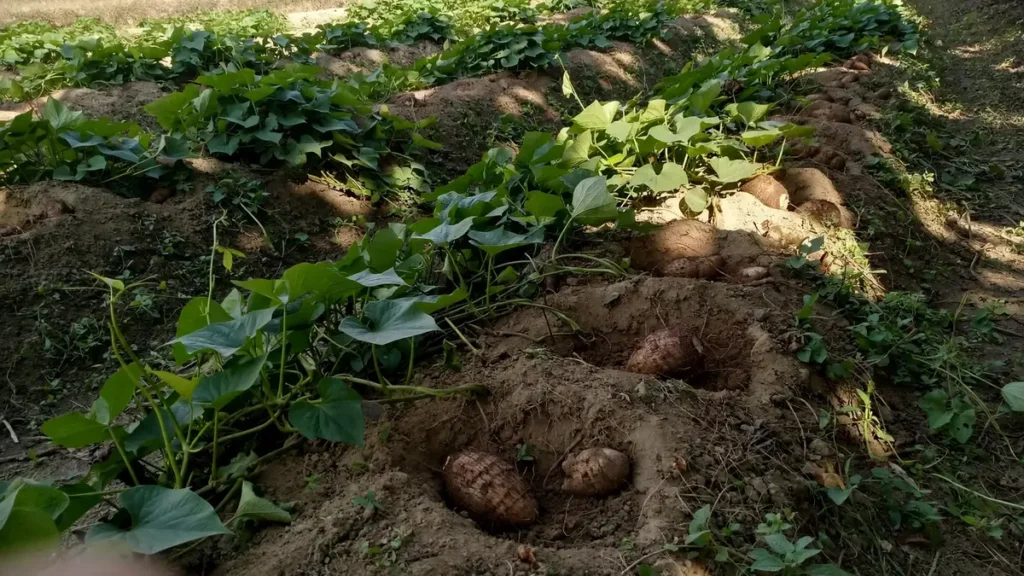
White yam is the crop that holds West African cooking together, and a farm stay built around it tastes nothing like a holiday built around a beach or a vineyard. Dioscorea rotundata grows on ridged mounds under a hot sun, its vines climbing tall stakes while the tubers swell underground for eight or nine months. When the harvest comes, the table fills with pounded yam, yam porridge, and yam with egg sauce. Nigeria grows more of it than any other country on earth, and the new yam season in late summer is still marked with festivals across Igboland.
A retreat centred on yam is therefore a warm, hands-on kind of luxury. You stay in a shaded guesthouse on a working farm, walk the ridges with the family who planted them, learn to tell a ripe tuber by the sound of the soil, and eat the harvest the same evening it leaves the ground. The pleasure is the heat, the red earth, the cooking fire, and a crop that has fed families here for centuries.
The nine stays below earn their places for the farming first and the comfort second. Each grows white yam as a serious crop and lets guests work the ridges.
Key takeaways
- White yam, Dioscorea rotundata, is a West African staple grown on ridged mounds, and Nigeria produces more of it than any other country.
- It is not a sweet potato. Sweet potato is Ipomoea batatas, from the morning glory family, while white yam is a true yam with its own flavour, texture and cooking traditions.
- The main harvest runs from August to October, with new yam festivals in August and September, so trips outside those months eat stored tubers.
- Heat and humidity shape the trip more than the room rate. Travel with water, a hat, and a slow first afternoon.
- Yam itself contains no gluten, but farm kitchens also bake bread and serve wheat-based sauces, so guests who avoid gluten should warn the kitchen in writing before they arrive.
What a yam farm retreat actually is
A yam farm retreat is a working farm in the yam belt of West Africa that takes a small number of guests, usually fewer than a dozen at a time, and feeds them from its own ridges. The farm plants yam in the dry months, stakes the vines as they climb, and digs the tubers when the leaves turn. Mornings are for the fields, the hot afternoon is for cooking and resting, and evenings are for pounded yam by lamplight.
What makes these stays different from a rural hotel is the work itself. Nobody shows you the farm from behind a rope. You are given a short hoe and a basket, shown how to loosen a mound without cutting the tuber, and taught how the farmers judge ripeness by the vine, the soil and the season.
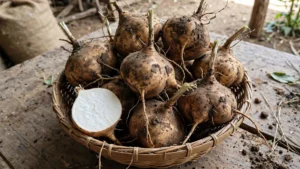
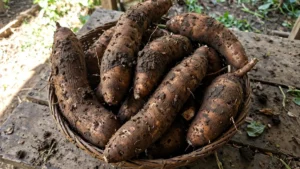
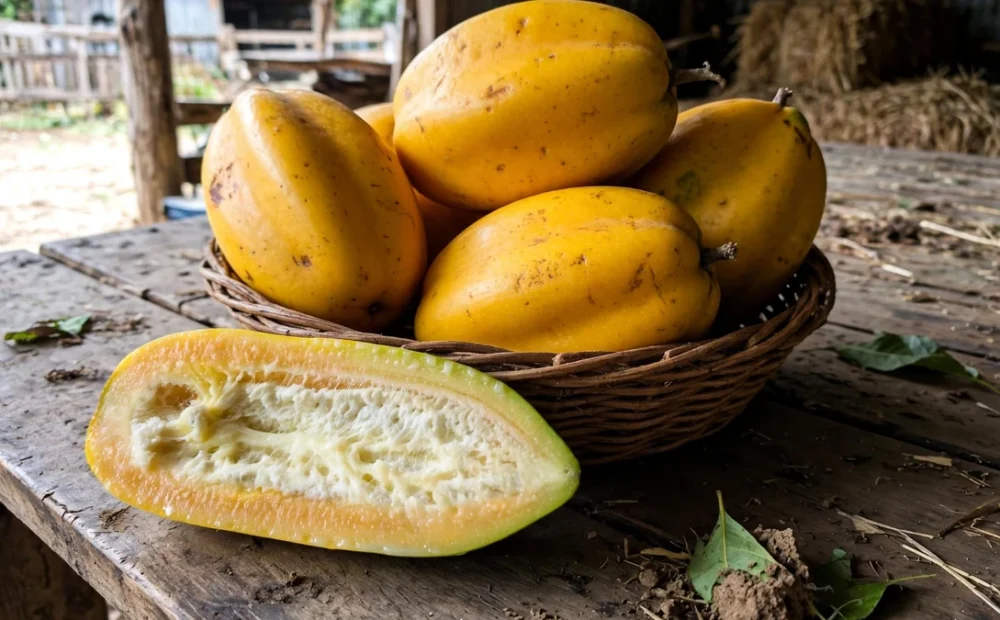
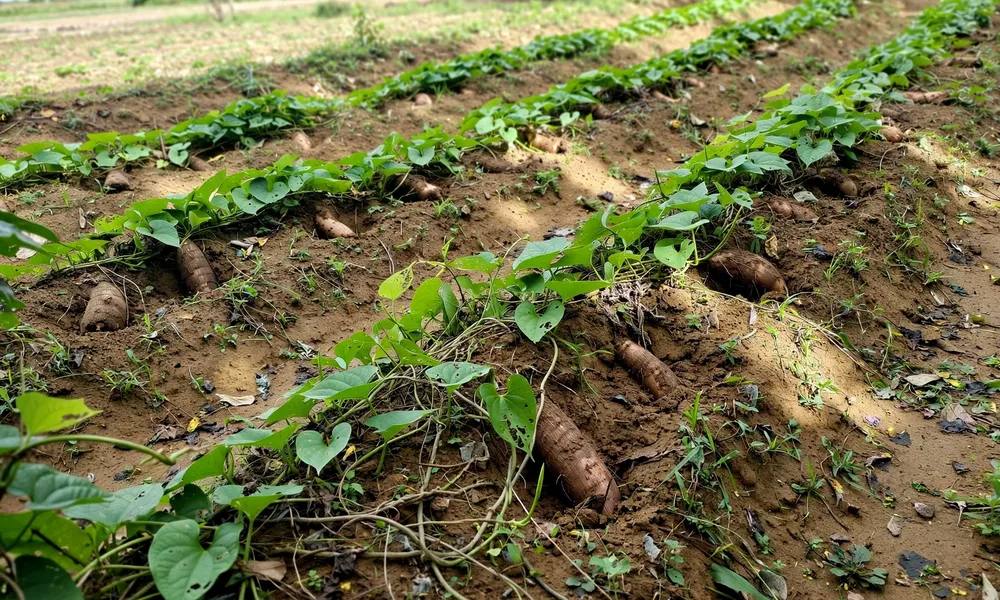
The tuber deserves a proper introduction. A white yam is long and cylindrical, with rough brown skin and pale, firm flesh inside. Cooked, it turns soft and smooth, with a mild, earthy flavour that takes on whatever it is served with. Pounded, it becomes stretchy and silky; fried, it crisps at the edges; roasted over charcoal, it is smoky and sweet. It is the most versatile staple on the continent.
How we picked these stays, and what to ask first
We looked for farms that grow white yam as their main crop, not as a small plot kept for show.
We also weighed the rooms, the shade, and the food beyond the tuber. A good stay has a cool sleeping room, a kitchen that can handle a gluten-free request without confusion, and a host who will say plainly when the harvest is over and the fresh digging has ended. Ask three things in a message before you pay: which weeks the main harvest runs, how the farm handles the midday heat, and whether the kitchen can cook your meals without wheat. Our guide to tucumã farm retreats leans on the same three questions, because they suit any farm stay built around one crop.
The 9 best luxury yam farm retreats of 2027
Lagos — Coastal Farmhouse with a Yam Barn
What we like: A farm on the green edge of Lagos, with yam ridges behind a shaded guesthouse and a traditional yam barn where the harvest is stored on wooden racks. The kitchen roasts yam over charcoal every evening. What to consider: The traffic out of Lagos can be slow, and the farm is warm and humid even in the morning. Best for: First-time visitors to West Africa who want a working farm within reach of the city. Style: Shaded guesthouse, open kitchen, yam barn on racks. Price range: $115–$170 a night, meals included. Standout feature: A charcoal-roast yam supper on the night you arrive, served with pepper sauce made on the farm.
Ibadan — Hill Farm with a Pounding Shed
What we like: A farm on the hills outside Ibadan, with a dedicated pounding shed where the mortar and pestle never rest for long, and yam ridges that run down to a small stream. What to consider: The track to the farm is rough after rain, and the farm has no vehicle of its own, so you need a driver from Ibadan. Best for: Travellers who want to learn pounded yam properly, from digging to serving. Style: Hill farmhouse, pounding shed, shaded veranda. Price range: $95–$145 a night, meals included. Standout feature: A pounding lesson at dusk, ending with a bowl of pounded yam and vegetable soup you helped make.
Accra — Garden Farm near the Coast Road
What we like: A garden farm a short drive from Accra, with yam ridges mixed among plantain and cassava, and a kitchen that serves yam porridge for breakfast and fried yam for lunch. What to consider: The setting feels less remote than the inland farms, and weekends bring day visitors to the garden. Best for: Food-focused travellers who want to taste Ghanaian yam cooking properly. Style: Garden farmhouse, big communal kitchen, shaded dining area. Price range: $100–$150 a night, meals included. Standout feature: A market morning in Accra with the farm cook, buying the peppers and fish that go with the yam.
Kumasi — Forest-Edge Farm with a Big Kitchen
What we like: A farm at the edge of the forest belt near Kumasi, with the largest kitchen of the nine, run by a cook who grew up selling yam at the Kejetia market. The yam here is cooked four ways in a single day. What to consider: The forest humidity is high, and the field paths get muddy in the rainy season. Best for: Travellers who like green, shaded landscapes and serious cooking. Style: Forest-edge farmhouse, big kitchen, open dining room. Price range: $90–$140 a night, meals included. Standout feature: A full cooking day that starts in the ridges and ends with four yam dishes on one table.
Abidjan — Lagoon-Side Farm with a Smoked Fish Kitchen
What we like: A farm on the lagoon outside Abidjan, where yam ridges meet the water and the kitchen pairs the harvest with smoked fish from the lagoon. The combination is the best meal on this list, and the evenings are cooler than inland. What to consider: The farm is a long drive from Abidjan airport, and French is the working language of the kitchen. Best for: Travellers who want lagoon air and a kitchen with a distinct Ivorian character. Style: Lagoon-side farmhouse, smoked fish kitchen, shaded terrace. Price range: $110–$165 a night, meals included. Standout feature: Smoked fish and pounded yam served on the terrace as the sun sets over the lagoon.
Cotonou — Coastal Farm with a Yam Festival Link
What we like: A small coastal farm near Cotonou with close ties to the local yam festival, where guests can join the harvest celebrations in August. The farm is compact, the hosts are warm, and the yam porridge here is the richest of the nine. What to consider: The farm is small, with only a handful of rooms, so festival weeks book out months ahead. Best for: Travellers who want to time their trip to the new yam celebrations. Style: Compact coastal farmhouse, festival links, communal dining. Price range: $80–$120 a night, meals included. Standout feature: An invitation to the local new yam festival, with dancing, drumming and the first tubers of the season.
Lomé — Hillside Farm above the Gulf
What we like: A hillside farm above Lomé, with yam ridges terraced into the slope and views down to the Gulf of Guinea on clear mornings. The farm grows yam alongside maize and beans, and the kitchen makes a yam and bean stew worth the climb. What to consider: The slope is steep, and the rooms are simple, with fans rather than air conditioning. Best for: Travellers who like a climb, a view, and a farm that feels properly lived-in. Style: Hillside farmhouse, terraced ridges, simple rooms. Price range: $75–$115 a night, meals included. Standout feature: A sunrise walk up through the terraces to the top ridge, with the gulf silver below.
Yaoundé — Highland Farm in the Centre Region
What we like: A farm in the cooler highlands around Yaoundé, where yam grows in red soil under a milder sun than the coast. The climate is kinder, the food is generous, and the farm feels calm rather than staged. What to consider: The highland harvest runs later than the coastal one, so early-season visitors see stored tubers. Best for: Travellers who dislike the coastal heat and want a gentler climate. Style: Highland farmhouse, red-soil ridges, outdoor kitchen. Price range: $85–$130 a night, meals included. Standout feature: A red-soil digging morning followed by a long lunch of yam, beans and grilled plantain.
Enugu — Festival Farm in the Coal City Hills
What we like: A farm in the hills around Enugu, at the heart of Igbo yam country, where the new yam festival is a serious local event and the farm is part of it. The hosts explain the festival properly, and the pounded yam here is the smoothest of the nine. What to consider: Festival season is busy and the farm fills quickly, so book well ahead for August and September. Best for: Travellers who want the cultural heart of yam farming, not just the crop. Style: Hillside farmhouse, festival ties, communal pounding shed. Price range: $105–$155 a night, meals included. Standout feature: A place at the new yam festival table, with the first pounded yam of the season.
Which yam region fits your trip
The Nigerian farms, Lagos, Ibadan and Enugu, suit first-time visitors. The transfers are straightforward, and the farms are used to guests who have never held a hoe. Enugu is the most cultural of the three, Lagos the easiest to reach, and Ibadan the best for learning the cooking.
The Ghanaian farms, Accra and Kumasi, suit travellers who want a slightly cooler, greener trip with a strong food focus. Accra is the practical choice for a short stay, while Kumasi rewards a longer one, with its forest setting and its big kitchen. Both suit a second trip, for anyone who has spent time in Nigeria and wants to compare the cooking.
The coastal and highland farms, Abidjan, Cotonou, Lomé and Yaoundé, suit the committed. Abidjan is the most distinctive for its lagoon kitchen, Cotonou the best for festival timing, Lomé the most scenic, and Yaoundé the most comfortable in the heat. Our roundup of buriti farm retreats reaches the same conclusion about fitting the region to the traveller, and the same logic applies on this list.
The caveats that matter
White yam is a safe, long-eaten food when cooked, but it is not a raw snack. The tubers should always be boiled, roasted or fried before eating, and the raw flesh can irritate the skin and mouth. Heat is the bigger practical concern. Every farm on this list sits in a hot, humid climate, and the midday sun is serious. Drink water through the day, wear a hat in the fields, and rest in the shade after lunch.
| Detail | What is known |
|---|---|
| Botanical name | Dioscorea rotundata, a true yam, not related to sweet potato |
| Where it grows | West Africa, mainly Nigeria, Ghana, Côte d’Ivoire, Benin, Togo and Cameroon |
| Main harvest | August to October, with new yam festivals in August and September |
| How it is eaten | Boiled, pounded, roasted or fried, always cooked, never raw |
| Flavour and texture | Mild and earthy, smooth when pounded, crisp when fried, smoky when roasted |
| Heat and humidity | Hot and humid year-round; carry water and rest at midday |
| Gluten note | Yam has no gluten, but farm kitchens also serve bread and wheat sauces |
| What it is not | Not a sweet potato, not taro, not cassava, and not eaten raw |
Money is simple on these farms. Most take cards in the nearest city but not on the farm, so carry cash for tips and farm-shop purchases.
Checklist: booking a yam farm stay honestly
Use these checks before you pay, and again a week before you travel.
- Get the harvest weeks confirmed in writing, and ask what the table looks like if you come once they have passed.
- Check how the farm handles the midday heat, and plan a shaded rest after lunch.
- Write to the kitchen about gluten, allergies, and anything else you cannot eat.
- Ask who drives you out, how long the road takes, and what it looks like after rain.
- Ask exactly what the price covers: meals, ridge walks, cooking lessons, and laundry are not always bundled in.
- Carry cash for the farm, because card machines rarely work outside the city.
Frequently asked questions
Which months put fresh yam on the table?
August to October is the main harvest across the yam belt, when the digging is fresh and the kitchens are cooking the new crop. The new yam festivals fall in August and September, and those weeks are the liveliest time to visit. Come outside those months and you will eat stored yams, which are still good, but the digging will already be done.
Is white yam safe to eat raw?
No. White yam should always be cooked, boiled, roasted or fried, before eating. Raw yam is not part of West African cooking, and it can irritate the mouth and stomach. Every farm here cooks it the right way, so the table is nothing to worry about.
How does white yam differ from sweet potato?
The two crops sit in entirely separate plant families. Sweet potato is Ipomoea batatas, a member of the morning glory family, while white yam is Dioscorea rotundata, a true yam. White yam is drier and starchier, pounds into a smooth stretchy dough, and is a savoury staple, where sweet potato is sweeter, softer, and cooked in a different tradition.
Do I need to be fit to stay on a yam farm?
You need to be comfortable walking on uneven ground in the heat, but you do not need to be an athlete. The work is gentle, the walks are short, and any farm here will let you sit a session out and watch. The heat is the real challenge, not the exercise.
What do guests who skip gluten need to ask the kitchen?
Ask in writing, before you book, whether the kitchen can cook your meals without wheat, and whether sauces are thickened with flour. Yam itself has no gluten, but West African farm kitchens bake bread daily and often thicken soups with wheat, so a clear written request is the only reliable way to be safe.
Can children come to a yam farm retreat?
Yes, older children usually love it, especially the digging, but the heat and the long days make it hard for very young children. Most farms suggest children over eight, and ask parents to keep the first afternoon slow.
The bottom line
The best yam farm retreat in 2027 is the one that matches your heat tolerance and your appetite for participation. Lagos and Ibadan are the easiest introductions, Accra and Kumasi are the best for cooks, Enugu is the most cultural, and Abidjan and Yaoundé are the most comfortable for a longer trip.
White yam will not change your life, but it will change how you think about West Africa. It is a humble crop, grown on ridges that have fed families for centuries, and eating it an hour after digging it is a pleasure no city restaurant can copy. Our roundup of cupuacu farm retreats covers another little-known tropical crop the same way, if you want to keep exploring after the yam belt.