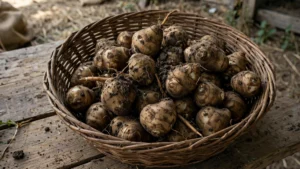
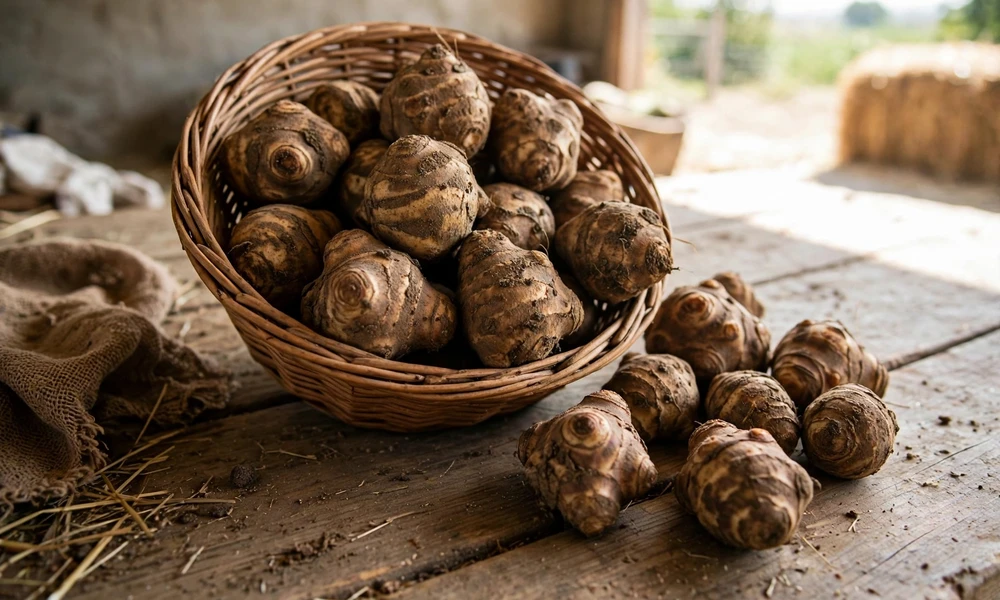
A Jerusalem artichoke farm escape is a short trip built around a knobbly tuber. The sunchoke, Helianthus tuberosus, is a sunflower cousin grown for its underground tubers, which taste nutty and faintly sweet when roasted and turn silky in soup. The farms are small, the season is short, and the point is to be there when the tubers come out of cold soil and go straight into a hot kitchen.
Planning it well is mostly timing. The digging season runs from the first frost in autumn through the winter, and the best weeks are the first month after the frost. Book outside those weeks and you may find no digging at all, a kitchen cooking from storage, and a trip that feels like any other country stay.
This guide walks through the nine steps that make the trip work, from picking the season and the region to packing boots, talking to the cook about gluten, and bringing pickles home. Work through them in order, and the farm takes care of the rest.
Key takeaways
- Jerusalem artichoke, also sold as sunchoke, is Helianthus tuberosus, a sunflower cousin whose knobbly tubers roast nutty and sweet and turn silky in soup.
- Time the trip for the digging season, from the first frost through winter, and book inside the farm’s digging weeks.
- France leads on cooking, Central Europe on hearty winter food, and North America on short trips from big cities.
- Ask the farm about gluten before you book, because farm kitchens bake bread and handle flour, and confirm guests can join the digging morning.
- Sunchokes are naturally gluten-free, but rich in inulin, so eat a small portion first, eat it well cooked, and expect some wind from a large serving on your first day.
What a Jerusalem artichoke farm escape involves
A sunchoke farm escape is a stay of two to four nights on a working farm that grows Jerusalem artichokes as a real crop. The farm has a handful of rooms, a kitchen that cooks what the field produces, and a farmer who takes guests into the field in the morning. The day is simple: breakfast, digging, a cooking lesson, and an evening meal built around the tuber.
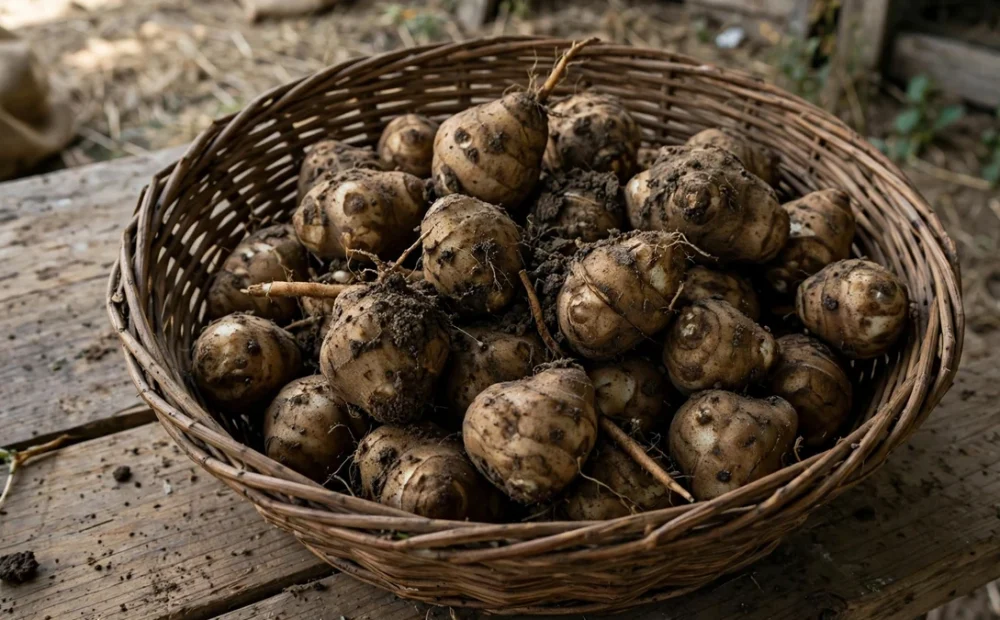
Digging sunchokes means working cold soil with a fork, lifting knobbly tubers that snap if you pull too hard, and filling a basket that goes straight to the kitchen. The afternoon is slower, with peeling, slicing, and a lesson in how the cook turns the tuber into three dishes. The evening meal is the reward, and it tastes better because your hands were in the soil that morning.
The escape suits travellers who like food, open ground, and a slow pace. It does not suit travellers who want a spa, a pool, or a packed itinerary, because the farm is quiet, the nearest town may be a bus ride away, and the best days have nothing planned except the field and the kitchen.
How to plan it, and what to check first
Start with the season, then the region, then the farm. The season is the first frost in autumn through the winter, and the region decides the food: France for topinambour cooked the bouchon way, Germany and Austria for Topinambur with dark bread and pickles, and North America for maple, duck, and lake fish. Once you know the region, write to two or three farms and ask when they dig, whether guests can join, and how the kitchen handles wheat.
Check the practical things before you pay. Confirm the room, the heating, and whether the farm collects guests from the nearest station, because some farms are a bus ride from town and a taxi may be hard to find. If you have planned a root-crop trip before, our how to plan a jicama farm escape follows the same shape in a warmer climate, and the same checks work there too.
The 9 steps to plan a Jerusalem artichoke farm escape
1. Book inside the farm’s digging weeks, after the first frost
What to do: Write to the farm and ask for its exact digging weeks, then book inside them. The season opens after the first frost, when the cold sweetens the tubers, and runs through winter. What to avoid: Booking flights first and hoping the digging lines up, because it usually does not. Best For: Every traveller, because the digging is the trip. Time Needed: A week of back-and-forth before you book. Standout Tip: Ask which week the farm lifts its sweetest rows, not just when digging starts.
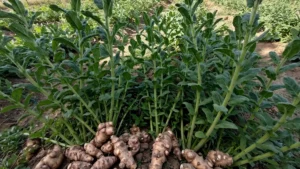
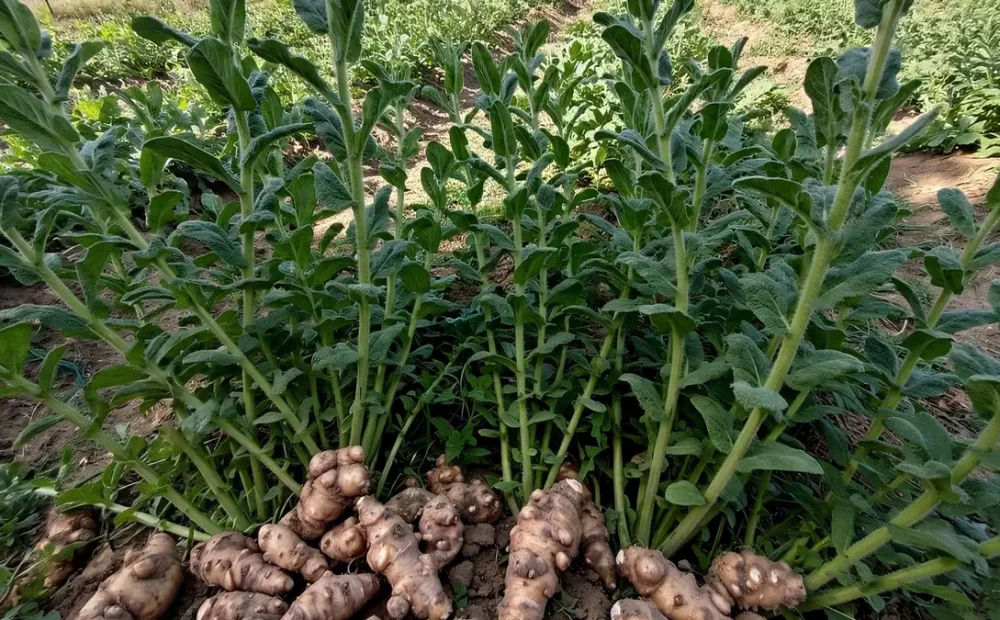
The leaves tell you when sunchokes are ready: the tall stems die back after the frost, and the tubers below are at their sweetest.
2. Choose between French, German and North American farms
What to do: Pick the French farms in Paris and Lyon for the most practised cooking, the German and Austrian farms for pickles, dark bread, and wine, and the North American farms in Toronto, Montreal, and New York for a short trip from a big city. What to avoid: Choosing by photograph alone, because a pretty field and a good kitchen are different things. Best For: Travellers weighing one region against another. Time Needed: An evening of reading, plus one message to each farm. Standout Tip: Read the evening menu before you read the room descriptions.
France cooks it in the most ways, Central Europe the heartiest, and North America is the fastest to reach.
3. Confirm the digging morning is open to guests
What to do: Ask the farm in your first message whether guests may join the digging morning, which days it runs, and what to bring. Most farms run it on set mornings, with forks and baskets provided. What to avoid: Arriving and expecting to dig on any morning, because some farms only dig on certain days and the rows are planned in advance. Best For: Travellers who want their hands in the soil. Time Needed: One message, and a reply within a day or two. Standout Tip: Ask if children can join, because the digging is gentle work and most farms welcome them.
The digging morning is the part you will remember, so settle it before you book.
4. Choose a room that looks over the sunchoke beds
What to do: Ask for a room facing the sunchoke beds, not the road, and confirm the heating, because autumn nights are cold and the farmhouse walls are thick. What to avoid: Taking the cheapest room without asking where it faces, because a road-facing room means traffic noise at dawn. Best For: Light sleepers who wake early. Time Needed: One message at booking. Standout Tip: Ask for a room above the kitchen, where the smell of roasting sunchokes drifts up in the evening.
A field-facing room means frost on the beds and the farmer already out with a fork.
5. Settle the gluten question with the cook before you book
What to do: Tell the farm in your opening message that you need gluten-free food, and ask whether soups are thickened with flour, whether the frying oil is shared, and whether the cook bakes without wheat. What to avoid: Mentioning gluten only on arrival, because a farm kitchen plans its baking days in advance and cannot change them at the last minute. Best For: Gluten-free travellers and anyone with a wheat allergy. Time Needed: One honest message, and a clear answer before you pay. Standout Tip: Ask what the cook serves instead of bread, because a good farm will have an answer ready.
Sunchokes themselves have no gluten, but a farm kitchen is a wheat kitchen, so the talk has to happen before you book.
6. Taste sunchokes roasted, as soup and as chips
What to do: Ask the cook to show you the tuber three ways in one meal: roasted with thyme, blended into a velouté, and sliced thin and fried into chips. Each form tastes different. What to avoid: Eating only one form and deciding you know the tuber, because a sunchoke in soup and a sunchoke roasted are barely the same food. Best For: Food lovers and first-time sunchoke eaters. Time Needed: One evening meal. Standout Tip: Taste a small portion of each first, because the inulin is strongest on your first day.
The roast shows the sweetness, the soup shows the silk, and the chips show the crunch.
7. Learn how much sunchoke to eat on day one
What to do: Eat a small portion first, eat it well cooked, and drink water with the meal. Inulin feeds gut bacteria, and a large first serving can cause wind. What to avoid: Eating a heaped plate on your first night, or eating sunchokes raw, because raw tubers are harder to digest and stronger on the stomach. Best For: Anyone with a sensitive gut, and everyone on day one. Time Needed: A short talk with the cook at your first meal. Standout Tip: Ask the cook how much is a first serving, because the farm knows its own tubers.
The rule is simple: small first, well cooked, water alongside.
8. Take a field walk with the farmer who grows them
What to do: Ask the farmer to walk the beds with you and explain how the tubers grow, when the frost sweetens them, and why the beds are dug in rotation. The walk takes an hour and teaches more than any menu. What to avoid: Wandering the fields alone, because the beds are a working crop and the farmer knows which rows are ready and which are not. Best For: Curious travellers and gardeners. Time Needed: An hour in the afternoon. Standout Tip: Ask about the tall stems, because the plant is a sunflower cousin and the summer flowers are part of the story.
A good farmer will show you a bed that is ready and one that needs another week.
9. Stock up on pickles and soup before you leave
What to do: Buy a jar of pickled sunchokes and a tub of soup from the farm store before you leave. Pickles travel well, and soup freezes well. What to avoid: Buying raw tubers to cook at home without asking how to store them, because they dry out fast and go soft in a warm bag. Best For: Travellers who cook at home. Time Needed: Ten minutes at the farm store. Standout Tip: Ask for the soup recipe too, because the farm’s version is usually simpler than you expect.
The pickles are the best souvenir: they keep for weeks and taste of the farm each time you open the jar.
Picking the right season and region
The season is the same everywhere: the first frost in autumn through the winter. What changes is the food and the weather.
Central Europe is the best value, with smoke, paprika, and dumplings, and wide countryside for a slow week. North America is the easiest to reach, with Toronto, Montreal, and the Hudson Valley a short journey from big cities, and food that leans on maple, duck, and lake fish. If you want a spiky fruit farm in a warm climate instead, our how to plan a kiwano farm escape follows the same steps for horned melon country.
Book inside the digging weeks and keep the trip short, whatever region you pick. Two nights is enough to dig, cook, and eat, and three nights lets you add a market morning and a walk. A week is too long for a farm this small, unless you spend the extra days in the nearest town. For a gentler mountain fruit in the same spirit, our how to plan a babaco farm escape covers a five-sided Ecuadorian fruit with a very different flavour but the same farm-stay shape.
The caveats that matter
The main caveat is inulin. Sunchokes are rich in this prebiotic fibre, and a large portion on your first day can cause wind and bloating. The fix is simple: eat a small portion first, eat it well cooked, and drink water with the meal. The second caveat is gluten. The tuber itself has no gluten, but farm kitchens bake bread, thicken soups with flour, and fry in shared oil, so a gluten-free guest needs to talk to the cook before booking, not after arriving.
| Detail | What is known |
|---|---|
| Best months | After the first frost in autumn through winter, when the cold sweetens them |
| The inulin rule | Eat a small portion first, well cooked; a large first serving can cause wind |
| Cooking time | Roast until soft and crisp at the edges; soup needs a long simmer |
| Stomach | Raw sunchoke is harder to digest; cooked is gentler, and water helps |
| Weather | Cold soil and mud in autumn; bring boots and a warm layer for the digging morning |
| Gluten | The tuber has no gluten, but farm kitchens cook with wheat, so ask before you book |
| Getting there | Some farms need a car or a booked lift from the nearest town |
| What it is not | Not a potato and not a globe artichoke; the name comes from Italian girasole, sunflower, not Jerusalem |
Weather is the other practical point. Autumn digging means mud, cold soil, and wet feet, so pack boots and a warm layer, and expect the field work to be shorter on a rainy day. The farms are also small, with a handful of rooms, so the frost weeks sell out early and a farm that looks quiet online may already be full.
Checklist: before you book a Jerusalem artichoke farm escape
Run through these checks when you book, then once more in the week before you travel.
- Confirm the digging weeks: find out when the farm lifts its sunchokes, and travel inside those dates.
- Confirm the digging morning: find out if guests may join, and what to wear for wet ground.
- Confirm the kitchen: raise gluten in your first message, and ask about wheat, flour, and shared oil.
- Plan the first serving: ask for a small, well-cooked portion of sunchoke, with water alongside.
- Confirm the room: ask for a field-facing room, and check the heating for cold nights.
- Confirm the journey: ask about the train, bus, or taxi from the nearest town, and farm pick-ups.
Frequently asked questions
How many nights does a Jerusalem artichoke farm stay need?
Two nights is enough to dig, cook, and eat, and three nights lets you add a market morning and a walk. A week is too long for a farm this small, unless you spend the extra days in the nearest town.
Do I need a car to reach a Jerusalem artichoke farm?
Not always. The Paris, Toronto, and Hudson Valley farms are reachable by train plus a short taxi, but the farms in the Czech Republic, Hungary, and the Townships are easier with a car, so ask the farm before you book.
Can children join the sunchoke harvest?
On most of these farms, yes. The digging is gentle work with a fork and a basket, and children usually love finding the knobbly tubers in the soil. Ask the farm when you book, and bring boots and gloves in their size.
What should I pack for a Jerusalem artichoke farm stay?
Boots for mud, a warm layer for cold mornings, gloves for digging, and a bag for the farm store. Leave the smart clothes at home, because the field work is dirty.
How is a Jerusalem artichoke different from a potato?
They are different plants altogether. The Jerusalem artichoke is a sunflower cousin grown for its knobbly tuber, which is nutty and sweet, while the potato is a nightshade tuber that is starchy and mild. The sunchoke also carries inulin, which the potato does not.
What sunchoke foods can I bring home?
Pickled sunchokes and soup travel best, because pickles keep for weeks and soup freezes well. Raw tubers dry out fast, so buy them only if you will cook them within a day or two.
The bottom line
The best Jerusalem artichoke farm escape in 2027 is a short, well-timed trip: book inside the digging weeks, pick the region that fits your appetite, talk to the cook about gluten before you pay, and eat a small portion first. France leads on cooking, Central Europe on value, North America on easy access.
Go in autumn, after the first frost, dig in the morning, cook in the afternoon, and eat in the evening with mud on your boots. A sunchoke will not impress you in a restaurant the way it does in a farmhouse kitchen, with soup on the stove and the farmer telling you how the frost made it sweet. That is the whole point of the trip.