
A king oyster escape is one of the easier farm holidays to plan, because the crop fruits steadily in a controlled hall. A bag gives stems over days rather than months, so your trip does not hinge on a season. The three things that do matter are a farm that grows well, a kitchen that grills what it cuts, and a bedroom that lets you rest after a cool morning in the fruiting hall. Get those right and the rest sorts itself out.
Most people go wrong by choosing the prettiest bedroom first and asking about the growing afterwards. On a mushroom farm that order fails, because the growing is the holiday. A neglected hall means thin cutting, a kitchen with little to grill, and a stay that could be any countryside weekend. Ask about the crop before the bed, and you sidestep that letdown.
What follows is nine steps, from picking a farm to carrying a jar of pickled stems home. Take them one at a time, and the trip will take care of itself.
Key takeaways
- Judge a farm by its growing first: straw or sawdust substrate bags, a cool damp fruiting hall, and stems cut every day.
- Two or three nights covers a fruiting, a cutting session with the growers, and a grill session in the kitchen.
- Reserve the cutting and the grilling together, since one without the other is only half the trip.
- A fresh king oyster stem feels firm and dry; slimy, spotted, or sour-smelling stems stay on the bag.
- Gluten never comes from the mushroom, but farm kitchens, sauces, and battered plates can carry it, so check before eating.
What a king oyster mushroom escape looks like
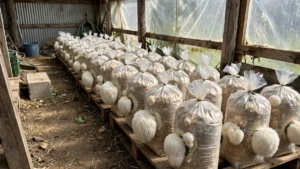
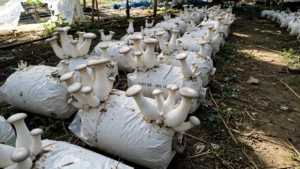
A typical escape opens with a morning in the fruiting hall. You put on clean shoes or the covers the farm hands out, step into a cool damp hall where substrate bags stand in rows, and a grower demonstrates how to cut a stem cleanly at the base. You cut enough for the kitchen while the grower talks through the bag’s life.
Afternoons belong to the kitchen. The morning’s cut becomes thick grilled rounds, a stir-fry, or a slow braise, and the cook explains the rule that matters most: high heat, one layer, no crowding, or the stems steam instead of browning.
How to plan the trip, step by step
Begin with the farm, not the bedroom. Find a farm that names its species, Pleurotus eryngii, and can describe its growing: straw or sawdust substrate, how long a bag fruits, and what becomes of spent bags. A farm that answers plainly usually grows well, while one that cannot answer is usually worth skipping.
Then sort the practical side: how far the farm sits from the nearest station or town, whether a car is needed, and whether cutting and grilling sessions come with the room or cost extra. A stay that keeps its session prices vague will surprise you later, so get the full cost in a single message before you pay.
The 9 steps to plan your king oyster mushroom farm escape
Choose a farm growing on straw or sawdust
What to do: Ask which substrate the farm packs into its bags, and whether spent bags go to compost. Straw and sawdust are the standard honest choices for king oysters. What to avoid: A farm that cannot name its substrate, or one that buys mushrooms in while pretending to grow. Best For: Travellers who want to watch real growing rather than a display. Time Needed: A quiet evening of reading and one message to each farm on your list. Standout Tip: Ask how long a bag keeps fruiting, because a farm that knows the number tracks its crop.
Time your visit to a fruiting, not a holiday
What to do: Ask what will be fruiting on your dates, and whether stems are due while you are there. What to avoid: Booking a bank holiday weekend blind, since the farm may be full and the fruiting may be spent. Best For: Visitors who want to cut stems rather than watch. Time Needed: A few short exchanges spread across a week before booking. Standout Tip: A Tuesday to Thursday stay often means a quieter farm and a fresher fruiting.
Stems push out over days, so the farm’s calendar counts for more than your own. One short message asking what is fruiting is the most useful thing you can send before paying anything.
Reserve the cutting session with the growers
What to do: Reserve a cutting session led by a grower, in a small group, wearing clean shoes or the covers the farm provides. What to avoid: A viewing-only tour where you stand behind glass and never touch a stem. Best For: First-time cutters and curious cooks. Time Needed: A morning in the fruiting hall, roughly two hours. Standout Tip: Cut the stem at the base with a clean knife instead of pulling, so the bag stays whole for its next stems.
Add the grilling session when you book the room
What to do: Add the cooking session when you reserve the room, and mention allergies or dietary needs in the same message. What to avoid: Leaving the kitchen to chance, since a farm kitchen may cook only for guests who booked ahead. Best For: Food lovers who want the cooking as well as the cutting. Time Needed: An afternoon in the kitchen, roughly three hours. Standout Tip: Ask the cook to demonstrate the thick-slice sear first, since it changes the mushroom more than any other step.
The grill session turns the morning’s work into a meal, and it is also where you pick up the mistakes to avoid at home. A crowded pan, a cold pan, or a wet stem all end the same soggy way, and seeing it once is enough to remember it.
Pack for a cool, damp fruiting hall
What to do: Bring a light waterproof layer, closed shoes you do not mind dampening, and a small bag for anything you carry home. What to avoid: Sandals or open shoes in the fruiting hall, and a heavy coat that soaks up humidity. Best For: Anyone heading to a cellar or glasshouse farm. Time Needed: Ten minutes with your bag open the night before you leave. Standout Tip: A thin layer beneath a waterproof shell keeps you warmer and drier than a single thick jumper.
Halls are cool and humid on purpose, and they can feel colder than the outdoors on a warm day. Dressing for damp rather than cold keeps you comfortable through a two-hour cutting session.
Judge a fresh stem with your hands
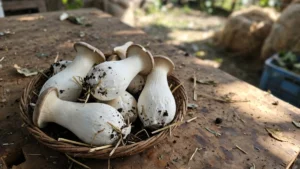
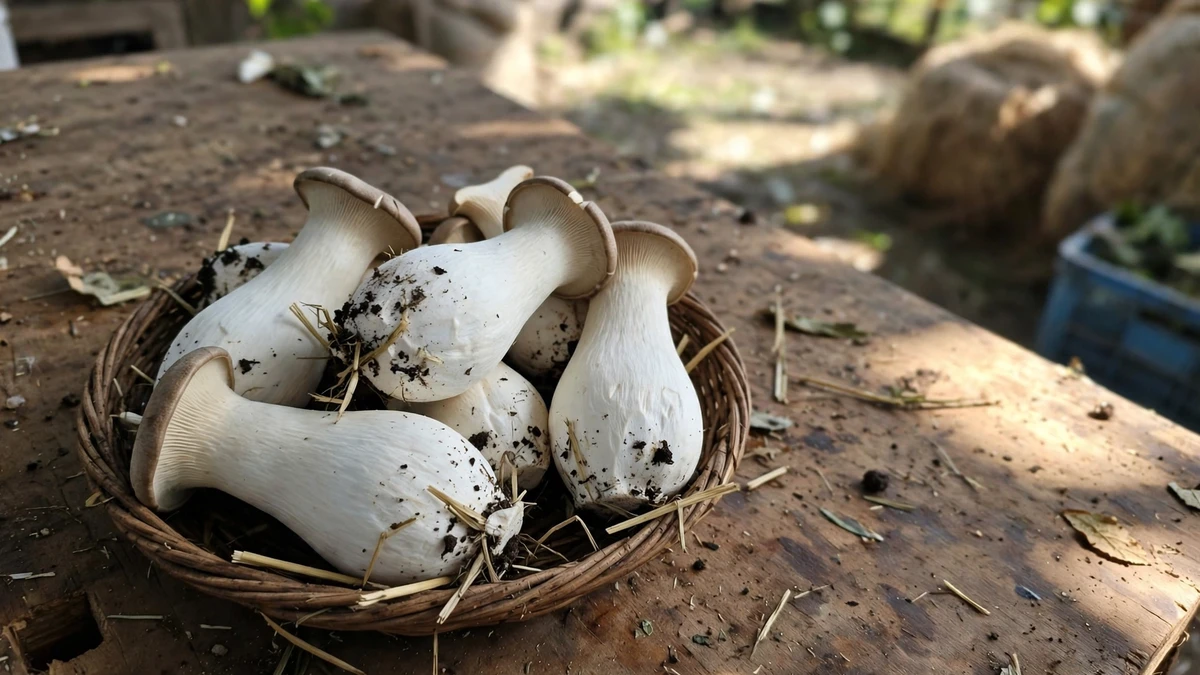
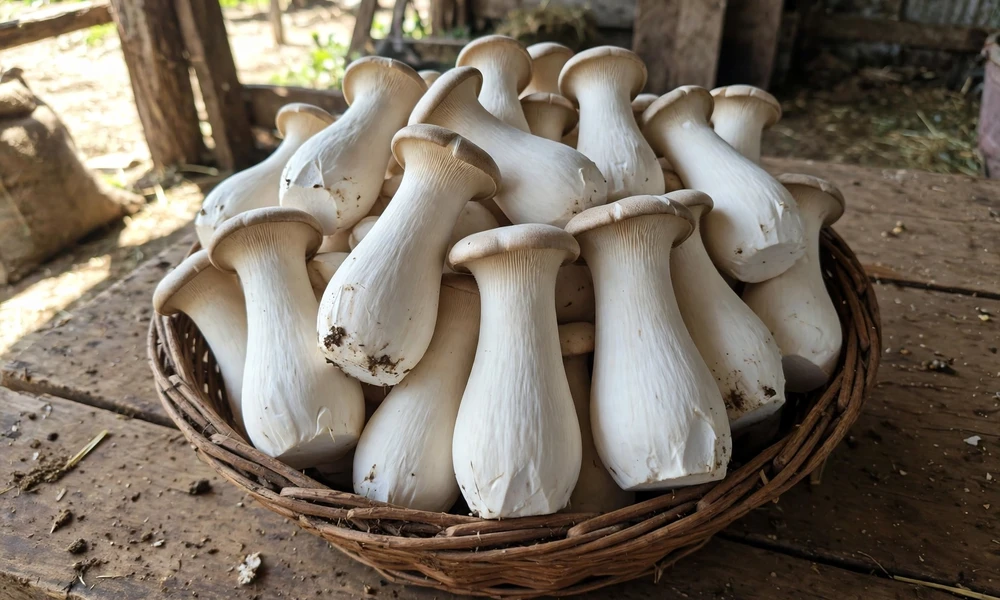
What to do: Pick the stem up, check that it feels firm and dry, and smell it for a mild fresh scent. What to avoid: Cutting stems that feel slimy, carry dark spots, or smell sour, however large they look. Best For: Shoppers who want to buy mushrooms confidently after the trip. Time Needed: A few minutes beside the grower on your first morning. Standout Tip: A smooth pale stem topped by a small dry cap is the clearest sign of a fresh king oyster.
Plan one meal around the farm’s grill
What to do: Eat at the farm at least once, and let the kitchen grill the morning’s cut as the main dish. What to avoid: Driving into town for every meal, which wastes the freshest food of the whole trip. Best For: Travellers who want the farm’s food as well as its rooms. Time Needed: One evening spent at the farm table. Standout Tip: Ask what the growers eat themselves, because that dish tends to be the most honest one on the menu.
Settle the gluten question before the first meal
What to do: Ask the kitchen about shared pans, shared fryers, sauces, and battered dishes before sitting down to eat. What to avoid: Assuming a mushroom dish is safe simply because the mushroom itself has no gluten. Best For: Anyone living with coeliac disease or a gluten sensitivity. Time Needed: A message before you arrive, plus one question at the table. Standout Tip: Ask whether the kitchen keeps a separate pan for gluten-free cooking, and whether it is used for every dish or only when asked.
The mushroom carries no gluten, yet a farm kitchen is a shared space, and soy sauce, flour, and batter all carry gluten into dishes that look safe. A plain question early saves an awkward one later, and a good kitchen answers it without fuss.
Carry the harvest home safely
What to do: Ask what you may take home, pack fresh stems in a paper bag, and cook them within a day or two. What to avoid: Sealing fresh mushrooms in plastic, which traps damp and turns them slimy, or pocketing wild mushrooms from a walk. Best For: Home cooks keen to practise what they learned. Time Needed: A few minutes of packing before you set off. Standout Tip: A jar of the farm’s pickled stems travels better than fresh ones and keeps for weeks.
King oyster mushrooms, plainly explained
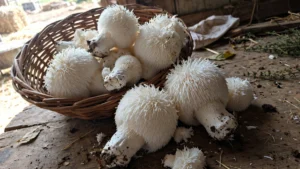
Pleurotus eryngii, the king oyster, is a thick white stem crowned by a small tan cap, also sold as the king trumpet or French horn mushroom. Its flavour is mild and slightly nutty, and it takes on butter, garlic, or smoke easily, which is why it suits thick slices on a grill or rounds seared like scallops. Its firm flesh holds up to heat instead of collapsing, so it is one of the most forgiving mushrooms to cook.
The pale oyster grows in fan-shaped clusters with thin flesh, while the king oyster grows as single thick stems made for slicing. Shiitake grows on logs, carries a broader cap, and tastes woodier and more savoury, taking months to fruit. Knowing those differences matters, because a farm growing king oysters is a different place from a farm growing shiitake, and your trip should match the crop. Our guide to planning a rutabaga farm escape makes the same point for root vegetables: name the crop first, then plan around it.
Grilling is simple once the rule is clear. Thick slices, high heat, one layer, and a little patience give browned edges and a firm bite. Crowd the pan and the stems steam, turning soft and pale. That single detail separates a dish you remember from one you forget, and it is the first thing a good farm kitchen demonstrates.
The caveats that matter
King oysters are a safe everyday food when fresh and cooked, but a few cautions still apply. Wild mushrooms must never be eaten unless an expert has named them, because many pale fungi look alike and some are poisonous. On a farm, eat only stems the growers cut with you. Anyone with a mushroom allergy should keep out of the fruiting hall as well as off the plate, because airborne spores can set off a reaction, and a farm that takes allergies seriously says so before you book.
| Detail | What is known |
|---|---|
| Best length of stay | Two or three nights, long enough for a fruiting and a grill session |
| Best time to go | All year in cellars; autumn brings the strongest glasshouse fruiting |
| What to book first | The cutting session with the growers, then the grill session, then the room |
| What to pack | A light waterproof layer, closed shoes, and a paper bag for mushrooms to carry home |
| How to spot a fresh stem | Firm and dry, with a smooth pale surface, a small dry cap, and a mild fresh smell |
| What to avoid | Wild mushrooms without an expert, slimy or sour stems, and crowded pans |
| Who should take care | Anyone with a mushroom allergy, and anyone with coeliac disease eating in a shared kitchen |
| Gluten note | The mushroom has no gluten; shared kitchens, sauces, and batters can add it |
Getting there is straightforward. Most of these farms sit a short drive or bike ride from a town, and a car makes the trip easier, though a few are reachable by train and a walk. Read the farm’s directions before booking, because a rural address on a map can hide a long unlit lane, and arriving after dark on your first night is the one part of the trip that is genuinely unpleasant.
Checklist: before you book a king oyster escape
Run through these before you pay, and again when you arrive.
- Find out which species the farm grows, and whether the cutting session is led by a grower.
- Confirm what is fruiting on your dates, and whether stems are due while you are there.
- Reserve the cutting and grilling sessions together, and get the full price in one message.
- Tell the kitchen about allergies and gluten needs ahead of arrival, not at the table.
- Pack a waterproof layer and closed shoes, and leave room for a jar of pickled stems.
- Work out how to arrive after dark, and whether the farm can arrange a lift from the station.
Frequently asked questions
How many nights do I need for a king oyster farm escape?
Two or three nights suits most visitors. That allows a morning to cut, an afternoon to grill, and a second day to catch another fruiting or a different dish. One night can work if the farm is close, but you will miss the second fruiting and the slower pace that makes the trip restful.
Do I need experience to pick king oyster mushrooms?
No. A grower demonstrates how to cut a stem free at the base, and you work beside them for your first session. Clean hands and a readiness to follow instructions are all it takes. Children can cut too, as long as they stay with the grower.
Can I visit a king oyster farm in winter?
Yes, and a cellar farm is the best choice, since its steady temperature keeps it fruiting all year. Glasshouse farms run slower in winter yet still fruit, and a winter visit tends to be quieter and cheaper. Ask what is fruiting before you book.
Are king oyster mushrooms safe to eat raw?
Cooking them is the better choice. Raw king oysters are tough and can upset the stomach, while a short time in a hot pan or on the grill makes them tender and flavourful. Every kitchen on this kind of trip cooks the morning’s cut, so raw eating never comes up.
What is the difference between king oyster mushrooms and shiitake?
King oysters are single thick stems raised in substrate bags, mild and meaty, while shiitake grows on logs, carries a broader cap, and tastes woodier and more savoury. They are different species, raised differently, and a farm growing one is not automatically a farm growing the other. Our guide to planning a porcini farm escape separates lookalike crops the same way before recommending a stay.
How should I carry mushrooms home so they stay fresh?
Pack fresh stems in a paper bag, keep them cool, and cook them within a day or two. Plastic seals in damp and turns them slimy, so avoid it. A jar of the farm’s pickled stems travels better and keeps for weeks, and it is the most practical souvenir of the trip. Our guide to planning a morel farm escape gives the same packing advice for spring mushrooms: paper, not plastic, and cook soon.
The bottom line
A king oyster escape works because the crop fruits steadily, the work is hands-on, and the cooking is simple enough to learn in an afternoon. Pick a farm that grows on straw or sawdust, reserve the cutting and the grilling together, and ask what is fruiting on your dates before you pay. Two or three nights is enough, and a cellar farm will fruit in any month.
Judge the trip on its cutting and its cooking rather than its decoration. Firm stems, a hot pan, and a grower who answers questions plainly are the signs of a well-planned escape, and you will come home knowing how to cut, how to grill, and how to spot a fresh stem in a shop.