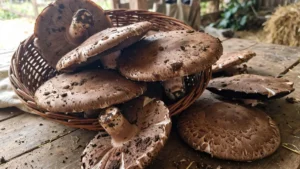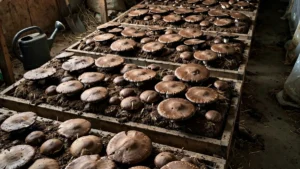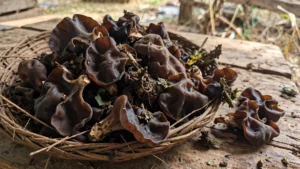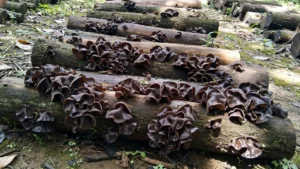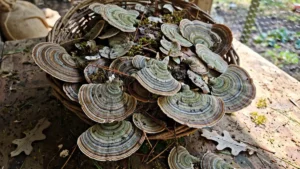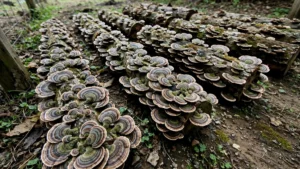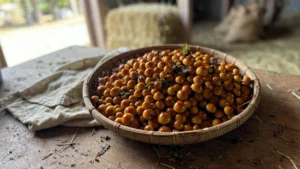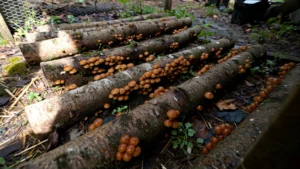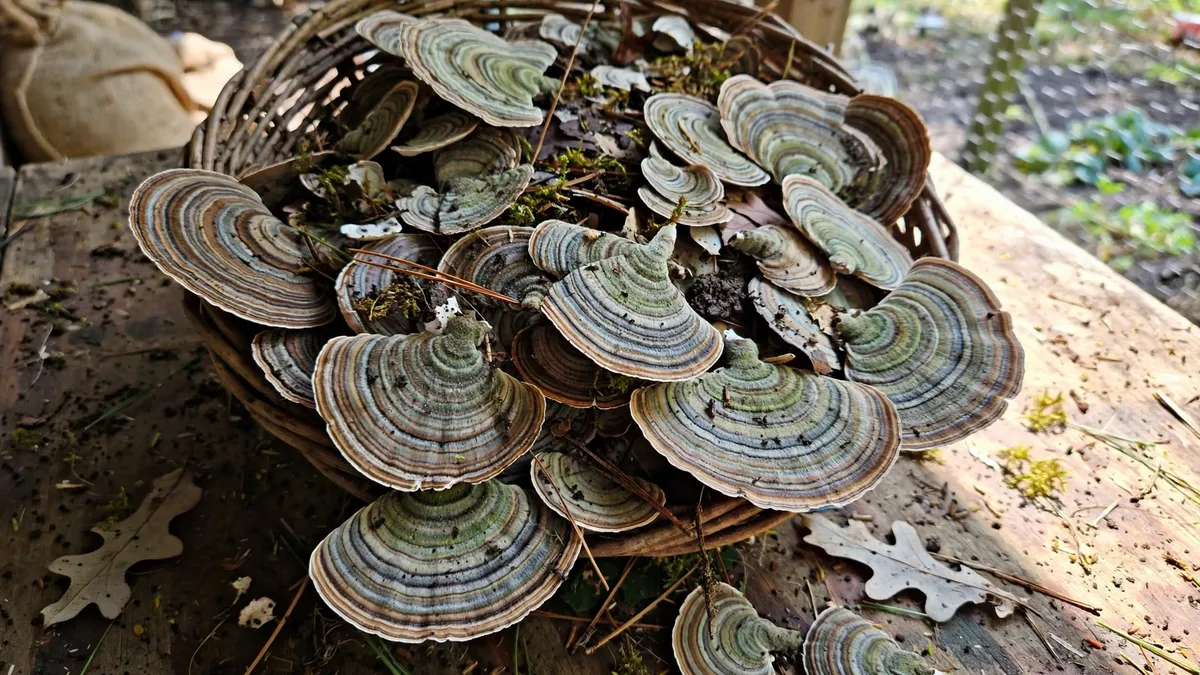
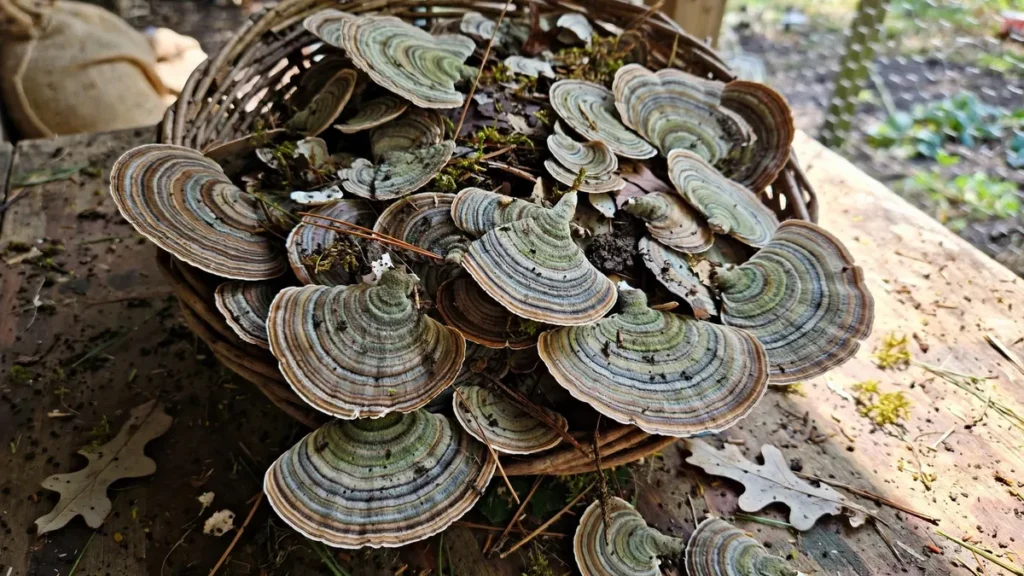
A turkey tail farm escape is a short stay on a farm that grows Trametes versicolor, the thin, banded fungus that fans across dead hardwood logs like painted shells. You sleep in a farmhouse room or a converted barn, walk a shaded log yard in the morning, cut your own fans from the logs, and watch them dry on the racks before they are simmered into tea for the evening. The whole trip is built around that slow arc, from log to rack to cup.
It is a calmer trip than a wine tour or a city break. The farms are small, the days are slow, and the best part is usually the least planned: standing in a damp log yard with a basket, choosing which banded fan to cut, while the grower says which log fruited first and which needs another season. The fungus sets the pace, and the farm works around it.
This guide walks through the nine steps that make the trip work, from asking the farm which log rows are fruiting to packing the dried fans you carry home. Follow them in order, and the farm handles the rest.
Key takeaways
- A turkey tail escape is a farm stay built around cutting and brewing Trametes versicolor, a thin banded fungus grown on hardwood logs.
- The fans fruit through much of the year, with autumn the strongest season, so ask the farm which log rows are fruiting before you fix dates.
- Two or three nights is the right length: one night rarely lines up with a log yard walk, a drying session and a tea tasting.
- Pack for cool, damp log yards and muddy lanes, not for a hotel, and bring a basket for your pick.
- Turkey tail itself has no gluten in it, but farm kitchens also serve bread, pasta and sauces, so ask about gluten before you book.
What a turkey tail farm escape actually is
A turkey tail farm escape is a stay of two or three nights on a working fungus farm, where the fungus is grown on site and the guest takes part in the harvest. Nights pass in a farmhouse room or a converted barn, meals come from the farm kitchen, and the days belong to the log yard, where banded fans are cut from oak logs, dried on racks, and brewed into tea. It is not a hotel that happens to serve a mushroom tea. The farm is the point.
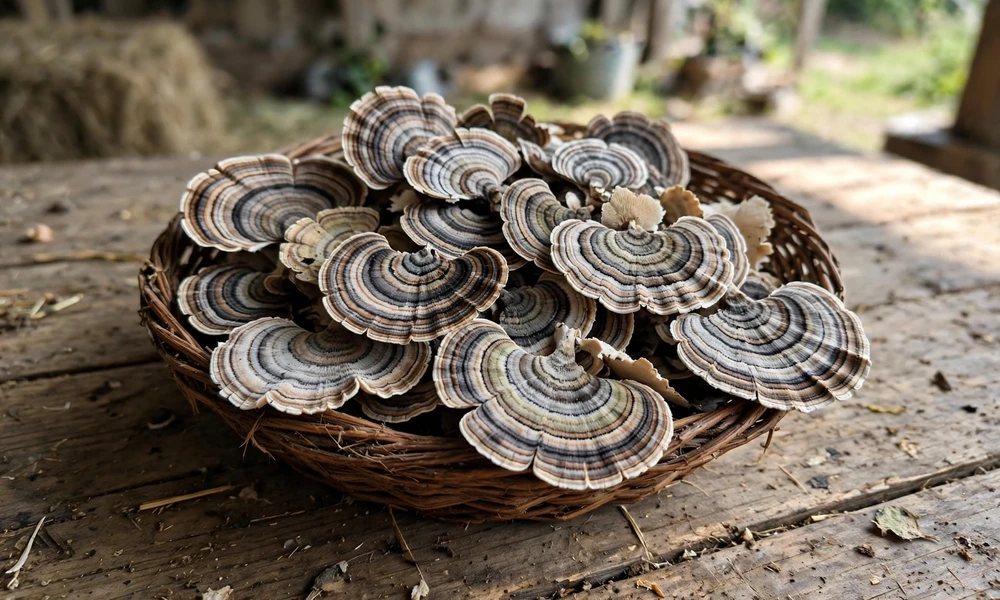
The fungus itself is Trametes versicolor, a thin fan with concentric bands of brown, cream and blue-grey that grows on dead hardwood. On a farm it fruits from spawn-inoculated logs, stacked in shaded rows and kept damp, and a fan can take months to reach full colour. The grower will point out the difference on your first morning, and after that you will spot it yourself. Our guide to planning a king oyster farm escape follows the same shape, but turkey tail is slower, tougher and quieter, and the farms that grow it tend to be smaller.
Most escapes run the same way. You arrive in the afternoon, eat supper at the farm table, and walk the log yard the next morning. You cut your fans, watch them go on the drying racks, and taste the tea that evening. On the second day you might walk the woods or spend the afternoon drying what you picked.
How to plan your turkey tail escape in nine steps
Planning is mostly a matter of timing. Turkey tail fruits when the log yard is damp and shaded, and the best weeks shift from year to year, so the first job is to ask the farm, not to book the room. The steps below run in the order that works: ask about fruiting first, choose the farm second, and sort the travel last, once you know the week is right.
The other thing to plan is length. One night is almost never enough, because a log yard walk, a drying session and a tea tasting rarely fall on the same day. Two nights gives you a cutting morning and a brewing evening. Three nights adds a market visit and a drying afternoon too. Our enoki farm escape guide makes the same point, and it holds here too: the fungus sets the schedule, so give the trip room to breathe.
The 9 steps to a turkey tail farm escape
Step 1: Find out which log rows are fruiting
What to do: Write to two or three farms and ask which log rows are fruiting, not just which weeks rooms are free. Ask how the yard has been running, whether the autumn flush has started, and whether a second flush is expected. What to avoid: Do not book a fixed week in high summer and hope the season comes early; turkey tail fruits best when the yard is damp, and a dry summer means a late season. Best For: Travellers whose dates can move by a week or two. Time Needed: A week of messages going back and forth before you book. Standout Tip: Ask which row gave the farm its brightest fans last year, not just when the season opens.
Step 2: Choose a farm with log rows you can walk
What to do: Pick a farm with a log yard on its own land, a short walk from your room, and ask whether guests can walk through it. Look for inoculated logs in neat rows, fans at different stages, and a grower happy to explain. What to avoid: Do not choose a farm that keeps its log yard closed to guests, or one that buys its dried turkey tail in from elsewhere. Best For: Travellers who want to see the growing, not just taste the tea. Time Needed: An evening reading the farm’s own website. Standout Tip: A log yard you can walk through tells you more about the farm than its whole website.
The log yard is the heart of the trip.
Step 3: Get the full price in writing before you pay
What to do: Ask for the full price in writing, including breakfast, the cutting session and the brewing session, before you pay anything. Ask what happens when the flush runs late, and whether the farm shifts your dates free of charge. What to avoid: Do not pay a deposit on a price given only by phone, and do not assume the brewing session is included. Best For: Anyone booking a month or more in advance. Time Needed: One message, then a wait as the farm confirms its rates. Standout Tip: A farm that writes its price down is a farm that keeps it.
Step 4: Book two or three nights instead of one
What to do: Book two nights at least, and three if you can, so a log yard walk, a drying session and a tea tasting all fit. Arrive in the afternoon, not late at night, so supper stays unhurried. What to avoid: Do not try to cut, dry and travel home in a single day; the fungus deserves a slower pace, and the farm kitchen does too. Best For: First-time visitors and long-distance travellers. Time Needed: One meal at the farm table on arrival night. Standout Tip: Two nights is the least that lets the trip breathe.
Step 5: Book your journey before the season fills
What to do: Book a train or a car once the farm confirms your week, and check the last leg with care, because farm lanes often see one bus a day. Ask the farm about a pickup from the nearest station. What to avoid: Do not leave the journey until the last week; autumn trains fill fast, and a missed connection can cost you the cutting morning. Best For: Travellers without a car. Time Needed: An evening studying the timetable. Standout Tip: Ask how the farm’s last guests arrived, not just how far the station sits.
Step 6: Pack for cool yards, damp air and a basket
What to do: Pack a warm layer for the log yard, closed shoes for damp ground, a waterproof coat for the lanes, and a basket or sturdy bag for your pick. Bring hand-washable clothes. What to avoid: Do not pack light shoes or a single thin jacket; the log yard is cool, the lanes are muddy, and the weather turns fast. Best For: Anyone new to walking a damp farm. Time Needed: An evening with the suitcase open on the bed. Standout Tip: A warm layer in the log yard is worth more than a second coat.
Step 7: Cut your first fan with the grower beside you
What to do: Go to the log yard with the grower on your first morning, and learn to cut a fan cleanly at the base, which ones are ready, and which need another season. Carry your own basket and take only what you will dry. What to avoid: Do not tear fans off the log, and do not cut a pale or thin one; it is not yet ready and the grower will tell you so. Best For: First-time pickers and keen brewers. Time Needed: A morning out in the yard with the grower. Standout Tip: Cut cleanly at the base, and the log will fruit again.
Cutting takes ten minutes to learn, and the grower checks your first few picks before you work the rows alone.
Step 8: Spend the afternoon drying and brewing
What to do: Lay your fans on the drying racks, simmer a few in water for the evening tea, and dry the rest slowly in the farm’s drying room. Ask the grower how long to dry them and how to store them at home. What to avoid: Do not try to eat the fans like a food mushroom; turkey tail is far too tough to chew, and it belongs in the pot, not on the plate. Best For: Travellers who want to take the trip home with them. Time Needed: An afternoon working in the farm kitchen. Standout Tip: Dry slowly, simmer gently, and taste before you sweeten.
Step 9: Taste your tea, then pack the dried fans for home
What to do: Drink the turkey tail tea at the farm table on your last evening, pack the dried fans in a sealed bag, and take a few home if the farm allows it. Ask how long the dried fans keep. What to avoid: Do not pack fresh fans loose in a suitcase; they bruise easily and will stain everything they touch. Best For: Anyone who wants the trip to last beyond the journey home. Time Needed: Ten minutes at the table before you go. Standout Tip: A bag of dried turkey tail turns a kitchen at home into a small piece of the trip.
Supper on the last night is the moment the trip adds up, with the tea you brewed from your own fans on the table and the dried ones in your bag.
When to go and where to start
Autumn is the best window, roughly September to November, when the log yards are damp and the fans are fruiting well. If your dates can move, ask the farm which week was best last year and aim for that one.
Begin in France if it is your first trip. The Île-de-France stay is a simple train ride from Paris, and the Rhône Hills retreat is a short trip from Lyon. For a longer stay, add Berlin or Vienna, where the forests are deep and the kitchens are hearty. Toronto and Montreal suit a North American trip. Our guide to planning a chanterelle farm escape uses the same regional logic: pick the region that matches your pace, and the fungus will follow.
The caveats that matter
Turkey tail is a tough, leathery fungus that nobody eats as food, and a few cautions apply. Never eat or brew a wild mushroom no expert has checked, and never chew a fresh turkey tail fan. Farm-grown fans are brewed into tea once dried, but raw fans are hard and indigestible. If you have a mushroom allergy, warn the farm before you book and ask what goes into the sauces. Some farms also grow other fungi in the same yards, so raise cross-contact before you book.
| Detail | What is known |
|---|---|
| What it is | Trametes versicolor, a thin fan-shaped fungus with concentric colour bands and a pale pore-covered underside |
| Where it grows | On dead hardwood, usually oak, beech and birch, on inoculated logs in a shaded yard |
| Can it be eaten raw | No, turkey tail is far too tough to eat, and is only brewed as tea after drying |
| Best-known uses | Dried turkey tail tea, turkey tail simmered into broth, dried fans ground for tea blends |
| Who should ask first | Anyone with a mushroom allergy, and anyone who avoids gluten |
| What to pack | A warm layer for the cool log yard, closed shoes for the damp ground, a basket or a bag |
| How far ahead to book | Three to five weeks ahead for the autumn season, two weeks outside it |
| What it is not | Not maitake, not oyster mushroom and not a food mushroom of any kind |
One more practical note: these farm stays are small, and autumn weekends fill first. If your dates are fixed, book early and ask the farm which weeks the log rows are fruiting, not just which weeks rooms are free.
Checklist: before you book a turkey tail farm escape
Use these checks before you book, and again the week before you travel.
- Ask the farm which weeks the fans are fruiting before you fix your dates.
- Check that the farm grows turkey tail on its own land, on inoculated logs, and opens the log yard to guests.
- Check the price in writing, including the cutting session, the brewing session and breakfast.
- Ask about gluten and allergies, and what the kitchen puts on the plate beside the tea.
- Pack a warm layer for the log yard, closed shoes for the damp ground, and a basket for your pick.
- Book two or three nights, so a log yard walk, a drying session and a tea tasting all fit.
Frequently asked questions
Do I need mushroom experience to visit a turkey tail farm?
No. The grower shows you how to cut on your first morning, and the cutting takes ten minutes to pick up. You do not need to know fungi to enjoy the trip, only to be willing to walk a damp log yard and listen.
Is the turkey tail tea I brew safe to drink?
Yes, if the fans are farm-grown, checked by the grower and dried and brewed properly. Never brew a wild mushroom without expert identification, and never chew a fresh fan.
What sets turkey tail apart from maitake?
Turkey tail is a thin, leathery fan with concentric colour bands and tiny pores underneath, while maitake grows in soft, frilly brown clusters. Maitake is cooked and eaten; turkey tail is far too tough for the plate and is only brewed into tea.
When is the best month for a turkey tail farm escape?
Autumn, roughly September to November, when the log yards stay damp and the fans fruit well. The logs keep producing for years, so some farms welcome guests in spring too; ask which weeks are strongest before you book.
Can children join a turkey tail farm escape?
Most farms welcome children, as long as they can walk the log yard quietly and stay clear of the damp ground and the equipment. The cutting session is usually what children enjoy most.
Does turkey tail contain gluten?
The fungus itself contains no gluten. The risk sits in the kitchen: bread, pasta, cakes and sauces may contain gluten, so ask the farm what it can serve a gluten-free guest before you book.
The bottom line
A turkey tail farm escape works when the timing is right, the farm grows the fungus on site, and you stay two or three nights. Ask about fruiting first, fix the price in writing, pack for cool yards and muddy lanes, and let the fungus set the pace. The rest of the trip, the cutting, the drying and the tea, will follow on its own.
Choose one farm, book the week the fans are fruiting, and judge the trip on the morning you cut your own fans and the evening you taste the tea. That is the honest way to meet a fungus that looks like nothing else, without turning the trip into a hotel stay that happens to serve a mushroom tea.