

What if the beach you remember from a postcard is not the one you should actually visit? Portugal packs an extraordinary range of coastline into a small country. There are honey-colored cliffs in the Algarve, cold Atlantic surf breaks near Lisbon, wind-whipped dunes south of the Tagus, and barrier islands reached only by ferry. Each one asks something different of the traveler. Some reward an early alarm. Others punish anyone who forgets a windbreak.
This guide sorts the country’s standout beaches by region, character, and the practical details that decide whether a day works or falls flat. It covers the famous names and the honest trade-offs behind them, so a trip can be planned around what a beach is really like rather than how it photographs.
Why Portugal’s Beaches Vary So Much
Portugal sits at the edge of the Atlantic, and that single fact shapes everything. The water is cold by Mediterranean standards, the swells are real, and the wind rarely takes a day off. The Algarve’s south coast is the sheltered exception, protected by cliffs and warmed by a milder current. Head west to the Alentejo or north toward Porto, and the ocean turns bracing, the waves grow, and the beaches stretch wide and empty.
That contrast is the country’s great advantage. A traveler can surf in the morning near Cascais and float in calm water the next afternoon in the eastern Algarve. It also means that the “best” beach depends entirely on what someone wants from the day. Families with small children, surfers chasing a clean wall of water, and hikers looking for a wild shoreline are all chasing different things.
Water quality is generally strong. The Blue Flag program, run internationally through the Foundation for Environmental Education, certifies beaches that meet standards for water quality, safety, and facilities, and Portugal consistently ranks among the top countries in Europe for the number of awarded sites. Still, flags and lifeguard seasons change by region and year, so it pays to check local signage on arrival rather than assuming a beach is supervised.
The Algarve: Cliffs, Caves, and Calm Water

The Algarve is where most first-time visitors end up, and for good reason. The south coast shelters some of the warmest water and calmest swimming in the country.
Praia da Marinha
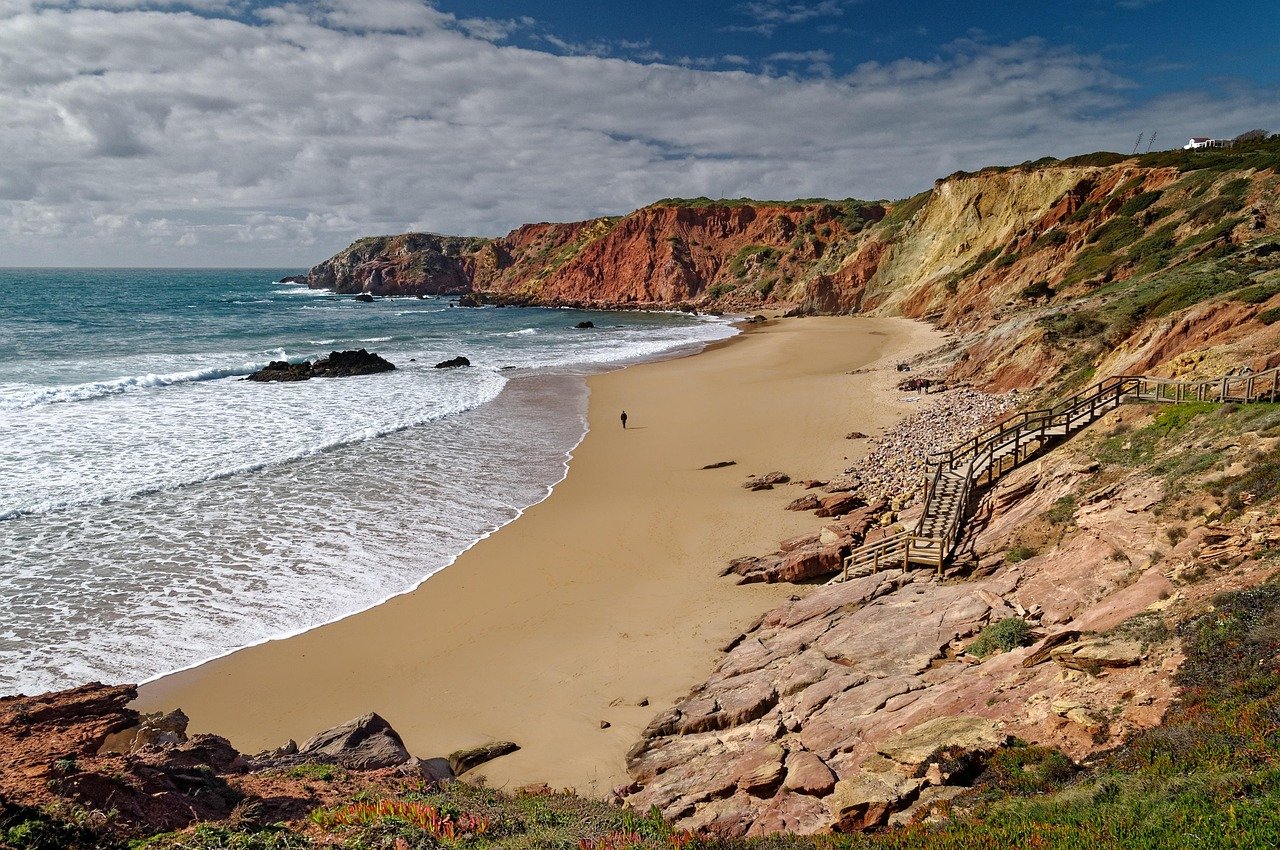
Praia da Marinha near Lagoa is the postcard beach of the Algarve. Limestone arches frame the sand, the water glows turquoise, and a famous rock formation offshore has drawn photographers for decades. The catch is access. A staircase descends a steep cliff, and the walk back up in midday heat is harder than most people expect. Go early, carry water, and wear proper shoes rather than flip-flops.
Praia de Benagil and the Sea Cave
Benagil is famous less for its sand than for the Algar de Benagil, the sea cave with a skylight opening that has become one of Portugal’s most shared images. The beach itself is small and tide-dependent. The cave is reached by boat, kayak, or paddleboard, and rules around landing inside have tightened as visitor numbers have grown. Kayak tours from nearby beaches are a popular middle ground, though the open water can be choppy.
Praia da Falésia
Praia da Falésia, stretching between Albufeira and Olhos de Água, is the long, dramatic alternative. Red and gold cliffs run for kilometers behind a wide band of sand. It has repeatedly ranked at or near the top of major traveler-voted beach lists, which means peak-season crowds follow. The beach is so long that walking ten minutes from the main access points usually solves the problem.
Eastern Algarve and the Ria Formosa
East of Faro, the coastline changes character entirely. The Ria Formosa is a protected lagoon system of sandbanks and channels, and its barrier-island beaches, including the long sandbar at Ilha de Tavira, are reached by ferry. The water is calm, shallow, and noticeably warmer, which makes this the best region for young children and nervous swimmers. The trade-off is logistics: ferry timetables, limited shade, and few facilities once across.
The Alentejo Coast: Space and Wind
South of Lisbon and north of the Algarve lies a stretch of coast that remains remarkably undeveloped. The Comporta region, including Praia da Comporta and Carvalhal, offers wide, dune-backed Atlantic beaches bordering the Sado estuary nature reserve. The water is cold and the wind is a constant, but the sense of space is unmatched.
This is not the place for a casual swim with toddlers. It is the place for long walks, horseback rides on the sand, and watching kite surfers work the afternoon breeze. A windbreak and a warm layer are not optional packing items here, whatever the forecast suggests.
Around Lisbon: Surf, Sand, and Easy Access
Lisbon has beaches within a short train or bus ride, which makes it one of Europe’s easiest capitals for a spontaneous swim.
Costa da Caparica, across the river in Almada, is a long Atlantic strip with reliable surf and a string of beach bars. Currents can be strong, and swimming safety varies along the coast, so it is worth watching where locals actually enter the water. Praia do Guincho, near Cascais, is wilder still, sitting inside the Sintra-Cascais natural park. Its wind and waves make it a favorite for surfing and wind sports, not for relaxed floating.
Travelers building a longer coastal itinerary often pair Lisbon with other Mediterranean and Atlantic destinations to compare how different the water and crowds feel. A look at guides to the best beaches in Barcelona and the Costa Brava beaches shows how much warmer and busier the Mediterranean side of the Iberian Peninsula can be, which helps set expectations before booking.
Central and Northern Portugal: Wild and Underrated
North of Lisbon, the coast turns greener and quieter. Beaches near Peniche and Ericeira draw surfers from across Europe, and Ericeira holds a World Surfing Reserve designation. The water is cold enough to warrant a wetsuit for anything longer than a quick dip, even in summer.
Further north, the Costa Verde and the Minho coast near the Spanish border offer broad beaches backed by dunes and pine forest. The season is shorter, the water colder, and the crowds thinner. For travelers who value emptiness over warmth, this is the country’s quiet secret.
Nazaré: The Big-Wave Capital
Praia do Norte at Nazaré is not a swimming beach. It is the stage for some of the largest waves ever surfed, generated when an underwater canyon focuses Atlantic swell directly at the shore. Guinness World Records has recognized record rides there, and the beach has become a pilgrimage site for surf fans. The viewing point above the beach is the safest and most comfortable place to watch. The sand itself can be dangerous during big swells, and the town beach, Praia da Nazaré, is a separate and far calmer option for a normal swim.
How to Choose the Right Beach
The fastest way to pick is to match the beach to the day’s priority. The table below sums up the practical differences.
| Region | Water temperature | Best for | Main drawback |
|---|---|---|---|
| Eastern Algarve (Ria Formosa) | Warmest | Families, calm swimming | Ferry logistics, little shade |
| Western Algarve | Mild | Scenery, caves, photography | Steep access, crowds |
| Alentejo (Comporta) | Cold | Space, walking, wind sports | Wind, strong surf |
| Lisbon coast | Cold | Surf, day trips from the city | Currents, busy weekends |
| Central and northern coast | Coldest | Empty sand, surfing | Short season, cold water |
Practical Tips and Common Mistakes
A few habits separate a good beach day from a frustrating one.
- Check the flags and lifeguard hours. Green means supervised swimming, yellow means caution, and red means stay out. Lifeguard seasons vary by region, and many northern beaches are unsupervised outside July and August.
- Arrive before ten in peak season. Parking at popular Algarve access points fills early, and the cliff staircases get congested and dangerously hot by midday.
- Respect cliff warnings. Rockfall is a real hazard on Algarve beaches, and access paths close for good reason. Barriers are not suggestions.
- Bring layers and a windbreak. The Atlantic breeze arrives most afternoons, and a beach that feels perfect at noon can turn chilly by four.
- Carry cash for ferries and kiosks. Some island crossings and small beach bars still run on cash.
- Do not underestimate the sun. Reflection off pale sand and water intensifies exposure, and shade is scarce on wide Atlantic beaches.
A common mistake is treating the Algarve as a single destination. The eastern lagoon beaches and the western cliff beaches behave like different countries, and travelers who book a hotel in the wrong spot spend hours in the car. Another is assuming that a famous name means easy access. Benagil and Marinha are stunning precisely because they sit below cliffs, and the climb back up is part of the deal.
For anyone comparing coastal destinations more broadly, it helps to see how other regions structure their beach culture. A guide to Sitges beaches shows how a compact Mediterranean town organizes its coves, while a practical look at Miramar Beach in Florida illustrates how Gulf Coast conditions differ from the Atlantic. Closer to home, a locals’ guide to Sullivan’s Island in South Carolina offers a useful model for how residents and visitors share a beach town. And for travelers who prefer warm, sheltered water, an overview of how to choose the right Greek beach for a trip makes the contrast with Portugal’s Atlantic character even clearer.
When to Go
July and August deliver the warmest water and the most reliable sun, along with peak crowds and prices. June and September are the sweet spot for most of the country, with warm air, fewer people, and water that is still swimmable in the south. The Algarve’s sheltered coast stays pleasant into October, while the northern coast empties out by mid-September.
Sea state and water temperature forecasts are published by the national weather and sea institute, and checking them the night before a beach day is a habit worth building. A flat forecast on the Algarve south coast means calm water; the same forecast on the west coast means something very different.
Conclusion
Portugal’s best beaches are not a single list but a set of choices. The eastern Algarve rewards families with warm, shallow water. The western cliffs deliver scenery that justifies the climb. The Alentejo and the north offer space and wildness for travelers who bring a windbreak and a tolerance for cold water. Nazaré delivers spectacle rather than swimming.
The through-line is honesty about conditions. Portugal’s Atlantic coast is beautiful and powerful, and it rewards visitors who check the flags, arrive early, respect the cliffs, and pack for wind. Pick the beach that matches the day rather than the photograph, and the country’s coastline will deliver far more than a postcard ever could.
FAQ
What is the best beach in Portugal for families?
The barrier-island beaches of the Ria Formosa in the eastern Algarve, including Ilha de Tavira, are the strongest choice. The water is calm, shallow, and the warmest in the country, and the ferry crossing keeps crowds manageable. The main limitation is limited shade and facilities, so bring supplies.
Which Portuguese beach is best for surfing?
Ericeira and Peniche on the central coast are the classic surf destinations, and Ericeira holds a World Surfing Reserve designation. Praia do Guincho near Cascais and Costa da Caparica near Lisbon are also reliable. Nazaré is for watching experts, not learning.
Can you swim at Nazaré?
Yes, but not at Praia do Norte, the big-wave beach. The town beach, Praia da Nazaré, is sheltered and suitable for normal swimming. Praia do Norte should be viewed from the clifftop, especially during large swells.
Is the water in Portugal warm enough to swim without a wetsuit?
In the Algarve’s sheltered south coast, yes, from June through September. On the Atlantic-facing coasts of the Alentejo, Lisbon, and the north, the water stays cold even in summer, and many swimmers wear a short wetsuit. The eastern Algarve lagoon beaches are the warmest option.
How do you reach Benagil sea cave?
The cave is reached by boat, kayak, or paddleboard from nearby beaches such as Benagil and Carvalho. The beach beside it is small and tide-dependent, and landing rules inside the cave have tightened as visitor numbers have grown. Guided kayak tours are the most common approach.
Do you need to pay to access Portuguese beaches?
Almost all beaches in Portugal are free to access. Costs come from parking, ferry crossings to island beaches, sunbed and umbrella rental, and guided tours such as kayak trips to the sea caves. Some remote access roads charge a small parking fee in peak season.














