


What if the most reliable way to judge a city’s food culture wasn’t its famous market or its Michelin stars, but a humble tube of pasta baked under béchamel? In Catalonia, that tube carries real weight. Canelones a la catalana show up at family tables, neighborhood bars, and white-tablecloth restaurants alike, and locals argue about them with the same seriousness other places reserve for football. If you have typed “best canelones catalanes near me” into a search bar, you already know the problem: the results are a jumble of map pins, undated listicles, and reviews that mention the dish once. This guide cuts through that noise with a practical method for finding good canelones wherever you happen to be standing.
What Makes Canelones Catalanes Different
The dish itself is straightforward on paper. Large pasta tubes are filled with a mix of ground meat, usually beef and pork, sometimes with chicken or veal blended in. The filled tubes are laid in a baking dish, blanketed in a white sauce, topped with grated cheese, and baked until the top blisters. That is the skeleton of the recipe.
What separates the Catalan version from other baked pasta dishes is the balance. The meat filling is typically fine-textured rather than chunky, the sauce is smooth and generous, and the whole thing is designed to be eaten with a spoon as much as a fork. Good versions taste of slow cooking. Bad versions taste of salt and cornstarch.
It helps to know that canelones are not exclusive to Catalonia. They are eaten across Spain, and they share a family tree with Italian cannelloni. The Catalan identity of the dish comes from context more than invention: the way it anchors festive meals, the way families pass down their own filling ratios, and the way it appears on menus as a point of pride rather than a side note.
Why Canelones Are a Christmas Dish First
In Catalonia, canelones are tied tightly to Sant Esteve, or Saint Stephen’s Day, celebrated on 26 December. That date is a public holiday in the region, and for many families the day after Christmas means canelones at the table.
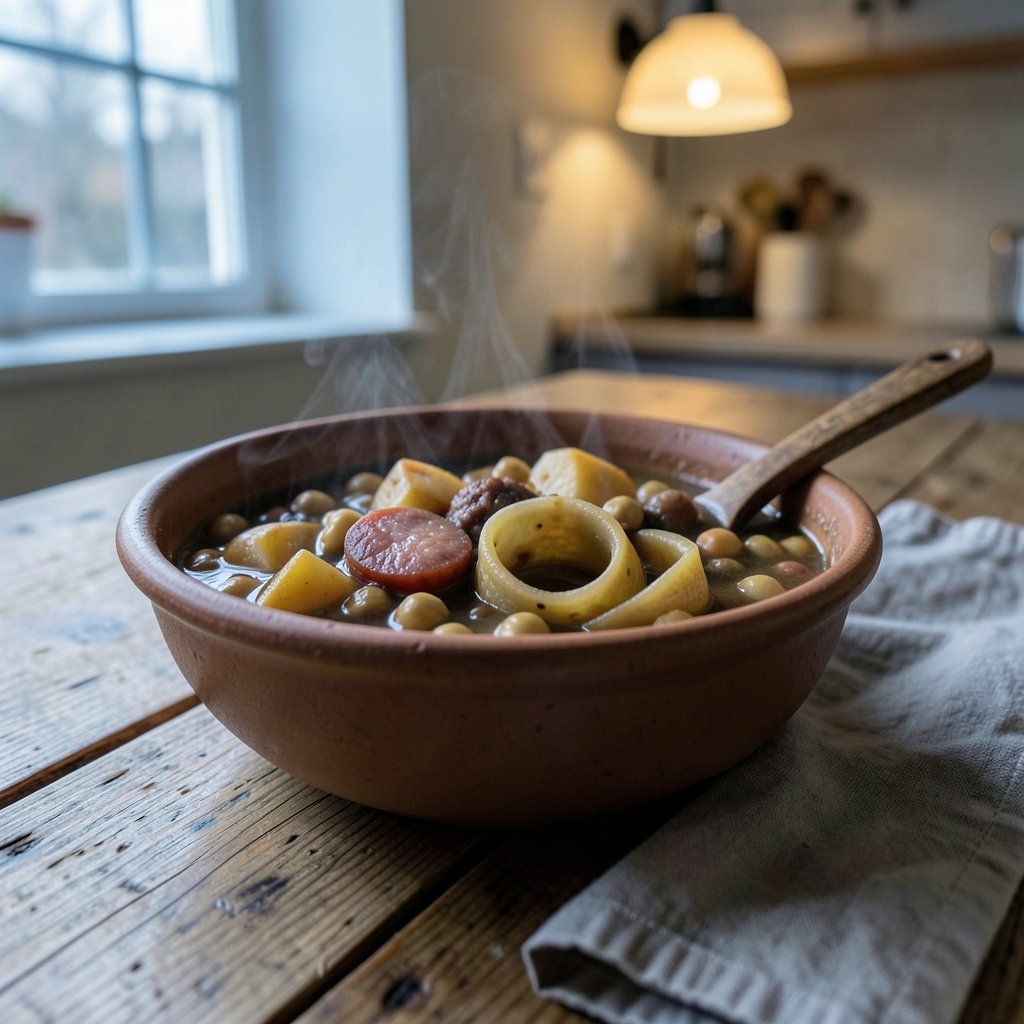
One origin story that circulates widely is that the dish began as a way to use up the leftovers from the previous day’s escudella i carn d’Olla, a substantial meat and vegetable stew. Treat that as tradition and folklore rather than documented history. It is repeated often, it makes intuitive sense, and it may well be partly true, but it should not be presented as settled fact.
The practical takeaway for a visitor or a curious local is this: seasonality changes what you will find. Many traditional restaurants serve canelones year-round, but the Christmas period is when the dish is most present, most practiced, and most likely to be made in large batches with care. If you are hunting in late December, your odds improve. If you are hunting in July, you need to be more deliberate about where you look.
Why “Near Me” Is a Harder Question Than It Looks
Search engines resolve “near me” using your device location or your network’s approximate location. That means two people in the same city can get different results, and a person in a suburb may get a completely different set of options than someone downtown. Results shift by neighborhood, by the hour, and by what the platform decides is relevant that day.
For anyone writing or reading about food, this has a real consequence. No single article can tell you the best canelones near you, because “near you” is a moving target. What an article can do is give you a repeatable method, plus the city-level context that makes the search faster. Think of the difference between handing someone a fish and teaching them to read a menu.
There is a related trap worth naming. Many “best of” lists are undated. A ranking published three years ago may point you to a restaurant that has changed owners, changed chefs, or closed. When a list has no date and no named source, treat it as a lead, not a verdict.
A Step-by-Step Method for Finding Good Canelones Wherever You Are
This is the part that actually works in practice. Follow it in order and you will waste far less time on mediocre pasta.
- Search in the local languages first. Searching “canelons” (Catalan) and “canelones” (Spanish) will surface far more genuinely local results than searching in English. English-language results tend to be travel-oriented and thin on neighborhood-level detail.
- Add a specific area to your query. Replace “near me” with a district, a street, or a landmark. “Canelons” plus a neighborhood name will pull up places that locals actually discuss.
- Check whether the dish is on the current menu. Menus change with seasons. A restaurant’s website or a recent photo of the menu is worth more than a review from two years ago.
- Read reviews for the dish, not the restaurant. Search within reviews for the word canelones. A place with a 4.2 average that has fifteen reviews specifically praising the canelones is a better bet than a 4.7 with none.
- Look for signals of freshness. Mentions of the dish selling out, being made in limited batches, or being available only on certain days are good signs. A dish that is always available and never runs out may be reheated.
- Call ahead during the holidays. Around Sant Esteve, popular places fill up and some sell canelones by the tray for takeaway. A quick phone call saves a wasted trip.
- Cross-check the date on any list you use. If a ranking has no date, assume it is older than it looks.
If you are also planning other errands around your food trip, the same location-first logic applies to services. Choosing a clinic, for instance, works much like choosing a restaurant: you want current information, local signals, and a way to verify before you commit, as outlined in this guide to laser hair removal near me. The principle is identical. Proximity is the starting filter, not the final answer.
City by City: Where the Search Gets Easier
Rather than pretend there is one answer, it helps to understand how the search behaves in each major Catalan city.
| City | What to expect | Best approach |
|---|---|---|
| Barcelona | The widest range, from old-school bars to modern takes; heavy competition and heavy tourist traffic | Search by neighborhood, not by city; favor places with recent, dish-specific reviews |
| Girona | Strong traditional cooking culture with a smaller restaurant pool | Ask locally; smaller cities reward word of mouth over search rankings |
| Tarragona | Family-oriented tradition, especially around the holidays | Look for takeaway trays and menu del dia offerings in season |
| Lleida | More inland, more home-style, less menu-driven | Focus on fondes and family-run spots rather than trend lists |
In Barcelona specifically, canelones have a long-standing place in the city’s eating culture, and several established establishments are known for them. That said, ownership, opening hours, and quality shift constantly. Naming a “best” without a current, dated check is not honest. Use the method above and verify before you travel across town.
Common Mistakes People Make
Most disappointing canelones experiences trace back to a handful of avoidable errors.
Trusting the photo over the review text. A glossy image of bubbling cheese tells you nothing about the filling. Read what people actually wrote.
Searching only in English. This is the single biggest miss. The best local information about canelones is written in Catalan and Spanish.
Ignoring the season. Expecting a Christmas-level canelones experience in August at a beachfront restaurant is setting yourself up for disappointment.
Assuming a ranking is permanent. Restaurant rankings are volatile. Any list should carry a date and a named source, such as a newspaper’s annual food guide, rather than appearing as an undated slideshow.
Forgetting dietary realities. Traditional canelones contain pork, gluten from the pasta, and dairy from the sauce and cheese. Vegetarian, halal, gluten-free, and lactose-intolerant diners need to ask specifically, and should not assume a kitchen can adapt a dish this traditional without notice.
Overlooking the takeaway option. In season, many places sell canelones by the tray. For a group, this is often better value and better quality than a rushed table service.
That last point about asking specifically applies broadly. Just as you would check the details before buying gloves for Raynaud’s disease rather than trusting a generic label, you should ask a restaurant direct questions about what is in the filling and how it is made. Specific questions get specific answers.
How to Judge a Plate Once It Arrives
You have done the search. Now the food is in front of you. A few markers separate a good plate from a great one.
The sauce should coat the pasta without drowning it. If the dish arrives swimming in liquid, the béchamel was likely too thin or the pasta was not drained properly. The top should show real gratin: browned patches, not a uniform orange sheet. The filling should hold together when you cut into it, with a texture that suggests it was cooked down rather than just ground and packed. And the seasoning should be restrained. Canelones are a comfort dish, not a salt delivery system.
Temperature matters more than people admit. A plate that arrives lukewarm usually means it was plated early and waited. Send it back if you can, or note it for next time.
Pairing and Ordering Like a Local
Canelones are substantial. Locals often treat them as a first course or a standalone main, not as part of a long tasting menu. A light starter and a simple dessert is a common structure. If you are ordering for a group, one portion of canelones plus shared plates tends to work better than everyone ordering their own.
On drinks, the regional instinct is straightforward: a light red or a dry white, or simply water. The dish is rich enough that heavily oaked wines fight it rather than complement it.
If you are planning a broader day out around your meal, the same logic of checking current, practical details in advance applies to transport and logistics, much as it does when you work out how ExpressLanes and metro toll lanes actually function before you drive. A little preparation removes most of the friction.
Conclusion
Finding the best canelones catalanes near you is less about discovering a secret list and more about asking better questions. Search in Catalan and Spanish. Add a neighborhood to your query. Check that the dish is on the current menu. Read reviews for the dish itself rather than the restaurant’s overall score. Respect the season, because canelones peak around Sant Esteve on 26 December. And verify anything a ranking tells you, because undated lists go stale fast.
The dish rewards this effort. When the filling is right, the sauce is smooth, and the top has real color, canelones a la catalana are one of the most satisfying things on a Catalan table. The search is the hard part. The eating is easy.
FAQ
What are canelones catalanes made of?
They are large pasta tubes filled with a fine-textured mix of ground meat, usually beef and pork and sometimes chicken or veal. The filled tubes are covered in a white béchamel-style sauce, topped with grated cheese, and baked until gratinated. Traditional versions contain pork, gluten, and dairy.
When is the best time to eat canelones in Catalonia?
The Christmas period, and specifically around Sant Esteve on 26 December, is when canelones are most central to Catalan tables. Many restaurants serve them year-round, but availability and quality tend to peak in late December.
Why do my “near me” search results differ from someone else’s?
Search engines resolve “near me” using your device location or your network’s approximate location. Results vary by city, neighborhood, and even time of day, so two people searching the same phrase can see completely different lists.
Should I search in English or in Catalan?
Search in Catalan (“canelons”) and Spanish (“canelones”) first. Local-language searches surface far more genuinely local results, including neighborhood spots that never appear in English-language travel content.
Are canelones catalanes suitable for vegetarians or gluten-free diners?
Not in their traditional form. The standard recipe includes pork, wheat pasta, and dairy in both the sauce and the cheese topping. Diners with dietary restrictions should ask the restaurant directly rather than assume the dish can be adapted.
How can I tell if a “best canelones” list is trustworthy?
Look for a publication date and a named source, such as a newspaper’s annual food guide. Undated listicles and rankings without attribution should be treated as leads rather than verdicts, since restaurants change owners, chefs, and menus frequently.














