Diamond earrings for men have moved from the margins of jewellery to the middle of it. A single diamond stud is now as normal in a smart outfit as a watch or a signet ring, and it works because it is small, precise and deliberate. The problem is not finding a diamond earring. It is finding one that suits your ear, your style and your budget, and knowing whether the stone, the setting and the metal are worth what you are paying for them.
That is why this guide is organised by stone, setting and wearability rather than by brand name alone. A half-carat solitaire in a four-prong setting is a different piece of jewellery from a pavé hoop or a bezel-set stud, even when both are diamonds in white gold. One is a quiet classic, the other is a statement. Price is a poor guide on its own. Some of the most wearable diamond earrings are modest studs in solid gold, and some of the most expensive are the hardest to wear every day.
Below are nine diamond earrings for men worth considering in 2027, from classic solitaire studs to pavé hoops and bezel-set designs. Each one is described by what it does well, what to watch for, and who it suits best, so you can choose with your ear and your wardrobe in mind, not just a bestseller list.
Key takeaways
- A diamond stud is the most versatile starting point, and a half-carat stone suits most ears without looking oversized.
- Check the four Cs — cut, colour, clarity and carat — but cut matters most, because it is what makes a diamond sparkle.
- Match the metal to your other jewellery: white gold and platinum suit cool tones, yellow gold suits warm tones.
- A secure setting matters more than size: a screw-back or a well-made push-back keeps the earring where it belongs.
- No earring fixes a poor setting or a stone that is too big for your ear, and a diamond that is not certified is a gamble, not a bargain.
What makes a diamond earring work for men
Scale is the first decision. A diamond stud should sit comfortably on the earlobe without pulling it down or dominating the ear. For most men, that means a stone between a quarter and one carat per ear, with half a carat the most popular choice. A stone larger than one carat per ear is a statement piece, and it suits a confident style and a larger earlobe. A stone smaller than a quarter carat can look lost, unless the setting is designed to make it stand out.
Cut is the second decision, and it matters more than carat weight. A well-cut diamond returns light through the top of the stone, which is what makes it sparkle. A poorly cut diamond, even a large one, can look dull and lifeless. When you compare two studs, look at how they catch the light as you move them, not just at the size written on the tag. The stone that sparkles in a shop window and in daylight is the one worth paying for.
Setting is the third decision. A four-prong setting holds the stone securely while letting in the most light, which is why it is the classic choice for a solitaire stud. A bezel setting, where the metal wraps around the edge of the stone, is more secure and more modern, and it suits an active lifestyle. A pavé setting, where small diamonds are set along the metal, adds sparkle but needs more care and is harder to clean.
How we chose these earrings and what to look for
Look first at the certification. A diamond over a quarter carat should come with a grading report from a recognised laboratory, such as the GIA or the IGI, stating its cut, colour, clarity and carat weight. If a seller cannot provide one, or offers a vague in-house grade instead, walk away. Certification is not a luxury extra. It is the only reliable way to know what you are buying.
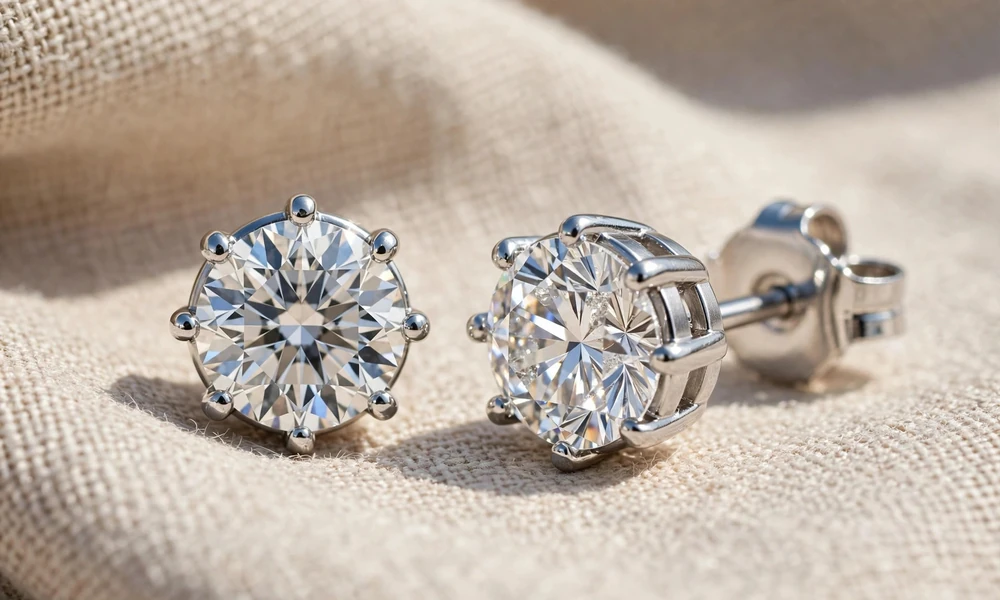
Look next at the metal and the back. Solid gold or platinum is worth the premium over plated metal, because plating wears and the earring will need replating within a year or two. A screw-back is the most secure closure for a stud, and it is worth choosing if you plan to wear the earrings every day. A push-back with a silicone grip is comfortable and convenient, but check it regularly, as it can loosen over time. Our guide to gold earrings covers the same metal and setting logic in more detail, and the same rules apply here: solid metal, a secure back, and a setting that suits how you will wear the piece.
Finally, think about how you will wear them. A single stud in one ear is the most common choice for men, and it suits a minimal style. A matched pair suits a bolder look and a symmetrical outfit. A hoop or a huggie with pavé diamonds is a statement piece and works best when the rest of your jewellery is quiet. The right choice is the one that fits the way you already dress, not the one that looks best in a photograph.
The 9 best diamond earrings for men of 2027
Tiffany & Co. Diamond Studs
What we like: A classic solitaire stud with an excellent cut, a secure six-prong setting, and the brand’s famously strict diamond standards. What to consider: Luxury price, and the six-prong setting suits a round stone best. Stone: Round brilliant diamond, 0.50 carat per ear. Setting: Six-prong, platinum. Best for: A first serious diamond stud. Price range: Luxury.
Cartier Diamond Studs
What we like: A refined solitaire stud with a four-prong setting, a clean Cartier cut, and a choice of white, yellow or rose gold. What to consider: Premium price, and the setting is designed for a round stone, so fancy shapes need a different model. Stone: Round brilliant diamond, 0.50 carat per ear. Setting: Four-prong, 18k gold. Best for: Understated luxury and a classic wardrobe. Price range: Luxury.
Mikimoto Diamond Studs
What we like: A precise solitaire stud from a house known for exacting standards, with a clean setting and a stone chosen for brilliance rather than size. What to consider: Luxury price and a limited range of sizes. Stone: Round brilliant diamond, 0.40 carat per ear. Setting: Four-prong, platinum. Best for: A smaller, perfectly cut stone. Price range: Luxury.
Mejuri Diamond Stud Earrings
What we like: A clean solitaire stud in solid gold, a fair price for a certified stone, and a design that works as a single or a pair. What to consider: The range is simpler than a luxury house, and the setting is best suited to round stones. Stone: Round brilliant diamond, 0.30 carat per ear. Setting: Four-prong, 14k solid gold. Best for: A first diamond stud on a sensible budget. Price range: Mid-range.
If you are buying your first diamond earrings, this is a sensible place to start. The stone is certified, the gold is solid, and the price leaves room to buy the pair rather than a single stud, which is how most men end up wearing them.
Monica Vinader Diamond Studs
What we like: A modern solitaire stud with a clean bezel option, a choice of gold colours, and a design that suits everyday wear. What to consider: The bezel setting shows less of the stone than a prong setting, so the diamond looks slightly smaller. Stone: Round brilliant diamond, 0.30 carat per ear. Setting: Bezel, 18k gold vermeil over sterling silver. Best for: Everyday wear and an active lifestyle. Price range: Mid-range.
Missoma Diamond Stud Earrings
What we like: A delicate solitaire stud with a fine pavé detail, a modern design, and a price that makes it easy to try the look. What to consider: The pavé detail needs more cleaning than a plain stud, and the gold is vermeil rather than solid. Stone: Round brilliant diamond, 0.25 carat per ear. Setting: Pavé, gold vermeil. Best for: A subtle sparkle and a modern style. Price range: Affordable.
Maria Black Diamond Studs
What we like: A bold, architectural stud with a chunky setting, a modern edge, and a design that reads as jewellery rather than an accessory. What to consider: The chunky setting suits a confident style and can look heavy on a small earlobe. Stone: Round brilliant diamond, 0.40 carat per ear. Setting: Chunky four-prong, sterling silver. Best for: A bold, modern look. Price range: Mid-range.
Astrid & Miyu Diamond Studs
What we like: A clean, contemporary stud with a secure screw-back, a choice of gold colours, and a design that layers well with other earrings. What to consider: The screw-back takes a moment longer to put on, and the range is best suited to smaller stones. Stone: Round brilliant diamond, 0.30 carat per ear. Setting: Four-prong, solid gold. Best for: Layering and a secure everyday stud. Price range: Mid-range.
Thomas Sabo Diamond Studs
What we like: A straightforward solitaire stud with a clean setting, a fair price, and a design that works as a single or a pair. What to consider: The stone is smaller than the luxury options, and the setting is simple rather than distinctive. Stone: Round brilliant diamond, 0.25 carat per ear. Setting: Four-prong, sterling silver. Best for: A first pair and a minimal style. Price range: Affordable.
Which diamond earring is right for you
Start with the size. If you are buying your first pair, choose a half-carat stone per ear. It is large enough to be noticed and small enough to wear every day, and it suits most earlobes. If your earlobes are small, or your style is minimal, a quarter to a third of a carat is a better choice. If you want a statement, go larger, but try the size on first, as a stone that looks right in a photograph can look very different on your own ear.
Then think about the metal. White gold and platinum suit cool skin tones and silver jewellery, while yellow gold suits warm skin tones and gold jewellery. Rose gold sits between the two and suits a modern wardrobe. The metal should match the other jewellery you wear most often, because mixed metals are harder to pull off with a small piece like a stud. Our guide to silver earrings covers the same metal logic from the silver side, and the same principle applies: the metal should match what you already wear, not fight it.
Finally, think about the back. A screw-back is the most secure and the best choice for everyday wear. A push-back with a silicone grip is comfortable and convenient, but check it regularly. A butterfly back is the least secure and is best avoided for a diamond stud you plan to wear often, as losing one earring means losing half the pair.
The caveats that matter
A diamond earring is a small piece of jewellery, and small pieces are easy to lose. The most common mistake is buying a stud with a weak back and then losing it within a month. The second mistake is buying a stone without certification and discovering later that it is smaller, less clear or less well cut than the price suggested. The third mistake is buying a stone that is too large for your ear, so that it pulls the lobe down and looks uncomfortable rather than elegant.
| Detail | What is known |
|---|---|
| Most versatile size | Half a carat per ear, large enough to notice and small enough to wear daily |
| What matters most | Cut, because it is what makes a diamond sparkle; carat alone does not |
| Certification | A grading report from the GIA or IGI for any stone over a quarter carat |
| Most secure setting | A bezel setting, or a four-prong setting with a screw-back |
| Metal choice | Solid gold or platinum; plated metal wears and needs replating |
| Cleaning | Warm water, mild soap and a soft brush; avoid ultrasonic cleaners for pavé settings |
| What to avoid | An uncertified stone, a weak butterfly back, or a stone too large for your ear |
| What it does not do | It does not fix a poor setting, and a larger stone will not sparkle if the cut is poor |
If you are buying a pair, check that the two stones match. A matched pair should be the same size, colour and clarity, and the same cut, so that they sparkle in the same way. A pair with mismatched stones will always look slightly off, even if each stone is good on its own.
Checklist: choosing diamond earrings honestly
Use these checks before you buy, and again when you try the earrings on at home.
- Check the certification: a grading report from the GIA or IGI for any stone over a quarter carat.
- Check the cut: look at how the stone catches the light as you move it, not just at the size on the tag.
- Check the setting: the stone should sit flat and secure, with no wobble when you touch it gently.
- Check the back: a screw-back is the most secure choice for everyday wear.
- Check the size on your own ear: half a carat suits most ears, and larger is not always better.
- Check the metal: it should match the other jewellery you wear most often.
Frequently asked questions
How big should a diamond stud be for a man?
Half a carat per ear is the most popular and most versatile choice. It is large enough to be noticed and small enough to wear every day. A quarter to a third of a carat suits a smaller earlobe or a minimal style, while one carat or more per ear is a statement and suits a confident style and a larger ear.
Should men wear one diamond earring or a pair?
Both are common. A single stud in one ear is the most popular choice and suits a minimal style. A matched pair suits a bolder look and a symmetrical outfit. There is no rule, and the right choice is the one that fits how you already dress. If you are unsure, start with a pair, as you can always wear one on its own.
Are lab-grown diamonds worth buying?
Lab-grown diamonds are chemically identical to mined diamonds and are graded in the same way, but they cost significantly less and hold less resale value. If you want the largest stone for your budget and do not care about resale, a lab-grown diamond is a sensible choice. If resale value matters to you, a mined diamond with certification is the safer buy.
How do I clean diamond earrings?
Soak them in warm water with a drop of mild soap, then brush gently with a soft toothbrush and rinse. Dry them with a soft cloth. Avoid ultrasonic cleaners for pavé settings, as the vibration can loosen small stones, and avoid harsh chemicals, which can damage the metal and the setting.
What metal is best for diamond earrings for men?
Platinum is the most durable and the most secure, but it is also the most expensive. White gold is a good middle ground, and yellow gold suits warm skin tones. Solid gold or platinum is worth the premium over plated metal, because plating wears and the earrings will need replating. Our guide to pearl earrings for men covers the same metal choices in a different context, and the same advice applies: buy solid metal if you plan to wear the earrings every day.
Do diamond earrings lose value?
Most diamond earrings lose value when resold, because retail prices include the setting, the brand and the markup. A certified stone from a recognised brand holds its value better than an uncertified stone, but diamond earrings should be bought to wear, not as an investment. If resale value matters, keep the certification and the original receipt.
The bottom line
The best diamond earrings for men in 2027 are not the largest or the most expensive. They are the ones with a well-cut stone, a secure setting, solid metal, and a size that suits your ear. For most men, that means a half-carat solitaire stud in white gold or platinum, with a screw-back, worn as a single or a pair.
Choose one pair, wear them for a month, and judge them on how often you reach for them and how comfortable they feel, not on how large the stone looks in the box. That is the honest way to buy diamond earrings: a pair that earns its place by being worn every day, not by sitting in a drawer.