


What if the single biggest upgrade to your listening didn’t come from a new phone, a new app, or a bigger streaming plan, but from the small thing you push into your ears every morning? That’s the odd truth about in-ear headphones: the gap between a mediocre pair and a great one is wider than almost any other audio purchase. The right pair makes a noisy train feel like a library. The wrong pair makes a ten-minute walk feel like a chore.
This roundup skips the theory and goes straight to specific options. Each pick below is here because it solves a real problem for a real kind of listener. Prices and specs appear only where they’re publicly listed, so treat any figure as a starting point to confirm before you buy.
The Shortlist at a Glance
| Option | Best for | Standout strength | Watch out for | Listed price |
|---|---|---|---|---|
| Sony WF-1000XM6 | Noise blocking on planes and trains | Top-tier ANC with memory foam tips | Can slip out of smaller ears | Check current retail |
| Apple AirPods Pro 3 | iPhone owners who want it simple | ANC close to the Sony, close iPhone integration | Limited features on Android | Check current retail |
| Technics EAH-AZ100E | Sound quality first, wireless convenience | Bass depth and clarity that rivals wired IEMs | Cumbersome product name, niche support | Around EUR 273 |
| Bowers & Wilkins Pi7 S2 | Design-led buyers | Premium build and app control | No multipoint, no volume gestures | Check current retail |
| EarFun 4 Pro+ | Budget commuters and gamers | Strong ANC and low latency for the money | Not a detail monster | Around EUR 75 |
| Simgot EM6L | Competitive gamers on a budget | Precise positional audio | Wired only | Around EUR 130 |
| Kiwi Ears Orchestra Lite / Septet | Detail-hungry listeners | Rich, layered sound | Over EUR 200, wired only | Over EUR 200 |
Sony WF-1000XM6: The Noise-Blocking Benchmark
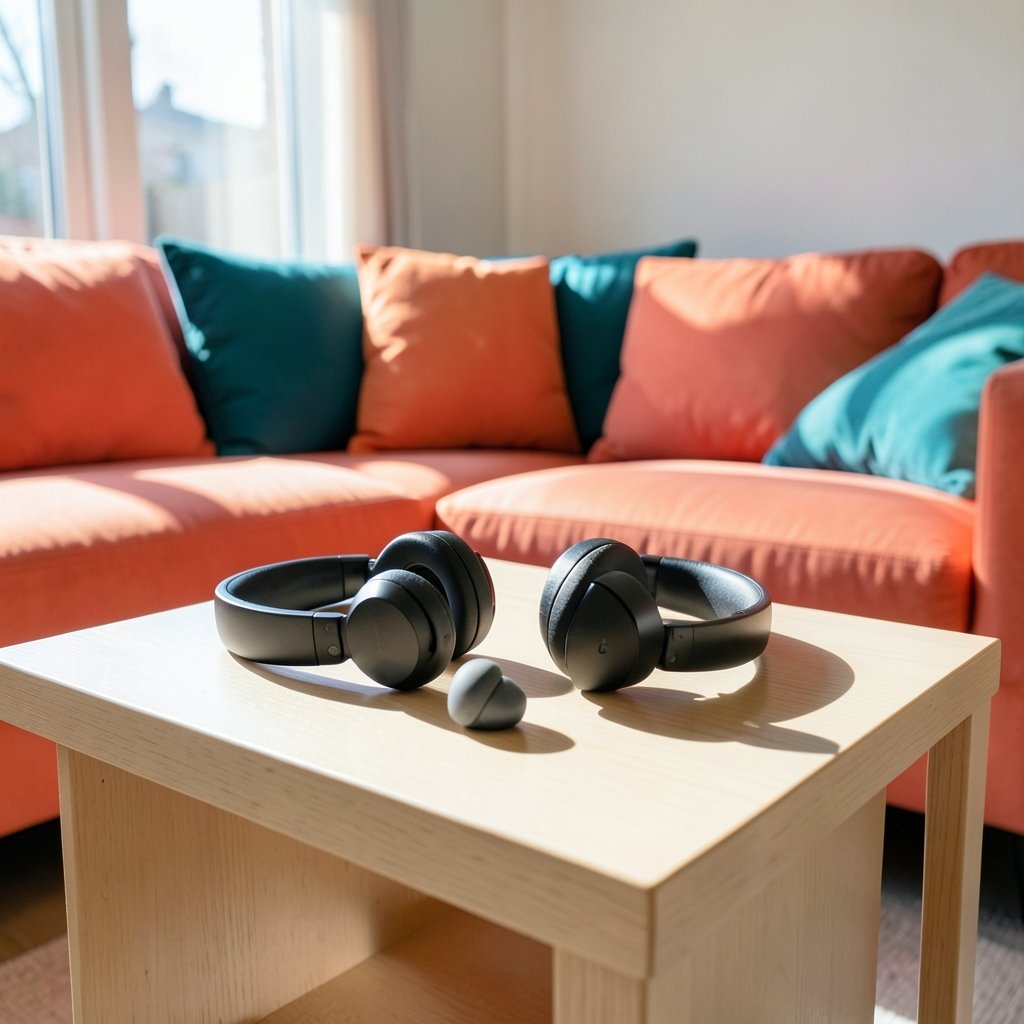
If your daily commute involves a plane cabin or a busy intersection, start here. Testing by RTINGS.com found the WF-1000XM6 pairs memory foam ear tips with Sony’s active noise cancellation to deliver isolation rivaled only by the AirPods Pro 3. That’s the whole pitch: the buds seal your ear canal physically and then cancel what’s left electronically.
The practical upside is that the foam tips do a lot of the work on their own. Even if you turn ANC off to save battery, you still get solid passive blocking. Sony also offers broad cross-platform support, so Android and iOS users both get access to sound customization features, which is more than Apple offers on non-Apple devices.
The limitation is fit. RTINGS notes these buds can pop out of smaller ears, and no amount of tuning fixes a seal that won’t hold. Buy from a retailer with a generous return window and test them on a walk before committing.
Apple AirPods Pro 3: The Effortless iPhone Pick
For anyone already living inside Apple’s world, the AirPods Pro 3 are the path of least resistance. Their noise isolation sits right at the top of the pile alongside the Sony set, and pairing is basically automatic. Engadget notes you can even use the AirPods Pro 3 as hearing aids, which is a genuinely useful feature rather than a marketing line.
The honest limitation is iPhone dependence. The best features assume an iPhone, and the tuning controls are less granular than what Sony offers. If you split your time between Android and iOS, the Sony pair is the more flexible buy. If you’re all-in on Apple, the simplicity is worth plenty.
One practical tip: the default ear tips are not always the right size. Run the fit test in the settings app. A surprising number of people complain about weak bass when the real problem is a loose seal.
Technics EAH-AZ100E: Wireless That Sounds Wired
Here’s the pick for people who suspect wireless audio is a compromise. A verified buyer review on Galaxus.de compared the Technics EAH-AZ100E directly against the wired FiiO FH5S, describing the overall sound as coming very close to those first-class wired in-ears, with very clear and intense bass and crystal clear highs. That’s a rare claim for a true wireless bud.
The listed price on that same page was around EUR 273, which puts it firmly in premium territory. The reviewer also flagged the awkward name, which is fair, and noted that the cable-free design made the Technics far more usable for cycling and workouts than the wired FiiO set.
The limitation is that this is a sound-first product. If you want the absolute best noise cancellation, Sony still leads. If you want the best balance of fidelity and freedom, the Technics is the more interesting choice.
Bowers & Wilkins Pi7 S2: Style With a Catch
The Pi7 S2 earns its place on build and app polish. Gesture controls handle calls, track skipping, and repeat, and the companion app works on older Android hardware too. For buyers who care about how a product feels in the hand and looks on a desk, it delivers.
But the caveats matter. According to a German lab-based roundup, volume and transparency controls aren’t available via gestures, and multipoint pairing, which lets you connect a music player and a phone at once, isn’t supported. The same review found the app can connect to the Pi7 S2 over Bluetooth but can’t stream audio to it. Those are real annoyances at this price.
The takeaway is simple: buy the Pi7 S2 for design and app features, not for flexibility. If you juggle a laptop and a phone all day, look elsewhere.
EarFun 4 Pro+: The Budget Commuter That Overdelivers
Not everyone needs to spend hundreds. A forum user on ComputerBase tested the EarFun 4 Pro+ with a desktop Bluetooth adapter and reported that it worked flawlessly, with no noticeable latency, very good sound for the price class, and solid ANC, all for around EUR 75.
That combination of low latency and decent cancellation makes it a sneaky-good pick for casual gaming, video watching, and music. The limitation is its ceiling. At this price you get competence, not refinement, and the detail retrieval won’t match the premium picks above.
If you’re unsure how much to spend, this is the sensible floor. Try a budget pair first. If it leaves you wanting more, you’ll know exactly which weakness bothers you, and you can upgrade with purpose. That’s a smarter path than guessing at the top.
Simgot EM6L: The Gamer’s Value Pick
For competitive shooters, positional accuracy beats bass thump every time. A forum discussion on ComputerBase recommends the Simgot EM6L at around EUR 130 for players who mainly need to locate enemies, noting it images well and stays detailed for the price. The same thread suggests the Simgot SuperMix4 at around EUR 180 as a step up.
These are wired in-ear monitors, so there’s no battery to charge and no codec to worry about. The trade-off is the cable, which is a hassle for cycling and workouts but irrelevant at a desk.
One practical note from that thread: if you need a microphone for voice chat, you can buy cables made for in-ears with a mic built in. Don’t dismiss wired IEMs just because they lack a boom.
Kiwi Ears Orchestra Lite and Septet: For Detail Hunters
If you’ve caught the audiophile bug, the Kiwi Ears Orchestra Lite and Septet sit in the conversation for listeners who want layered, textured sound. The ComputerBase thread places both slightly above EUR 200 and frames them as serious options rather than budget curiosities.
The limitation is the same as any wired IEM: they’re a commitment. You need a decent source, you need to accept the cable, and you need to actually enjoy the hobby. For everyone else, a good wireless pair will be more useful day to day.
Worth knowing: the Japanese price-ranking site kakaku.com lists hybrid-driver models combining a balanced armature with a dynamic driver, with support for codecs like LDAC and aptX Lossless and up to 12 hours of playback with ANC off. If you’re shopping in that market, those spec sheets are a useful filter.
How to Choose Without Overthinking It
After reading seven options, the decision usually comes down to three questions. Answer them honestly and the shortlist collapses fast.
- Where will you wear them most? A noisy commute points to Sony or Apple. A quiet desk points to wired IEMs. A gym points to anything with a secure fit and sweat resistance.
- What phone do you carry? iPhone owners lose features on non-Apple buds. Android owners lose features on AirPods. Match the bud to the phone and half your problems disappear.
- Do you need to hear other people? If you cycle or work in an open office, transparency mode and a secure fit matter more than bass depth. If you want to block the world out, prioritize ANC and tip quality.
Then there’s fit, which is the most underrated factor. A cheap bud with the right tip will beat an expensive bud with the wrong one. Buy from a seller with easy returns, test the seal within the first week, and don’t be shy about swapping tips. For a deeper look at what actually blocks sound versus what just claims to, this breakdown of noise cancelling headphones that actually cut noise is worth ten minutes.
Two more habits pay off. First, decide your budget before you browse, because in-ear pricing climbs fast and the gains get smaller near the top. Second, check whether the model you’re eyeing is a current generation or last year’s model at a discount. A previous-generation flagship is often the best value in the whole category. If you’re weighing generations against each other, this guide to the best headphones of 2025 and what actually matters before you buy covers the trade-offs clearly.
And if you’re buying for someone else, resist the urge to pick the flashiest option. A practical walkthrough on how to pick the best headphones for your ears, budget, and daily life will save you from a gift that sits in a drawer.
Common Mistakes That Waste Money
The most frequent error is buying for specs instead of situations. A 50-hour battery claim means little if the buds hurt after forty minutes.
The second is ignoring ear tip sizes. Most boxes include three sizes; most people never try more than one.
The third is assuming more expensive always means better. As one roundup of audiophile in-ears points out, pricier models aren’t automatically superior, because some in-ears are tuned for specific use cases and preferences. A bass-heavy set built for workouts may sound muddy to someone who mostly listens to podcasts.
The fourth is skipping the return window. Fit is personal, and no review can predict whether a bud will stay in your ear on a run.
Conclusion
The best in-ear headphones aren’t a single product. They’re the pair that matches your commute, your phone, and your ears. Sony leads on noise blocking, Apple wins on simplicity for iPhone users, Technics delivers the closest thing to wired sound without a cable, and the budget picks from EarFun and Simgot cover most people for a fraction of the price. Start with the question of where you’ll wear them, buy from a store that lets you return them, and spend the first week testing the seal. Do that, and you’ll end up with the pair you actually keep.
Frequently Asked Questions
Are expensive in-ear headphones worth it?
Sometimes. The jump from a budget pair to a mid-range one is usually obvious, especially in noise cancellation and fit. The jump from mid-range to premium is smaller and mostly about refinement. Buy the cheaper tier first, find out what annoys you, then upgrade with a specific goal in mind.
Do in-ear headphones block noise better than over-ear ones?
Generally yes, for two reasons. The tip physically seals your ear canal, and good models add active noise cancellation on top. Testing has found top in-ear models deliver isolation that rivals the best over-ear designs, and they’re far easier to carry.
Why do my earbuds keep falling out?
Almost always a tip-size problem, not a bud problem. Some models, including the Sony WF-1000XM6, are known to slip out of smaller ears even with a good seal. Try every included tip size, consider foam tips, and buy from a retailer that accepts returns.
Can I use AirPods Pro with an Android phone?
Yes, they’ll pair and play audio. But you lose much of the integration that makes them appealing, and the tuning controls are more limited. Android users usually get more features and better value from a cross-platform model.
Are wired in-ear monitors better for gaming?
For positional accuracy at a desk, often yes. Wired IEMs avoid Bluetooth latency entirely, and models like the Simgot EM6L are praised for imaging at around EUR 130. If you also need a mic, buy a cable with one built in.
How much should I spend on my first serious pair?
Start around the EUR 75 mark with something like the EarFun 4 Pro+, which offers solid ANC and low latency for the price. If that leaves you wanting more, you’ll know whether you need better noise cancellation, better sound, or better fit, and you can spend accordingly.











