



Oily skin and foundation have a complicated relationship. By midday, a formula that looked flawless in the morning can start to separate around the nose, slide off the chin, and turn shiny across the forehead, no matter how carefully it was applied. It is not a failure of technique. It is usually a sign that the formula was wrong for the skin in front of it.
The best foundations for oily skin do three things at once. They control shine without looking flat, they stay put through heat, humidity and a long day, and they let the skin underneath breathe enough that pores do not feel clogged by late afternoon. That balance is harder to find than it sounds, because a formula that is too mattifying can look cakey, while one that is too dewy will break down within hours on an oily T-zone.
Below are nine foundations worth considering in 2027, from a long-wear classic to an affordable drugstore staple that genuinely holds up. Each one is described by what it is good at, what to watch for, and who it suits best, so you can choose with your skin type in mind, not just a shade name or a pretty bottle.
Key takeaways
- Oil-free, long-wear and matte or soft-matte finishes last longest on oily skin, especially formulas with oil-absorbing ingredients such as silica, clay or niacinamide.
- Prep matters as much as the foundation: a light gel moisturiser, a mattifying primer on the T-zone, and a thin layer of product beat a thick layer every time.
- Set the T-zone with a light dusting of translucent powder and carry blotting paper, not more powder, for midday touch-ups.
- Look for shades with a neutral or golden undertone if your foundation turns orange by afternoon, which often means the formula is oxidising on oily skin.
- No foundation controls oil all day on its own, and a formula that feels tight, drying or irritating should be swapped for a gentler one, even if its wear time is impressive.
What this guide covers
This guide covers foundations made for oily and combination skin, with a focus on wear time, shine control and comfort. It includes long-wear liquid foundations, soft-matte formulas, and a few lighter options for days when full coverage feels like too much. It does not include heavy stage makeup or formulas designed mainly for dry skin, because those solve a different problem.
Every foundation here is judged on the same questions. Does it stay in place for eight hours or more? Does it control shine without looking dry? Does it sit well over sunscreen, and does it still look like skin at the end of the day? Shade range matters too, because a long-wear formula is only useful if you can find a shade that matches your neck as well as your face.
The guide also covers the habits that make any foundation work harder. How you prep, how much you apply, and how you set it all change the result, sometimes more than the product itself. A good foundation applied thinly over well-prepped skin will almost always outlast a great one applied thickly over bare skin.
How we chose these foundations and what to look for
Look first at the finish and the formula. Oil-free, long-wear and matte or soft-matte foundations are the safest starting point for oily skin. Check for oil-absorbing powders, clay, silica or niacinamide, and be cautious with formulas that promise a dewy glow as their main feature. That glow often becomes shine within hours on oily skin, and it is easier to add glow back with highlighter than to take shine away once it has broken through.
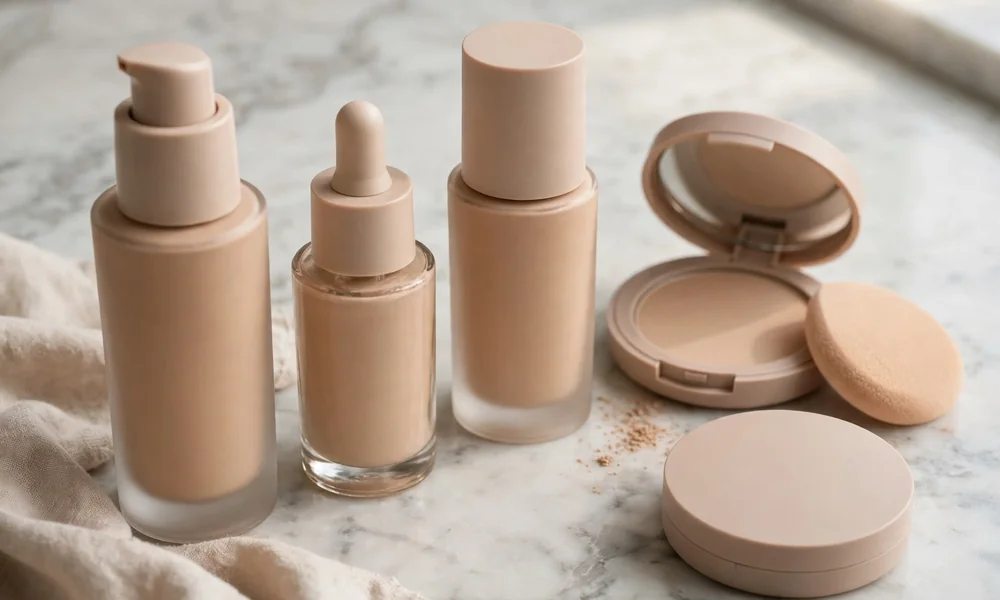
Look next at the texture and the coverage. A liquid foundation that blends easily and sets to a flexible finish is usually more comfortable than a very thick, fast-drying one. Thin layers are the secret to longevity on oily skin. One thin layer, left to set for a minute, then a little more only where you need it, will last longer and look more natural than a single heavy layer. Even oily skin needs hydration underneath makeup, and our guide to the best moisturisers for dry skin is a useful reminder that a light moisturiser helps foundation sit evenly, whatever your skin type.
Finally, look at the shade and the undertone. Oily skin can make some foundations oxidise, darkening or turning orange as the day goes on. If that has happened to you, try a neutral undertone, test it on your jawline rather than your hand, and check it in daylight after an hour. A shade that looks perfect in the shop and orange by lunch is not the right shade.
Estée Lauder Double Wear Stay-in-Place Foundation
What we like: Exceptional long wear, a natural matte finish, strong shine control, and one of the widest shade ranges available, with a formula that stays put through heat and humidity.
What to consider: It sets quickly, so work in sections, and it can feel drying on dehydrated skin, so prep with a light moisturiser first. Key details: Matte finish, medium to full coverage, oil-free. Skin type: Oily, combination. Wear: Up to 24 hours claimed. Cruelty-free: No.
The benchmark for long wear. It is less forgiving if you rush it, but for oily skin that needs makeup to survive a long day or a humid climate, it is one of the most reliable choices you can buy.
Fenty Beauty Pro Filt’r Soft Matte Longwear Foundation
What we like: A soft matte finish that looks like skin rather than powder, excellent oil control, a very wide shade range, and a lightweight feel for a long-wear formula.
What to consider: It can cling to dry patches, so exfoliate gently and moisturise first, and the pump can dispense more than you need. Key details: Soft matte finish, medium to full coverage, oil-free. Skin type: Oily, combination. Wear: Long-wear, all day. Cruelty-free: Yes.
A strong choice if you want matte without flatness. It controls shine well, photographs beautifully, and suits a wide range of skin tones.
Maybelline Fit Me Matte + Poreless Foundation
What we like: Affordable, widely available, genuinely mattifying, with a large shade range and a natural finish that does not look heavy on the skin.
What to consider: Wear time is shorter than premium long-wear foundations, so set the T-zone with powder and expect a midday blot. Key details: Matte finish, medium coverage, oil-free. Skin type: Oily, normal to oily. Wear: All day with setting powder. Cruelty-free: No.
The best value option here, earning its place on performance, not just price. For everyday wear, it gives a smooth, shine-controlled finish for a fraction of a luxury foundation’s cost.
NARS Soft Matte Complete Foundation
What we like: A soft, blurred matte finish, medium to full coverage, good oil control, and a formula that smooths the look of pores without settling into fine lines.
What to consider: Premium price, and the shade range, while good, is narrower than some rivals, so swatch carefully. Key details: Soft matte finish, medium to full coverage, oil-free. Skin type: Oily, combination. Wear: Up to 16 hours claimed. Cruelty-free: No.
For oily skin that also wants a polished, almost airbrushed finish, this is a lovely option. It feels comfortable and holds up well with a light powder set.
Lancôme Teint Idole Ultra Wear Foundation
What we like: Long wear, a natural matte finish, breathable feel, strong coverage that still looks like skin, and a shade range that covers many undertones well.
What to consider: It is a premium price, and very oily skin will still need blotting paper by late afternoon. Key details: Matte finish, full coverage, oil-free. Skin type: Oily, combination. Wear: Up to 24 hours claimed. Cruelty-free: No.
A dependable all-rounder. It covers redness well, stays comfortable for hours, and is one of the easiest long-wear foundations to apply without streaks.
L’Oréal Paris Infallible 24H Fresh Wear Foundation
What we like: Lightweight, breathable, with a fresh matte finish, good shade range, and impressive wear for a drugstore foundation, including in warm weather.
What to consider: Coverage is medium rather than full, so very uneven skin may need concealer on top, and the bottle can be tricky to control. Key details: Matte finish, medium coverage, oil-free. Skin type: Oily, combination. Wear: Up to 24 hours claimed. Cruelty-free: No.
The drugstore pick when you want long wear without a heavy feel. It layers well over sunscreen and is a practical everyday choice on a budget.
Charlotte Tilbury Airbrush Flawless Foundation
What we like: A smooth, blurred finish, medium to full coverage, good oil control for a luxury formula, and skincare-inspired ingredients that help it sit comfortably.
What to consider: Premium price, and the finish is more natural matte than flat matte, so very oily skin should still powder the T-zone. Key details: Natural matte finish, medium to full coverage. Skin type: Oily, combination. Wear: All day. Cruelty-free: No.
The polished option for special occasions and long days alike, giving skin a soft-focus, even look when set lightly with powder.
MAC Studio Fix Fluid SPF 15 Foundation
What we like: A classic matte formula with strong coverage, reliable oil control, a huge shade range, and a finish that photographs well and lasts through long days.
What to consider: It can feel heavy if applied thickly, so use a thin layer and blend well, and the SPF is not a substitute for sunscreen. Key details: Matte finish, medium to full coverage, oil-free. Skin type: Oily, combination. Wear: All day. Cruelty-free: No.
A long-standing favourite for good reason. It covers well, controls shine, and comes in enough shades for most people to find a close match.
Clinique Stay-Matte Oil-Free Makeup
What we like: Fragrance-free, oil-free, gentle on sensitive and breakout-prone skin, with a natural matte finish and a lightweight feel that does not clog pores.
What to consider: Coverage is light to medium, and the shade range is more limited than some rivals, so check your match in daylight. Key details: Matte finish, light to medium coverage, oil-free, fragrance-free. Skin type: Oily, sensitive, breakout-prone. Wear: All day with powder. Cruelty-free: No.
For oily skin that is also sensitive or breakout-prone, this is one of the safest choices here. It is gentle and breathable, designed for skin that reacts easily.
Why oily skin breaks foundation down
Oily skin produces more sebum, the skin’s natural oil, than dry or normal skin. In small amounts sebum protects the barrier, but in larger amounts it can lift foundation and push pigment into pores. Heat and humidity speed that up, which is why foundation that lasts all winter can fall apart on a summer afternoon.
Skincare underneath matters just as much as the foundation itself. A heavy cream under a matte foundation can make it slide, while no moisturiser at all can make skin produce even more oil to compensate. The sweet spot is a light, oil-free gel that hydrates without adding shine, followed by sunscreen designed for oily skin. Wait a few minutes between steps, so each layer can settle. Many people with oily skin worry that facial oils will make things worse, but our guide to the best face oils explains that a light, non-comedogenic oil used sparingly can suit some skin types.
Application technique is the third piece. A damp sponge presses foundation into the skin in a thin, even layer, while a brush can leave streaks if the formula sets quickly. Whatever tool you use, start in the centre of the face, where coverage is needed most, and blend outwards, using less towards the edges.
The caveats that matter
Foundation is helpful, but it is not skincare, and it cannot fix the causes of oily skin on its own. Very oily skin, frequent breakouts, or skin that feels sore or inflamed may need a simpler routine or advice from a dermatologist, not a stronger foundation. If a foundation breaks you out or clogs pores, stop using it and try a lighter, non-comedogenic formula.
| Detail | What is known |
|---|---|
| Best finish for oily skin | Matte or soft matte, oil-free, with oil-absorbing ingredients such as silica or clay |
| Best prep | Light gel moisturiser, oil-free sunscreen, and a mattifying primer on the T-zone |
| How much to apply | One thin layer, built up only where needed, rather than a single heavy layer |
| How to set it | A light dusting of translucent powder on the forehead, nose and chin |
| Best midday touch-up | Blotting paper first, then a little powder only where shine returns |
| What to avoid | Dewy or luminous formulas, heavy creams underneath, and thick layers of product |
| When to check the shade | On the jawline, in daylight, after an hour, to catch oxidising early |
| When to see a dermatologist | Persistent breakouts, clogged pores, redness or irritation that does not improve |
If your foundation separates or pills, the cause is often a clash between products rather than a bad foundation. Silicone-heavy primers under water-based foundations, or heavy oils under matte formulas, can both cause pilling. Simplify to one moisturiser, one sunscreen and one primer, then add products back one at a time.
Checklist: choosing a foundation for oily skin honestly
Use these checks before you buy, and again after two weeks of wear.
- Check the formula: oil-free, long-wear and matte or soft matte, with oil-absorbing ingredients.
- Check the shade in daylight: test on your jawline and recheck after an hour for oxidising.
- Check the prep: light gel moisturiser, oil-free sunscreen, and primer only where you get shiny.
- Apply thinly: one thin layer with a damp sponge, building coverage only where you need it.
- Set the T-zone: a light dusting of translucent powder on the forehead, nose and chin.
- Blot, do not cake: use blotting paper for midday shine, and add powder sparingly if you need it.
Frequently asked questions
Should oily skin skip moisturiser before foundation?
No. Skipping moisturiser can make oily skin produce even more oil, and foundation applied to dehydrated skin often looks patchy and breaks down faster. Choose a light, oil-free gel moisturiser, let it absorb for a few minutes, and then apply primer and foundation as usual.
Why does my foundation turn orange by afternoon?
That is usually oxidising, where sebum, air and heat darken the pigment as the day goes on. Try a shade with a neutral undertone, a long-wear oil-free formula, and a mattifying primer. Testing the shade on your jawline and checking it after an hour in daylight will catch the problem before you buy.
Is powder or setting spray better for oily skin?
Both help, and they do different jobs. Translucent powder absorbs oil and sets the T-zone, while setting spray locks the makeup in place and can reduce a powdery look. For very oily skin, use a light dusting of powder first, then a setting spray, and blot with paper rather than adding more powder during the day.
Can I use a dewy foundation if I have oily skin?
You can, but it is harder to keep in place. A dewy finish adds shine to skin that already produces plenty of its own, so it tends to break down faster. If you love the look, try a soft-matte foundation with a luminous primer only on the cheekbones, or add a small amount of highlighter after your base has set.
What ingredients should oily skin look for in foundation?
Oil-free and non-comedogenic formulas are the safest starting point, with oil-absorbing ingredients such as silica, clay and niacinamide. Squalane is a lightweight ingredient that suits many skin types without feeling heavy, and our guide to the best squalane products explains how it works and where it fits in a routine. Avoid very heavy oils and rich creams in the base if your skin is very oily.
How do I stop foundation settling into pores?
Use a thin layer, a pore-blurring primer where pores are most visible, and a damp sponge to press the product in rather than dragging it. A light dusting of powder helps too. If pores still look emphasised, try a lighter texture and a closer shade match.
The bottom line
The best foundation for oily skin in 2027 is not the most expensive or the most mattifying. It is the one that controls shine without looking flat, that stays in place for a full day, and that still feels comfortable at six in the evening. For most oily skin, that means an oil-free, long-wear, soft-matte formula, applied thinly over light prep, set lightly on the T-zone, and touched up with blotting paper rather than more product.
Start with one of the nine foundations above, test the shade on your jawline in daylight, and give it two weeks of real wear before you decide. That is the honest way to find a foundation that works with your skin, not against it, without spending more than you need to.
Note: This guide is general skincare information, not medical advice. Patch-test new products, and speak to a dermatologist if you have persistent breakouts, irritation, or skin that does not improve with a simpler routine.


