

What if the console in your bag could run triple-A PC games on a plane, then dock to a TV at home? That is the promise of the modern gaming handheld, and it is why the category exploded from a niche hobby into one of the most crowded shelves in tech. The catch: these devices are not interchangeable. A $400 SteamOS machine and a $1,000 Windows powerhouse solve completely different problems, and buying the wrong one is an expensive lesson.
This roundup cuts straight to the shortlist. Each pick below names who it suits, what it does well, and the one limitation buyers complain about most. Prices appear only where a published review states them, so treat any figure as a starting point and confirm it on the official store page before checkout.
Quick Comparison: The Best Gaming Handhelds at a Glance
| Device | Best for | Standout strength | Main trade-off | Price signal |
|---|---|---|---|---|
| Steam Deck OLED | Most people, first handheld | Bright HDR OLED screen, improved battery | Some Steam games won’t run; large body | Not stated in reviews reviewed |
| Asus ROG Xbox Ally X | Windows fans who want the newest UI | Widest game library, slick Xbox interface | Expensive, no HDR, buggy software | Not stated in reviews reviewed |
| Lenovo Legion Go S (SteamOS) | Comfort-first Steam players | Best frame rates in testing, great grip layout | Chunky for a handheld | Around $700 for 512 GB |
| Lenovo Legion Go 2 | Big-screen players | Huge display, detachable controllers | Heavy and bulky | Not stated in reviews reviewed |
| MSI Claw A8 / Claw 8 | Performance chasers | Runs demanding titles smoothly, excellent ergonomics | High price, no OLED | Not stated in reviews reviewed |
| Nintendo Switch Lite | Kids and budget buyers | Compact, light, affordable | LCD only, nearing end of its game cycle | £177 |
Steam Deck OLED: Still the Safest First Pick
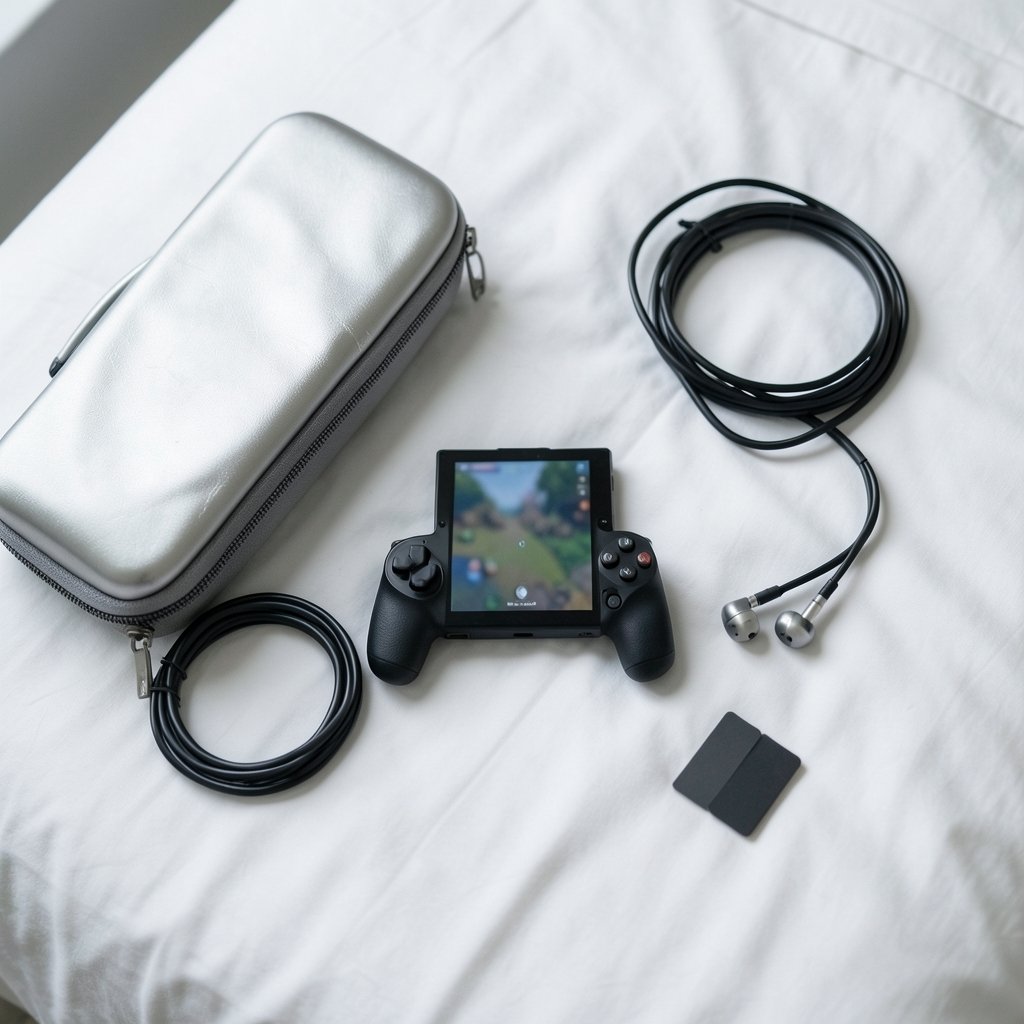
If someone has never owned a handheld, this is the machine most reviewers hand them. It pairs a slim design with a bright HDR OLED display, and the controls feel excellent thanks to improved haptics. Battery life improved over the original, and the jump to a 90Hz refresh rate makes the screen upgrade worth it on its own.
The honest downsides matter. It is large, it does not have removable controllers, and some Steam games simply do not run on it. On a smaller panel, certain games can also feel cramped. None of that stops it from being the default recommendation for anyone who wants to pick up the hobby without overthinking it.
One practical tip: before buying any SteamOS device, check the compatibility badge on the games you actually play most. Buyers who skip this step are the ones who end up frustrated in week one. If you are building out a whole setup, it helps to think about peripherals the same way you would when you choose a gaming keyboard for your setup — match the gear to your habits, not to the spec sheet.
Asus ROG Xbox Ally X: The Windows Option With the Slickest Interface
For players who prefer running Windows on a handheld, the ROG Xbox Ally X is the newest serious option. It supports a wider library of games than rivals like the Steam Deck and Nintendo Switch, which is the whole point of a Windows machine. The Xbox UI makes the experience feel slick and snappy, and the bumpers and buttons are clicky and responsive, with joysticks that have good tension. Substantial grips make it more comfortable than the typical handheld shape, and reviewers note it delivers the best battery life among x86 handhelds.
The trade-offs are real. It is expensive. The display does not support HDR and does not show great contrast. There are no trigger stops, and the interface is still buggy and inconsistent in places. Buyers who want polish out of the box should weigh that against the library advantage.
Lenovo Legion Go S (SteamOS): Comfort You Notice on Long Flights
This is the sleeper pick for people who care about how a handheld feels after hour two. In hands-on testing, the SteamOS version of the Legion Go S turned in the best frame rates in Shadow of the Tomb Raider, and testers found it more comfortable than the Steam Deck OLED because the Hall Effect RGB joysticks sit where thumbs do not have to reach far. It held up on cross-country flights, which is exactly the scenario these devices are sold for.
The limitation is size. Even in its smaller form, the handheld aspect is chunkier than ideal, and the 512 GB model lands around the $700 mark. That is well placed given the large screen and the included controllers, but it is not a budget entry point.
Lenovo Legion Go 2: For Players Who Want a Big Screen
The Legion Go 2 is the answer for anyone whose main complaint about handhelds is that the screen feels small. It offers the biggest display in this group along with detachable controllers, which turns it into a tiny tabletop console when you prop it up. If you mostly play at a desk or on a train tray table, that screen real estate changes the experience more than raw frame rates do.
The cost is portability. It is the heaviest, bulkiest way to play on the go, and the handheld aspect is chunkier than most rivals. Buyers who plan to hold it for hours should try one in person first.
MSI Claw A8 and Claw 8: Peak Performance at a Peak Price
The Claw line is what you buy when performance is the whole point. Reviewers describe the Claw 8 as the pinnacle of handheld gaming right now, with a processor fast enough to run intensive triple-A titles without compromising on performance or graphics. The ergonomics are impressive for long sessions, it feels like holding a real console controller, and the port selection is generous: a 3.5mm headphone jack, a MicroSD card reader, and two Thunderbolt 4 USB-C ports.
Two caveats. There is no OLED display, though brightness and color clarity are still excellent. And the price tag makes it tough to recommend to anyone who is not chasing maximum frames. The Claw A8 is the value-oriented version of the same idea.
Nintendo Switch Lite: The Compact, Affordable Choice
Following the market trend toward bigger and faster devices, Nintendo arguably ignored one of its core demographics: children. The Switch Lite fixes that. It is markedly more comfortable in smaller hands, more compact and lighter than any other model, and it cannot dock to a TV at all. At £177, it is the cheapest way into handheld gaming on this list.
The limits are clear. The LCD display is unspectacular, and the device will not get new games for much longer. For a younger player or a second console, that is a fair trade. For a primary device, it is not.
How to Choose Without Wasting Money
Start with your library, not the spec sheet. The single biggest mistake buyers make is buying hardware first and discovering their games do not run well on it. Work backward instead.
- List the five games you play most and check whether each one runs on your shortlisted device.
- Decide whether you want a console-like experience or a PC-like one. SteamOS and Windows behave very differently day to day.
- Weigh screen size against weight. Bigger panels are more immersive and harder to hold for hours.
- Budget for storage. Game installs are large, and a MicroSD card or a bigger SSD is often the smarter spend than a faster chip.
- Hold one before you commit if you can. Grip shape divides opinion more than any benchmark.
The same logic applies to the rest of your setup. A handheld is a companion device, and pairing it with gear that matches your habits — the way you would when you pick a wireless gaming headset that actually fits your needs — matters more than chasing the newest release.
Which Handheld Wins for Which Player
The pattern is simple once you line the options up. Steam Deck OLED wins on balance and price-to-experience. ROG Xbox Ally X wins on library size and interface polish, at a premium. Legion Go S wins on comfort. Legion Go 2 wins on screen. MSI Claw wins on raw performance. Switch Lite wins on price and size for younger players.
If you are also shopping for a desk-bound setup alongside your handheld, the same “fit first” rule applies when you find a cheap gaming laptop without wasting money. And if you are kitting out a shared household of players, it is worth settling on cool gaming nicknames early so everyone’s profiles stay straight.
Conclusion
There is no single best gaming handheld, only the best one for how you actually play. Buy the Steam Deck OLED if you want the safest all-rounder. Buy the ROG Xbox Ally X if a wide library and a familiar interface matter more than HDR. Buy the Legion Go S for comfort, the Legion Go 2 for screen size, the MSI Claw for frames, and the Switch Lite for a child or a tight budget. Check your library, hold one if you can, and spend the savings on storage rather than on a faster chip you will rarely notice.
Frequently Asked Questions
What is the best gaming handheld for most people?
The Steam Deck OLED is the safest recommendation for a first handheld. It combines a bright HDR OLED display, excellent controls with improved haptics, better battery life, and a 90Hz refresh rate. Its main limits are size, no removable controllers, and a handful of Steam games that will not run on it.
Is a Windows handheld better than a SteamOS one?
It depends on your library. Windows devices like the Asus ROG Xbox Ally X support a wider range of games than SteamOS rivals, which is a genuine advantage. The cost is money and polish: the Ally X is expensive, its display lacks HDR, and its interface is still buggy and inconsistent in places.
Which gaming handheld has the best battery life?
Among the x86-based options reviewed, the ROG Xbox Ally X is noted for delivering the best battery life. The Steam Deck OLED also improved on its predecessor, with roughly an extra hour of play on a single charge, which matters on long journeys.
Do I need to worry about game compatibility?
Yes, and it is the most common buyer mistake. Some Steam games do not run on the Steam Deck, and performance varies by title on every device. Check the compatibility status of the specific games you play most before you buy, not after.
Is the Nintendo Switch Lite a good first handheld?
For younger players and tight budgets, yes. It is more compact and lighter than any other Switch model, more comfortable in smaller hands, and costs £177. The trade-offs are an unspectacular LCD screen, no TV docking, and the fact that it will not get new games for much longer.
How much should I expect to spend?
Prices vary widely and change often. The Legion Go S with 512 GB sits around the $700 mark, while the Switch Lite is £177. Premium Windows machines cost considerably more. Confirm current pricing on the official product page before you commit, since published figures go stale quickly.











