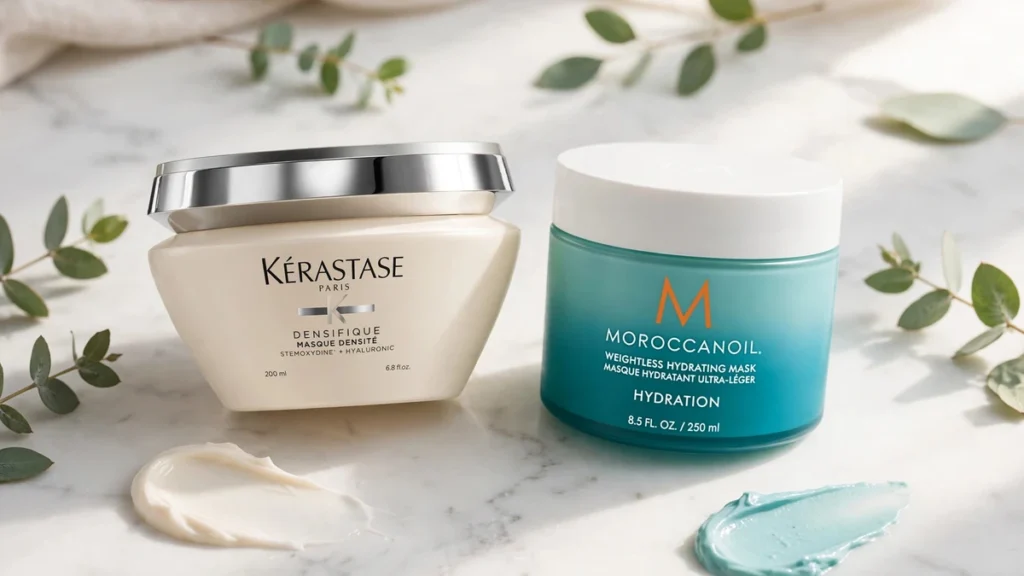
Fine hair does not need less care. It needs lighter care. A rich, heavy mask can leave fine strands flat, limp, and greasy at the roots within hours, which is why so many people with fine hair give up on masks altogether. The irony is that fine hair often needs a mask more than most. It tangles easily, breaks easily, and loses volume the moment it is weighed down, so the right mask has to do two things at once: repair and hydrate without adding weight.
That is why this guide is organised around weight, not just repair. A mask that works beautifully on thick, coarse hair can be the worst choice for fine hair, and a mask that feels like almost nothing can still strengthen strands, smooth frizz, and add visible body. The difference is the formula: lightweight humectants and proteins instead of heavy butters and oils, and a texture that rinses clean.
Below are nine hair masks worth considering in 2027, from a volumising treatment to gentle, fragrance-light options for sensitive scalps. Each one is described by what it is good at, what to watch for, and who it suits best, so you can choose with your hair in mind, not just a bestseller list.
Key takeaways
- Fine hair needs lightweight masks: proteins, hyaluronic acid, and light humectants add strength and shine without flattening roots.
- Heavy butters and oils, such as shea butter and coconut oil, can weigh fine hair down and leave it looking greasy within hours.
- Apply mask from mid-lengths to ends, not on the scalp, and rinse thoroughly to keep volume at the roots.
- Once a week is enough for most fine hair; twice a week only if hair is damaged, bleached, or heat-styled often.
- No mask adds permanent thickness, and a mask that leaves hair limp, coated, or dull after rinsing is too heavy for your hair type.
What fine hair actually needs from a mask
Fine hair is not the same as thin hair. Fine refers to the diameter of each strand, and fine strands have less internal structure to hold a style, which is why they go flat so easily. They also have a smaller surface area, so a heavy product coats them more completely, and that coating is what kills volume. A good mask for fine hair works inside the strand rather than sitting on top of it, using proteins to reinforce the cuticle and light hydrators to smooth it, without leaving a film behind.
Volume is the other half of the problem. Fine hair loses body when the roots are weighed down, so where you apply a mask matters as much as which one you choose. Mid-lengths to ends is the rule, and roots should stay product-free unless a formula is specifically designed as a lightweight scalp treatment. A mask that promises volume usually does it by lifting the cuticle slightly and adding a light protein layer, which gives strands more grip and more lift at the root.
Damage changes the calculation. Bleached, heat-styled, or colour-treated fine hair needs more repair, but still not more weight. Bond-building formulas, light keratin, and amino acids can rebuild strength without the heaviness of a butter-rich mask, which is why so many of the best options for fine hair are also the best options for damaged hair. The key is to choose repair that rinses clean.
How we chose these masks and what to look for
Look first at the texture. A mask for fine hair should feel light, almost gel-like or like a thin cream, and it should rinse out easily with no slippery residue. If a mask feels like a thick butter in the jar, it will probably feel heavy on fine hair too. Look for words such as weightless and volumising on the label, and be wary of formulas built around shea butter, coconut oil, or castor oil as the first ingredients.

Look next at the active ingredients. Hydrolysed proteins, such as wheat, soy, and keratin, strengthen fine strands without adding bulk. Hyaluronic acid and glycerin add hydration that does not weigh hair down. Panthenol, or pro-vitamin B5, adds shine and a little thickness to each strand. Bond builders, such as bis-aminopropyl diglycol dimaleate, help repair damage from bleach and heat while staying light. Our guide to the best hydrating hair masks explains the difference between hydration and heaviness, because a mask can be deeply hydrating yet too heavy for fine hair.
Finally, look at the size and the scent. A mask used once a week should last two to three months, and a smaller jar is often the smarter buy for fine hair. A light, fresh scent is a practical plus, since a heavy fragrance can linger on fine hair and feel overpowering. A mask you enjoy using every week is worth more than a stronger one you avoid.
The 9 best hair masks for fine hair of 2027
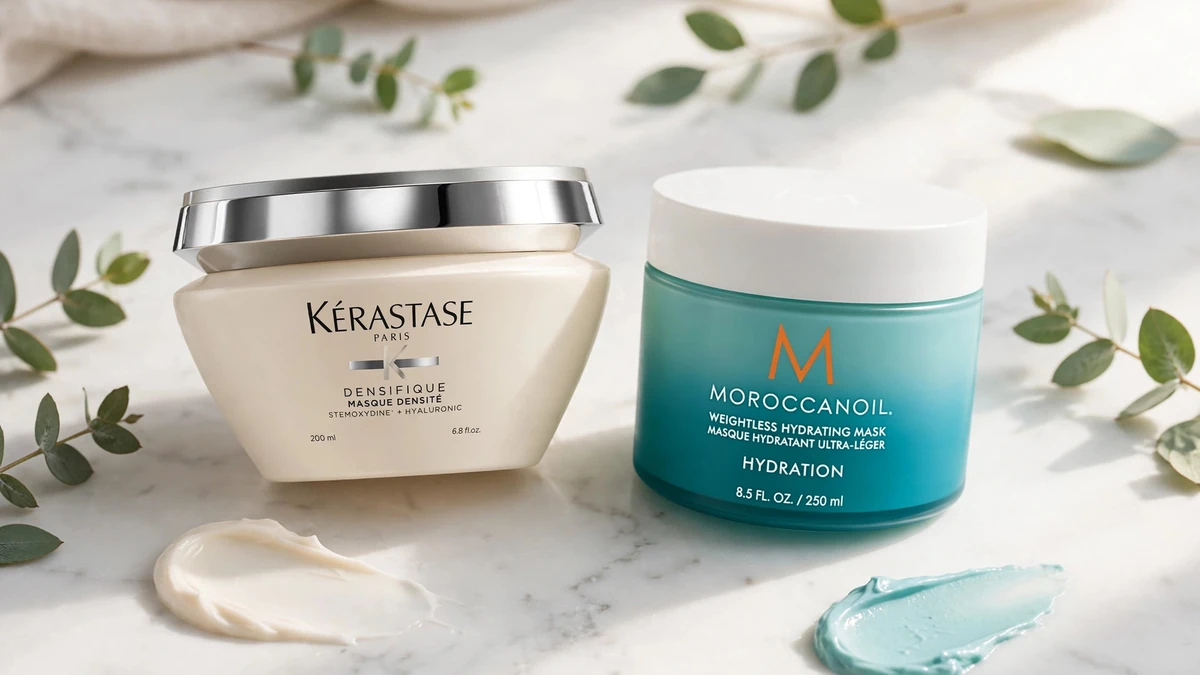
Kérastase Densifique Masque Densité
What we like: A volumising mask designed for fine, thinning hair, with hyaluronic acid and gluco-peptide to add body and density, and a light texture that rinses clean.
What to consider: Premium price, and it is best for volume rather than deep repair, so very damaged hair may need a bond builder too. Key ingredients: Hyaluronic acid, gluco-peptide, ceramides. Hair type: Fine, thinning. Size: 200 ml. Cruelty-free: No.
This is the mask to reach for when volume is the priority. It leaves fine hair feeling fuller and easier to style, without the coated feeling that heavier masks leave behind.
Moroccanoil Weightless Hydrating Mask
What we like: A genuinely weightless formula with argan oil in a light, fast-absorbing base, designed specifically for fine hair that needs hydration without flatness.
What to consider: A lighter treatment, so very dry or damaged hair may need something richer, and the scent is noticeable. Key ingredients: Argan oil, glycerin. Hair type: Fine, dry. Size: 250 ml. Cruelty-free: Yes.
For fine hair that feels dry but goes limp with most masks, this is a practical middle ground. It hydrates and smooths without sacrificing volume.
Olaplex No. 8 Bond Intense Moisture Mask
What we like: A bond-building mask that repairs damage from bleach, colour, and heat while staying surprisingly light, with a smooth texture that rinses out easily.
What to consider: Best for damaged hair rather than volume, and it needs three to five minutes to work properly. Key ingredients: Bis-aminopropyl diglycol dimaleate, avocado oil, squalane. Hair type: Fine, damaged, colour-treated. Size: 100 ml. Cruelty-free: Yes.
If your fine hair is also damaged, this is the repair option that does not cost you volume. It is one of the lightest bond builders available, and a little goes a long way.
Amika The Kure Intense Repair Mask
What we like: A protein-rich mask with bond cure technology that strengthens fine, damaged hair, with a whipped texture that feels light despite its repair power.
What to consider: Protein-heavy, so using it more than once a week can make fine hair feel stiff, and it is best alternated with a hydrating mask. Key ingredients: Bond cure technology, shea butter, borage oil. Hair type: Fine, damaged. Size: 250 ml. Cruelty-free: Yes.
A strong repair mask for fine hair that has been bleached or heat-styled often. Use it weekly, not daily, and hair will feel stronger without feeling coated.
Briogeo Don’t Despair, Repair! Deep Conditioning Mask
What we like: A clean-beauty favourite with rosehip oil, algae extract, and B vitamins, in a texture that is rich enough to repair but light enough for fine hair.
What to consider: The scent is floral and noticeable, and very fine hair may prefer a smaller amount applied only to the ends. Key ingredients: Rosehip oil, algae extract, panthenol. Hair type: Fine, dry, damaged. Size: 236 ml. Cruelty-free: Yes.
This is a good all-rounder for fine hair that needs both hydration and repair. It is gentle, widely available, and easy to fit into a weekly routine.
Ouai Treatment Masque for Fine Hair
What we like: A fine-hair version of a popular mask, with hydrolysed keratin and amino acids to strengthen strands, and a light texture that does not flatten roots.
What to consider: A smaller jar than some competitors, and it works best as a weekly treatment rather than a daily conditioner. Key ingredients: Hydrolysed keratin, amino acids, tamarind seed extract. Hair type: Fine, medium. Size: 236 ml. Cruelty-free: Yes.
Designed from the start for fine hair, this mask gets the balance right. It adds strength and shine without the weight that makes fine hair fall flat.
Verb Ghost Mask
What we like: A weightless mask with moringa oil that hydrates and detangles fine hair, with almost no residue, and a fresh, light scent.
What to consider: A lighter treatment, so it is best for maintenance rather than deep repair, and very damaged hair may need something stronger. Key ingredients: Moringa oil, hydrolysed soy protein. Hair type: Fine, all. Size: 180 ml. Cruelty-free: Yes.
If most masks feel too heavy for your hair, this is the one to try first. It is genuinely weightless, and it leaves fine hair soft and easy to comb without any greasy feeling.
Christophe Robin Volumising Mask with Rose Extracts
What we like: A volumising mask with rose water and baobab leaf extract that adds body and shine, with a light gel-cream texture that suits fine hair.
What to consider: Premium price, and the volume effect is subtle rather than dramatic, so it works best as part of a volumising routine. Key ingredients: Rose water, baobab leaf extract. Hair type: Fine, flat. Size: 250 ml. Cruelty-free: No.
For fine hair that needs volume and a little luxury, this mask adds lift and shine without heaviness. It is a good choice before styling, when you want body that lasts.
Living Proof Restore Mask Treatment
What we like: A lightweight repair mask that smooths and strengthens fine hair, with a patented molecule that helps hair resist damage and stay cleaner for longer.
What to consider: Best for mild to moderate damage, and it is not the cheapest option for the size. Key ingredients: Patented OFPMA molecule, shea butter. Hair type: Fine, damaged. Size: 200 ml. Cruelty-free: Yes.
A smart choice for fine hair that is damaged but still needs to look full. It repairs and smooths without the heavy, coated feeling that makes fine hair look thinner.
Which hair mask is right for your fine hair
Fine hair that is mostly healthy needs volume and light hydration. Look for volumising masks with hyaluronic acid, panthenol, or light proteins, and avoid anything built around heavy butters. A weightless mask used once a week is usually enough, and you can add a volumising shampoo to the same routine for more lift.
Fine hair that is bleached, coloured, or heat-styled often needs repair first. Bond builders and light keratin treatments strengthen strands without adding bulk, and they work best when used weekly and rinsed thoroughly. If your hair feels both damaged and flat, use a bond-building mask one week and a volumising mask the next, rather than seeking one mask that does everything. Knowing how to wash your hair properly helps here too, because a clean scalp and thorough rinsing are what let a lightweight mask do its work without residue.
Fine hair that is also oily needs the lightest touch of all. Choose a mask with almost no oil in the formula, apply it only to the ends, and rinse with cool water to close the cuticle. If your roots get greasy quickly, skip the mask on the top half of your hair entirely, and use a dry shampoo on non-wash days.
The caveats that matter
A mask cannot add permanent thickness to fine hair. It can make strands feel fuller and stronger, but the diameter of each hair is set by genetics, and no product changes that. What a good mask does is protect the hair you have, reduce breakage, and add temporary volume and shine, which together make fine hair look much better.
| Detail | What is known |
|---|---|
| Best formula type | Lightweight, weightless, or volumising; proteins and hyaluronic acid over heavy butters |
| Where to apply it | Mid-lengths to ends only; keep mask off the scalp and roots |
| How often to use it | Once a week for most fine hair; twice a week only if damaged or bleached |
| How long to leave it on | Three to five minutes is enough; longer does not add benefit for fine hair |
| What to avoid | Heavy shea butter, coconut oil, and castor oil formulas that flatten fine hair |
| Protein balance | Protein once a week is enough; too much can make fine hair feel stiff and brittle |
| Who should start gently | Very fine, oily, or easily weighed-down hair; use a smaller amount on the ends only |
| What it does not do | It does not add permanent thickness, replace a haircut, or repair split ends |
If your scalp is irritated, flaking, or itchy, or if you are using prescription scalp treatment, check with your clinician or dermatologist before adding a new mask, especially one with fragrance or active ingredients. A mask is a hair product, not a scalp treatment, and keeping it off the scalp is the simplest way to avoid problems. For a lighter daily step, our guide to the best hair oils for straight hair covers lightweight oils that suit fine hair without the weight of a heavy mask.
Checklist: choosing a hair mask for fine hair honestly
Use these checks before you buy, and again after two weeks of use.
- Check the texture: it should feel light and gel-like, not thick and buttery, and it should rinse out easily.
- Check the ingredients: look for proteins, hyaluronic acid, and panthenol, not shea butter or coconut oil at the top of the list.
- Check the amount: use a coin-sized amount for fine hair, applied to mid-lengths and ends only.
- Check the rinse: hair should feel clean and light after rinsing, not coated or slippery.
- Check the volume: roots should still lift after drying; if they fall flat, the mask is too heavy.
- Check the balance: alternate a protein mask with a hydrating mask, so hair stays strong without feeling stiff.
Frequently asked questions
How often should I use a hair mask on fine hair?
Once a week is enough for most fine hair. If your hair is bleached, coloured, or heat-styled often, twice a week can help, but use a lightweight formula and keep it off your roots.
Can a hair mask make fine hair look thicker?
Temporarily, yes. Proteins and volumising ingredients coat each strand lightly and add body, which makes hair look fuller. The effect washes out, and no mask changes the actual thickness of your hair permanently.
Should I put hair mask on my scalp?
No, not with a regular mask. Apply from mid-lengths to ends only, because mask on the scalp weighs down roots, can clog follicles, and makes fine hair look greasy faster.
Why does my hair feel flat after using a mask?
The mask is probably too heavy for your hair type. Heavy butters and oils coat fine strands and pull them down. Switch to a weightless or volumising formula, use less product, and rinse thoroughly with cool water.
Can I use a protein mask every week?
Yes, once a week is usually fine, but watch for stiffness. If your hair starts to feel dry or brittle, you are using too much protein. Alternate with a hydrating mask for a few weeks until it feels soft again.
Do I still need conditioner if I use a mask?
On mask days, no. A mask replaces conditioner for that wash. On other wash days, use a lightweight conditioner on the ends only, so you do not add weight between treatments.
The bottom line
The best hair mask for fine hair in 2027 is not the richest or the most expensive. It is the lightest one that still repairs and hydrates, that you will use every week, and that leaves your roots lifting instead of falling flat. For volume, a volumising mask with hyaluronic acid is a strong choice. For damaged fine hair, a lightweight bond builder is the smarter start, and it will still deliver visible strength without the weight.
Choose one mask, use it once a week on mid-lengths and ends, rinse thoroughly, and judge it on how your hair looks after drying, not on how rich it feels in the jar. That is the honest way to get the benefit a mask is known for, without the flatness that makes people with fine hair give up on them.