Chickpeas feed more people than almost any other pulse on earth. They grow on low bushes in dry fields from the Deccan to the Atlas foothills, and at harvest the plants are pulled or cut, dried in the sun and threshed, and the round peas pour out of the pods. The hummus on the plate, the falafel in the wrap and the chana masala in the bowl all begin in those fields.
A chickpea farm retreat puts you on a small farm where that pulse still grows, when the bushes turn from green to straw and the harvest begins. You sleep in a farmhouse room, eat chickpeas cooked the way the farm has always cooked them, walk the rows at dawn, and watch the plants pulled, threshed and milled into flour. The farms run from the plains of central India to the highlands of Ethiopia, and the chickpea is the thread that ties them together.
Below are nine chickpea farm retreats worth considering in 2027, from the pulse country of India to a remote highland farm in East Africa. Each of the nine is judged on its strengths, its weak points and the traveller it suits, so the choice comes down to how you travel rather than where the map points.
Key takeaways
- Chickpeas are the world’s most widely grown pulse after beans, and a chickpea farm stay is built around the harvest, the threshing and the cooking, so ask the farm which type it grows before you book.
- Desi chickpeas are small, dark and rough-coated, while kabuli chickpeas are large, pale and smooth, and the two cook in different ways, so a farm that grows desi will feed you differently from one that grows kabuli.
- The Indian harvest falls in February and March, the Mediterranean cutting runs in June and July, and the southern harvest lands in October and November, and the exact week moves with the rain, so confirm it before booking flights.
- Most chickpea farms are small and take only a few guests, so expect plain rooms, shared meals and dust on your boots.
- Harvest dates are a guess, not a promise: a stay planned around one threshing day can end with the bushes still green in the field.
What a chickpea farm retreat actually is
A chickpea farm retreat means three to five nights on a working farm that grows chickpeas, with the chickpea harvest as the reason for the trip. Guests sleep in a farmhouse room or a converted barn, eat from the farm kitchen, and join the season’s work, walking the rows and seeing the plants pulled, threshed and cooked in the farm kitchen.
Chickpeas have been grown for food for thousands of years, and the great chickpea regions took shape around the dishes they served. The plains of central India fed the chana stalls of the Deccan, the fields of Anatolia fed the roasted-chickpea sellers of Turkey, and the Bekaa Valley fed the hummus makers of Lebanon.
Most of these farms sit in dry country, with low green bushes in wide fields and a threshing yard by the barn. Life on these farms runs to the field’s rhythm rather than a hotel’s, with supper at one long table, and the finest stays put you to work in the harvest.
How we picked these stays, and what to ask first
We began with where chickpeas truly grow, not where they sell best. A genuine chickpea farm offers fields to walk through, bushes to stand among at harvest, and a kitchen, a mill or a stone oven working with its own pulse. A farm that buys its chickpeas in is not a chickpea farm, whatever the website says.
The best farms take few guests, so the harvest stays honest work rather than a performance for visitors. They also spell out what the nightly rate covers, with meals, the ride in from the nearest town and walks through the fields part of the price rather than added on arrival. A farm that talks plainly about the harvest, the threshing and the cooking usually looks after its guests well too.
The 9 best luxury chickpea farm retreats of 2027
Madhya Pradesh, India — Chickpeas in the Heart of India
What we like: Chickpeas in Madhya Pradesh, where the desi bushes cover the black-soil plains and the farm cooks chana masala, roasted chana and besan sweets from its own harvest. The fields are vast, the villages are old, and the kitchen serves dal, poha and warm chapatis.
What to consider: The harvest days are hot and dusty, the farms are plain, and the rooms are simple.
Style: Central Indian plain farm stay. Best for: Travellers who want chickpeas where they grow best. Price range: $65–$95 per night. Standout feature: Chana masala and roasted chana from the farm’s own desi harvest.
Rajasthan, India — Chickpeas on the Desert Edge
What we like: Chickpeas in Rajasthan, where the bushes grow on the edge of the Thar and the farm roasts chana over charcoal and grinds besan for sweets and snacks. The desert light is sharp, the villages keep their painted walls, and the kitchen serves ker sangri, millet bread and warm milk.
What to consider: The desert edge is dry and the nights are cold, so the field work is best at dawn.
Style: Rajasthani desert farm stay. Best for: Travellers who want chickpeas with desert light and old villages. Price range: $100–$130 per night. Standout feature: Charcoal-roasted chana and besan sweets from the desert-edge harvest.
Central Anatolia, Turkey — Chickpeas on the Anatolian Plateau
What we like: Chickpeas in Central Anatolia, where the kabuli bushes spread across the high plateau and the farm roasts leblebi and cooks nohut stews from its own crop. The plateau is wide and bright, the villages keep their stone houses, and the kitchen serves lentil soup, bulgur and warm pide with farm honey.
What to consider: The plateau is windy at harvest, and the farm is far from the towns.
Style: Anatolian plateau farm stay. Best for: Travellers who want chickpeas on a high bright plain. Price range: $135–$165 per night. Standout feature: Leblebi roasted on the farm from its own kabuli chickpeas.
Sinaloa, Mexico — Chickpeas by the Pacific
What we like: Chickpeas in Sinaloa, where the kabuli fields run toward the Pacific and the farm cooks garbanzo stews and caldo with its own harvest. The coast is warm, the towns keep their plazas and markets, and the kitchen serves ceviche, tamales and warm tortillas with farm salsa.
What to consider: The harvest falls in the dry season, so the fields are bare by late spring, and the farm is a long drive from the coast towns.
Style: Mexican Pacific farm stay. Best for: Travellers who want chickpeas with a warm coast nearby. Price range: $170–$200 per night. Standout feature: Garbanzo caldo cooked from chickpeas grown on the farm.
Bekaa Valley, Lebanon — Chickpeas Between the Mountains
What we like: Chickpeas in the Bekaa Valley, where the kabuli bushes grow between the Lebanon and Anti-Lebanon ranges and the farm makes hummus, falafel and balila from its own crop. The valley is fertile, the villages keep their stone mills, and the kitchen serves tabbouleh, kibbeh and warm pita with farm olive oil.
What to consider: The valley harvest is short, and the farm takes very few guests.
Style: Lebanese valley farm stay. Best for: Travellers who want chickpeas where hummus began. Price range: $205–$235 per night. Standout feature: Hummus and falafel made from the farm’s own kabuli chickpeas.
Puglia, Italy — Chickpeas on the Heel of Italy
What we like: Chickpeas in Puglia, where the bushes grow in the red earth of the heel and the farm cooks ciceri e tria and chickpea soups from its own harvest. The countryside keeps its trulli and dry-stone walls, the sea is close, and the kitchen serves orecchiette, burrata and warm focaccia with farm olive oil.
What to consider: The fields are small and the harvest is quick, so the cutting week is easy to miss.
Style: Puglian country farm stay. Best for: Travellers who want chickpeas with Italian cooking and a near sea. Price range: $240–$270 per night. Standout feature: Ciceri e tria cooked from chickpeas grown on the farm.
Queensland, Australia — Chickpeas in the Northern Summer
What we like: Chickpeas in Queensland, where the bushes cover the inland downs and the farm roasts chana and cooks chickpea curries from its own crop. The country is wide, the skies are huge, and the kitchen serves lamb, damper and fresh salads with farm honey.
What to consider: The harvest falls in October and November, the opposite season to Europe, so the trip needs planning a year ahead.
Style: Australian downs farm stay. Best for: Travellers who want chickpeas in the southern summer. Price range: $275–$305 per night. Standout feature: Roasted chana and chickpea curries from the Queensland harvest.
Haouz Plain, Morocco — Chickpeas Below the Atlas
What we like: Chickpeas on the Haouz Plain, where the bushes grow below the Atlas foothills and the farm cooks harira and chickpea tagines from its own crop. The plain is warm, the mountains rise behind it, and the kitchen serves couscous, mint tea and warm bread with farm argan oil.
What to consider: The plain is hot at harvest, and the farm is a long drive from Marrakech.
Style: Moroccan plain farm stay. Best for: Travellers who want chickpeas below the Atlas mountains. Price range: $310–$340 per night. Standout feature: Harira and chickpea tagines from the Haouz harvest.
Amhara Highlands, Ethiopia — Chickpeas in the Ethiopian Highlands
What we like: Chickpeas in the Amhara Highlands, where the bushes grow on high terraces and the farm cooks shiro wat and fasting dishes from its own crop. The highlands are cool, the churches are old, and the kitchen serves injera, lentil stews and warm honey wine with farm butter.
What to consider: The highlands are the most remote stay on this list, and the harvest falls in the short rains, so the threshing week is short and easy to miss.
Style: Ethiopian highland farm stay. Best for: Travellers who want chickpeas at the far end of the map. Price range: $345–$380 per night. Standout feature: Shiro wat cooked from chickpeas grown on the highland terraces.
Which chickpea region fits your trip
If you want chickpeas where the pulse story runs deepest, start with Madhya Pradesh or Rajasthan, where the grain has been grown and cooked the longest and the kitchens run to chana masala and roasted chana. Both welcome a newcomer gently, with easy walks and slow table meals.
If you want scenery with your chickpeas, the Amhara Highlands and the Haouz Plain put the fields in mountain country, Queensland puts them under huge southern skies, and the Bekaa Valley puts them between two mountain ranges.
If you want the grain that goes with the chickpea, our guide to the wheat farm retreats covers the bread every farm table is built on, and the pumpkin farm retreats offer a different harvest altogether, with big orange fruit and autumn markets instead of low bushes and threshing yards.
The caveats that matter
Chickpea farming answers to the weather: farms give a best guess, never a promise, and a trip pinned to one threshing day gambles on the rain. The real warning is the kitchen, easy to overlook on a gentle country stay.
| Detail | What is known |
|---|---|
| Best time to visit | February into March in India, June into July around the Mediterranean, October into November in the south, once the bushes turn straw-coloured; the precise week shifts with the rain |
| What the work involves | Walking the rows, watching the plants pulled and threshed, and seeing the peas cooked and milled into flour |
| How long a stay runs | Three to five nights, timed to the late-season threshing weeks |
| Who should take care | Guests with a legume allergy, because chickpeas are the heart of the stay, and anyone unused to strong sun or harvest dust |
| What the kitchen serves | Chickpea stews, roasted chana, flatbreads and salads, usually with the farm oil poured beside the plate |
| Gluten note | Chickpea flour is naturally free of gluten, but the farm bread served beside it is usually wheat, so ask the kitchen what it can safely serve |
| What to pack | Sturdy closed shoes, a sun hat, a warm layer for cold highland nights, and clothes you can wash by hand |
| What it does not do | No promised threshing day, no fixed menu, and no hotel-style service on a working farm |
If a legume allergy, a condition that heat worsens, or a strict gluten-free diet applies, speak to the farm before booking. One question about the kitchen and the bread can spare you a difficult stay, and a farm that answers it straight is usually worth the visit. The hop farm retreats sound the same caution, since the beer on their tables is brewed from grain too.
Checklist: booking a chickpea farm stay honestly
Run through these checks before you pay, and once more the week before you travel.
- Get the farm’s threshing window in writing, and ask what the plan is if the bushes are still green on arrival.
- Ask whether supper, the transfer from the nearest town and the field walks come with the nightly rate.
- Ask whether the threshing and cooking happen on the farm, and whether the kitchen can serve a meal without chickpeas.
- Step into the bedroom before paying, and try the bed, run the taps and feel the heating — the rooms are plain.
- Pack for fierce sun and dusty paths: closed shoes, a hat, a warm layer for cold evenings, and clothes you can wash by hand.
- Keep one day free for the nearest town, so a harvest that shifts still leaves a good trip behind.
Frequently asked questions
What is the difference between desi and kabuli chickpeas?
Desi chickpeas are small, dark and rough-coated, while kabuli chickpeas are large, pale and smooth. Desi peas hold their shape in curries and roast well, kabuli peas mash smoothly into hummus, and the two grow in different climates, so a farm that grows desi will feed you differently from one that grows kabuli.
When are chickpeas harvested, and how long does it last?
The Indian harvest falls in February and March, the Mediterranean cutting runs in June and July, and the southern harvest lands in October and November, and the threshing itself takes a week or two. The exact week shifts with the rain, so ask the farm for its threshing window rather than one date, and hold off booking flights until the window is set.
What does a ripe chickpea field look like?
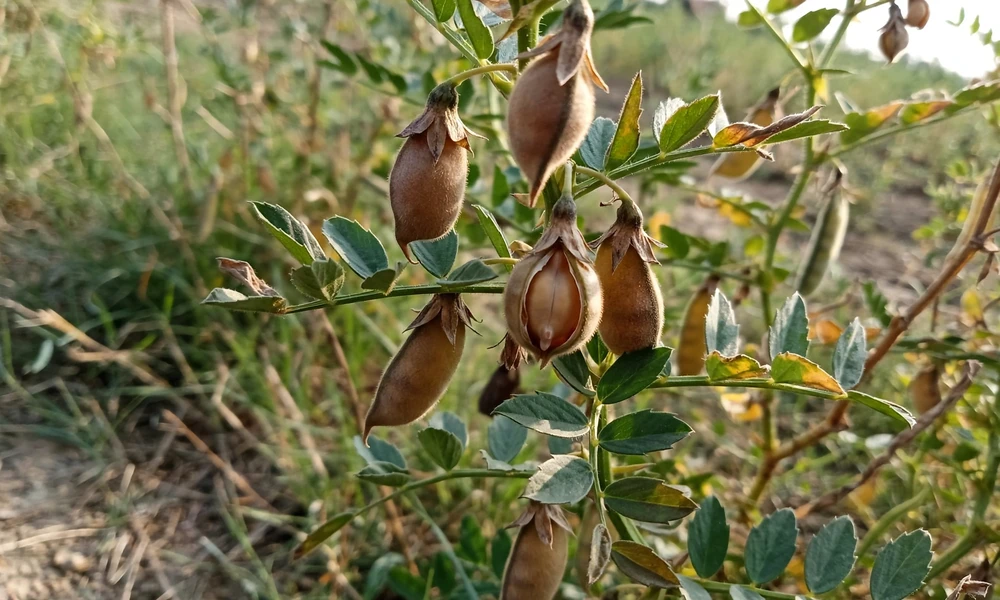
A ripe chickpea field turns from green to straw, and the low bushes dry out until the pods rattle when you shake them. Rub a pod between your palms and the peas inside should feel hard and dry, with no green left in the shell, and the field should smell of warm dust.
May I take part in the pulling and threshing?
Most farms let you walk the rows and help with the pulling and the threshing, and some let you sit in the kitchen and cook with the peas. The threshing itself is dusty work, so ask the farm what guests can do before you book, and expect dust on your clothes either way.
Where should a first-time chickpea traveller start?
Madhya Pradesh is the easiest first trip: the chickpea fields are at their widest there, the farms are used to guests, and the chana masala best shows what the pulse can do. If you want the story as well as the bowl, the Bekaa Valley is the valley where hummus began.
Do chickpea farms suit travellers who cannot eat gluten?
Mostly. The fields, the threshing and the harvest are worth the trip alone, and chickpea flour itself carries no gluten, but the bread served beside the chickpeas is usually wheat. Ask the farm what a gluten-free guest can eat, and book the threshing week rather than the baking week.
The bottom line
A chickpea farm retreat suits travellers who prefer dry golden fields, threshing yards and chickpeas cooked the farm’s own way to a hotel. The stews are warm and fresh, and the finest stays feed you from land they farmed themselves.
Set the harvest week before the travel dates, and keep a spare day at the end. When the chickpeas ripen on time you will eat stews from peas pulled that week, and when they do not, the hills, the plains and the old towns will still carry the trip.