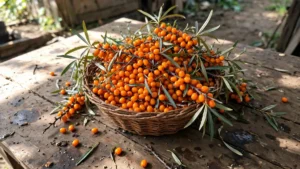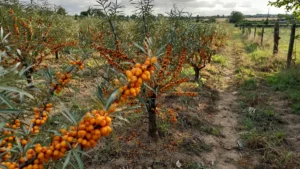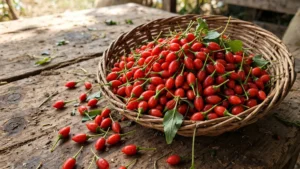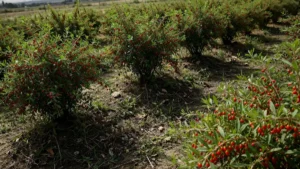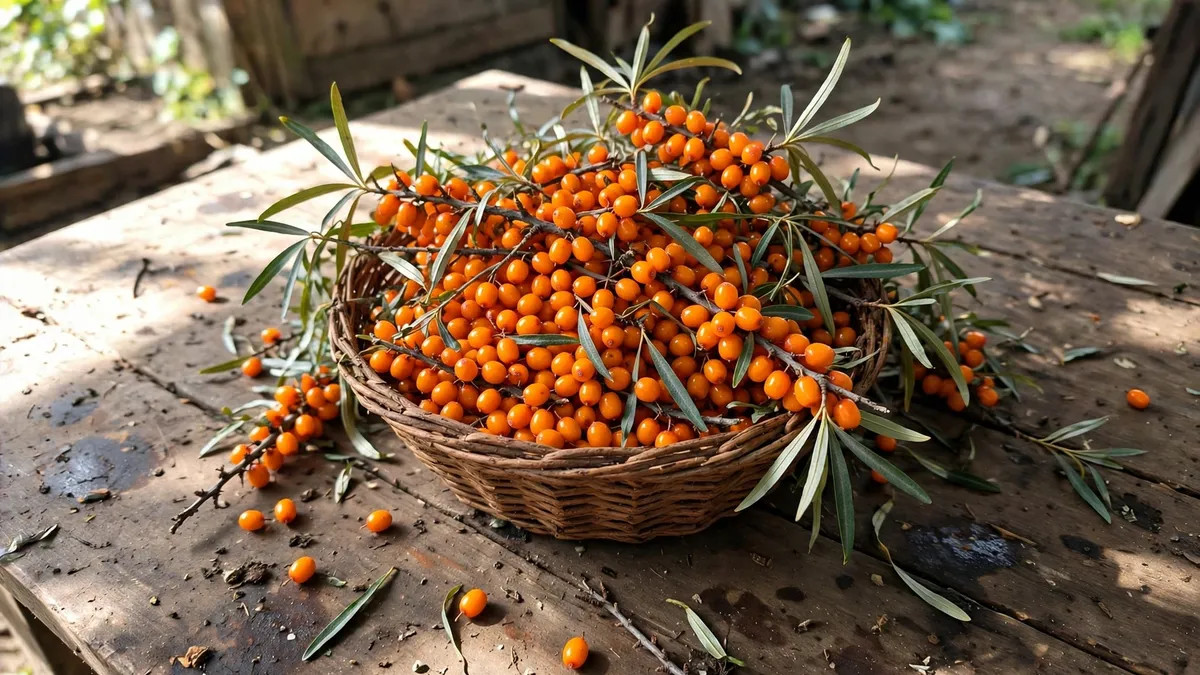

Sea buckthorn is the rare berry that tells you when it is ready by colour alone. The shrubs are low and thorny: the berries hang in dense orange clusters, turn from pale yellow to deep orange as the sugars arrive, and burst under a gentle squeeze when the juice is at its peak. A sea buckthorn farm escape is a few days on a working berry farm at harvest time, learning to read the fruit, shaking it down onto cloths, and pressing it the same day.
The trip is briefer and busier than most farm escapes. Sea buckthorn ripens in one quick flush of three or four weeks, not a long season, so the dates are tight and the work is brisk — cloths, baskets and pressing drums rather than slow wandering. The farms that welcome guests are family places, and the best of them cook with the harvest at every meal, from juice at breakfast to oil drizzled over dinner.
This guide walks through the nine steps that turn a sea buckthorn farm visit into a proper escape in 2027: tasting the berry before you book, choosing the harvest weeks, picking a valley by its cooking, and bringing the harvest home without crushing it. Follow them in order and the thicket does the rest.
Key takeaways
- Taste sea buckthorn at home first: the juice is sharply tart, the oil is smoother and nuttier, and the difference decides which valley suits you.
- Buckthorn picks in one flush of three to four weeks, so the farm names a short window rather than a long season.
- Plan around the picking flush, not the flight deals — a farm outside its flush is just a house with thorny bushes.
- The berries are naturally gluten-free, but farm kitchens bake bread and fry snacks, so put the allergy in writing with your first message.
- Loose berries crush in luggage; juice, oil and dried berries travel far better.
What a sea buckthorn farm escape involves
A sea buckthorn farm escape is a stay of two to four nights on a working berry farm during the picking flush. You sleep in a farmhouse or small lodge on the property, eat meals cooked from the farm’s own produce, and spend your days in the thicket: walking the rows at dawn, shaking branches over cloths, sorting berries under the trees, and watching the press squeeze orange juice the same afternoon.
The work is brisk and hands-on. Sea buckthorn shrubs are low, so most picking happens from the ground, and the crew works at a pace guests can follow once they learn the shake. Some farms press the berries into juice on the day they are picked, and that juice tastes nothing like the bottled kind. The days are built around the berries: a cool morning in the thicket, a long lunch under the trees, and an afternoon at the press or the sorting table. Evenings are for the oil press and the farm table, where the day’s pick appears in every course.
The escape suits travellers who want their meals to come from the field they stand in and are happy to let the farm run the day. It is not a resort holiday: the thicket decides when you rise, the kitchen decides what you eat, and the weather decides whether the picking happens at all. That is the point — the berries run the trip, and the best stays are honest about it.
How to plan it, and what to ask first
Start by deciding what kind of buckthorn you like. The juice is sharply tart and citrusy and suits drinking; the oil is smoother and nuttier and suits cooking. Ladakh leans juice, Romania leans syrup, and Germany is famous for its buckthorn cordial. Knowing your preference narrows the valleys before you look at a single room.

Put three questions to the farm before you commit. First, which weeks the main flush falls in, and whether guests may shake the branches. Second, whether the kitchen can cook a full gluten-free menu, since buckthorn dishes sit beside wheat breads and fried snacks. Third, find out what the room rate includes — some farms bundle every meal and picking session, while others charge them apart. Planning a rambutan farm escape follows the same three questions, and they work just as well for buckthorn.
The 9 steps to plan a sea buckthorn farm escape
Sample the juice and the oil before picking a valley
Buy a bottle of buckthorn juice and a small jar of the oil before you choose a valley: taste them side by side and notice which you reach for twice. The juice is bright, sour and citrusy, and it wakes up a breakfast. The oil is smoother, nuttier and richer, and it is the better ingredient for cooking.
What to Do: Taste both the juice and the oil, and note which flavour you prefer. What to Avoid: Booking a valley famous for a buckthorn product you have never tried. Best For: First-time buckthorn travellers. Time Needed: Twenty minutes at a health food shop. Standout Tip: Smell the juice before you drink it — a good batch smells of oranges and sea air.
Time your visit for the berry picking
Sea buckthorn picks in one flush of three to four weeks, and the farm can name its main window months ahead. Book inside that window, even when the airfare stings. A farm outside its flush has berries on the shrubs but nothing worth shaking down, and the kitchen cooks from last year’s oil instead of today’s harvest.
What to Do: Get the farm to name its flush in writing, then book inside it. What to Avoid: Choosing dates by airfare and hoping the berries cooperate. Best For: Travellers who will not miss the harvest. Time Needed: A single evening with the farm calendars. Standout Tip: Mid-flush is busier and better than the opening week.
Decide your valley from what the kitchen serves
Every buckthorn valley cooks the berry differently: Ladakh makes juice and tea, Romania makes syrups and stews, Germany makes cordials, Finland makes porridge and teas. Pick the valley whose cooking you want to eat for three days, not the one with the prettiest photographs.
What to Do: Study the farm’s menu before its reviews. What to Avoid: Picking a valley for its scenery and discovering a kitchen you do not enjoy. Best For: Food lovers. Time Needed: An hour over the farm menus. Standout Tip: A farm that lists its dishes cooks them well.
Ask if guests shake the branches too
Some farms welcome guests into the thicket with cloths; others keep visitors on the veranda and hand them juice at lunch. Both stays are honest, yet the trips feel nothing alike. Ask before you book, and ask what the picking involves: shaking branches over cloths, or a guided walk with the crew.
What to Do: Ask directly whether guests shake branches, and what the work looks like. What to Avoid: Assuming each farm stay includes picking. Best For: Travellers who like to work with their hands. Time Needed: Ten minutes on the first email. Standout Tip: Farms that welcome pickers usually say so up front.
Learn the shake from a harvest video
A ripe buckthorn berry bursts under a gentle thumb, glows deep orange, and comes away from the branch with a light shake. Pale berries stay hard, and stripping them by hand crushes the fruit and scratches your arms. Watch a harvest video or two so you can tell the crew’s good advice from your own guesswork in the rows.
What to Do: Watch how the crew shakes branches onto cloths before your trip. What to Avoid: Stripping berries by hand, which crushes them and scratches your arms. Best For: Anyone who plans to pick. Time Needed: Half an hour watching harvest films. Standout Tip: A berry that glows orange is ready; a pale one is not, whatever the calendar says.
Warn the farm about gluten before you book
Sea buckthorn berries are naturally gluten-free, but the farm kitchen is not. Wheat breads, fried snacks and soy sauce share the table, and a warning spoken at breakfast comes too late. Put the allergy in your opening note, ask for a written menu plan, and check again the week before you travel.
What to Do: State the allergy in writing and ask what the kitchen plans to cook. What to Avoid: Bringing it up for the first time at the table. Best For: Gluten-free travellers. Time Needed: Five minutes to write the booking email. Standout Tip: A farm that replies in writing takes allergies seriously.
Glove up and cover your arms for the thicket
Buckthorn thickets are sunny, the thorns are long and sharp, and ripe berries leak orange juice onto everything they touch. Wear thick gloves, long sleeves, closed shoes and clothes you do not mind staining. Bring a light rain layer too, since a wet picking week is a real possibility in the mountains.
What to Do: Pack thick gloves, closed shoes and a hat. What to Avoid: White linen, sandals and anything you would hate to stain. Best For: Anyone working a full day among the shrubs. Time Needed: Ten minutes of packing. Standout Tip: A long-sleeved shirt beats sunscreen alone under thicket sun.
Watch the cook buy the morning’s food
The best buckthorn trips include a morning at the local market, where the farm cook buys herbs, honey and vegetables for the day’s cooking. Go along. You will see how the valley eats buckthorn — in juices, syrups, teas and desserts — and you will understand the farm’s kitchen far better than any menu can explain.
What to Do: Ask the cook if you can join the market trip. What to Avoid: Sleeping in and eating the results without seeing them bought. Best For: Curious cooks. Time Needed: A morning, starting early. Standout Tip: Buy a bottle of buckthorn juice at the market and compare it with the farm’s own press.
Carry bottled juice home from the farm
Loose buckthorn berries crush in luggage and stain everything orange. Juice, oil and dried berries keep for months, travel well, and taste of the farm long after the trip ends. Buy them at the farm shop, where the money goes to the growers, and pack them in your hold luggage.
What to Do: Buy juice, oil and dried berries at the farm shop. What to Avoid: Filling a bag with loose berries that crush on the way home. Best For: Travellers who want the holiday to linger. Time Needed: Half an hour at the farm shop till. Standout Tip: Dried berries travel best of all and keep for months.
Picking the right season and valley
Buckthorn’s short flush makes the season tighter than most fruit trips, but the middle of the flush is still the sweet spot. Early in the flush the berries are pale and hard; late in the flush they are soft and heavily perfumed, and the farm is busy with pressing. Mid-flush gives you firm berries for drying and soft berries for juice in the same week.
Ladakh suits a first trip: the thickets are old, the picking culture is deep, and the kitchens cook buckthorn three ways a day. A farm that answers slowly or vaguely about its dates is worth skipping, since the harvest calendar is the one thing every good farm knows by heart. Romania suits a second trip, or a first trip for travellers who want syrups and stews together. A mangosteen farm escape pairs well with a buckthorn trip for travellers who want two berry stays on one journey.
Germany suits food lovers who want buckthorn in cordials and sauces, Finland suits travellers who like frost-sweetened berries and Arctic air, and Scotland suits anyone who wants comfort first and thicket work second. Wherever you go, book inside the flush and let the farm name the weeks — the shrub runs the calendar, and the wise trips follow it.
The caveats that matter
Sea buckthorn is a generous berry, but the trip still has sharp edges. Berries picked while pale and hard never soften properly, so a farm that starts before the fruit turns fully orange is cutting corners. Ripe berries crush fast, so cloths and careful hands matter more than speed. And the kitchen’s habit of serving buckthorn in small, balanced dishes is a sign of care, since too much of the juice at once can upset a sensitive stomach.
| Detail | What is known |
|---|---|
| Best picking window | Mid-flush, three to four weeks of picking, with the heaviest days in the middle |
| Ripeness test | Berries turn bright orange and burst under a thumb; pale fruit is not ready |
| Gluten status | The berries are naturally gluten-free, but farm kitchens serve wheat breads too |
| Guest picking | Allowed at most farm stays, with gloves, cloths and baskets provided by the crew |
| Thorns | Long and sharp, so gloves and long sleeves are worn by everyone in the rows |
| Crushing | Ripe berries crush fast, so they are shaken onto cloths, never stripped by hand |
| Rain risk | Wet berries rot quickly, so a rainy picking week can cut the harvest short |
| What to bring home | Buckthorn juice, oil and dried berries, bought at the farm shop |
Checklist: before you book a sea buckthorn farm escape
- Taste buckthorn juice and oil at home, and know which you prefer.
- Get the farm to name its picking flush in writing before you pay.
- Put any wheat or gluten allergy in your opening note, and ask for a written menu plan.
- Make sure meals and picking are part of the room rate, not extras.
- Pack thick gloves, closed shoes and a hat, plus a light rain layer.
- Keep a morning free for the market run with the farm cook.
Frequently asked questions
In which months do sea buckthorn berries ripen?
Sea buckthorn ripens in one flush rather than waves, so most farms pick for three to four weeks at a time. The exact months depend on the valley: Ladakh picks in late summer, Romania picks in early autumn, and Finland picks before the first frost. Ask the farm to name its flush before you commit.
Can guests help with the picking in the thicket?
Yes, at most farm stays on this list. Guests shake branches over cloths with the crew, and the work is brisk enough for beginners. Stripping berries by hand is not allowed, since the fruit crushes and the thorns scratch, but the shrubs are low enough to work from the ground.
Can sea buckthorn farms feed gluten-free guests?
The berries themselves are naturally gluten-free. The trouble starts in the farm kitchen, where bread, fried snacks and soy sauce share a table. Tell the farm about the allergy in your opening note and ask for a written menu plan before you arrive.
How do I recognise a ripe sea buckthorn berry?
A ripe buckthorn berry glows deep orange and bursts under a gentle thumb. Pale berries stay hard, and colour alone is the test that matters most here. Practise the squeeze test on shop-bought berries before your trip.
Which valley suits a first sea buckthorn trip?
Ladakh, for the deepest buckthorn country and the most forgiving picking culture. The thickets are old, the farmhouse kitchens cook the berries three ways a day, and the harvest window is long enough to plan around.
What is worth carrying home from a sea buckthorn farm?
Buy buckthorn juice, oil and dried berries at the farm shop. All three keep for months and travel well, unlike loose berries, which crush in luggage. A guava farm escape is a good second stop for travellers building a tart fruit pantry from farm visits.
The bottom line
Sea buckthorn rewards the traveller who tastes first, books inside the flush, and lets the farm set the day. Pick a valley by its cooking, put your allergy in writing, and spend a morning at the market with the cook. The berries handle the rest — bright, tart and orange, straight off the branch.
If you follow only one step here, make it the second: book the harvest, not the cheapest flight. A simple farmhouse in Ladakh during the flush gives you more than a luxury lodge in the Highlands outside it. The shrub sets the season, and the smartest trips follow it.