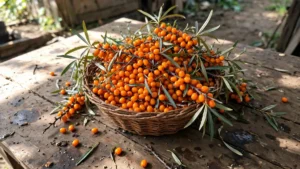
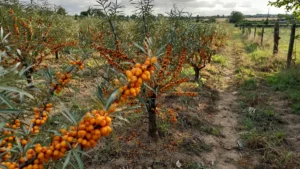
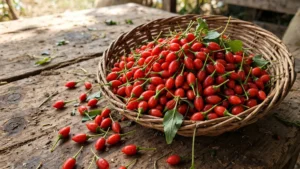
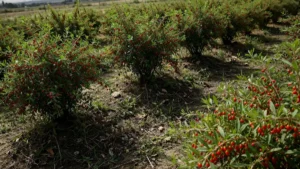
Sea buckthorn is the berry that fights back. The shrubs grow low and thorny along riverbanks and high mountain valleys, their branches studded with spines and clusters of small orange berries so tart they make your mouth pucker. The berries stain fingers orange, crush at a touch, and carry more vitamin C than almost any fruit that grows in the cold.
A sea buckthorn farm retreat is a stay on a working berry farm at harvest time, when the fruit is shaken from the branches onto cloths, pressed into juice the same afternoon, and cooked into jams and teas. Guests sleep in farmhouses at the edge of the thickets, walk the rows with gloves on, and eat meals built around the harvest: buckthorn juice at breakfast, berries folded into porridge, oil drizzled over salads. The best stays keep groups small and let the berries set the day.
This guide gathers nine luxury sea buckthorn farm retreats for 2027, from the high desert valleys of Ladakh to a hillside farm in the Scottish Highlands. Every stay below offers real thicket access, honest pricing and a kitchen that treats the berry as a main ingredient.
Key takeaways
- Sea buckthorn berries are small, bright orange and sharply tart, and they crush easily, so farms harvest by shaking branches over cloths or freezing cut branches.
- The best retreats let guests pick, press and cook with the berries, not just walk past the shrubs on a tour.
- Room rates run from $65–$95 a night at the simplest Ladakh farmhouse to $345–$380 at the top Scottish lodge.
- The berries are naturally gluten-free, but farm kitchens also bake bread and fry snacks, so guests with coeliac disease should put the allergy in writing before arrival.
- Thorns are the real hazard here, not the fruit: thick gloves and long sleeves matter more than sunscreen on a buckthorn farm.
What a sea buckthorn farm retreat actually is
A sea buckthorn farm retreat is a stay on a working berry farm, usually a family farm where the shrubs were planted along a riverbank or a mountain slope a generation ago and the harvest is still done with cloths, baskets and gloved hands. The shrubs are not tall, so the work is close to the ground, but the thorns are long and sharp, and every picker wears gloves. The berries glow orange against grey-green leaves for weeks, and the kitchen runs on whatever came down that morning.
The season is short here, shorter than at most fruit farms. Sea buckthorn ripens in a single late-summer flush, and the berries soften fast once they turn fully orange, so a farm may pick for only three or four weeks. Arrive early and the berries are still hard and sour; arrive mid-flush and the branches hang heavy with bright fruit that bursts under a thumb.
What sets a real retreat apart from a resort with a few shrubs is access. At a genuine farm stay you walk into the thicket with the crew, shake branches over a cloth, and watch the press squeeze orange juice the same afternoon. At a resort you get a buckthorn drink at check-in and a photograph of a bush.
How we picked these stays, and what to ask first
We looked for farms that grow sea buckthorn as a main crop, keep guest numbers low, and cook a full meal a day around the harvest. We also favoured stays that share their picking calendar and answer allergy questions in writing before you book. Stays that would not name their picking weeks or that charged for a thicket walk on top of the room rate did not make the list.

Ask three questions before you book. First, which weeks the berries come down, and whether guests may work beside the crew. Second, can the kitchen cook a full gluten-free menu, since buckthorn dishes often sit beside wheat breads and fried snacks. Third, what does the room rate cover — some farms bundle every meal and picking session, while others charge them apart. Those three answers are worth more than any review. Rambutan farm retreats are the same kind of working-farm stay, and the same three questions matter there too.
The 9 best luxury sea buckthorn farm retreats of 2027
Ladakh, India — Sea Buckthorn on the High Desert Slopes
Ladakh grows sea buckthorn along the Indus riverbeds, where the shrubs survive thin air, cold nights and fierce sun. The farmhouse kitchen cooks with the berries all day: juice at breakfast, berries folded into barley porridge, tea from the dried leaves in the evening.
What We Like: The highest buckthorn country on this list, and a kitchen that uses the whole shrub, berries and leaves alike. What to Consider: Thin mountain air, and the nearest airport is a long drive over high passes. Best For: Travellers who want buckthorn where it grows wildest. Style: Stone farmhouse with a walled apricot garden. Price Range: $65–$95 a night, with breakfast, dinner and picking covered. Standout Feature: An evening tea brewed from the farm’s own dried buckthorn leaves.
Spiti Valley, Himachal Pradesh, India — Sea Buckthorn in a Cold Desert Valley
Spiti is a cold desert valley where sea buckthorn lines the riverbanks in dense thorny thickets, and lunch is barley soup with buckthorn oil stirred through it.
What We Like: Wild riverside thickets, generous fruit, and a kitchen that cooks with the berry oil. What to Consider: Cold nights, and the valley road closes when the passes snow over. Best For: Guests who like stark landscapes and hardy food. Style: Mud-brick farmhouse above the river. Price Range: $95–$125 a night, with meals and picking sessions included. Standout Feature: Buckthorn oil pressed on the farm and served at the table.
Mustang, Nepal — Sea Buckthorn Below the Annapurna Wall
Mustang sits in the rain shadow of the Annapurnas, and the buckthorn grows on dry, stony soil that makes the berries unusually tart. The stay is a small stone house at the village edge, its rooms opening onto a courtyard where the berries dry on cloths.
What We Like: Remarkably tart fruit from dry mountain soil, in a quiet valley. What to Consider: A simple house with small rooms, and the mountain road is rough in places. Best For: Travellers who want the sharpest berries on this list. Style: Stone village house with a drying courtyard. Price Range: $120–$150 a night, including all meals. Standout Feature: Berries so tart the farm sells them dried, by the pouch.
Lhasa, Tibet, China — Sea Buckthorn on the Roof of the World
Lhasa is high-plateau Tibet, where sea buckthorn shrubs grow along the river flats and the berries ripen under a hard sun. The shrubs are pruned low, picking happens in the cool morning, and the kitchen serves barley dishes with buckthorn juice.
What We Like: A serious high-altitude farm and the best buckthorn juice on this list. What to Consider: Fierce midday sun, and the farm is far from the city. Best For: Guests who want to see high-altitude farming and taste real buckthorn juice. Style: Plateau farmhouse with a river-flat thicket. Price Range: $145–$175 a night, with meals covered. Standout Feature: Juice pressed the same morning it is picked, served cold at lunch.
Altai Mountains, Mongolia — Sea Buckthorn Among the Steppe Hills
The Altai grows sea buckthorn in the same valleys as its herders’ camps, pairing the two harvests: berries in the morning, dairy in the afternoon. The stay is a comfortable ger camp on a hillside, serving milky tea and buckthorn jam at a long table.
What We Like: Two harvests in one stay, and a comfortable camp with wide views. What to Consider: The hills are steep, and the berry season can crowd the calendar. Best For: Travellers who want berries and steppe life in a single trip. Style: Ger camp on a grassy hillside. Price Range: $170–$205 a night, with food included. Standout Feature: A buckthorn jam served with fresh curd at breakfast.
Transylvania, Romania — Sea Buckthorn in the Carpathian Foothills
Transylvania is famous across Romania for its sea buckthorn, and the shrubs along the river valleys grow the bright orange berries the region is known for. The farm is a hillside property where picking happens at dawn, the fruit is sorted under a walnut tree, and the kitchen cooks stews and syrups.
What We Like: The most famous buckthorn district in Romania, with bright orange fruit. What to Consider: Autumn fog can delay the morning picking, and the town is busy. Best For: Food lovers who want Romania’s best-known berry. Style: Hillside farmhouse with a sorting yard. Price Range: $200–$235 a night, meals and picking sessions included. Standout Feature: Bright orange berries sorted under a walnut tree.
Pomerania, Germany — Sea Buckthorn Among the Baltic Dunes
Pomerania sits on the Baltic coast, where sea buckthorn shrubs grow in sandy soil between the dunes. The farm is run by a family that has grown the berries for three generations, and the kitchen cooks northern German food with the fruit in sauces and cordial.
What We Like: A family farm with three generations of buckthorn knowledge. What to Consider: Sandy ground that is hard walking, and a long drive from the airport. Best For: Guests who want a family farm and Baltic cooking. Style: Brick farmhouse with a dune-side thicket. Price Range: $230–$265 a night, with all food included. Standout Feature: Buckthorn cordial mixed by the farm’s third-generation cook.
Lapland, Finland — Sea Buckthorn Before the First Frost
Lapland grows sea buckthorn in cool northern valleys, where the berries are picked before the first frost and pressed the same day. The farm is a log cabin above the thicket, and the kitchen cooks northern Finnish food with buckthorn in porridge and tea.
What We Like: Cool valley air, early frosts that sweeten the berries, and northern Finnish cooking. What to Consider: The valley road is steep, and the berry season is short. Best For: Travellers who want Arctic air and tart berries. Style: Log cabin above a valley thicket. Price Range: $265–$300 a night, with meals and market trips. Standout Feature: Berries picked before the frost and pressed into juice at the farm table.
Scottish Highlands, Scotland — Sea Buckthorn on a Highland Farm
The Scottish Highlands are the most polished stay on this list, a small luxury lodge on a hillside above a loch, with a sea buckthorn thicket running down to the water. The kitchen cooks the berries into sauces, drinks and desserts, and guests get a guided picking session with the head gardener each morning.
What We Like: The most comfortable rooms on this list, and a chef who treats the berry seriously. What to Consider: The priciest stay here by far, with a smaller thicket than the Himalayan farms. Best For: Honeymooners and comfort-first travellers who still want to pick berries. Style: Private lodge rooms on a loch-side hillside. Price Range: $345–$380 a night, full board included. Standout Feature: A Highland chef cooking buckthorn across sauces, drinks and desserts.
Which sea buckthorn region fits your trip
If this is your first buckthorn trip, start in Ladakh. The thickets are older, the picking culture deeper, and the kitchens have cooked with the berries for generations. Ladakh suits travellers who like high desert air and open-fire cooking; Mustang is the pick for the tartest berries on the list.
Central Asia suits a second trip, or a first for travellers who want juice and jam in the same week. Lhasa grows the berries on a high plateau and presses them the same morning, while the Altai pairs the berry harvest with steppe dairy. Mangosteen farm retreats offer a similar orchard feel for travellers who want to compare two fruit farms on one journey.
Europe suits food lovers who want buckthorn in cordials and stews rather than juice: Transylvania grows the famous bright berries of Romania, and Pomerania adds a family farm. Finland and Scotland suit travellers who want comfort first: Lapland adds Arctic air and frost-sweetened berries, while the Highlands are the only stay here with a spa.
The caveats that matter
Sea buckthorn is a rewarding berry, but a farm trip still has sharp edges. Berries taken while pale and hard never soften properly, so a farm that begins before the fruit turns fully orange is cutting corners. The shrubs are thorny, so gloves are for everyone, not just the crew. The berries crush easily, so packing them in shallow baskets is a sign of care.
| Detail | What is known |
|---|---|
| Best harvest window | One flush a year; the main picking runs for three to four weeks |
| Ripeness test | Berries turn bright orange and burst under a thumb; pale fruit is not ready |
| Gluten status | The berries are naturally gluten-free, but farm kitchens serve wheat breads too |
| Guest picking | Allowed at all nine stays, with gloves, cloths and baskets provided by the crew |
| Climbing | Not an issue; the shrubs are low, but thorns scratch, so long sleeves are worn |
| Crushing | Ripe berries crush fast, so they are shaken onto cloths, never stripped by hand |
| Rain risk | Wet berries rot quickly, so a rainy picking week can cut the harvest short |
| What to bring home | Buckthorn juice, oil and dried berries, bought at the farm shop |
Checklist: booking a sea buckthorn farm stay honestly
- Get the farm to put its picking weeks in writing before you pay anything.
- Tell the farm about any wheat or gluten allergy in your opening message, and ask what the kitchen will cook.
- Check that meals and picking sessions come with the room rate, not as extras.
- Wear thick gloves, a hat and long sleeves in the rows, and pack a light rain layer.
- Bring cash for the farm shop; card machines are rare in the mountains.
- Leave a free morning for the local market, where buckthorn oil is cheapest.
Frequently asked questions
When do sea buckthorn berries ripen?
Sea buckthorn ripens in a single flush rather than waves, so most farms pick for three to four weeks. The berries turn bright orange and burst under a thumb when ready; a farm that picks while the berries are still pale and hard is harvesting too early.
Are guests allowed to pick sea buckthorn themselves?
Yes, at all nine stays on this list. Guests use cloths to catch the berries the crew shakes down, and the crew shows newcomers how to tell a ripe berry from a pale one. Stripping berries by hand is not allowed, since the fruit crushes and the thorns scratch.
Is sea buckthorn safe for gluten-free guests?
Eaten on their own, the berries carry no gluten. The trouble starts at the farm table, where bread, fried snacks and soy sauce sit beside the berry dishes. Tell the farm about the allergy before you arrive and ask for a menu plan in writing.
What does ripe sea buckthorn taste like?
Ripe sea buckthorn is sharply tart and citrusy, with a rich oily note that deepens as it softens. The juice tastes bright and sour; the oil is smoother and nuttier. Unripe berries are hard and astringent, and most cooks sweeten the juice with honey.
How long should a sea buckthorn farm stay last?
Three nights is the sweet spot: one day to settle in and walk the thicket, one to pick and press with the crew, and one for the market and kitchen. A shorter stay feels rushed, while a longer one covers the same ground twice.
What should I carry home from a sea buckthorn farm?
Buckthorn juice, oil and dried berries, all from the farm shop. All three keep for months in a cool cupboard and carry the harvest home better than anything fresh. Avoid loose berries, which crush in luggage. Guava farm retreats are a good second stop for travellers building a tart fruit pantry from farm visits.
The bottom line
Sea buckthorn pays back the traveller who books around the berries instead of the airfares. Pick the right weeks, find a farm that lets you into the thicket instead of keeping you on the veranda, and tell the kitchen about your allergies before you arrive. The berries do the rest — bright, tart and orange, shaken straight off the branch.
If you book only one stay from this list, choose the one whose harvest weeks fit your dates, not the one with the loveliest photos. A plain farmhouse in Ladakh in picking week beats a grand Highland lodge a month too late. The shrub sets the season; the wise trips plan around it.