Damaged hair does not need more products. It needs the right one, used in the right amount, at the right moment. Bleach, heat styling, colour, sun and everyday friction all wear down the same thing: the cuticle, the overlapping layer of scales that keeps each strand smooth, strong and able to hold moisture.
A hair serum is one of the most useful tools for that problem, because it works on the surface where the damage shows. A good serum coats the strand, smooths the cuticle back down, seals in moisture, adds shine and, in many formulas, protects against the next round of heat. What it does not do is rebuild hair from the inside. Hair is not living tissue, so once a strand is damaged, no product can restore it to its original state. The honest goal of a serum is to make damaged hair look and feel better, to protect what is left, and to buy time between trims while new, healthier hair grows in.
Below are nine serums worth considering in 2027, chosen for damaged, bleached and over-processed hair specifically. They range from bond-building treatments to lightweight oils. Each one is described by what it is good at, what to watch for, and who it suits best, so you can choose with your hair in mind, not just a bestseller list.
Key takeaways
- A serum for damaged hair smooths the cuticle, seals in moisture, adds shine and protects against heat, but it cannot rebuild a broken strand from the inside.
- Bond-building and protein-rich serums suit bleached and chemically treated hair, while lightweight oils suit fine hair.
- Use one to two drops on damp hair, from the mid-lengths to the ends, and add a little more only if your hair is thick or very long.
- Apply before heat styling, not after, so the serum can protect the hair.
- No serum repairs split ends permanently, and if your hair is snapping off in short pieces, a serum alone is not enough, so a trim and a break from heat are the honest next steps.
What damaged hair actually needs from a serum
Damaged hair has three main problems, and a serum can help with all three if it is the right kind. The first is roughness. When the cuticle is lifted, strands catch on each other, which is why damaged hair tangles and feels straw-like. A serum smooths that surface, which is why hair feels softer and combs through more easily after you use one. The second is moisture loss. A rough cuticle lets water escape, so hair dries out between washes. A serum forms a light barrier that slows that loss, especially on the ends, which are the oldest and driest part of every strand.
The third problem is heat. Most damaged hair is also heat-styled hair, and every pass of a straightener or curling iron on unprotected hair adds to the damage. Many serums include heat protection, and using one before styling slows further harm. Some formulas also contain bond-building ingredients, which target the broken bonds inside the hair shaft rather than just coating the surface.
What a serum cannot do is also worth knowing before you buy. It cannot glue a split end back together for good. It can make a split end look sealed for a day or two, which is useful, but the split will return, and only a trim removes it.
How we chose these serums and what to look for
Look first at the type of damage. Bleached and chemically treated hair needs bond-building or protein-rich formulas, because the internal structure is weakened. Heat-damaged hair needs heat protection and moisture. Fine hair that is damaged needs a light, fast-absorbing serum, because a heavy oil will flatten it and make it look greasy by midday. Thick, coarse or curly hair can take a richer formula and often needs more of it.

Look next at the ingredient list. Bond builders such as bis-aminopropyl diglycol dimaleate are the most useful for bleached hair. Hydrolysed proteins, including wheat, soy and keratin, help hair feel stronger and less stretchy when wet. Plant oils such as argan, camellia, marula and rosehip add shine and softness, and they suit most hair types as long as the formula is light enough. Silicones, including dimethicone and amodimethicone, smooth the cuticle very effectively, but they can build up, so a clarifying wash once every week or two keeps hair from feeling coated.
Finally, look at the texture and the bottle. A serum you enjoy using is worth more than a stronger one you avoid. A thin, fast-absorbing texture suits fine hair, while a richer, oil-based texture suits thick or very dry hair and works well as an overnight pre-wash treatment. Our guide to the best hair serums for frizz is a useful companion here, because frizz and damage often arrive together, and the right serum for one problem is often the right serum for the other.
The 9 best hair serums for damaged hair of 2027
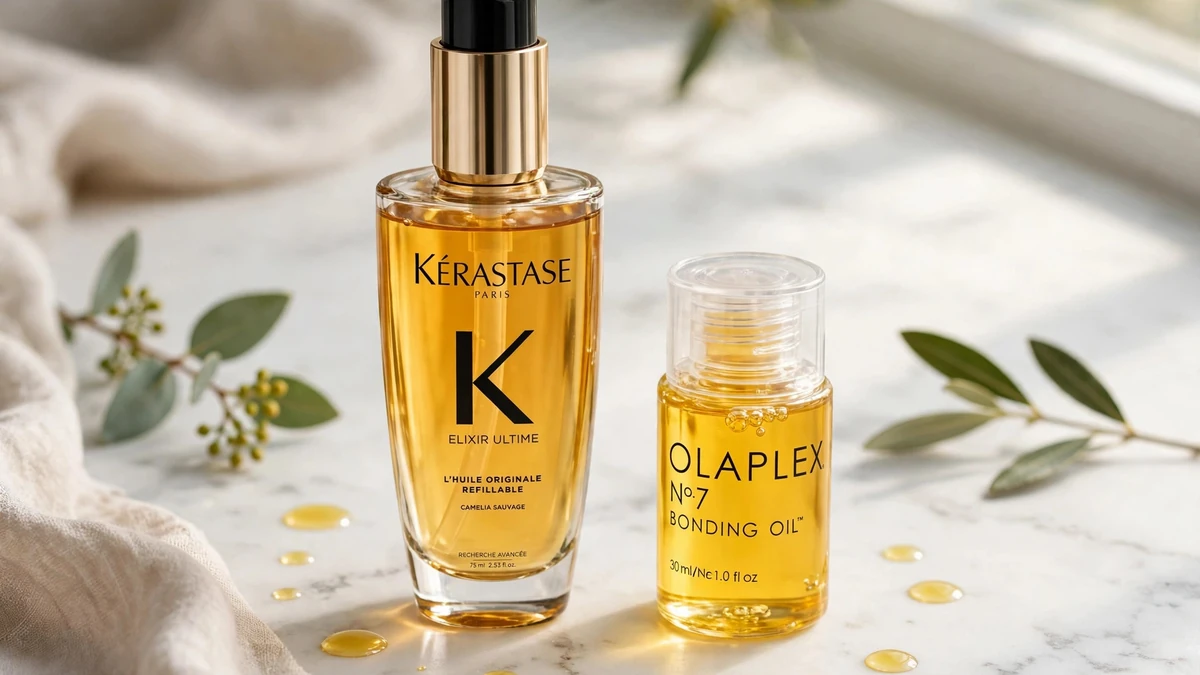
Kérastase Elixir Ultime L’Huile Originale
What we like: A versatile blend of camellia, marula and argan oils that smooths, adds shine and softens without feeling heavy, with a fine, dry texture that suits most hair types. What to consider: Premium price, and the fragrance is noticeable, so skip it if you prefer unscented products. Key ingredients: Camellia oil, marula oil, argan oil. Hair type: All, including fine. Size: 100 ml. Cruelty-free: No.
This is the serum other serums are measured against for damaged hair that still needs to look polished. One pump is enough for most hair, on damp hair before styling or smoothed over dry ends during the day.
Olaplex No.7 Bonding Oil
What we like: The only serum here built around bond-building technology, designed for hair whose internal structure has been weakened by bleach or chemical treatment, with heat protection up to 230 degrees. What to consider: A small 30 ml bottle, and it is concentrated, so more than a few drops will weigh hair down. Key ingredients: Bis-aminopropyl diglycol dimaleate, grape seed oil. Hair type: Bleached, chemically treated, damaged. Size: 30 ml. Cruelty-free: Yes.
The most useful serum on the list for bleached hair, because it targets the broken bonds that make bleached hair stretchy and fragile.
Moroccanoil Treatment Original
What we like: An argan-oil classic that detangles, smooths and adds shine, with a light texture that absorbs quickly and a formula that works as a styling aid and a finishing product. What to consider: The fragrance is strong, and very fine hair may need only half a pump. Key ingredients: Argan oil, linseed extract. Hair type: All, especially medium to thick. Size: 25 ml, 50 ml, 100 ml. Cruelty-free: No.
A reliable choice for damaged hair that is also dry and dull, and a little goes a long way.
Gisou Honey Infused Hair Oil
What we like: A honey-based oil that adds moisture and shine without heaviness, with a pleasant, natural scent and a formula that works well as a pre-wash treatment as well as a leave-in. What to consider: More expensive per millilitre than most oils here, and it is best for hair that needs moisture, not for hair that needs bond repair. Key ingredients: Mirsalehi honey, sweet almond oil, coconut oil. Hair type: Dry, damaged, normal. Size: 20 ml, 50 ml, 100 ml. Cruelty-free: Yes.
A good choice if your damage is mainly dryness and dullness rather than breakage, and it works well overnight before washing.
Davines OI Oil
What we like: A roucou-oil formula that softens, smooths and adds shine, with heat protection and a light, non-greasy finish that suits daily use. What to consider: The scent is distinctive and lingers, and the bottle is small for the price. Key ingredients: Roucou oil. Hair type: All, especially medium to coarse. Size: 50 ml. Cruelty-free: No.
One of the best serums for hair that is damaged and also frizzy, because it keeps the cuticle smooth through the day.
Shu Uemura Essence Absolue Nourishing Protective Oil
What we like: A camellia-oil formula that nourishes deeply, protects against heat and leaves hair soft and shiny, with a generous 150 ml bottle that lasts a long time. What to consider: Richer than most serums here, so fine hair needs only a drop or two. Key ingredients: Camellia oil. Hair type: Thick, coarse, very dry. Size: 150 ml. Cruelty-free: No.
Best for thick or coarse hair that drinks up lighter serums, and it works well as a pre-blow-dry step.
Briogeo Don’t Despair, Repair! Strengthening Treatment Oil
What we like: A blend of rosehip, argan and sweet almond oils with a protein-rich approach to damage, designed for hair that is weak and breaking, with a clean, fragrance-light formula. What to consider: A small 30 ml bottle, and it works best as part of a repair routine rather than on its own. Key ingredients: Rosehip oil, argan oil, sweet almond oil. Hair type: Weak, brittle, damaged. Size: 30 ml. Cruelty-free: Yes.
A good choice if your hair is snapping rather than just looking dull, and it pairs well with a strengthening mask.
Amika Glass Action Hydrating Hair Oil
What we like: A sea-buckthorn formula that adds a glass-like shine, smooths frizz and hydrates without weight, with a light texture that suits fine and medium hair. What to consider: Better for shine and softness than for deep repair, so pair it with a mask if your hair is badly damaged. Key ingredients: Sea buckthorn, squalane. Hair type: Fine, medium, dull. Size: 50 ml. Cruelty-free: Yes.
One of the safest choices for fine, damaged hair, giving shine and smoothness without the heaviness that makes fine hair look flat.
Ouai Hair Oil
What we like: A blend of ama oil and borage oil that smooths, protects against heat and adds shine, with a light, fast-absorbing texture and a clean, modern scent. What to consider: The bottle is small, and very thick hair may need two pumps. Key ingredients: Ama oil, borage oil, baobab oil. Hair type: All, especially medium. Size: 45 ml. Cruelty-free: Yes.
A practical everyday serum for damaged hair that still needs to be styled daily, light enough for most hair and protective enough for heat styling.
Which serum is right for your damage
Bleached or chemically treated hair should start with a bond builder. Olaplex No.7 is the clearest choice here, because it is the only serum designed to work on the broken bonds inside the shaft. Use it on damp hair before styling, and give it a few weeks, because bond repair is gradual.
Heat-damaged hair needs a serum with heat protection and moisture. Kérastase Elixir Ultime, Davines OI Oil and Ouai Hair Oil all protect against heat and add softness, and they are the best choices if you blow-dry or straighten your hair most days. Fine, damaged hair needs the lightest option, used in very small amounts, because a heavy formula will flatten it.
Thick, coarse or very dry hair can take a richer formula and usually needs more of it. Shu Uemura Essence Absolue and Moroccanoil Treatment Original are the best choices here, and both work well as a pre-wash treatment as well as a leave-in. Washing matters too. A serum works best on clean, damp hair. Our guide to how to wash your hair properly explains why that step matters, because over-washing strips the moisture a serum is trying to seal in, and under-washing leaves build-up that stops it absorbing at all.
The caveats that matter
Serums are low-risk products, but they are not magic, and a few honest limits are worth knowing. The first is build-up. Silicones and heavy oils accumulate on the hair over time, which is why hair can start to feel coated or dull after weeks of daily use.
| Detail | What is known |
|---|---|
| What a serum can do | Smooth the cuticle, seal in moisture, add shine, protect against heat |
| What it cannot do | Rebuild a broken strand, repair split ends permanently, or make hair grow faster |
| Best for bleached hair | Bond-building serums, such as Olaplex No.7, used on damp hair |
| Best for fine damaged hair | Lightweight oils, one to two drops only, such as Amika Glass Action |
| How much to use | One to two drops for fine hair, two to three for thick hair, mid-lengths to ends |
| When to apply | On damp hair before heat styling, and a drop on dry ends during the day |
| Build-up | Use a clarifying wash every one to two weeks if you use a serum daily |
| When to see a stylist | If hair is snapping in short pieces, or split ends keep returning after trims |
If your scalp is broken, sore or irritated, stop using new products on it and speak to your clinician or dermatologist before continuing, especially if you are using a prescription scalp treatment. If you are pregnant or breastfeeding, check with your clinician first, because some formulas contain essential oils you may want to avoid.
Checklist: choosing a hair serum for damaged hair honestly
Use these checks before you buy, and again after two weeks of use.
- Match the serum to the damage: bond builders for bleached hair, light oils for fine hair, rich oils for thick hair.
- Check the texture: it should absorb within a minute, not sit greasy on the surface.
- Start with one drop: add more only if your hair is thick or very long, and never start with a full pump.
- Apply to damp hair first: mid-lengths to ends, before heat styling, so it can protect while you style.
- Clarify regularly: use a clarifying wash every one to two weeks to prevent build-up from silicones and oils.
- Judge it on breakage, not shine: shine is easy, but less snapping and easier combing are the real signs it is working.
Frequently asked questions
Can a hair serum repair split ends?
Temporarily, yes. A serum can make a split end look sealed for a day or two by coating it, but the split will return, and only a trim removes it.
Should I use a serum on wet or dry hair?
Mostly on damp hair, before styling, so it can protect against heat and seal in moisture. A single drop on dry ends during the day smooths flyaways, but a full pump on dry hair will look greasy.
Can I use a hair serum every day?
Yes, as long as you use a small amount and clarify your hair every one to two weeks.
What is the difference between a hair serum and a hair oil?
A serum is usually lighter and designed to smooth and protect, while an oil is richer and designed to moisturise and add shine. Many products sit between the two.
Do I still need a hair mask if I use a serum?
Yes, for badly damaged hair. A serum works on the surface, while a mask works deeper and over a longer time, so using both is the most effective routine, and our guide to the best hydrating hair masks is a good place to start.
Will a serum make my fine hair look greasy?
It can, if you use too much. Start with a single drop, warm it between your palms, apply it only to the mid-lengths and ends, and choose a lightweight formula.
The bottom line
The best hair serum for damaged hair in 2027 is not the most expensive or the most famous. It is the one that matches your damage, that you will use every time you wash and style, and that leaves your hair softer and less prone to snapping. For bleached hair, a bond builder such as Olaplex No.7 is the most useful choice. For fine hair, a lightweight oil such as Amika Glass Action is the safest. For thick, dry hair, a richer formula such as Shu Uemura Essence Absolue is the most satisfying.
Choose one serum, use a small amount on damp hair before styling, clarify your hair every week or two, and judge it on breakage and combing, not just shine. Pair it with a trim and a break from heat when your hair needs it.