A good cup of black tea costs pennies. A great one, from the best luxury black tea brands, costs considerably more, and the difference is easy to taste once you know what to look for. The leaves are larger and more intact, the flavour is layered rather than flat, and the cup finishes clean instead of turning bitter halfway through. Cheap black tea is built to survive a tea bag; luxury black tea rewards patience, good water, and a few unhurried minutes.
The problem is that the word luxury does a lot of heavy lifting on tea packaging. A glossy tin and a high price do not guarantee good leaf, and some of the most expensive teas on the shelf are ordinary leaf dressed up with flavouring. The trick is knowing which names have earned their reputation and which are selling the tin.
Below are nine brands worth considering in 2027, from the grand old tea houses of Paris and London to smaller specialist blenders in the United States and Britain. Each one is described by what it does well, what to watch for, and who it suits best.
Key takeaways
- Whole-leaf black tea tastes smoother and more layered than tea-bag tea, and it can usually be steeped more than once.
- Single-origin teas from Assam, Darjeeling, Yunnan, and Ceylon each have a distinct character, while blends are made for consistency.
- Freshness matters more than age: buy loose leaf in small quantities, store it airtight away from light and strong smells, and use it within a year.
- Water temperature and steeping time decide whether a luxury tea tastes refined or bitter, so a thermometer and a timer are worth having.
- No tea is a health cure, and a high price does not guarantee quality, so judge every brand by the leaf and the cup, not the packaging.
What makes a black tea a luxury black tea
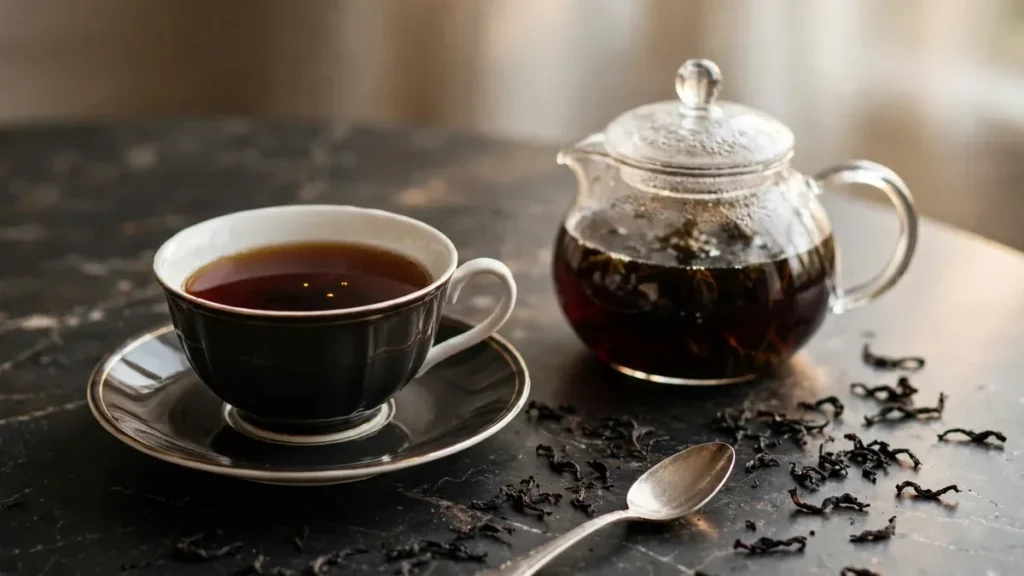
Black tea is fully oxidised tea, made from the leaves of the Camellia sinensis plant. After picking, the leaves are withered, rolled, oxidised until they turn dark, and then dried, creating the deep amber colour, the malty notes, and the gentle caffeine lift that make black tea the most widely drunk tea in the world. Luxury black tea starts with the same plant, but everything after the picking is done with more care.
The first difference is the leaf itself. Luxury teas are usually made from whole, unbroken leaves, often with a high proportion of golden tips, the young buds of the plant. Whole leaves release flavour slowly and evenly, so a good luxury black tea can be steeped twice and still taste interesting. Broken leaves and dust, the kind found in most tea bags, release flavour quickly and then turn harsh. Open the tin, and the leaf should look like leaf, not crumbs.
The second difference is origin and traceability. A luxury brand can tell you where its tea comes from, often down to the garden or estate, the harvest season, and the flush, the picking period. First-flush Darjeeling from spring tastes floral and delicate, while second-flush Darjeeling from summer is fuller and more muscatel. Assam is malty and strong, Yunnan is smooth and honeyed, and Ceylon is bright and brisk. A brand that names the garden stands behind the leaf.
The third difference is blending. Master blenders taste hundreds of lots and combine them so that a signature blend tastes the same every year, despite every harvest being slightly different. A good house blend should taste like itself every time you open a new tin, which is harder than it sounds.
How we chose these teas and what to look for
Look first at the leaf and the information on the tin. A serious brand lists the origin, the grade, and the harvest where it matters, and it sells loose leaf as its main format. If the packaging says nothing about where the tea comes from, that is usually because there is nothing worth saying.

Look next at the aroma of the dry leaf. Good black tea smells rich and inviting before any water touches it: malt, dried fruit, honey, cocoa, flowers, or spice, depending on the origin. A flat, dusty, or stale smell is a warning, even in an expensive tin. If the aroma has faded after a month, use the tea sooner.
Finally, look at the value, not just the price. Luxury black tea is sold by weight, so divide the price by the number of cups the tin will make. Many luxury loose-leaf teas work out to less than a dollar a cup, which is a reasonable price for a daily ritual and a modest one for a gift.
The 9 best luxury black tea brands of 2027
TWG Tea
What we like: A Singapore-born house with an enormous catalogue of single-origin teas and signature blends, and a level of consistency that makes it a safe first step into luxury tea.
What to consider: The range is so large it can be overwhelming, and prices rise quickly for the rarer single origins. Best for: Building a small collection, and for gifts. Signature teas: Singapore Breakfast, 1837 Black Tea, Silver Moon. Format: Loose leaf and sachets.
TWG is the brand to start with if you want breadth, and the 1837 Black Tea, with notes of fruit and flowers, is the best-known entry point.
Mariage Frères
What we like: A Paris house founded in 1854, with one of the finest blending traditions in the world. Its flavoured black teas are the benchmark for the style: the flavouring is restrained, and the base tea is good enough to carry it.
What to consider: Premium pricing, and the flavoured blends can overshadow the plain single origins for newcomers. Best for: Classic French-style flavoured teas and afternoon tea. Signature teas: Marco Polo, Earl Grey French Blue, Wedding Impérial. Format: Loose leaf and tea bags.
Mariage Frères is the house that defines luxury tea for many people, and Marco Polo, its famous fruit-and-flower blend, is the reason.
Fortnum & Mason
What we like: The London institution, blending tea since 1707, with a range that runs from the famous Royal Blend to excellent single-estate Darjeelings. The quality is dependable, and the brand is a byword for British tea tradition.
What to consider: Some of the most popular blends are designed for milk and sugar, so purists may prefer the single-origin range. Best for: Classic British blends and gifts. Signature teas: Royal Blend, Assam Superb, Darjeeling First Flush. Format: Loose leaf and tea bags.
Fortnum & Mason is the safe, distinguished choice, and the seasonal first-flush Darjeeling is worth buying when it appears each spring.
Harney & Sons
What we like: An American family house with an excellent balance of quality and value. The loose-leaf teas are generously sized, and the range includes some of the best flavoured black teas outside Paris.
What to consider: The catalogue is large and the packaging is plainer than the European houses, so it feels less like a luxury gift. Best for: Everyday luxury and value. Signature teas: Earl Grey Supreme, Hot Cinnamon Spice, Paris. Format: Loose leaf, sachets, and tea bags.
Harney & Sons is the brand for people who drink black tea every day and want it to be good every day.
Dammann Frères
What we like: Another great Paris house, founded in 1692, with a superb range of flavoured and plain black teas. The flavouring is delicate, and the house is particularly strong on fruit and flower blends.
What to consider: Less widely available outside France than Mariage Frères, and the range can be hard to navigate without guidance. Best for: Refined flavoured teas and afternoon tea. Signature teas: Earl Grey Yin Zhen, Goût Russe Douchka, Jardin Bleu. Format: Loose leaf and tea bags.
Dammann Frères is the connoisseur’s Paris house, quieter than its rival but no less accomplished.
Whittard of Chelsea
What we like: A British house founded in 1886, with a wide range of black teas at accessible prices. The quality is solid, the blends are friendly and easy to brew, and the shops make tasting easy.
What to consider: The range leans towards approachable blends rather than rare single origins, so experienced drinkers may want to look elsewhere for depth. Best for: Everyday drinking and beginners. Signature teas: English Breakfast, Chelsea Breakfast, Earl Grey. Format: Loose leaf and tea bags.
Whittard is the friendly face of luxury tea, and a good first luxury brand for someone moving up from supermarket tea.
Kusmi Tea
What we like: A house with Russian roots and a Paris home since 1867, famous for bold, spiced, and citrus-flavoured black teas. The blends are distinctive, and the colourful tins are among the most recognisable in tea.
What to consider: The flavoured blends dominate the range, so lovers of plain single-origin tea have fewer options. Best for: Spiced and citrus blends, and gifts. Signature teas: Anastasia, Prince Vladimir, Earl Grey Intense. Format: Loose leaf and tea bags.
Kusmi Tea is for drinkers who like their black tea with character, and a good choice when you want a cup that feels like an occasion.
Smith Teamaker
What we like: A Portland, Oregon, house founded by the late Steven Smith, with a craftsman approach to blending and a strong focus on full-leaf teas. The blends are original, and the quality is consistently high.
What to consider: A smaller range than the European houses, and less widely available outside the United States. Best for: Modern, original blends and full-leaf quality. Signature teas: Lord Bergamot, Masala Chai, Portland Breakfast. Format: Loose leaf and sachets.
Smith Teamaker is the modern American answer to the old European houses, blending in small batches with visibly whole leaf.
Rare Tea Company
What we like: A small British company sourcing directly from small growers and gardens, with an exceptional range of single-origin black teas. The provenance is unusually transparent.
What to consider: Higher prices, smaller quantities, and limited availability, so it is best for special occasions rather than everyday drinking. Best for: Single-origin connoisseurs and gifts. Signature teas: Wild Assam, Yunnan Gold, Malawi Satemwa. Format: Loose leaf.
Rare Tea Company is the brand for the moment you want to taste what black tea can be at its best.
How to brew luxury black tea properly
Good leaf deserves good technique, and the technique is simple. Start with fresh, filtered water, and bring it to a full boil, about 100 degrees Celsius, for most black teas. A few delicate Darjeelings do better slightly cooler, at around 95 degrees. Water that has been boiled and left standing tastes flat, so always start fresh.
Use about two to three grams of loose leaf per 200 millilitres of water, roughly a heaped teaspoon, and steep for three to five minutes. Three minutes gives a lighter, more aromatic cup; five minutes gives a stronger, fuller cup. Beyond five minutes, most black teas turn bitter, so set a timer. If the tea is too strong, use less leaf next time rather than steeping for less time.
Warm the teapot or cup with a little hot water first, so the brewing water does not lose heat to cold porcelain. Pour the water over the leaf, cover, and wait. When the time is up, strain the leaves out completely, because tea left sitting on the leaf keeps extracting and turns bitter. You can steep the same leaves a second time, with slightly hotter water and an extra minute, for a softer, sweeter cup. Slowing down for a proper brew is part of the pleasure, much like the unhurried preparation behind a good pour-over coffee maker ritual.
Choosing between single-origin teas and blends
Single-origin teas are the best way to learn what black tea can taste like. An Assam is malty and strong, a Darjeeling is floral and light, a Yunnan is smooth and sweet, and a Ceylon is bright and brisk. If you are building a collection, start with one tea from each of these four origins, and taste them plain, without milk or sugar.
Blends exist for a different reason: consistency and balance. A good breakfast blend combines the malt of Assam with the brightness of Ceylon to make a cup that is strong, smooth, and dependable every morning. Blends are also more forgiving of small brewing mistakes, which makes them a sensible choice for everyday drinking and for serving to guests. Many memorable tea experiences happen in settings designed for slowing down: the afternoon tea service at the world’s best luxury spa resorts is built around exactly this kind of unhurried, well-brewed cup.
The caveats that matter
Black tea is a simple drink, but it is not without things to watch. It contains caffeine, roughly half as much as coffee per cup, which matters if you drink it late in the evening. It also contains tannins, which can stain teeth and upset an empty stomach. Drinking tea with food avoids most of that, and rinsing with water after a cup helps with staining.
| Detail | What is known |
|---|---|
| Best leaf to buy | Whole, unbroken leaves with golden tips, loose rather than in tea bags |
| Best origins to start with | Assam for malt, Darjeeling for floral, Yunnan for honey, Ceylon for brightness |
| Water temperature | Full boil, about 100 degrees Celsius, or 95 degrees for delicate Darjeeling |
| Steeping time | Three to five minutes, with a timer, and strain the leaves out fully |
| Amount of leaf | Two to three grams per 200 millilitres, about a heaped teaspoon |
| Caffeine | About half the caffeine of coffee per cup, so avoid late-evening drinking if sensitive |
| Storage | Airtight tin or jar, cool and dark, away from strong smells, use within a year |
| What it does not do | It is not a health cure, and a high price does not guarantee a good cup |
Price is the other caveat. Luxury tea is a pleasure, not an investment, and the most expensive tin in the shop is not always the best tea in the shop. The honest test is simple: brew it properly, taste it plain, and ask whether you would buy it again. If the answer is yes, the price was fair.
Checklist: buying luxury black tea honestly
Use these checks before you buy, and again after your first cup.
- Check the leaf: whole, unbroken leaves with golden tips, not crumbs or dust.
- Check the origin: the tin should name the country, region, or garden.
- Smell the dry leaf: it should smell rich and inviting, never flat, dusty, or stale.
- Buy small first: a 50-gram tin lets you try a tea properly.
- Brew it plain: taste the first cup without milk or sugar, so you can judge the tea itself.
- Store it well: airtight, cool, dark, and away from coffee, spices, and other strong smells.
Frequently asked questions
What is the best luxury black tea for beginners?
A good breakfast blend from Fortnum & Mason, Harney & Sons, or Whittard is the easiest start: smooth and forgiving, so you can learn what you like before moving on to single-origin teas.
Is loose-leaf black tea really better than tea bags?
Usually, yes. Loose leaf is made from whole leaves, which release flavour slowly and evenly, while most tea bags contain broken leaf and dust, which brew quickly and turn bitter.
How much should I pay for luxury black tea?
Expect to pay more than supermarket tea, but judge by the cost per cup, not the price of the tin. Many excellent loose-leaf teas work out to well under a dollar a cup. Rare single-origin teas cost more, and they are best saved for special occasions.
How long does loose-leaf black tea stay fresh?
Kept airtight, cool, and dark, black tea stays at its best for six to twelve months after opening. After that it does not go bad, but the aroma and flavour fade, so buy small quantities and use them.
Can I drink black tea every day?
Yes, for most people. Black tea contains about half the caffeine of coffee, so two or three cups a day is comfortable for most adults. If you are sensitive to caffeine, drink it earlier in the day. A slower pace suits tea generally, and the same unhurried approach that makes luxury wellness retreats appealing applies to a daily tea ritual too: the benefit is in the pause as much as in the cup.
Should I add milk or sugar to luxury black tea?
That is a matter of taste, but try the first cup plain. Milk suits strong Assam-based blends, and a little sugar suits spiced or flavoured teas, but delicate Darjeeling and Yunnan teas are best without either.
The bottom line
The best luxury black tea brands are the ones that respect the leaf: whole leaves, named origins, careful blending, and packaging that protects the tea. TWG Tea and Mariage Frères offer breadth and polish, Fortnum & Mason offers tradition, Harney & Sons offers value, and the smaller houses, Smith Teamaker and Rare Tea Company, offer the single-origin quality that reminds you why tea became a luxury in the first place.
Start with one good blend for everyday mornings and one single-origin tea for quieter moments. Brew them properly, taste them plain, and let your palate decide which tins you buy again.