


A silk scarf is one of the most forgiving accessories to wear and one of the least forgiving to clean. Silk is a protein fibre, which means it reacts to heat, harsh detergents and rough handling in ways cotton never does. A scarf that has survived years of wear can be ruined in ten minutes by water that is too hot, a detergent that is too strong, or a wringing motion that breaks the fibres.
The good news is that most silk scarves can be cleaned safely at home, once you know the rules. The nine steps below cover the whole process, from reading the care label to storing the scarf afterwards, and they work for the printed silk squares, the long silk scarves and the delicate vintage pieces that are worth the extra care. Nothing here needs special equipment, just cool water, a gentle detergent, and patience.
Below are nine cleaning tips for 2027, each one explained plainly, with what it does well, what to watch for, and how long it takes. Follow them in order the first time you clean a scarf, and they become a quick routine you can repeat with confidence.
Key takeaways
- Most silk scarves can be hand-washed safely at home in cool water with a gentle, pH-neutral detergent.
- Never wring a silk scarf, never use hot water, and never use bleach or a harsh stain remover on silk.
- Always test for colourfastness on a hidden corner before you wash a printed or brightly coloured scarf.
- Dry a silk scarf flat or on a towel, away from direct sun, and steam out creases rather than ironing them.
- Some stains and some scarves, especially vintage pieces and heavily embellished ones, belong at a professional cleaner, and that is not a failure.
What cleaning a silk scarf actually involves
Cleaning a silk scarf means removing body oils, perfume, makeup and dust from a delicate protein fibre without damaging its structure or its colour. Silk fibres are smooth and strong when dry, but they weaken when wet and they are easily damaged by heat, friction and alkaline cleaners. That is why every step in this guide is gentle: cool water, minimal agitation, no wringing, and drying that lets the fibres relax back into shape.
The most common mistake is treating a silk scarf like a cotton one. Hot water shrinks and dulls silk. A normal laundry detergent strips its natural lustre. Wringing twists and breaks the fibres, which is why a wrung scarf can come out of the sink looking permanently creased and tired. A tumble dryer is worse still, and will shrink most silk scarves beyond repair. If you remember one rule, it is this: cool, gentle, and slow.
It also helps to understand what you are cleaning off. Most of the dirt on a silk scarf is not visible. It is the body oil and perfume from your neck, the foundation from your jawline, and the dust the scarf picks up in a handbag or a drawer. That is why a scarf can look clean and still need washing, and why a regular, gentle clean keeps a scarf looking better for longer than waiting until it is visibly dirty.
How we chose these tips and what to look for
Look first at the care label. It tells you whether the scarf is pure silk, a silk blend, or a silk with a special finish, and whether the maker recommends hand-washing or dry cleaning. A label that says dry clean only deserves respect, especially for a valuable or vintage scarf, but many pure silk scarves labelled dry clean only can be hand-washed safely if you are careful, and this guide explains how to decide.

Look next at the colour and the print. A brightly coloured or heavily printed scarf needs a colourfastness test before it goes near water, because some dyes bleed, especially reds and dark blues. A pale or white scarf is less risky for colour, but it shows water marks more easily, so it needs to be dried evenly. Our guide to how to style a silk scarf covers the wearing side of scarf care, while this guide covers the cleaning side, and the two work best together.
Finally, look at the condition of the scarf before you start. Check for loose threads, small holes, fraying edges and stains, and deal with those before you wash, not after. A loose thread pulled during washing can unravel a hem, and a stain that goes into water without pre-treatment can set permanently. Five minutes of inspection saves a scarf.
The 9 ways to clean a silk scarf in 2027
Read the care label before you touch water
What we like: The care label tells you the fibre content, the recommended method, and any warnings, which takes the guesswork out of the first decision. What to consider: Labels are sometimes cautious, and dry clean only does not always mean hand-washing is impossible, but it does mean you should test carefully first. Best for: Every scarf, every time, before the first wash. Cost: Nothing. Time needed: Two minutes.
Test for colourfastness on a hidden corner
What we like: A simple damp-cloth test on a hidden corner tells you in a minute whether the dye will bleed, which is the information that matters most before washing. What to consider: A test that shows no bleeding does not guarantee the whole scarf is safe, especially if it has several colours, so test each strong colour if you can. Best for: Printed, brightly coloured, and vintage scarves. Cost: Nothing. Time needed: Five minutes.
Spot-clean first with a damp cloth
What we like: Spot-cleaning deals with a small mark without washing the whole scarf, which is less stress on the fibres and the colour. What to consider: Rubbing a spot can spread it and damage the weave, so always blot, never rub, and work from the outside of the mark inwards. Best for: Small marks, makeup smudges, and food spots. Cost: Nothing. Time needed: Five to ten minutes.
Hand-wash in cool water with a gentle detergent
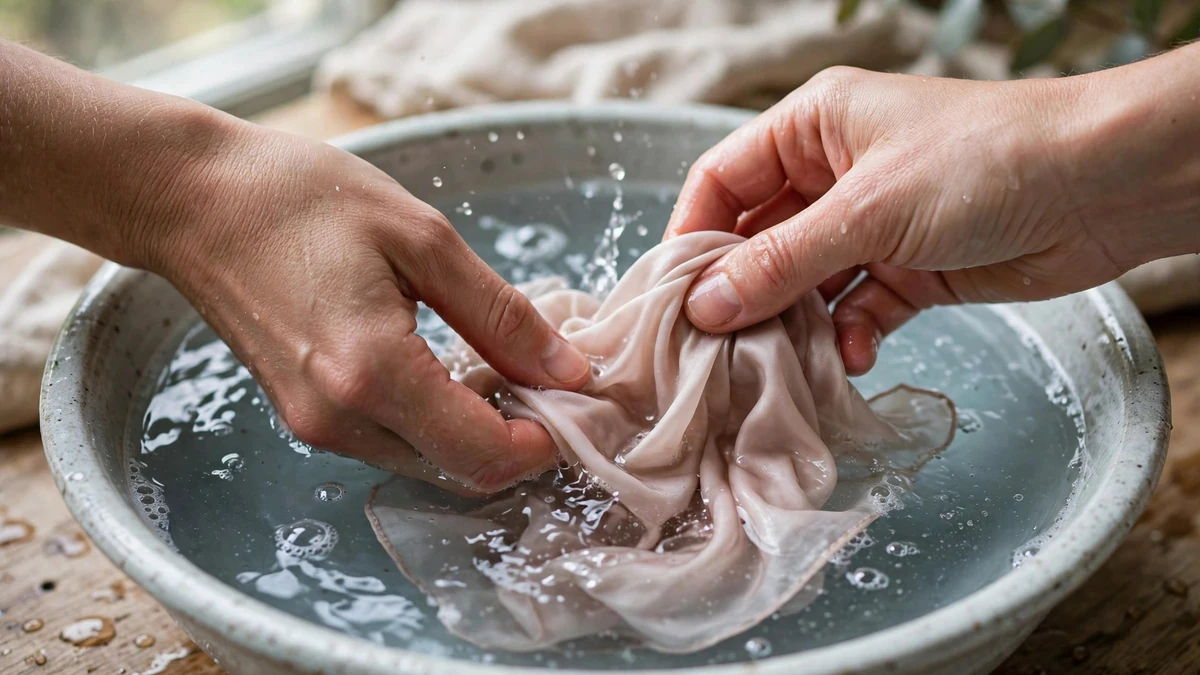
What we like: A short, gentle hand-wash in cool water is the safest way to clean most silk scarves, and it restores the fabric’s softness and shine. What to consider: The water must be cool, not warm, and the detergent must be gentle and pH-neutral, because heat and harsh cleaners damage silk quickly. Best for: Most pure silk scarves that have passed a colourfastness test. Cost: A few pence of detergent. Time needed: Ten minutes.
Fill a clean basin with cool water and add a small amount of a gentle detergent made for delicates, or a mild, pH-neutral soap. Submerge the scarf and move it gently through the water for three to five minutes, without rubbing, twisting or scrubbing. Then drain the basin and rinse the scarf in fresh cool water until the water runs clear. Keep the whole wash short. Silk does not need a long soak, and a long soak increases the risk of dye bleeding and fibre damage.
Never wring a silk scarf, press it instead
What we like: Pressing water out between towels removes just as much moisture as wringing, without twisting and breaking the fibres. What to consider: It takes a little longer than wringing, and you need two clean towels, but the difference to the scarf is enormous. Best for: Every silk scarf, after every wash. Cost: Nothing. Time needed: Five minutes.
Rinse in cool water with a splash of vinegar
What we like: A tablespoon of white vinegar in the final rinse water helps remove soap residue, restores silk’s natural sheen, and can help set colour. What to consider: Use only a small amount, and only white vinegar, because too much can damage the fibres and coloured vinegar can stain. Best for: Scarves that feel stiff after washing, or that have lost their shine. Cost: A few pence. Time needed: Two minutes.
Dry flat, away from direct sun
What we like: Drying flat keeps the scarf’s shape and prevents the stretching that happens when wet silk hangs, and keeping it out of the sun protects the colour. What to consider: Flat drying takes longer than hanging, and you need a clean surface, but it is the only method that does not distort the scarf. Best for: Every silk scarf, after every wash. Cost: Nothing. Time needed: A few hours, unattended.
Steam out creases, never press with a hot iron
What we like: Steam relaxes silk fibres and removes creases without the direct heat that can scorch or shine the fabric. What to consider: A steamer needs to be held at a distance, and a very hot iron can leave a permanent shine mark, so steam is the safer choice. Best for: Every silk scarf that comes out of washing with creases. Cost: Nothing if you use a steamer, or a few minutes with a kettle. Time needed: Five minutes.
Treat stains quickly, and know which ones need a professional
What we like: Acting quickly on a stain, and knowing when to hand it to a professional, saves more scarves than any cleaning product. What to consider: Some stains, especially oil, red wine and ink, set fast on silk, and a wrong home remedy can make them permanent. Best for: Stained scarves, vintage pieces, and anything valuable. Cost: Nothing at home; a professional clean costs more but saves the scarf. Time needed: Minutes at home; a few days at a cleaner.
Blot a fresh stain immediately with a clean cloth, without rubbing, and do not apply heat, which sets most stains. For oil, a light dusting of talcum powder can absorb some of it before washing. For anything you are unsure about, or for a scarf that is valuable, vintage or heavily embellished, take it to a cleaner who works with silk and tell them what the stain is. A professional clean is cheaper than a replacement, and a good cleaner will tell you honestly if a stain cannot be removed.
Which cleaning method is right for your scarf
For a modern, pure silk scarf in good condition that has passed a colourfastness test, hand-washing at home is the right choice. It is gentle, it is cheap, and it keeps the scarf in your hands rather than in a cleaner’s queue. Wash it when it needs it, which for a scarf worn regularly means every few weeks of wear, not after every outing, because over-washing wears silk out faster than gentle use does.
For a vintage scarf, a scarf with beading or embroidery, a scarf whose dye bleeds in the colourfastness test, or a scarf with a stain you cannot identify, a professional cleaner is the right choice. Tell the cleaner what the scarf is made of, what the stain is if you know, and what you have already tried, because that information helps them choose the right treatment. Our guide to the best silk scarves for women is worth reading alongside this one, because the scarves most worth cleaning carefully are usually the ones most worth buying well in the first place.
For a silk blend, follow the care label rather than this guide, because the other fibre changes the rules. A silk and wool blend, for example, is more sensitive to heat and agitation than pure silk, and a silk and cotton blend is more forgiving. When in doubt, wash cooler, wash shorter, and handle the scarf less, and you will rarely go wrong.
The caveats that matter
Silk is a strong fibre when dry and a fragile one when wet, and almost every cleaning disaster comes from forgetting that. Hot water, harsh detergent, wringing, tumble drying and direct sun are the five things that damage silk scarves most often, and they are all avoidable. A scarf that is cleaned gently will last for decades. A scarf that is cleaned roughly may not survive a single wash.
| Detail | What is known |
|---|---|
| Water temperature | Cool only; hot water shrinks and dulls silk |
| Detergent | Gentle, pH-neutral, made for delicates; never bleach or harsh cleaners |
| Wash time | Three to five minutes; silk does not need a long soak |
| Removing water | Press between towels; never wring or twist a wet scarf |
| Drying | Flat on a towel, away from sun and heat; never hang wet or tumble dry |
| Creases | Steam, not a hot iron; use a pressing cloth if you must iron |
| Colour test | Damp white cloth on a hidden corner before the first wash |
| When to go professional | Vintage, embellished, bleeding dye, or an unknown stain |
Perfume and hairspray deserve a mention too, because they are the quietest cause of silk damage. Spray perfume and hairspray before you put a scarf on, not after, and let them dry first. Both contain alcohol and chemicals that can mark silk, and the marks often do not appear until the scarf is washed. The same goes for deodorant, which can stain the part of a scarf that sits against the neck.
Checklist: cleaning a silk scarf honestly
Use these checks every time you clean a scarf, and again before you store it.
- Check the care label: fibre content, recommended method, and any warnings.
- Check for colourfastness: damp white cloth on a hidden corner, and test each strong colour.
- Check the scarf’s condition: loose threads, holes, fraying edges, and stains, before it goes near water.
- Check the water: cool, clean, with a small amount of gentle detergent, and a short wash.
- Check the drying: flat on a towel, out of the sun, turned once, and never hung wet.
- Check the storage: clean, dry, rolled or folded loosely, away from perfume and direct light.
Frequently asked questions
Can I wash a silk scarf in the washing machine?
Almost never. Even a delicates cycle agitates silk too much, and the spin cycle can distort it. Hand-washing takes ten minutes and is far safer. If a scarf is labelled machine washable, use the gentlest cycle, a mesh bag, and cool water, but expect a shorter life for the scarf.
What detergent should I use on silk?
A gentle, pH-neutral detergent made for delicates, or a mild soap with no bleach, enzymes or optical brighteners. Use a small amount. Too much detergent is harder to rinse out, and residue makes silk feel stiff and look dull.
How often should I clean a silk scarf?
When it needs it, which for a regularly worn scarf is every few weeks of wear, or when it smells, feels stiff, or has a visible mark. Over-washing wears silk out, so do not wash a scarf after every single wear unless it is genuinely dirty.
Can I iron a silk scarf?
Yes, but steam is safer. If you iron, use the lowest silk setting, a pressing cloth, and keep the iron moving. Never use a hot iron directly on silk, and never iron a scarf that is still damp from washing, because the combination of heat and moisture can leave a shine mark.
How should I store a silk scarf?
Clean and completely dry, rolled loosely or folded with tissue paper, in a drawer or a box away from direct light and perfume. Do not hang a silk scarf for long periods, because it can stretch, and keep it away from rough jewellery that can snag the weave. Our guide to cleaning gold jewellery at home covers the other half of that pairing, because jewellery and silk share a drawer more often than they should.
What should I do if my silk scarf shrinks?
Unfortunately, a badly shrunk silk scarf rarely recovers fully. You can try soaking it in cool water with a little hair conditioner, which relaxes the fibres, then gently stretching it back into shape while it dries flat, but this works best on a slight shrink, not a severe one. Prevention, cool water and no heat, is far more effective than any rescue.
The bottom line
Cleaning a silk scarf is not difficult, but it is unforgiving of shortcuts. Cool water, a gentle detergent, a short wash, pressing rather than wringing, and flat drying away from the sun will keep a good scarf looking good for years. The whole process takes about fifteen minutes of your time, plus a few hours of drying, and it costs almost nothing.
Clean your scarves when they need it, store them clean and dry, and take the valuable or stained ones to a professional without hesitation. That is the honest way to look after silk, and the reason a well-kept scarf can be worn for decades rather than for a single season.


