
A tweed blazer is one of those wardrobe pieces that looks effortless and turns out to be anything but simple. It is warm without being heavy, structured without being stiff, and smart enough for a meeting yet relaxed enough for a weekend walk. The trouble is that not every jacket labelled tweed is the real thing, and not every real tweed blazer suits every body, every climate, or every occasion.
That confusion is understandable. Tweed is a cloth, not a cut, and the word covers everything from a rough estate tweed woven on a Scottish island to a smooth, lightweight blend made for a city spring. The pattern, the weight, the lining and the cut all change how the blazer looks, feels and wears, which is why two jackets with the same label can behave like completely different garments.
This guide explains what a tweed blazer actually is, how the cloth is made, which patterns and weights to look for, and how to choose one that earns its place in your wardrobe in 2027. It is written for anyone buying their first tweed blazer, and for anyone who already owns one and wants to wear it better.
Key takeaways
- A tweed blazer is defined by its cloth: a rough, woollen, twill-woven fabric, usually with flecks of colour running through it.
- Harris Tweed is the protected original, woven by hand on the Outer Hebrides of Scotland and marked with the Orb trademark.
- Weight matters more than brand: a heavy estate tweed is for cold weather, while a lighter tweed works across three seasons.
- The best blazers are cut soft, with a natural shoulder and room to move, rather than stiff and boxy.
- No tweed blazer is waterproof, crease-proof, or a good choice for formal evening dress, whatever the label claims.
What a tweed blazer actually is
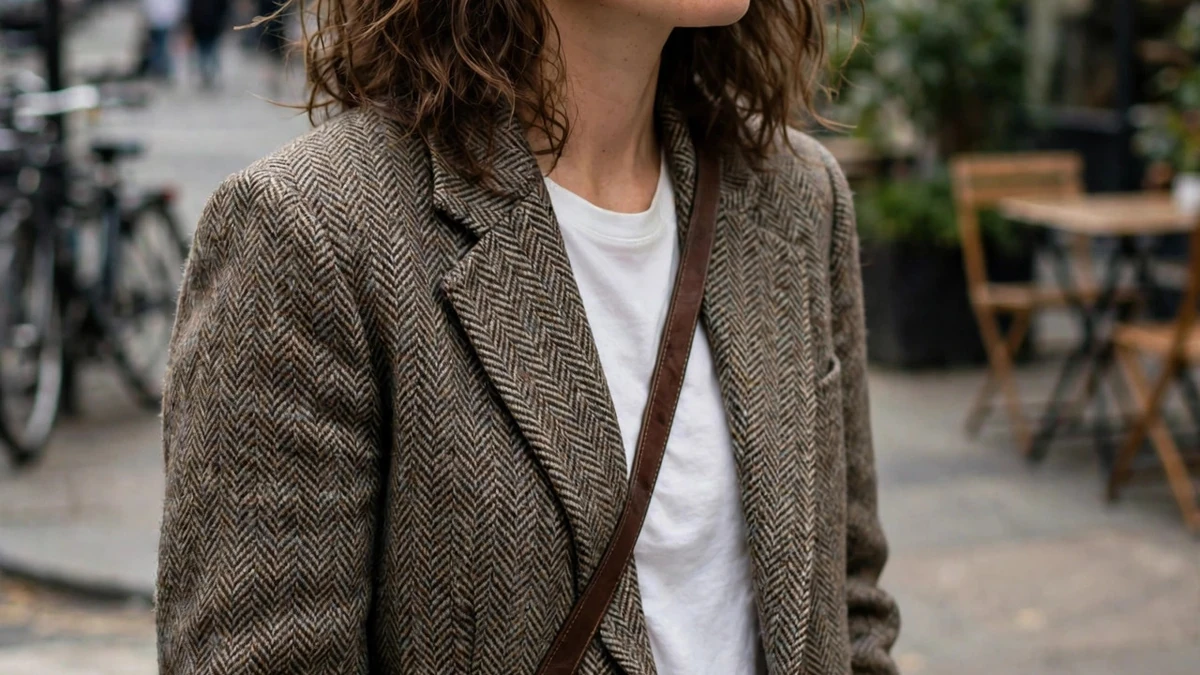
A tweed blazer is a tailored jacket made from tweed, a woollen cloth woven in a twill pattern, which gives it the diagonal lines you can see if you look closely at the surface. The wool is usually coarse and slightly rough to the touch, and the yarn is often made from several colours twisted together, so the cloth has a flecked, almost speckled look rather than a flat, single colour. That texture is the point. It hides wear, softens with age, and gives the jacket a depth that a smooth worsted wool never has.
The name comes from the River Tweed in Scotland, where the cloth was first made for farmers, gamekeepers and landowners who needed something warm, tough and weather-resistant for life outdoors. The jackets were cut loose enough to move in, with deep pockets and a sturdy build, because they were working clothes before they were fashion. The modern tweed blazer keeps that DNA: it is a jacket built for real life, not for a photograph.
Today the term is used more loosely, and that is where buyers get caught out. A jacket can be called tweed when it is made from a tweed-effect fabric, a wool blend with a printed pattern, or a smooth cloth with a few flecks added for show. None of these is necessarily a bad jacket, but none of them will age, breathe or wear like a true woollen tweed. The difference is in the cloth, and the cloth is what this guide helps you judge.
Tweed also ages in a way that few fabrics do. The cloth softens with wear, the colours mellow, and the jacket slowly moulds itself to your shape, so a five-year-old tweed blazer often looks better than a new one. That is why vintage tweed is so sought after, and why a good blazer is worth buying once and keeping for years rather than replacing every season.
How we chose these facts and what to look for
Start with the cloth. Hold it up to the light and look at the weave. A real tweed has a visible diagonal twill, a slightly uneven surface, and flecks of two or three colours in the yarn. It should feel dry and a little rough, not slick or silky. If the surface looks printed rather than woven, or if the pattern sits on top of the cloth instead of running through it, it is an imitation, and it will not wear the same way.
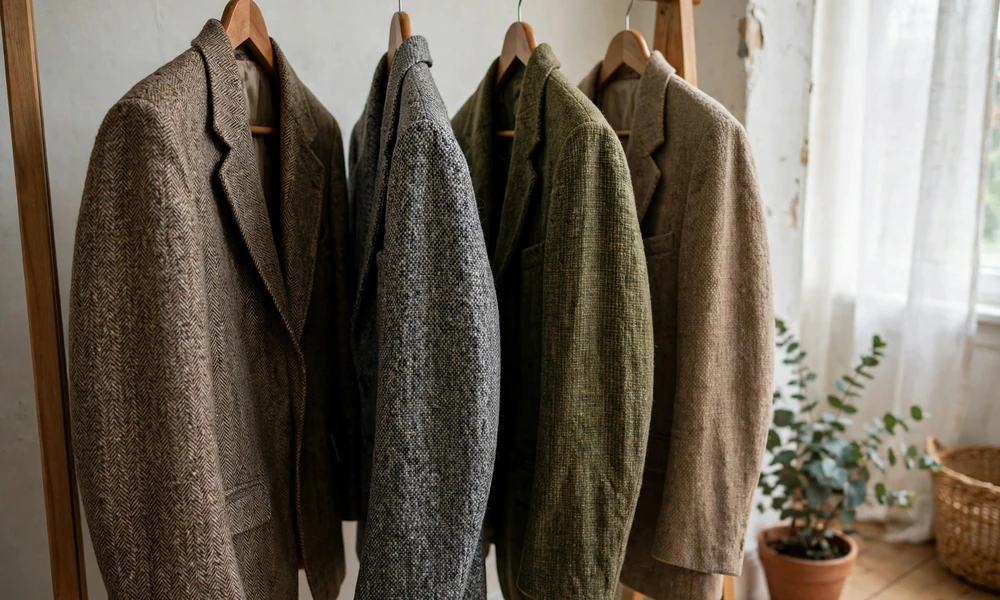
Next, check the weight and the lining. A winter tweed blazer is heavy, often 400 grams per metre or more, and it will feel substantial in your hands. A lighter tweed, around 300 grams, is the more useful choice for most people, because it works from autumn through spring. A half lining, where the back is lined but the front panels are left open, lets the cloth breathe and keeps the jacket comfortable indoors. Our roundup of the best tweed jackets for women shows how different weights and cuts change the way the same cloth looks on the body.
Finally, look at the cut. A good tweed blazer has a natural shoulder, a gentle waist, and enough room across the chest to layer a thin knit underneath. The lapels should lie flat, the pockets should sit straight, and the sleeves should end at your wrist bone. If the jacket feels stiff or boxy, or if it pulls when you button it, the cut is wrong for you, whatever the label says.
The 9 key facts about a tweed blazer in 2027
Tweed is a woollen cloth, not a style of jacket
What we like: The definition is simple and useful: tweed is a rough, woollen, twill-woven cloth, and a tweed blazer is any jacket made from it. What to consider: Because the word describes the cloth, not the cut, two tweed blazers can look completely different. Best for: Anyone who wants to understand what they are buying before they spend. Cost: Free knowledge; the cloth itself ranges widely. Time needed: A few minutes to check the weave before you buy.
Harris Tweed is the protected original
What we like: Harris Tweed is woven by hand on the Outer Hebrides of Scotland, and every genuine piece carries the Orb trademark, a mark protected by law. What to consider: The name is often borrowed by jackets that are not Harris Tweed at all. Best for: Buyers who want the most authentic cloth available. Cost: Harris Tweed blazers usually start higher than generic tweed. Time needed: A minute to look for the Orb label inside the jacket.
The weave is what makes it warm and hard-wearing
What we like: The twill weave packs the wool fibres tightly together, which traps air, holds warmth, and resists tearing and abrasion far better than a plain weave. What to consider: The same tight weave makes heavy tweed slow to dry if it gets soaked. Best for: Cold, damp, windy weather and daily wear. Cost: Included in the price of any genuine tweed. Time needed: No extra care beyond normal wear.
Herringbone, check and fleck are the classic patterns
What we like: Herringbone is the most versatile pattern, a windowpane check is the most traditional, and a flecked Donegal tweed is the most forgiving of creases and wear. What to consider: Bold checks suit confident dressers and can overwhelm a small frame. Best for: Building a wardrobe around one or two patterns that suit you. Cost: Pattern does not usually change the price. Time needed: Try two or three patterns on before deciding.
A tweed blazer is cut softer than a suit jacket
What we like: A good tweed blazer has a natural, unpadded shoulder, a slightly longer body, and room to move, which makes it comfortable all day. What to consider: A very soft cut can look shapeless on some bodies, and a structured cut can feel stiff. Best for: Smart-casual dressing, layering, and anyone who dislikes rigid tailoring. Cost: A good cut costs more, because it takes more skill to make. Time needed: Ten minutes of trying on, sitting down, and raising your arms.
It was made for the countryside, then moved to the city
What we like: Tweed began as working cloth for Scottish estates, then became the uniform of country weekends, and finally a city classic worn with jeans, chinos and tailored trousers. What to consider: The country roots mean some tweeds still look rustic, which is not always right for a formal office. Best for: Weekends, smart-casual offices, and autumn and winter travel. Cost: No extra cost; the history is free. Time needed: None, once you know the story.
It pairs with more than you expect
What we like: A tweed blazer works with dark jeans, chinos, corduroy trousers, a wool skirt, and even a simple dress, which makes it one of the hardest-working jackets you can own. What to consider: It clashes with very formal trousers and shiny fabrics, which make the tweed look rough by comparison. Best for: Building outfits around one jacket across the week. Cost: Nothing extra, if you already own the basics. Time needed: A few minutes to try combinations at home.
Weight matters: choose by season
What we like: A light tweed, around 300 grams per metre, works from autumn to spring, while a heavy estate tweed, 450 grams or more, is genuinely warm in deep winter. What to consider: A heavy tweed is too warm for a heated office or a mild autumn day. Best for: Matching the jacket to your climate and your calendar. Cost: Lighter tweeds are often slightly cheaper. Time needed: Check the weight on the label or ask the seller.
Care is simple but not optional
What we like: Tweed needs little care: brush it after wear, air it out, and dry-clean it only when it is genuinely dirty. What to consider: Machine washing will shrink and felt the wool, and moths love untreated tweed. Best for: Anyone who prefers low-maintenance clothes. Cost: A clothes brush and a few cedar blocks. Time needed: Two minutes after each wear.
Which tweed blazer is right for you
If you are buying your first tweed blazer, choose a herringbone in a mid-weight cloth, in brown, grey or dark green, with a natural shoulder and a half lining. It will work with jeans, chinos and tailored trousers, it will carry you through three seasons, and it will not date. A windowpane check is the right second jacket, and a flecked Donegal is the right third, for weekends and character.
Fit matters more than brand. The shoulders should end at your own shoulders, the button should close without pulling, and the sleeves should show about a centimetre of shirt cuff. If you plan to layer a knit underneath, try the jacket on over one. If you mostly wear it indoors, choose the lighter cloth. A guide to how to style a blazer for work is useful here, because the same fitting rules apply, and the work setting is where a bad fit is most obvious.
Finally, buy the best cloth you can afford, and worry less about the label. A well-made blazer in a good tweed will look better in five years than a fashionable blazer in a poor cloth looks on day one. Tweed softens, moulds to your shape, and develops a patina that no new jacket can fake.
The caveats that matter
Tweed is honest cloth, but it is not magic. It is not waterproof, so a heavy downpour will soak it, and it dries slowly. It is not crease-proof, so it will wrinkle at the elbows and the seat, though the texture hides this better than a smooth cloth. It sheds a little when new, it can feel scratchy against bare skin, and it attracts moths if it is stored dirty or in a damp wardrobe. None of these are reasons to avoid tweed. They are reasons to buy the right weight, wear a layer underneath, and store it properly.
| Detail | What is known |
|---|---|
| What it is | A tailored jacket made from twill-woven woollen tweed cloth |
| The protected original | Harris Tweed, handwoven in the Outer Hebrides, marked with the Orb |
| Best first pattern | Herringbone in brown, grey or dark green |
| Best weight for most people | Mid-weight, around 300 to 350 grams per metre |
| Best cut | Natural shoulder, gentle waist, room to layer a thin knit |
| What it pairs with | Jeans, chinos, corduroy, knits, leather shoes |
| Care | Brush after wear, air out, dry-clean sparingly, protect from moths |
| What it is not | Not waterproof, not crease-proof, not formal evening wear |
If you have a wool allergy or very sensitive skin, try a tweed blazer on over a long-sleeved shirt before you buy, because the coarse fibres can irritate bare skin. And if you live in a warm climate, a tweed blazer is a travel and evening jacket, not a daily one, so choose the lightest cloth you can find.
Checklist: choosing a tweed blazer honestly
Use these checks before you buy, and again when the jacket arrives.
- Check the cloth: visible twill weave, flecks of colour in the yarn, a dry, slightly rough feel.
- Check the label: wool content, the Orb mark for Harris Tweed, and the weight if it is stated.
- Check the shoulders: they should end at your own shoulders, with no padding sticking out.
- Check the fit: button it, sit down, raise your arms, and try it over a thin knit.
- Check the lining: a half lining breathes better and is more comfortable indoors.
- Check the length: it should cover your seat and sit comfortably over your trousers or skirt.
Frequently asked questions
What is the difference between a tweed blazer and a tweed jacket?
Very little. A tweed blazer is a tweed jacket cut as a separate, usually with a softer shoulder and a slightly longer body than a suit jacket. The terms are used interchangeably by most makers, so judge the garment in front of you, not the name on the tag.
Is a tweed blazer warm enough for winter?
Yes, in a mid-weight or heavy cloth, especially with a knit underneath. A light tweed is better for autumn and spring. The weave traps air and holds warmth well, but it is not a coat, so in deep cold you will still want an overcoat on top.
Can you wear a tweed blazer in spring?
Yes, if the cloth is light. A 300-gram tweed in a pale colour works well in spring, particularly on cool mornings and evenings. A heavy estate tweed is too warm once the temperature rises, so choose by weight, not by the calendar.
How do I stop my tweed blazer from smelling musty?
Air it out after every wear, brush it, and store it in a dry place with cedar or lavender. Mustiness usually means damp storage, so check your wardrobe for dampness before you blame the jacket, and dry-clean it if the smell persists.
Is tweed blazer the same as Harris Tweed?
No. Harris Tweed is a specific, protected cloth from the Outer Hebrides, while tweed is a general type of woollen cloth made in many places. A tweed blazer can be made from Harris Tweed, but most are made from other tweeds, which can still be excellent.
Which is better for a first tweed blazer, wool or a wool blend?
Pure wool is the better choice for a first blazer, because it breathes, ages well, and holds its shape. A blend with a little cashmere or silk can feel softer, but it costs more and needs gentler care. Our comparison of wool and linen blazers shows how the fibre changes the way a blazer behaves in different weather.
The bottom line
A tweed blazer is worth owning because it is one of the few jackets that gets better with wear. The cloth is warm, tough and forgiving, the cut is comfortable, and the style has survived nearly two centuries without looking dated. Buy a mid-weight herringbone in a colour you already wear, check the cloth and the fit before you pay, and you will have a jacket that works across seasons and outfits.
Start with the cloth, not the brand. Look for a visible twill, flecks of colour, and a natural shoulder, and be honest about your climate and your routine. Get those right, brush it after wear, and your tweed blazer will be the jacket you reach for most, year after year.